Industry Portal
Related News
- 00
0000-00
Pep Boys Road Report: Chicago Tops List as Southern Tire Repairs Rise - 00
0000-00
Forged Lightweight Alloy Wheels: How to Choose the Right Load Rating - 00
0000-00
Vehicle Chassis Lightweighting: Comparing Steel, Aluminum and Composites - 00
0000-00
Nissan and FOOD REBORN Develop Pineapple Leaf Fiber Body Panel - 00
0000-00
Vehicle Exterior Design Surfacing: From Concept Sketch to Class-A Model
Tags
Nissan and FOOD REBORN Develop Pineapple Leaf Fiber Body Panel
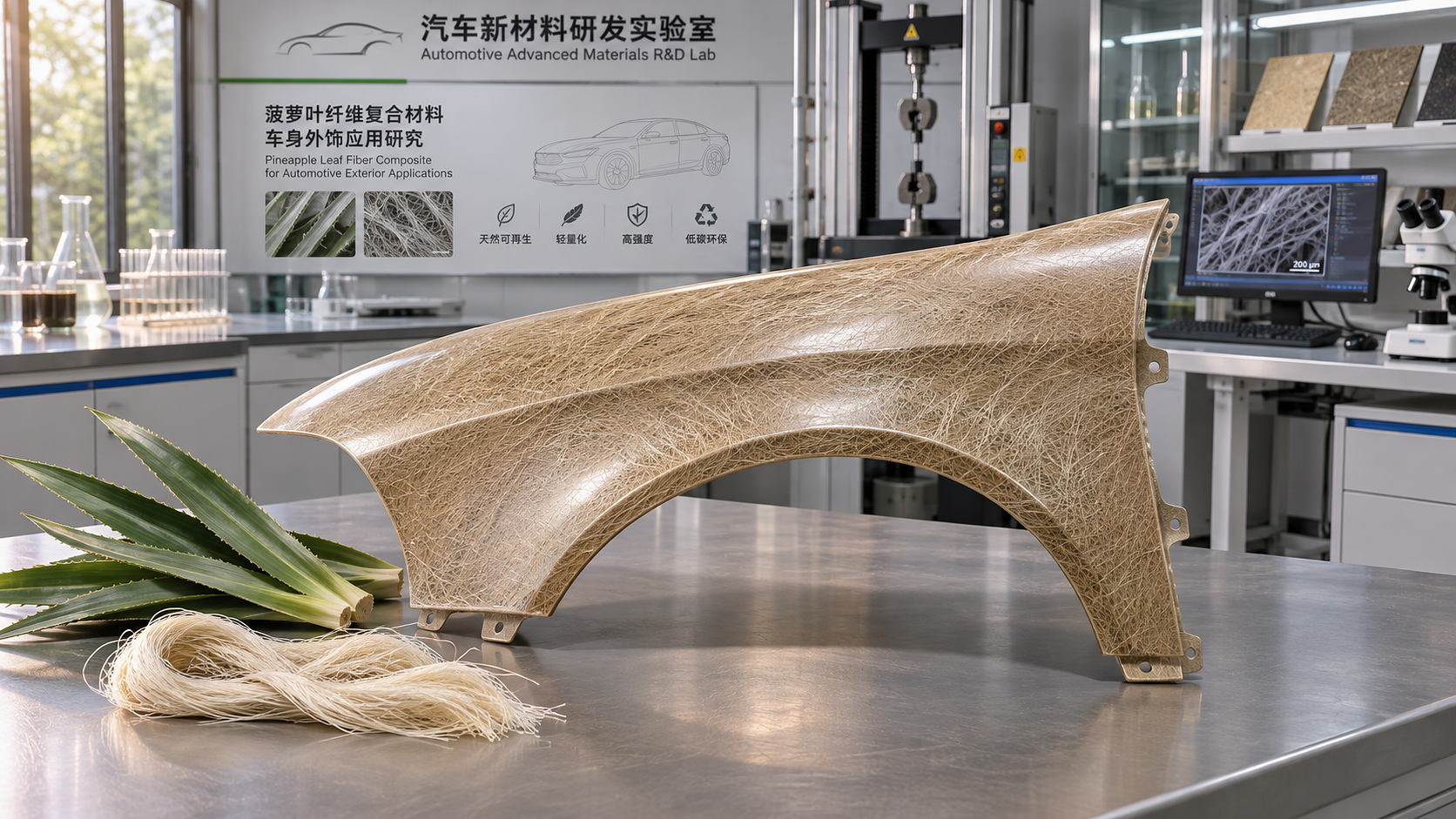
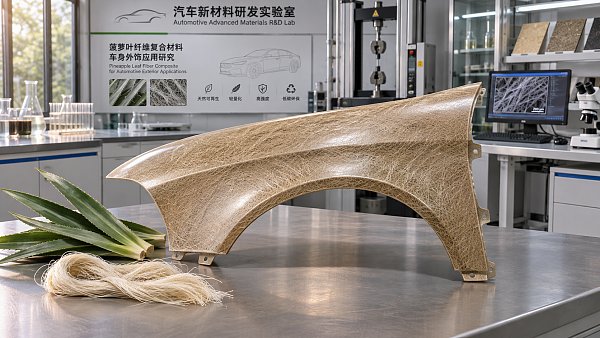
Nissan Motor and Japanese materials company FOOD REBORN have developed an automotive exterior body panel made from pineapple leaf fiber natural fiber-reinforced plastic (NFRP). Described as the first of its kind worldwide, the panel uses a composite that Nissan says achieved higher tensile strength in internal testing than a conventional flax-based natural fiber composite.
The partners plan to apply the development to exterior automotive components and display it for the first time at the SAMPE Japan advanced materials exhibition, scheduled for November 18–20, 2026, at Tokyo Big Sight. The use of agricultural waste also offers a potential route to reducing environmental impact.
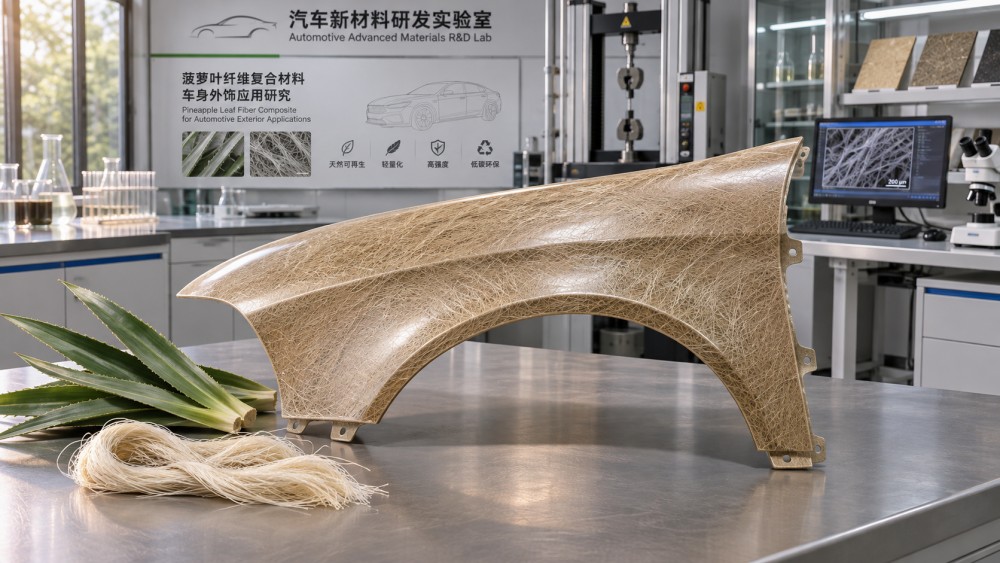
What the strength comparison shows
The reported tensile strength result provides an initial comparison with another natural fiber composite. Tensile strength concerns a material’s ability to withstand forces that pull it apart, making it a useful property to examine when considering a material for a body panel.
The comparison is specific, however: it describes Nissan’s internal test against a conventional flax-based natural fiber composite. It does not establish how the pineapple leaf material performs against every material used for exterior panels, or how a finished component would perform under all service conditions.
For an exterior application, the reported result is therefore a starting point for evaluation rather than proof that the material is ready for every type of panel. The performance of a finished component would depend on requirements beyond the single property disclosed in the announcement.
From agricultural waste to exterior components
The development connects two aspects of material selection: the use of an agricultural byproduct and the mechanical performance needed for an automotive application. If pineapple leaves can be used effectively in exterior components, they could provide a use for material that would otherwise be treated as waste.
The environmental benefit will depend on how the complete material and component are produced and used. The announcement identifies the use of agricultural waste as a way to help reduce environmental impact, but it does not quantify that effect. The presence of a natural fiber alone does not establish the overall environmental footprint of a finished panel.
The choice of an exterior body panel also makes the intended application significant. Material developers and automotive engineers evaluating such a component would need to consider how its properties translate from a material test to a finished part, including whether performance can be maintained through manufacturing and use.
What to watch next
The planned exhibition will provide an opportunity to see the development presented publicly. Further information about the panel’s intended applications and performance would help clarify how the material could move from a demonstrated component toward broader use.
For suppliers and manufacturers, the practical questions include how consistently the fiber can be supplied and processed, how the composite performs as a finished exterior part, and what manufacturing requirements accompany its use. Answers to those questions would shape whether the material can be considered for particular components.
For now, the clearest result is a developed exterior panel and a favorable internal tensile-strength comparison with a flax-based natural fiber composite. The scope of any later application, as well as the scale of its environmental benefit, will depend on further development and evidence.
Have questions about this sector analysis, or seeking best practices specific to your niche? Drop us a line below and let the senior consultants at AEVS assist you.
Related News
 Evolutionary TrendsNissan and FOOD REBORN Develop Pineapple Leaf Fiber Body PanelNissan and FOOD REBORN have developed a pineapple leaf fiber body panel. Explore its strength test results and potential for automotive use.MORE+
 Evolutionary TrendsVehicle Aesthetics Trends 2026: Colors, Lighting and Exterior DesignExplore vehicle aesthetics trends 2026, from expressive colors and signature lighting to aerodynamic styling, and discover how design choices affect everyday driving.MORE+
 Evolutionary TrendsSun Xiaohong: China's Auto Industry Enters Overseas Expansion 2.0China's auto industry enters overseas expansion 2.0. Discover Sun Xiaohong's vision for global supply chains, lasting market presence and reinvestment.MORE+
 Evolutionary TrendsPopular NEV configuration options shaping new model launchesWhat are the most popular NEV configuration options available now? Explore smart roofs, aero wheels, EV tires, matrix LEDs, and sensors for stronger launches.MORE+
 Evolutionary TrendsChoosing Joining Technologies for Lightweight Multi-Material Vehicle StructuresVehicle lightweighting joining technologies: discover how adhesives, rivets, screws, and welding enable durable multi-material structures with smarter manufacturing choices.MORE+
 Evolutionary TrendsNorth American Vehicle Aesthetics: Trends Shaping Exterior Design and MaterialsVehicle aesthetics North America: explore exterior design trends in EV aerodynamics, smart lighting, sensor integration, durable materials, and serviceable styling.MORE+
 Evolutionary TrendsHow Is Smart Optical Perception Shaping ADAS and Lighting Projects in the Middle East?Smart optical perception Middle East is transforming ADAS and vehicle lighting with stronger resilience, safer performance, and smarter integration. Discover what it means for upcoming projects.MORE+
 Evolutionary TrendsAutomotive Optical Systems in Europe: Key Market Shifts and OEM Demand SignalsAutomotive optical systems Europe is reshaping OEM sourcing through regulation, EV integration, and software-defined design. Explore key market shifts, demand signals, and growth opportunities.MORE+
 Evolutionary TrendsHow Raw Material Cost Fluctuations Are Reshaping Composite Sourcing StrategiesRaw material cost fluctuations composites teams face are reshaping sourcing, design, and risk control. See how smarter strategies protect performance, supply continuity, and cost resilience.MORE+
 Evolutionary TrendsAutomotive Vision Systems Europe: Market Drivers, Regulation, and Supplier OutlookAutomotive vision systems Europe is reshaping vehicle safety, EV efficiency, and supplier strategy. Explore key regulations, market drivers, and outlook to spot growth opportunities.MORE+
 Evolutionary TrendsVehicle Lightweighting for EVs: Where Mass Reduction Delivers the Biggest Range GainsVehicle lightweighting for EVs delivers the biggest range gains when wheels, tires, roof systems, and sensors are optimized together. Discover where mass reduction truly improves efficiency, cost, and real-world driving value.MORE+
 Evolutionary TrendsVehicle Exterior Design Styling in EVs: Balancing Aerodynamics, Brand Identity, and CostVehicle exterior design styling in EVs shapes range, brand identity, and cost. Discover how aerodynamics, lighting, wheels, and sensors drive smarter, more competitive design.MORE+
 Evolutionary TrendsSmart Mobility Procurement Guide: How to Compare Platforms, Costs, and Integration RisksSmart mobility procurement guide covering platform comparison, total cost, and integration risks. Learn how to evaluate suppliers, reduce hidden costs, and source with confidence.MORE+
 Evolutionary TrendsNEV Industry Trends: What Is Driving Demand, Pricing, and Supply Chain Shifts?NEV industry trends are reshaping demand, pricing, and supply chains. Discover what drives margin, innovation, and smarter sourcing in a more competitive market.MORE+
 Evolutionary TrendsVehicle Lightweighting Methods Compared: Where Precision Forging Delivers the Most ValueVehicle lightweighting compared: discover where precision forging delivers the most value for EVs and performance vehicles through stronger, lighter wheels and critical chassis parts.MORE+
![]() Evolutionary TrendsWhat Is Driving NVH Control Demand in the NEV Industry Supply Chain?NEV industry demand for NVH control is surging as quieter EVs expose road, wind, and structural noise. Explore the supply chain forces shaping comfort, quality, and competitive value.MORE+
 Evolutionary TrendsNEV Industry Trends: How Battery Costs, Policy, and Exports Are Reshaping CompetitionNEV industry trends are being reshaped by falling battery costs, selective policy, and export pressure. Discover how these forces redefine pricing, compliance, and competitive advantage.MORE+
 Evolutionary TrendsNEV Industry Trends: What Is Driving Battery Supply, Pricing, and Platform DecisionsNEV industry trends are reshaping battery supply, pricing, and platform strategy. Discover what drives cost, flexibility, and competitive advantage in the next vehicle cycle.MORE+
 Evolutionary TrendsHow Smart Mobility Is Reshaping Urban Transport Planning and Connected Vehicle ServicesSmart mobility is reshaping urban transport planning with connected vehicle services, smarter exterior systems, and road-ready performance insights that improve safety, efficiency, and city mobility.MORE+
 Evolutionary TrendsWhat Do Vehicle Exterior Architects Do in EV Design and Brand Styling?Vehicle exterior architects drive EV design by linking brand styling, aerodynamics, lighting, wheels, and sensors—see how this role boosts range, identity, and sourcing decisions.MORE+
![]() Evolutionary TrendsSmart Optical Perception in Vehicles: What It Detects and Where It Works BestSmart optical perception in vehicles detects lanes, pedestrians, signs, glare, and weather changes. Learn where it works best, its limits, and how it boosts safer, smarter driving.MORE+
 Evolutionary TrendsDynamic Driving Perception for ADAS: Sensor Fusion Use Cases and RisksDynamic driving perception helps ADAS teams reduce risk with smarter sensor fusion, real-world validation, and safer production-ready decisions.MORE+
 Evolutionary TrendsHow smart mobility is reshaping daily urban travelSmart mobility is transforming urban travel with safer roads, smarter EV systems, adaptive lighting, connected sensors, and more efficient daily commutes.MORE+
 Evolutionary TrendsWhat makes smart optical perception reliable at night?Smart optical perception at night depends on anti-glare control, sensor fusion, thermal stability, and compliance. Learn how to evaluate reliable exterior vision systems.MORE+
 Evolutionary TrendsAre thermal management models ready for EV scaling?Thermal management models are evolving for EV scaling—see how system-level validation improves battery safety, lighting stability, airflow efficiency, and NEV performance.MORE+
 Evolutionary TrendsWhat vehicle exterior architects look for in early designVehicle exterior architects shape early design beyond styling—balancing aerodynamics, lighting, sensors, compliance, and EV efficiency to create concepts that are buildable, competitive, and future-ready.MORE+
 Evolutionary TrendsWhy vehicle lightweighting matters more as EV range targets riseVehicle lightweighting is becoming critical as EV range targets rise. Learn how lighter wheels, tires, lighting, and exterior systems boost efficiency, cut costs, and improve performance.MORE+
 Evolutionary TrendsHow aerodynamic parameters change real EV range on highwaysAerodynamic parameters shape real EV highway range more than battery size alone. Learn how Cd, frontal area, wheels, tires, and airflow design drive efficiency and smarter EV decisions.MORE+
 Evolutionary TrendsWhat vehicle exterior architects consider in modern EVsVehicle exterior architects shape modern EVs through aerodynamics, lighting, sensors, and lightweight design. Discover what drives smarter, safer, and more efficient exterior decisions.MORE+
![]() Evolutionary TrendsWhat the NEV industry is getting right about long-term growthNEV industry growth is shifting from scale to smarter engineering. Discover how lightweight wheels, EV tires, LED lighting, and sensors are driving efficiency, safety, and long-term value.MORE+
 Evolutionary TrendsWhy automotive exterior components now shape EV rangeAutomotive exterior components now shape EV range, noise, safety, and sensor performance. Discover how smarter wheels, tires, lighting, and surfaces boost efficiency and competitive value.MORE+
 Evolutionary TrendsWhy vehicle lightweighting matters more in today’s EV raceVehicle lightweighting is key to winning the EV race. Discover how lighter wheels, tires, lighting, and roof systems can boost range, safety, performance, and cost efficiency.MORE+
 Evolutionary TrendsWhere the NEV industry is finding its next margin gainsNEV industry margin gains are shifting to lightweight wheels, EV tires, smart lighting, and sensor systems. Discover where efficiency, safety, and premium value create the next profit edge.MORE+
 Evolutionary TrendsWhy vehicle lightweighting matters more as EV platforms evolveVehicle lightweighting is becoming critical as EV platforms grow heavier and smarter. Discover how it boosts range, safety, aerodynamics, durability, and premium driving performance.MORE+
 Evolutionary TrendsCFD simulations can cut design errors before toolingCFD simulations help project managers cut design errors before tooling by exposing airflow, cooling, and performance risks early—reducing rework, protecting timelines, and improving cost control.MORE+
 Evolutionary TrendsWhat vehicle exterior architects miss in early EV stylingVehicle exterior architects often miss how early EV styling affects range, sensors, lighting, and launch risk. See what to fix early to avoid costly redesigns.MORE+
 Evolutionary TrendsWhen CFD simulations fail to match road test resultsCFD simulations not matching road tests? Discover the real causes behind correlation gaps, from tires and sensors to thermal and transient effects, and learn how to improve validation faster.MORE+
 Evolutionary TrendsNEV industry shifts that are reshaping supplier prioritiesNEV industry trends are redefining supplier priorities in wheels, tires, lighting, sensors, and sunroofs. Discover key sourcing risks, market shifts, and smarter evaluation strategies.MORE+
 Evolutionary TrendsHow accurate are CFD simulations before physical testing?CFD simulations reveal how accurately teams can rank concepts, cut prototype loops, and spot aero or thermal risks before physical testing. Learn where to trust results—and where validation still matters.MORE+
 Evolutionary TrendsHow CFD Simulations Help Cut Early Body Design ReworkCFD simulations help teams spot aerodynamic, thermal, and packaging risks early, cut costly body design rework, protect budgets, and keep vehicle development on schedule.MORE+