Industry Portal
Related News
- 00
0000-00
ECE-Compliant Lighting for Commercial Vehicles: Approval and Installation Checks - 00
0000-00
Laser Adaptive Headlights: What to Check for Range and Glare Control - 00
0000-00
Precision Forging for Aluminum Wheels: Alloy Selection and Fatigue Performance - 00
0000-00
NEV Industry Standards in China: Which Battery Safety Tests Are Required? - 00
0000-00
Automotive Exterior Lighting Systems: Lamp Types, Functions, and Placement
What makes smart optical perception reliable at night?
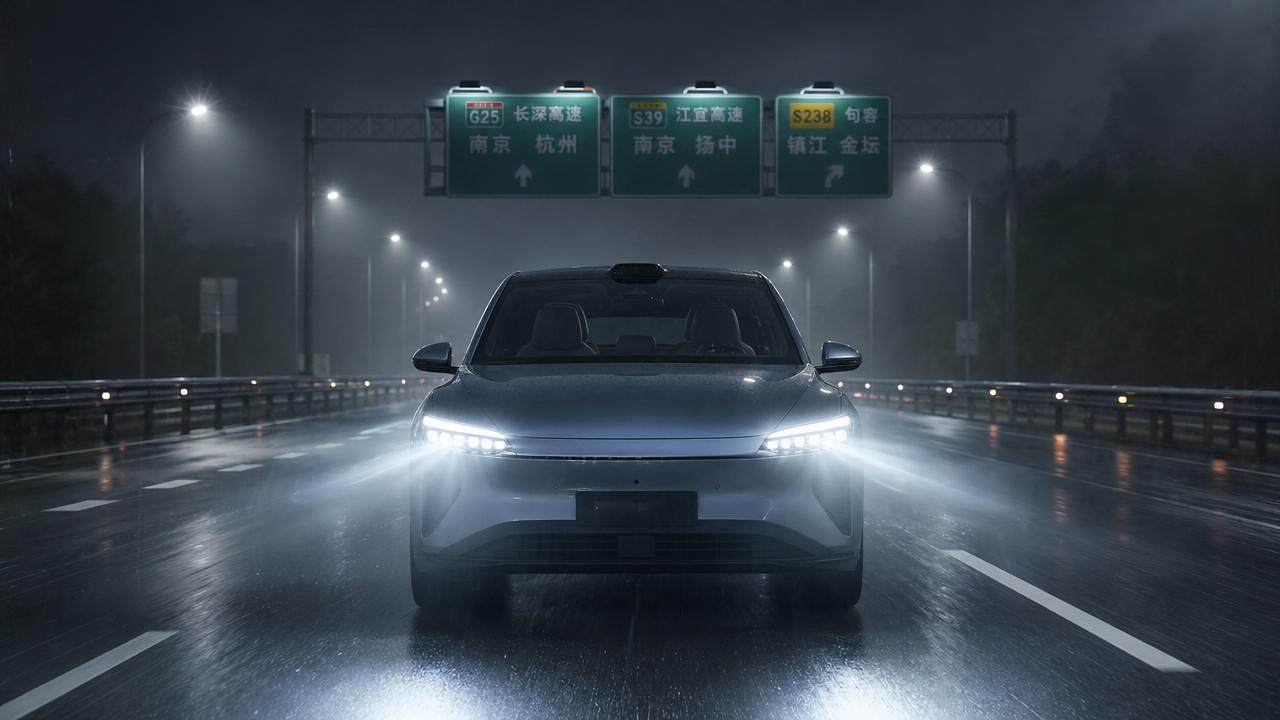
Night reliability in smart optical perception is no longer defined by brighter illumination alone. For technical evaluators, the real challenge lies in how LED matrices, optical algorithms, sensor switches, thermal control, and vehicle-level compliance work together under glare, rain, fog, low contrast, and high-speed scenarios. As NEVs demand safer and more intelligent exterior vision systems, assessing nighttime performance requires a deeper look at anti-glare precision, sensing redundancy, calibration stability, and real-world durability across global standards.
Why nighttime reliability is a system question, not a lamp question
For technical evaluators, smart optical perception should be assessed as a vehicle exterior intelligence stack. It includes illumination hardware, perception sensors, switching logic, software calibration, thermal behavior, and compliance limits.
A matrix LED may deliver high luminous output, yet still fail in complex night driving if segmentation accuracy, glare suppression, and rain reflection handling are unstable.
AEVS evaluates smart optical perception through the combined lens of vehicle aesthetics, dynamic driving perception, NEV range pressure, and global regulatory constraints.
The reliability chain evaluators should verify
- Optical distribution must provide enough forward visibility without creating discomfort glare for opposing drivers or pedestrians.
- Perception algorithms must identify road users, lane edges, signs, wet surfaces, and temporary obstacles under low contrast.
- Auto sensor switches must activate headlights, wipers, and related body-network functions without delay or false triggering.
- Thermal control must prevent LED output decay, color drift, lens fogging, and electronic instability during long night operation.
- Compliance mapping must consider ECE, DOT, regional beam rules, and local requirements for adaptive driving beam functions.
This chain is important because smart optical perception is only reliable when each subsystem behaves predictably after vibration, heat cycles, contamination, and software updates.
What technical indicators reveal real smart optical perception performance?
A procurement document often lists brightness, pixel count, and sensor type. Those values matter, but they do not fully describe nighttime reliability.
Evaluators should connect measurable parameters with scenarios. The following table converts common indicators into practical judgment points for smart optical perception projects.
The strongest smart optical perception proposal is not the one with the largest specification number. It is the one whose indicators remain stable across environmental stress and vehicle states.
Which night scenarios expose weak optical perception designs?
Laboratory measurements are necessary, but night reliability is proven on roads. Technical evaluators should map requirements to scenario clusters before approving suppliers.
High-speed highways and rural roads
At high speed, smart optical perception must identify dark objects early while avoiding overexposure of reflective signs and license plates.
The system should transition between high beam, low beam, and adaptive masking without visible flicker or delayed response.
Urban traffic with mixed light sources
Streetlights, storefront reflections, wet asphalt, e-bikes, and pedestrians create dense visual interference. Smart optical perception must separate useful signals from background noise.
False positives can cause unnecessary dimming, while false negatives can leave vulnerable road users outside the driver’s visual confidence zone.
Rain, fog, snow, and low-contrast surfaces
Bad weather challenges both illumination and sensing. Reflected light can reduce contrast, and droplets on lenses may scatter the beam.
This is where AEVS pays special attention to auto sensor switches, wiper coordination, headlight activation logic, and sensor redundancy.
How should evaluators compare optical architectures?
Different vehicle programs require different architectures. A premium NEV, a fleet vehicle, and an aftermarket upgrade do not share the same cost, compliance, or integration limits.
The comparison below helps technical teams position smart optical perception options according to function depth and implementation risk.
This comparison shows why smart optical perception selection should not start with a single component quotation. It should start with the vehicle’s night-driving mission profile.
What role do tires, wheels, and exterior systems play in vision reliability?
Night perception is influenced by more than headlight assemblies. Vehicle stance, vibration, wheel airflow, tire behavior, and exterior packaging all affect sensing stability.
AEVS connects smart optical perception with lightweight exterior engineering because NEV architecture compresses space, weight, thermal, and range priorities.
Wheel and tire effects on optical calibration
Heavy battery packs and instant EV torque increase tire load variation. If ride height and suspension response shift, headlamp leveling and perception angles may also shift.
High-performance tires with stable load behavior help maintain predictable body attitude during acceleration, braking, and cornering at night.
Thermal airflow around low-drag exterior designs
Low-drag wheels and closed front fascia designs improve efficiency, but they may change airflow around brake, lamp, and sensor zones.
For smart optical perception, thermal simulation should consider LED heat sinks, electronic modules, lens condensation, and airflow blocked by exterior styling.
Procurement checklist: how to reduce selection risk
Technical evaluators often face limited budgets, short delivery windows, and strict certification targets. A structured checklist reduces the chance of buying a visually impressive but unstable solution.
- Define the operating design domain, including highway speed, climate exposure, road type, and target markets.
- Request scenario-based evidence, not only static photometric curves or nominal lumen values.
- Check whether smart optical perception software can be updated without breaking certification assumptions.
- Confirm diagnostic logic for blocked sensors, failed LED segments, communication errors, and thermal derating.
- Review supplier capability across optics, electronics, mechanical packaging, software, and compliance documentation.
A good quotation should specify validation scope, sample stages, environmental tests, software responsibility, interface boundaries, and expected change-control procedures.
Questions to ask before technical approval
- How does the system behave when the front camera is partially obscured by rain, dirt, or low sun residue?
- What fallback beam pattern is used if adaptive masking becomes unavailable during a night journey?
- Can calibration be maintained after tire replacement, wheel upgrade, accident repair, or headlamp service?
- Which regulations are considered for target markets, and where are the remaining approval uncertainties?
Compliance and validation points that should not be treated as paperwork
Regulatory alignment is a core reliability factor. A system that performs well in a demo may still be unsuitable if it cannot satisfy market-specific lighting rules.
For smart optical perception, compliance should be reviewed together with vehicle integration, diagnostics, cybersecurity considerations, and service procedures.
The table reinforces a practical rule: certification is not a final stamp. It is an engineering boundary that should shape smart optical perception design from the first concept review.
Common misconceptions that lead to poor nighttime decisions
Many evaluation errors come from simplifying smart optical perception into one headline feature. The following misconceptions often create hidden procurement and integration costs.
“More pixels always means better night perception”
Higher resolution can support finer masking and projection, but it also increases thermal load, software complexity, validation effort, and calibration sensitivity.
Evaluators should ask whether added pixels improve real road decisions, not only showroom demonstrations.
“A camera alone is enough for adaptive lighting”
Cameras are valuable, yet heavy rain, dirty lenses, glare, and low-contrast objects can weaken visual recognition.
Smart optical perception becomes more robust when sensor switching logic, mm-wave support, and body-network diagnostics are designed together.
“Aftermarket upgrades only need optical compatibility”
Aftermarket lighting or sensor upgrades can affect beam legality, electrical load, vehicle diagnostics, and driver-assistance interactions.
Distributors should verify fitment, calibration requirements, local regulations, and warranty boundaries before promoting advanced exterior vision functions.
FAQ for technical evaluators of smart optical perception
How do I choose between matrix LED and projection lighting?
Choose matrix LED when the primary need is adaptive high-beam control, anti-glare masking, and stable highway visibility. Consider projection lighting when road guidance or interactive functions justify higher validation effort.
What should be checked first when budget is limited?
Prioritize glare control, thermal stability, sensor reliability, and compliance feasibility. A moderate system with predictable fallback is usually safer than an advanced system with unclear diagnostics.
Is smart optical perception only relevant to premium NEVs?
No. Premium vehicles may use richer functions, but fleet vehicles, urban mobility platforms, and aftermarket distributors also need dependable night visibility, automatic switching, and compliant replacement options.
How long should validation planning take?
Timing depends on architecture complexity, target markets, and sample maturity. Evaluators should reserve time for environmental testing, road scenarios, software updates, and corrective calibration loops.
Why choose AEVS for exterior vision intelligence and supplier decisions?
AEVS helps technical evaluators move beyond isolated component claims. Our Strategic Intelligence Center connects automotive optics, tire dynamics, exterior architecture, compliance signals, and commercial demand patterns.
For smart optical perception projects, we support parameter confirmation, architecture comparison, supplier capability review, certification requirement mapping, and application-scenario analysis.
Teams can consult AEVS when preparing RFQ specifications, comparing LED headlight assemblies, reviewing auto sensor switch strategies, or assessing how wheels and tires affect dynamic perception stability.
If your program faces tight delivery schedules, uncertain regional compliance, or difficult nighttime validation targets, contact AEVS to discuss selection criteria, sample support, custom research scope, and quotation alignment.
Reliable smart optical perception at night is achieved through disciplined system judgment. AEVS provides the intelligence stitching needed to illuminate perception boundaries and drive exterior decisions with confidence.