
Industry Portal
Related News
- 00
0000-00
ECE-Compliant Lighting for Commercial Vehicles: Approval and Installation Checks - 00
0000-00
Laser Adaptive Headlights: What to Check for Range and Glare Control - 00
0000-00
Precision Forging for Aluminum Wheels: Alloy Selection and Fatigue Performance - 00
0000-00
NEV Industry Standards in China: Which Battery Safety Tests Are Required? - 00
0000-00
Automotive Exterior Lighting Systems: Lamp Types, Functions, and Placement
Are thermal management models ready for EV scaling?
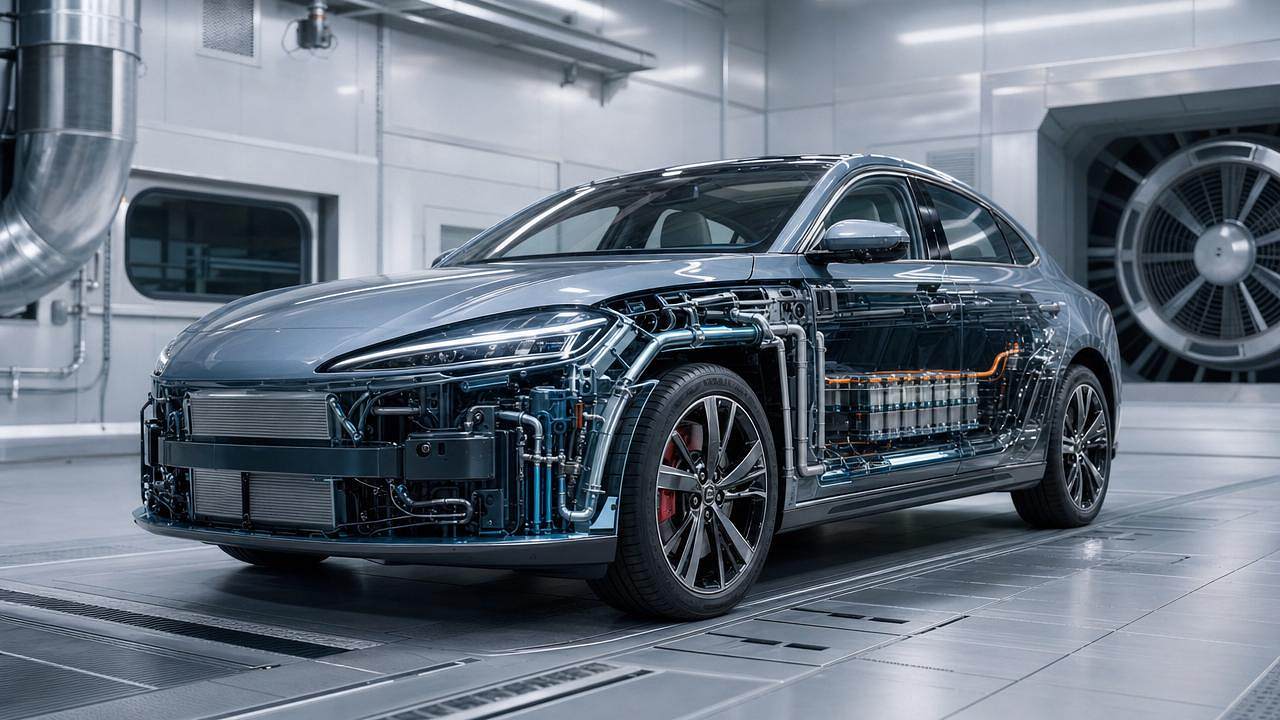
As EV platforms scale across global markets, thermal management models are moving from component-level calculations to system-wide validation tools.
They now influence range, safety, lighting performance, exterior packaging, fast-charging stability, and low-drag design efficiency.
The key question is no longer whether thermal management models can predict heat behavior.
It is whether they remain accurate under compact architectures, smart optical integration, heavy battery loads, and high-volume NEV deployment.
Are thermal management models mature enough for EV scaling?
Thermal management models are more mature than they were five years ago.
They can simulate battery packs, motors, power electronics, LED headlight assemblies, cabin comfort systems, and underbody airflow.
However, EV scaling exposes problems that isolated component models often miss.
A battery model may pass validation while the full vehicle still struggles during fast charging in hot climates.
A headlight heat sink may look stable in the lab, then degrade inside a sealed, low-drag front fascia.
This is why thermal management models must evolve into system-level decision tools.
They need to connect coolant loops, aerodynamic resistance, sensor reliability, lighting output, tire loading, and energy consumption.
For EV scaling, accuracy is only one requirement.
Repeatability, data quality, boundary condition control, and manufacturing variation are equally important.
What do thermal management models actually need to predict?
In modern EVs, heat is not limited to the battery pack.
It moves through drivetrain components, optical modules, electronic controllers, brakes, tires, cabin systems, and exterior structures.
Effective thermal management models should predict temperature rise, heat transfer routes, cooling demand, power derating, and long-term degradation.
They should also show how design choices affect efficiency.
A closed aerodynamic wheel may reduce drag but restrict brake airflow.
A narrow lamp assembly may improve styling but increase LED junction temperature.
A quieter tire may generate different rolling heat under heavy EV curb weight.
Thermal management models must capture these trade-offs before physical prototypes become expensive.
Core prediction areas
- Battery temperature uniformity during fast charging and high-load driving.
- Power electronics derating under repeated acceleration cycles.
- LED headlight thermal stability under sealed exterior packaging.
- Brake and wheel airflow inside low-drag aluminum alloy wheel designs.
- Sensor switch reliability during heat, humidity, vibration, and contamination.
- Cabin and sunroof heat gain under solar radiation and electrochromic dimming.
Where do current thermal management models perform well?
Current thermal management models perform strongly in controlled simulations with clear inputs.
Battery pack cooling, coolant channel design, heat exchanger sizing, and steady-state airflow are common strengths.
They also support early-stage exterior design decisions.
For example, CFD simulations can compare airflow through wheel openings before tooling begins.
Optical teams can use thermal management models to test LED output stability across different heat sink layouts.
This matters because smart headlights are no longer simple illumination devices.
Matrix projection, anti-glare masking, and high-pixel optical engines raise heat density inside compact housings.
For exterior components, models are also useful when balancing aesthetics and energy efficiency.
They reveal whether a low-drag surface creates hidden thermal risk near electronics, brakes, or sensors.
Practical strengths today
- They reduce prototype cycles by screening weak designs early.
- They support fast comparison between airflow, cooling, and packaging options.
- They improve communication between optics, body, tire, and thermal engineering teams.
- They help validate compliance-sensitive functions such as lighting stability and visibility.
What gaps appear when EV production volume increases?
EV scaling introduces variability that laboratory testing may not fully represent.
Thermal management models can become less reliable when assumptions are too clean.
Real vehicles face dust, tire wear, uneven road surfaces, component aging, blocked airflow, and regional climate extremes.
Small deviations become important when millions of vehicles share one platform architecture.
Another gap is cross-domain coupling.
Battery engineers may optimize cooling power, while exterior designers optimize drag reduction.
If both decisions are modeled separately, the final vehicle may consume more energy than expected.
Thermal management models also struggle when material data lacks consistency.
Aluminum alloys, rubber compounds, optical plastics, coatings, and adhesives all behave differently under heat cycles.
Without updated material databases, model confidence weakens.
Common blind spots
- Overlooking thermal effects inside sealed exterior lighting modules.
- Treating tire heat and rolling resistance as secondary variables.
- Ignoring airflow changes caused by decorative wheel covers or aerodynamic trims.
- Using static climate assumptions for vehicles sold across multiple regions.
- Separating fast-charging simulation from real driving thermal recovery.
How should thermal management models handle exterior and vision systems?
Exterior and vision systems are becoming thermally active design zones.
LED headlight assemblies, sensor switches, sunroof glass, wheels, brakes, and tires all affect vehicle heat balance.
Thermal management models should include these systems earlier in the development process.
A high-performance headlight may require stable temperature to protect luminous flux and optical precision.
A sensor switch may need protection against false triggering caused by condensation or temperature drift.
A panoramic sunroof may increase cabin cooling load unless glass, shading, and dimming systems are properly modeled.
Aluminum alloy wheels also deserve more detailed treatment.
They influence brake cooling, aerodynamic drag, unsprung mass, and local airflow around tires.
For high-performance tires, models should connect rolling resistance, heat generation, grip, noise, and load durability.
Why AEVS-focused evaluation matters
AEVS views thermal management models through vehicle aesthetics and dynamic driving perception.
This perspective connects aerodynamic surfaces, optical matrix algorithms, ground contact systems, and NEV safety requirements.
The result is a more complete view of exterior efficiency, not only a narrow heat map.
How can teams judge whether a model is ready?
A ready model must be validated against measured data, not only simulation logic.
It should perform across operating extremes, including high ambient temperature, cold starts, fast charging, and sustained highway speeds.
Thermal management models should also support decisions, not just generate colorful plots.
If a model cannot guide design trade-offs, its business value is limited.
Readiness also depends on integration.
The model should exchange data with aerodynamics, lighting, structural, battery, tire, and control-system simulations.
This creates a realistic system picture.
What mistakes weaken thermal management models?
The first mistake is modeling ideal conditions while selling vehicles into non-ideal markets.
Urban congestion, extreme heat, steep roads, snow, dust, and high-speed driving change thermal behavior dramatically.
The second mistake is delaying exterior and vision input until late validation.
At that stage, optical packaging, wheel design, and sensor placement may already be difficult to change.
The third mistake is ignoring controls.
Cooling pumps, active shutters, lighting dimming, defogging logic, and charging strategy all affect heat distribution.
Thermal management models should be linked with control algorithms whenever possible.
The fourth mistake is treating cost as separate from thermal design.
A cheaper material may increase warranty risk if its thermal aging behavior is poorly understood.
Risk reminders
- Do not rely on one operating point for global EV deployment.
- Do not separate lighting performance from heat dissipation analysis.
- Do not assume low-drag designs automatically improve total energy use.
- Do not ignore tire heat under heavy battery-electric vehicle loads.
- Do not validate models only after tooling decisions are locked.
What improvements are needed before mass NEV deployment?
Thermal management models need richer field data from real EV use.
Fleet telemetry can reveal charging habits, climate exposure, cooling loads, and component aging patterns.
They also need better coupling with digital twins and hardware-in-the-loop testing.
This allows models to evolve as components, software, and operating conditions change.
Material databases must improve as well.
Thermal conductivity, emissivity, fatigue behavior, and coating durability should reflect production-grade materials.
For smart exterior systems, optical and thermal simulation should be linked more tightly.
LED output, lens distortion, condensation risk, and housing temperature should be evaluated together.
For wheels and tires, CFD, structural stress, and thermal load models should share common assumptions.
FAQ: practical answers about thermal management models
Conclusion: ready, but not finished
Thermal management models are ready to support EV scaling in many areas.
They already improve battery cooling, optical stability, airflow design, and early engineering decisions.
Yet they are not finished tools.
High-volume NEV deployment requires stronger validation, better field data, and closer integration with exterior and vision systems.
The next step is practical and measurable.
Build thermal management models that connect aerodynamics, optics, tires, wheels, sensors, materials, and control logic from the earliest design phase.
That approach supports safer EV platforms, more efficient exterior architectures, and smarter high-performance mobility at global scale.