
Industry Portal
Related News
- 00
0000-00
ECE-Compliant Lighting for Commercial Vehicles: Approval and Installation Checks - 00
0000-00
Laser Adaptive Headlights: What to Check for Range and Glare Control - 00
0000-00
Precision Forging for Aluminum Wheels: Alloy Selection and Fatigue Performance - 00
0000-00
NEV Industry Standards in China: Which Battery Safety Tests Are Required? - 00
0000-00
Automotive Exterior Lighting Systems: Lamp Types, Functions, and Placement
Why vehicle lightweighting matters more as EV range targets rise
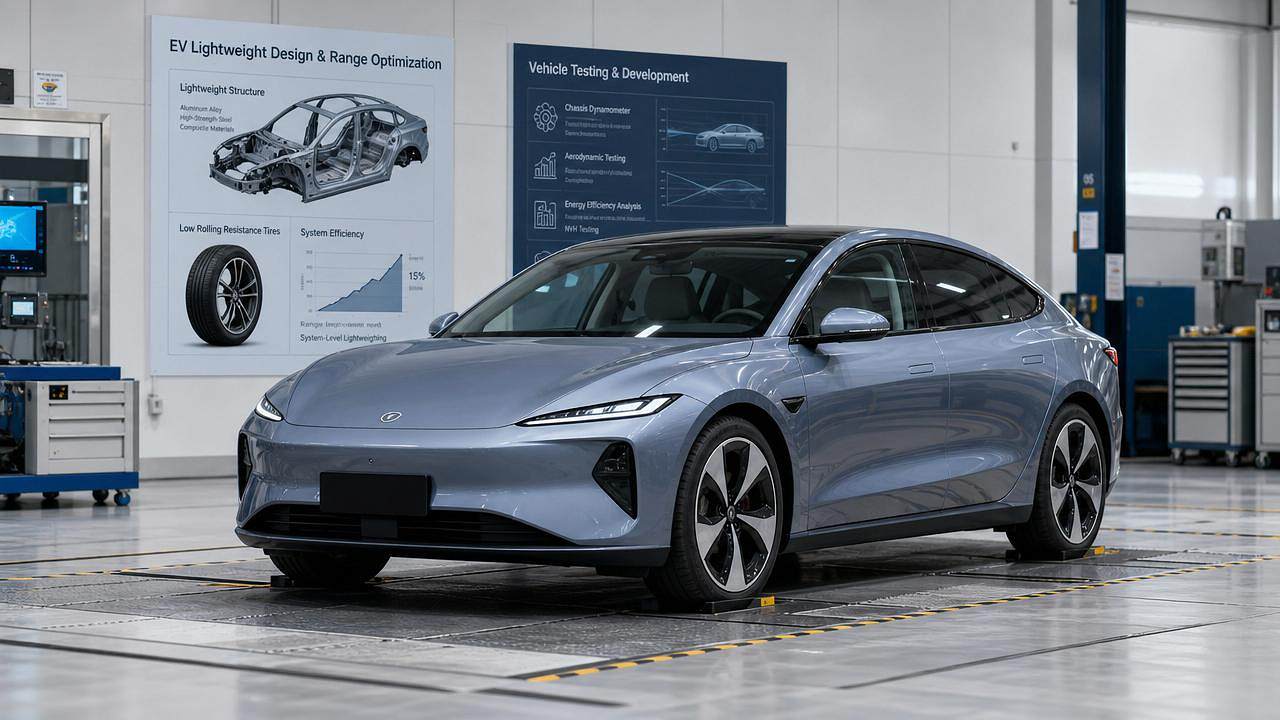
As EV range targets climb, vehicle lightweighting is no longer a secondary engineering choice. It now shapes efficiency, cost, safety, and brand competitiveness across the automotive value chain.
Every added kilogram affects battery demand, aerodynamic efficiency, braking behavior, and tire wear. That is why vehicle lightweighting now matters more as electric vehicles chase longer range and stricter performance expectations.
For exterior systems, wheels, tires, lighting, and sensing hardware, weight reduction must work with durability and intelligence. The most competitive EV programs now treat mass optimization as a system decision, not a single-part upgrade.
Range expectations are changing the rules for vehicle lightweighting
A few years ago, range gains mostly depended on larger batteries. That strategy is becoming harder to justify because batteries increase cost, curb weight, charging time, and raw material exposure.
As a result, vehicle lightweighting has moved from an efficiency tactic to a core development principle. It helps EVs extend range without endlessly increasing pack size.
This shift is especially visible in exterior and vision systems. Lightweight sunroof structures, aluminum wheels, lower-resistance tires, compact LED modules, and integrated sensor switches all influence total vehicle mass.
The market also expects EVs to be quieter, safer, and more connected. That means new technologies are being added, yet vehicle lightweighting must offset their mass impact.
The strongest trend signals point to system-level mass reduction
The latest industry signals show that lightweight design is spreading beyond body panels. It now reaches contact systems, optical hardware, thermal structures, and electronically controlled exterior components.
- Battery cost pressure is pushing engineers to seek range from mass savings.
- Heavier EV platforms are increasing demand for lighter wheels and stronger tires.
- Advanced lighting and sensing systems must become more compact and efficient.
- Global compliance and safety standards require lighter parts without weaker performance.
- Aerodynamic refinement now works closely with vehicle lightweighting strategies.
This trend is important because EV performance is highly sensitive to total mass. Small reductions across many subsystems often deliver more realistic gains than one dramatic redesign.
Why vehicle lightweighting is accelerating now
Several forces are making vehicle lightweighting more urgent. These forces are technical, commercial, and regulatory at the same time.
In practice, vehicle lightweighting is no longer about shaving metal alone. It now involves simulation, packaging efficiency, component integration, and life-cycle thinking.
Exterior and vision systems are becoming high-impact lightweighting zones
Vehicle lightweighting creates the greatest value when applied to visible, high-function components. These systems influence drag, handling, thermal behavior, cabin comfort, and electrical efficiency.
Electric sunroof systems
Panoramic roofs enhance cabin appeal, yet they can raise mass high on the vehicle. Lightweight structures and electrochromic technologies help reduce the penalty while preserving comfort and NVH performance.
Aluminum alloy wheels
Few areas show the value of vehicle lightweighting more clearly than wheels. Lower unsprung mass improves energy efficiency, ride response, and braking control.
Low-pressure casting and precision forging also support aerodynamic wheel designs. That matters because EV range depends on both reduced weight and reduced drag.
High-performance tires
EV tires face higher torque and heavier curb weight. Vehicle lightweighting reduces these stresses, helping extend tire life and improve rolling resistance without sacrificing grip or noise control.
LED headlight assemblies and sensor switches
Smart lighting and perception systems are essential to modern mobility. Their housings, heat management, optics, and switch networks must become lighter, smaller, and more integrated.
This is where vehicle lightweighting supports both range and intelligence. A compact sensor or matrix module saves mass while enabling advanced safety functions.
The business impact reaches far beyond engineering
The effects of vehicle lightweighting are not limited to product design. They reach sourcing strategy, compliance planning, aftermarket demand, and platform profitability.
- Lower mass can reduce battery capacity needs and total system cost.
- Lighter wheels and tires can improve efficiency ratings and road feel.
- Integrated optical systems can reduce packaging complexity.
- Material-efficient designs can better absorb aluminum and rubber price volatility.
- Premium aftermarket products often gain value through visible lightweight performance benefits.
This is why intelligence platforms such as AEVS have growing relevance. Tracking standards, raw material trends, aerodynamic data, and component evolution helps convert vehicle lightweighting from theory into measurable business advantage.
What deserves the closest attention now
The next stage of vehicle lightweighting will reward disciplined decisions. Progress depends on balancing mass reduction with durability, energy efficiency, compliance, and user experience.
- Focus on subsystem interaction, not isolated part reduction.
- Prioritize unsprung and high-mounted mass for stronger vehicle response gains.
- Pair lightweight materials with CFD, thermal, and structural simulation.
- Assess rolling resistance, drag, and optical packaging together.
- Monitor ECE, DOT, and related compliance changes affecting exterior systems.
- Use aftermarket demand signals to identify premium lightweight product opportunities.
A practical response framework is taking shape
Vehicle lightweighting becomes more effective when guided by a staged response. The goal is to create repeatable gains across design, validation, and market positioning.
This framework reflects a broader market reality. Vehicle lightweighting now works best when supported by intelligence, testing, and cross-component coordination.
The next competitive edge will come from informed lightweight decisions
As EV range targets rise, vehicle lightweighting becomes one of the clearest paths to sustainable differentiation. It improves efficiency, supports safety, and limits the hidden costs of heavier electrified platforms.
The strongest results will come from treating lightweight exterior components, wheels, tires, headlights, and sensing systems as one connected performance ecosystem.
A practical next step is to review where mass, drag, heat, and perception hardware intersect. That is often where vehicle lightweighting delivers the fastest and most defensible return.
For ongoing insight into lightweight exterior systems, optical technologies, tire dynamics, wheel aerodynamics, and compliance signals, AEVS provides a strategic intelligence perspective built for the evolving EV era.