
Industry Portal
Related News
- 00
0000-00
Automotive Product Comparison Charts: How Buyers Can Compare Specs, Cost, and Fit - 00
0000-00
How to Evaluate a Low-Pressure Casting Manufacturer for Automotive Quality Parts - 00
0000-00
Vehicle Lightweighting: Which Materials Cut EV Mass Without Compromising Safety? - 00
0000-00
Matrix Projection Price Guide: Cost Drivers for Automotive Lighting Buyers - 00
0000-00
How to Evaluate Auto Sensor Switches for Passenger Cars: Accuracy, Response, Reliability
How Raw Material Cost Fluctuations Are Reshaping Composite Sourcing Strategies
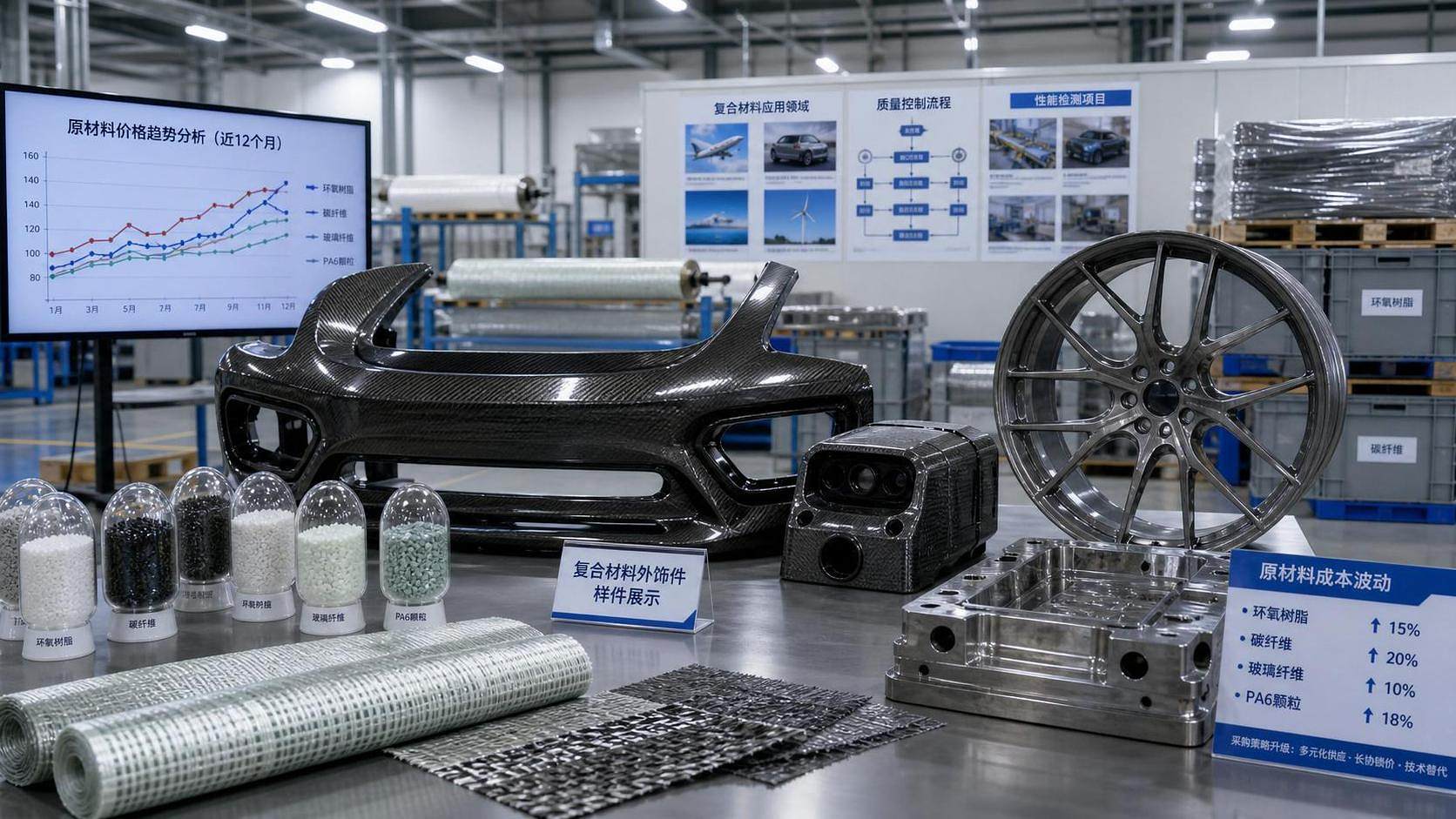
Raw material cost volatility is now changing composite decisions earlier in the cycle
Raw material cost fluctuations are no longer a late-stage budgeting issue. They now influence material selection, design validation, supplier qualification, and launch timing much earlier.
That shift is especially visible where composites support lightweighting, impact control, thermal stability, and surface precision across mobility-related systems.
In automotive exterior and vision applications, cost pressure is tied directly to aerodynamic targets, safety compliance, and brand-level finish quality.
For AEVS, this matters because the same market signals shaping aluminum wheels, advanced tires, sensor housings, and lighting modules are also reshaping composite sourcing strategies.
The practical question is no longer whether prices move. It is how raw material cost fluctuations composites planning can absorb without damaging performance or resilience.
Why this signal has become harder to ignore
Recent volatility has come from several directions at once. Resin feedstocks, energy, freight, specialty fillers, and regional policy shifts now move on different clocks.
That creates uneven pricing inside the same composite family. A part may look stable on paper, while one ingredient changes the margin profile completely.
More noticeably, the market now treats availability and specification risk as part of cost. Short supply of certified grades can be as disruptive as a price spike.
For sectors tied to NEV growth, these pressures are amplified by faster product refresh cycles and higher expectations for efficiency, weight reduction, and durability.
- Petrochemical exposure keeps resin prices sensitive to energy and geopolitical shocks.
- Carbon fiber, glass fiber, and additives face regional concentration risk.
- Tighter environmental rules are changing approved material portfolios.
- Freight variability still affects landed cost more than many models assumed.
Taken together, raw material cost fluctuations composites teams once treated as cyclical are now becoming structural planning inputs.
The impact is spreading beyond procurement into engineering and program risk
A few years ago, sourcing could often buffer cost movement through negotiation. That buffer is thinner when material volatility affects processing behavior and validation timing.
This is important in exterior and optical-adjacent components. Surface consistency, dimensional stability, vibration behavior, and thermal response cannot be traded away lightly.
For example, a housing used near smart headlight systems may require precise heat management and low deformation under operating cycles.
A lower-cost substitute may pass basic cost review, yet fail to protect optical alignment or long-term weathering performance.
The same logic applies to aerodynamic exterior trims, sensor covers, structural inserts, and composite-enhanced wheel or underbody components.
The result is a broader management problem. Cost fluctuation is now linked with engineering credibility and supply continuity, not just quarterly price variance.
What is driving the new sourcing playbook
The most effective companies are not responding with a single tactic. They are redesigning sourcing logic around flexibility, qualification depth, and better cost intelligence.
One clear change is the move away from single-metric supplier comparisons. Lowest quoted price is less useful when formulations, logistics exposure, and technical support differ sharply.
Another change is earlier collaboration between material experts and program planning. That matters in markets where lightweighting and decarbonization targets are both rising.
AEVS has tracked similar shifts across its focus areas. Aluminum, rubber, optics, and composite-related inputs increasingly require cross-functional interpretation, not isolated price monitoring.
- Dual-source qualification is expanding, even for technically sensitive components.
- Index-linked contracts are replacing fixed assumptions in unstable categories.
- Regional balancing is used to reduce freight and policy exposure.
- Design teams are requesting approved substitution windows earlier.
These moves do not remove raw material cost fluctuations composites buyers face. They reduce the chance that one market shock becomes a program-wide failure.
Demand-side expectations are also changing the economics
The market is not asking only for cheaper parts. It is asking for lighter, quieter, smarter, and more visually refined systems at the same time.
That raises the value of composites in many applications, even when material costs are unstable. In some cases, the alternative is a heavier or less integrated design.
Electric sunroof systems need tight control of weight, sealing, and NVH. Sensor switches and smart lighting assemblies need housings that protect precision under real operating stress.
Wheels and tire-adjacent systems face their own pressure. Aerodynamics, brake airflow, rolling resistance, and curb-weight demands all sharpen the need for smarter material choices.
This means raw material cost fluctuations composites decisions cannot be separated from product positioning. Material strategy now influences how premium, efficient, and durable a platform can remain.
Where the strongest response is taking shape
The strongest performers are building decision models that combine cost visibility with application-level performance thresholds.
In practice, that means not every part gets the same sourcing response. Some categories can accept wider substitution. Others require highly protected material pathways.
Three signals deserve closer watching
- Formulation sensitivity: small ingredient changes can alter paintability, thermal behavior, or optical stability.
- Validation bottlenecks: approved alternatives may exist, but test timing can delay real switching options.
- Aftermarket divergence: premium replacement demand may justify different material economics than OE programs.
This last point is easy to underestimate. AEVS has noted that high-end replacement wheels and performance tire channels already show stronger acceptance of technical value over lowest cost.
That creates room for more selective composite sourcing, especially where durability, silence, finish, or aerodynamic contribution can be measured clearly.
The next phase will favor visibility, optionality, and tighter technical discipline
The next phase of raw material cost fluctuations composites strategy will likely be less about reacting faster and more about preparing earlier.
Better organizations are already mapping which materials are cost-critical, which are performance-critical, and which are both.
That distinction matters. A cosmetic trim part and a sensor-adjacent structural element should not share the same sourcing logic.
A useful next step is to build a staged review model:
- Track feedstock and specialty additive exposure separately.
- Review where approved alternatives already exist, and where they do not.
- Recheck landed-cost assumptions against regional supply and compliance changes.
- Tie sourcing scenarios to real performance limits, not generic savings targets.
Raw material cost fluctuations will remain part of the market. The more decisive shift is that composites sourcing has become a strategic capability, not a back-end negotiation task.
For businesses tracking vehicle exteriors, optical systems, and mobility efficiency, the immediate advantage will come from connecting market signals with engineering reality before disruption forces the decision.