
Industry Portal
Related News
- 00
0000-00
ECE-Compliant Lighting for Commercial Vehicles: Approval and Installation Checks - 00
0000-00
Laser Adaptive Headlights: What to Check for Range and Glare Control - 00
0000-00
Precision Forging for Aluminum Wheels: Alloy Selection and Fatigue Performance - 00
0000-00
NEV Industry Standards in China: Which Battery Safety Tests Are Required? - 00
0000-00
Automotive Exterior Lighting Systems: Lamp Types, Functions, and Placement
Why vehicle lightweighting matters more as EV platforms evolve
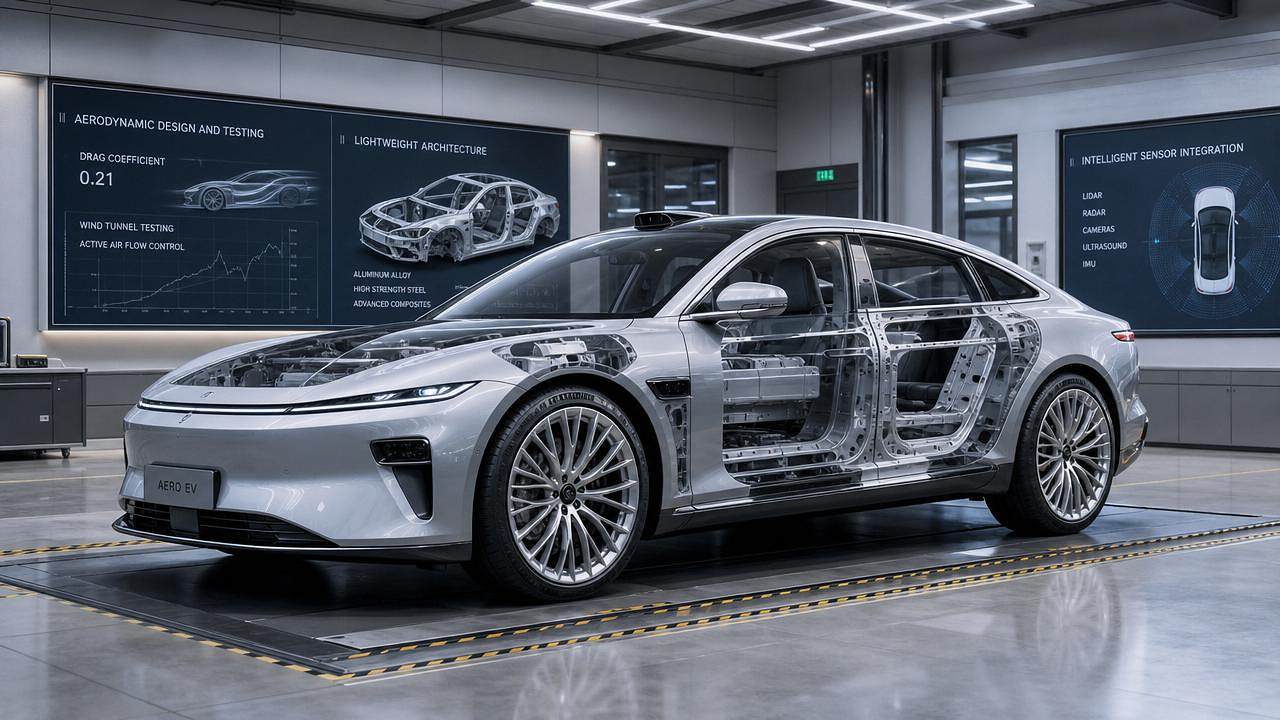
As EV architectures advance, vehicle lightweighting is no longer just an efficiency tactic. It now shapes range, safety, thermal balance, durability, exterior design freedom, and overall driving refinement.
Across the wider mobility ecosystem, vehicle lightweighting affects materials, wheels, tires, lighting modules, sensor packaging, and body integration. Its strategic importance rises as EV platforms become heavier, smarter, and more software-defined.
For the Automotive Exterior & Vision Systems landscape, this shift is especially relevant. Exterior components increasingly carry aerodynamic, structural, sensing, and aesthetic responsibilities at the same time.
Vehicle lightweighting in the EV platform context
Vehicle lightweighting means reducing mass without compromising strength, compliance, safety, or functionality. In EVs, that challenge is harder because battery packs add substantial weight and influence packaging decisions.
Earlier lightweight programs often focused on fuel economy. Today, vehicle lightweighting supports battery range, acceleration consistency, brake performance, suspension tuning, and the durability of smart exterior systems.
The most effective approach is system-level optimization. A lighter wheel, better tire construction, compact headlamp assembly, and efficient sensor housing can together outperform a single large material substitution.
This explains why vehicle lightweighting now matters more as EV platforms evolve. Every kilogram saved can improve multiple engineering targets rather than only one efficiency metric.
Why mass reduction is more complex in modern EVs
- Battery systems increase curb weight and alter load distribution.
- Instant torque creates higher stress on tires, wheels, and contact patches.
- ADAS and lighting systems add sensors, harnesses, and thermal management needs.
- Aerodynamic targets require tightly integrated exterior components.
- Crash performance and global regulations limit simplistic mass reduction.
Industry signals behind the growing importance of vehicle lightweighting
Several market and engineering trends make vehicle lightweighting a central issue. These signals affect product strategy, sourcing priorities, and platform architecture decisions across the automotive value chain.
These factors move vehicle lightweighting from a component question to a platform discipline. Success depends on balancing energy efficiency, compliance, cost, manufacturability, and customer-perceived quality.
How exterior and vision systems influence lightweight outcomes
Exterior and vision systems are often underestimated in EV mass strategies. Yet they affect aerodynamic drag, unsprung mass, power consumption, thermal loads, and the integration of safety technologies.
Aluminum alloy wheels and unsprung mass
Lightweight wheel design can produce outsized benefits. Reducing unsprung mass improves steering response, ride comfort, suspension control, and energy efficiency under real-world driving conditions.
Low-pressure casting and precision forging support vehicle lightweighting while preserving impact resistance. For EVs, wheel airflow and brake cooling also influence thermal stability and regenerative braking consistency.
High-performance tires as energy and load carriers
Tires are the only road contact point. In EVs, they must manage heavy loads, immediate torque, low rolling resistance, noise targets, and wear performance at once.
Vehicle lightweighting reduces stress on tire structures and can extend efficiency benefits. At the same time, tire construction itself must support the heavier baseline of electric platforms.
LED headlight assemblies and optical packaging
Modern headlights are no longer simple lamps. They include optics, heat sinks, control electronics, projection modules, and precise anti-glare functions.
Smart optical systems can support vehicle lightweighting when designers optimize housing materials, cooling paths, and structural interfaces. Compact designs also improve frontal packaging and aerodynamic freedom.
Sensor switches and body network integration
Auto sensor switches for lighting, wipers, and blind-spot support add intelligence. However, every sensor, bracket, connector, and protective cover contributes to weight and packaging density.
Vehicle lightweighting in this area depends on multifunctional integration. Fewer parts, smarter placement, and better enclosure design can reduce mass while improving durability and system reliability.
Business value of vehicle lightweighting across EV programs
The business case for vehicle lightweighting is broader than saving energy. It touches platform economics, product differentiation, warranty risk, and speed of engineering iteration.
- Improves range without relying only on larger battery packs.
- Supports better acceleration, braking, and handling feel.
- Helps control tire wear and suspension loads.
- Creates more design flexibility for aerodynamic exteriors.
- Can reduce material use and lifecycle carbon intensity.
- Strengthens premium perception through refinement and efficiency.
For intelligence platforms like AEVS, the value lies in connecting these technical effects. Vehicle lightweighting is most useful when analyzed through materials, optics, dynamics, regulations, and aftermarket demand together.
Typical lightweight pathways in evolving EV architectures
Not every EV program uses the same lightweight route. The right method depends on vehicle size, performance targets, regional regulations, and the role of exterior systems.
Programs with strong results usually combine several pathways. Vehicle lightweighting becomes more resilient when gains come from architecture, modules, and materials rather than one expensive intervention.
Practical considerations for implementation
A successful vehicle lightweighting strategy needs disciplined trade-off management. Weight reduction that harms thermal control, NVH, serviceability, or compliance can erase the original benefit.
Key points to evaluate
- Measure system impact, not only component mass saved.
- Prioritize unsprung and rotating mass where possible.
- Check thermal effects in headlights, brakes, and battery-adjacent zones.
- Model aerodynamic changes with CFD and real usage conditions.
- Validate global standards such as ECE and DOT requirements.
- Track raw material volatility before locking sourcing strategies.
- Consider aftermarket service, repair cost, and replacement cycles.
For exterior and vision systems, cross-functional review is essential. Optical engineers, wheel specialists, tire experts, and body architects must align targets early rather than fixing conflicts late.
Strategic next steps for future-ready EV development
As EV platforms evolve, vehicle lightweighting should be treated as a continuous design discipline. It is most effective when integrated with aerodynamics, perception systems, thermal logic, and lifecycle economics.
A practical next step is to map mass contributors across exterior modules, wheels, tires, lighting, and sensor systems. Then compare those findings against range targets, compliance needs, and cost boundaries.
The AEVS perspective is especially useful here. By linking aerodynamic parameters, optical intelligence, ground contact performance, and material trends, vehicle lightweighting becomes a clearer source of competitive advantage.
In the coming EV cycle, the winners will not simply remove weight. They will redesign how lightweight components, smart exteriors, and vision systems work together to improve safety, efficiency, and driving perception.