
Industry Portal
Related News
- 00
0000-00
Selecting NEV Exterior Components for Aerodynamics, Durability, and EV Integration - 00
0000-00
How Tire Dynamics Shape Braking Distance, Stability, and ABS Performance - 00
0000-00
How to Specify Automotive Trim Parts for Durable Interior and Exterior Finishes - 00
0000-00
Choosing Joining Technologies for Lightweight Multi-Material Vehicle Structures - 00
0000-00
Vehicle Lightweighting for Automotive Design: Balancing Mass, Safety, and Cost
NEV industry shifts that are reshaping supplier priorities
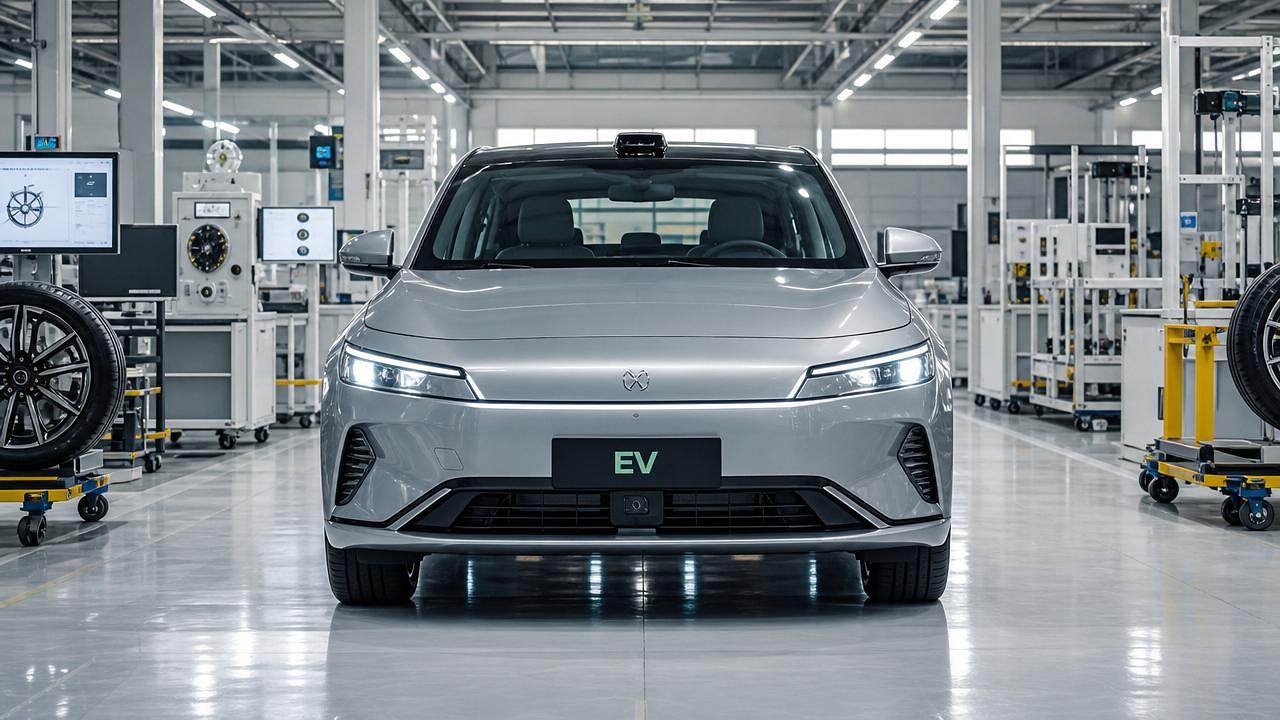
The NEV industry is rapidly redefining what suppliers must prioritize, from lightweight exterior systems and high-performance tires to intelligent lighting and sensing technologies. For business evaluators, understanding these shifts is essential to identifying resilient partners, anticipating cost and compliance pressures, and capturing value in a market where efficiency, safety, and smart perception increasingly determine competitive advantage.
For procurement teams, investment reviewers, and supplier qualification managers, this is no longer a narrow component discussion. In the NEV industry, exterior and vision systems now influence range, cabin comfort, thermal balance, safety logic, software integration, and aftermarket margin at the same time.
That shift matters because supplier assessment cycles are getting shorter, while technical validation is getting deeper. A business evaluator may still compare unit cost, lead time, and warranty exposure, but now must also judge aerodynamic performance, optical precision, sensor compatibility, and raw material risk across a 12–24 month sourcing horizon.
Against this backdrop, AEVS provides a practical lens for reading the market. Its focus on electric sunroof systems, aluminum alloy wheels, high-performance tires, LED headlight assemblies, and auto sensor switches reflects the exact product groups where the NEV industry is reshaping supplier priorities most aggressively.
Why supplier priorities are changing across the NEV industry
The first driver is energy efficiency. In internal combustion platforms, a marginal weight increase or drag penalty could often be tolerated. In the NEV industry, even a small change in wheel mass, tire rolling resistance, or exterior airflow can affect range perception, charging frequency, and platform competitiveness.
The second driver is system coupling. A headlamp is no longer just a lighting part, and a sensor switch is no longer a standalone electrical item. Exterior modules increasingly sit inside a broader software, thermal, and regulatory architecture. This means supplier capability must be measured at the subsystem level, not only by part-level conformity.
The third driver is global compliance complexity. As NEV exports expand, suppliers must support multi-market homologation paths, often across ECE and DOT frameworks, while also handling changing local expectations for visibility, road interaction, and intelligent assist functions. A delay of 4–8 weeks in compliance correction can disrupt launch timing and inventory planning.
Four structural shifts business evaluators should track
- Lightweighting has moved from optional optimization to a core sourcing criterion, especially for wheels, sunroof assemblies, and structural exterior modules.
- Road-contact performance now combines grip, rolling resistance, noise, and torque endurance rather than relying on a single performance metric.
- Lighting systems are becoming perception platforms, requiring thermal management, optical accuracy, electronics reliability, and software adaptability.
- Sensor-enabled body functions must integrate with vehicle safety logic, meaning tolerance control, detection accuracy, and environmental durability are under closer review.
What this means in practical sourcing terms
A supplier that was acceptable 3 years ago on price and on-time delivery alone may no longer pass evaluation. In the current NEV industry, buyers increasingly ask for 3-layer validation: manufacturing consistency, engineering collaboration, and regulatory readiness. Without all three, even a cost-competitive quote can become a program risk.
This is especially visible in categories where performance trade-offs are tight. For example, low-drag wheel design must still manage brake cooling airflow, while quiet EV tires must withstand heavy curb weight and instant torque. Those are not brochure-level claims; they are engineering and commercial issues that affect warranty, customer satisfaction, and brand perception.
The table below highlights how typical sourcing priorities have evolved in the NEV industry across major exterior and vision-related categories.
The key conclusion is that supplier value in the NEV industry is becoming multidimensional. Price still matters, but performance per kilogram, performance per watt, and performance per software interaction are now equally relevant during evaluation.
The five product domains where supplier capability now decides market access
Business evaluators can simplify a complex market by focusing on five product domains that are increasingly decisive in the NEV industry. These areas align with both vehicle differentiation and risk exposure, which is why they deserve deeper review during supplier shortlisting.
Electric sunroof systems: comfort, mass, and NVH under one roof
Electric sunroof systems are becoming strategic rather than decorative. In EV platforms, added roof mass affects the center of gravity, while poor sealing or acoustic control is more noticeable because the cabin is quieter. Evaluators should examine module weight, leakage performance, cycle life, and NVH behavior over temperature ranges such as -30°C to 80°C.
Electrochromic dimming and solar management features also matter. If a supplier can reduce heat gain and glare without adding excessive complexity, the OEM may improve perceived cabin quality while reducing HVAC load during high-temperature operation.
Aluminum alloy wheels: lightweighting without sacrificing structural confidence
Wheel suppliers in the NEV industry face a demanding equation. Buyers want low weight, low drag, and strong impact resistance in a single package. That is why production route matters. Low-pressure casting may support scale and cost control, while forged solutions often serve premium or performance-oriented programs where weight savings of several kilograms per vehicle can justify the higher component price.
Reviewers should also ask whether the supplier can provide CFD-backed airflow analysis, fatigue test data, and finish durability information. Cosmetic quality alone is not enough when wheel geometry influences brake cooling and efficiency.
High-performance tires: the only road contact point becomes a bigger strategic lever
In the NEV industry, tires carry more load, manage stronger initial torque, and expose cabin noise more clearly than in many conventional vehicles. That raises the value of compound design, tread pattern optimization, and self-sealing technology. A buyer should compare load index suitability, rolling resistance class, noise characteristics, and replacement market opportunity.
Typical evaluation windows include dry handling, wet braking, abrasion stability, and high-speed endurance. For commercial discussions, it is also useful to assess whether the supplier can support both OEM fitment and high-margin aftermarket replacement programs within 6–12 months after vehicle launch.
LED headlight assemblies: optics, software logic, and thermal control converge
Lighting has become one of the most visible examples of convergence in the NEV industry. Matrix LED systems, adaptive beam control, and projection interaction all require stable thermal management and accurate optical calibration. A reviewer should not only ask how bright the lamp is, but also how the supplier manages heat, moisture, control latency, and anti-glare precision.
Thermal control is especially important because output stability can drop if heat is poorly dissipated. A strong supplier should explain housing material choice, heat sink strategy, sealing approach, and expected luminous consistency over repeated operating cycles.
Auto sensor switches: the invisible layer behind safer exterior behavior
Sensor switches often look minor on a bill of materials, yet they carry system-level consequences. Rain sensing, blind-spot triggering, and automatic lighting activation all rely on dependable detection under vibration, dust, road spray, and changing ambient light. False positives and false negatives both create cost risk.
For this reason, evaluators should request information on sensing range, signal stability, enclosure durability, and communication compatibility. In many programs, the real cost difference appears later through calibration time, field failure rates, or software adjustment effort rather than initial purchase price.
How business evaluators should assess suppliers in a more technical NEV market
As the NEV industry matures, supplier evaluation requires more than a standard RFQ comparison sheet. A practical review model should combine commercial, engineering, and operational criteria, with enough depth to reveal hidden risk before nomination.
A six-point evaluation framework
- Technical fit: Does the supplier meet the target performance window, such as weight, noise, drag, or sensing response?
- Manufacturing maturity: Are process capability, tooling control, and defect containment methods documented and repeatable?
- Compliance readiness: Can the supplier support ECE, DOT, and relevant regional requirements without late-stage redesign?
- Raw material resilience: How exposed is the supplier to aluminum, rubber, resin, or electronic component volatility?
- Launch support: Can the supplier sustain PPAP timing, validation builds, and engineering changes within a 6–16 week program window?
- Aftermarket potential: Does the product create follow-on revenue in premium replacement, customization, or upgrade channels?
Why this framework works
It reflects the reality that a supplier in the NEV industry is judged not only by factory output but by its ability to support a moving technical target. A business evaluator who scores all six areas will usually identify weak points earlier than one relying only on price, capacity, and sample approval.
The following table translates that framework into practical checks for sourcing and due diligence teams.
The table shows that good supplier selection in the NEV industry is not about finding the cheapest compliant part. It is about choosing the partner least likely to create hidden downstream cost across validation, export, quality, and service.
Risk signals, common mistakes, and smarter sourcing actions
Even experienced buyers can misread supplier strength when the market moves quickly. In the NEV industry, three common mistakes appear repeatedly: overweighting sample quality, underweighting raw material risk, and failing to test cross-functional support capability.
Risk signals that deserve immediate attention
- A supplier can provide attractive prototypes but cannot explain process stability at scale.
- Quoted pricing lacks a clear mechanism for aluminum, rubber, or electronic component fluctuation over 90–180 days.
- Compliance answers are generic, with no region-specific pathway for target export markets.
- Engineering teams respond slowly to thermal, optical, or airflow questions that affect subsystem behavior.
- Warranty terms are broad, but failure analysis and root-cause workflow are vague or undocumented.
Practical sourcing actions for evaluators
To improve decision quality, procurement and commercial review teams should add structured checkpoints before nomination. One useful approach is a 3-stage review: first, commercial screening; second, technical and compliance verification; third, pilot supply and change-response testing. This sequence often reveals weaknesses that a static supplier presentation will not show.
It is also wise to separate must-have criteria from negotiable features. For example, for EV tires or intelligent lamps, validation robustness and regional compliance may be non-negotiable, while decorative finish options or packaging customization can be resolved later. That prioritization reduces decision noise.
AEVS is especially relevant here because the NEV industry no longer rewards fragmented market intelligence. Buyers need linked insight: raw material movement, design evolution, technical risk, regulatory direction, and aftermarket demand. A platform that connects those layers can shorten evaluation cycles and improve sourcing confidence.
Where value capture is likely to grow next
Looking ahead 12–36 months, value creation in the NEV industry is likely to intensify in premium replacement tires, custom forged wheels, smarter adaptive lighting, and sensor-linked exterior control systems. These are categories where technical differentiation can still command margin, especially when supported by credible engineering data.
For business evaluators, the implication is clear: treat supplier assessment as a strategic capability, not only an administrative function. The strongest partners will be those that combine manufacturing discipline with application insight, fast technical feedback, and a realistic understanding of global program risk.
The NEV industry is raising the standard for every supplier connected to vehicle exteriors, road contact, lighting, and sensing. Companies that evaluate partners through the lens of lightweighting, intelligent perception, compliance readiness, and lifecycle value will make better sourcing decisions and protect long-term profitability.
AEVS supports that process by turning scattered market changes into decision-grade intelligence across sunroof systems, alloy wheels, tires, LED headlight assemblies, and auto sensor switches. If you want a more precise view of supplier capability, market direction, or high-potential product segments, contact us now to get tailored insights, discuss product details, or explore more solutions for your NEV sourcing strategy.