
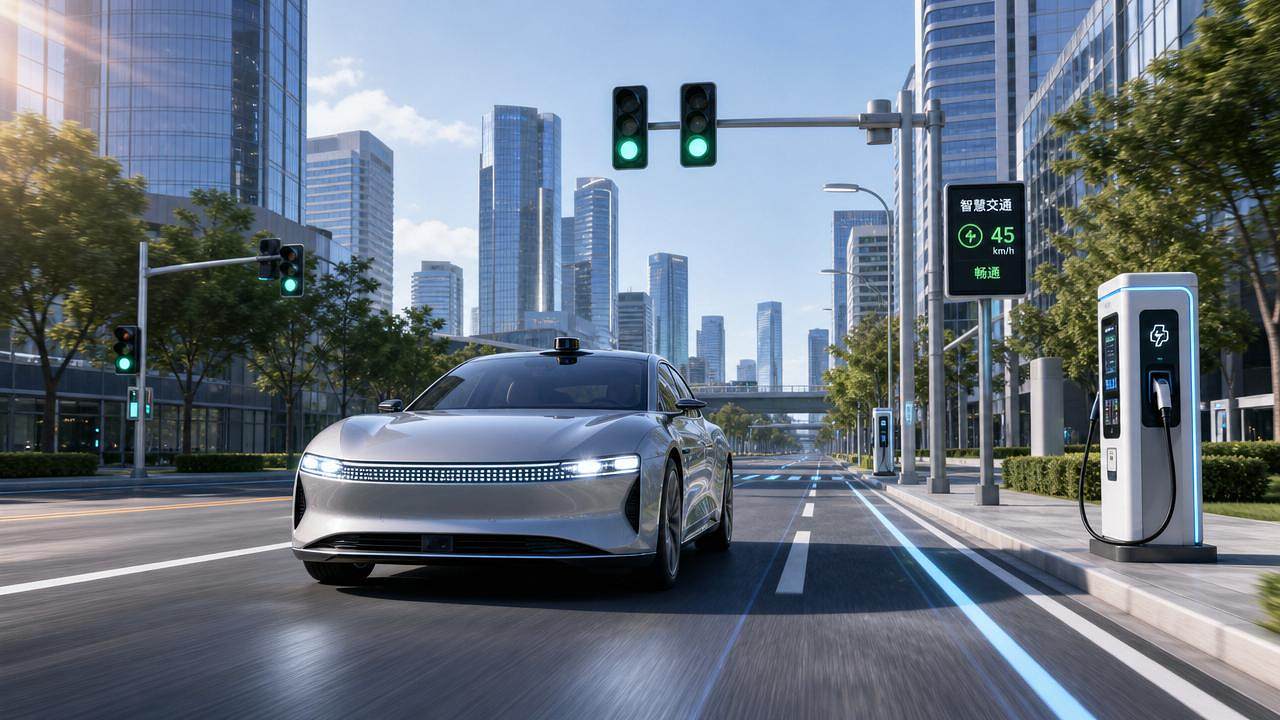
How smart mobility is reshaping daily urban travel
Smart mobility is transforming daily urban travel from a routine commute into a connected, data-driven experience.
As cities adopt electric vehicles, intelligent lighting, advanced sensors, and lightweight exterior systems, every journey becomes safer, more efficient, and more responsive.
For researchers tracking transportation futures, the key question is not whether smart mobility matters, but where its measurable urban value appears first.
What urban travelers actually gain from smart mobility
For daily users, smart mobility becomes valuable when it reduces uncertainty: fewer delays, safer crossings, clearer routes, quieter cabins, and easier multimodal transfers.
The most visible improvements are not futuristic features, but practical changes in how vehicles sense, decide, communicate, and adapt to city conditions.
Electric powertrains, connected infrastructure, and intelligent vehicle exteriors are converging to make urban movement less reactive and more predictive.
Instead of treating each trip as isolated, smart systems connect traffic flow, vehicle status, weather, road friction, lighting, and user preferences.
This shift matters because urban travel is shaped by repeated micro-decisions: when to brake, where to turn, how to merge, and when visibility changes.
Why smart mobility is more than a transport technology trend
Smart mobility is often discussed through apps, autonomous driving, or shared vehicles, but its deeper impact lies in system-level coordination.
Urban travel increasingly depends on vehicles that understand their surroundings and infrastructure that can exchange information with moving road users.
This includes traffic signals responding to congestion, vehicles adjusting lighting patterns, and sensor networks detecting hazards before drivers notice them.
For information researchers, the important distinction is between isolated digital features and mobility ecosystems that improve total journey performance.
A city does not become smarter because vehicles contain more software; it becomes smarter when data improves safety, efficiency, access, and energy use.
How electric vehicles change the foundation of urban movement
Electric vehicles are one of the strongest accelerators of smart mobility because they combine digital control, energy monitoring, and connected software architecture.
In dense cities, EVs reduce local emissions and noise, but they also create new design priorities for daily travel performance.
Battery weight changes braking demands, tire loads, wheel design, suspension tuning, and energy efficiency calculations across stop-and-go urban routes.
That is why lightweight exterior components, aerodynamic wheels, and low-rolling-resistance tires are no longer secondary styling decisions.
They directly influence range stability, ride comfort, energy consumption, and the user’s confidence during short but frequent city journeys.
Researchers should watch how EV exterior systems evolve from appearance-led components into performance interfaces that support decarbonized urban mobility.
Why vehicle exterior intelligence matters in everyday travel
Smart mobility is not only built inside the cabin or cloud; it is also built into the vehicle’s exterior sensing and interaction layer.
Headlights, tires, wheels, sunroofs, and sensor switches increasingly shape how vehicles perceive roads and respond to changing travel environments.
Matrix LED headlight assemblies, for example, can improve night visibility while reducing glare for pedestrians, cyclists, and oncoming traffic.
Advanced lighting also supports communication, using projected guidance or adaptive beam control to make vehicle intentions easier to understand.
Auto sensor switches add another layer by supporting rain detection, headlight activation, blind-spot monitoring, and other automated comfort or safety functions.
These systems may appear small individually, but together they improve the reliability of daily travel under imperfect urban conditions.
How intelligent lighting improves safety in crowded cities
Urban travel often fails at the edges of visibility: intersections, curbside parking zones, wet roads, construction areas, and poorly lit crossings.
Smart lighting addresses these weak points by adapting beam shape, intensity, and direction according to speed, steering angle, and surrounding traffic.
Million-pixel matrix systems can selectively mask glare while preserving illumination for lane markings, pedestrians, and unexpected roadside obstacles.
This capability is especially important for electric vehicles, whose quiet operation can make them less noticeable in busy shared spaces.
Lighting is therefore becoming both a perception tool and a communication tool within the broader smart mobility environment.
For researchers, the most relevant metrics include glare reduction, pedestrian detection support, thermal management, regulation compliance, and integration with onboard sensors.
Why tires and wheels are central to smart urban efficiency
Tires remain the only physical contact point between vehicles and roads, making them essential to any realistic view of smart mobility.
Electric vehicles create higher tire stress because of instant torque, greater curb weight, and user expectations for quiet low-speed travel.
High-performance EV tires must balance grip, silence, rolling resistance, wet braking, durability, and load capacity in one demanding package.
Wheels also influence efficiency through weight, stiffness, brake cooling, impact resistance, and aerodynamic drag during repeated acceleration cycles.
Forged and low-pressure cast aluminum alloy wheels help reduce unsprung mass, improving energy efficiency and perceived ride quality.
For city users, these engineering details translate into longer usable range, smoother handling, lower cabin noise, and better confidence in emergency braking.
How sensors turn daily commuting into a responsive system
Smart mobility depends on sensors because cities are unpredictable, and vehicles need continuous awareness beyond the driver’s direct attention.
Millimeter-wave radar, cameras, photoelectric sensors, rain sensors, and light sensors help vehicles interpret weather, traffic density, and nearby movement.
These inputs support automated wipers, adaptive headlights, blind-spot alerts, parking assistance, and more accurate driver assistance responses.
The value is not only convenience; it is the reduction of reaction gaps during repeated low-speed, high-complexity urban situations.
In the future, exterior sensors will likely become more deeply linked with road infrastructure and fleet-level traffic intelligence.
That connection will help cities move from incident response toward prevention, especially in zones with pedestrians, cyclists, buses, and delivery vehicles.
What infrastructure must provide for smart mobility to work
Vehicle intelligence alone cannot reshape urban travel unless cities provide infrastructure that supports data exchange, charging, safety, and accessibility.
Reliable charging networks are fundamental, but smart mobility also requires connected traffic lights, digital parking systems, and road-condition monitoring.
Public transport integration is equally important because most daily urban trips involve more than one mode or decision point.
When vehicles, buses, trains, bikes, and walking routes share real-time information, travel planning becomes more accurate and less stressful.
However, infrastructure investment must be targeted toward measurable bottlenecks rather than generic digital upgrades with limited user impact.
Researchers should assess how infrastructure improves journey time reliability, accident reduction, energy consumption, accessibility, and fleet utilization.
How user behavior changes as travel becomes data-driven
Smart mobility changes behavior by giving users more information before and during a trip, not only after delays occur.
Travelers can compare routes, charging availability, weather effects, congestion forecasts, and modal combinations with greater precision.
Over time, users may shift from fixed commuting habits toward flexible decisions based on cost, time, comfort, and environmental impact.
This behavioral shift is important because technology adoption depends on trust, predictability, and visible improvement in everyday routines.
If smart mobility adds complexity without reducing friction, users may ignore advanced features or disable automated functions.
Successful systems should therefore feel intuitive, with vehicle interfaces and mobility platforms supporting quick decisions rather than overwhelming users.
Which risks researchers should not overlook
Smart mobility introduces new concerns around cybersecurity, data privacy, interoperability, repairability, and unequal access between different urban districts.
Vehicles that depend on software, sensors, and connectivity must be protected against data misuse and system manipulation.
Hardware complexity also affects maintenance costs, aftermarket availability, diagnostic capability, and the skills required across service networks.
Regulation adds another layer, especially for lighting compliance, sensor validation, tire performance standards, and cross-border component certification.
Researchers should avoid evaluating smart mobility only through innovation speed; resilience and lifecycle cost are equally important.
The best solutions will combine advanced intelligence with durable components, transparent standards, and practical maintenance pathways.
How to evaluate the real value of smart mobility solutions
Information researchers can separate strong smart mobility solutions from weak ones by focusing on measurable outcomes rather than promotional language.
Useful indicators include crash reduction, energy savings, route reliability, charging efficiency, component durability, and user adoption rates.
For vehicle exterior and vision systems, evaluation should include optical performance, aerodynamic contribution, rolling resistance, noise control, and sensor accuracy.
It is also worth comparing benefits across use cases, because taxis, delivery fleets, private EVs, and public buses face different demands.
A technology that performs well in highway scenarios may offer limited value in dense city traffic with frequent stops.
The strongest business cases usually appear where user pain points, regulatory pressure, and component maturity intersect.
Where the next wave of innovation is likely to appear
The next phase of smart mobility will likely focus on integrated perception, exterior communication, lightweight efficiency, and predictive maintenance.
Headlights may evolve into interactive road projection systems, while sensors become more seamlessly embedded into body structures.
Tires may carry richer data about pressure, temperature, wear, load, and friction, supporting safer automated driving decisions.
Wheels will continue to balance styling with aerodynamic performance, brake cooling, strength, and material efficiency for electric platforms.
Sunroof systems may also contribute through electrochromic dimming, thermal comfort, cabin ambience, and noise control in premium urban vehicles.
These advances show that smart mobility is not one technology, but a coordinated redesign of movement, perception, and vehicle interaction.
Conclusion: smart mobility is making urban travel more predictable
Smart mobility is reshaping daily urban travel by reducing uncertainty and turning vehicles into responsive participants within connected city systems.
Its value appears in safer lighting, smarter sensing, more efficient EV components, better tire performance, and more coordinated infrastructure.
For researchers, the priority is to examine practical outcomes, not just futuristic concepts or isolated digital features.
The most important innovations will be those that improve real journeys: shorter delays, safer roads, lower energy use, and greater user confidence.
As urban mobility becomes more intelligent, exterior and vision systems will play a central role in how cities move, see, and adapt.