Industry Portal
Related News
- 00
0000-00
ECE-Compliant Lighting for Commercial Vehicles: Approval and Installation Checks - 00
0000-00
Laser Adaptive Headlights: What to Check for Range and Glare Control - 00
0000-00
Precision Forging for Aluminum Wheels: Alloy Selection and Fatigue Performance - 00
0000-00
NEV Industry Standards in China: Which Battery Safety Tests Are Required? - 00
0000-00
Automotive Exterior Lighting Systems: Lamp Types, Functions, and Placement
CFD simulations can cut design errors before tooling
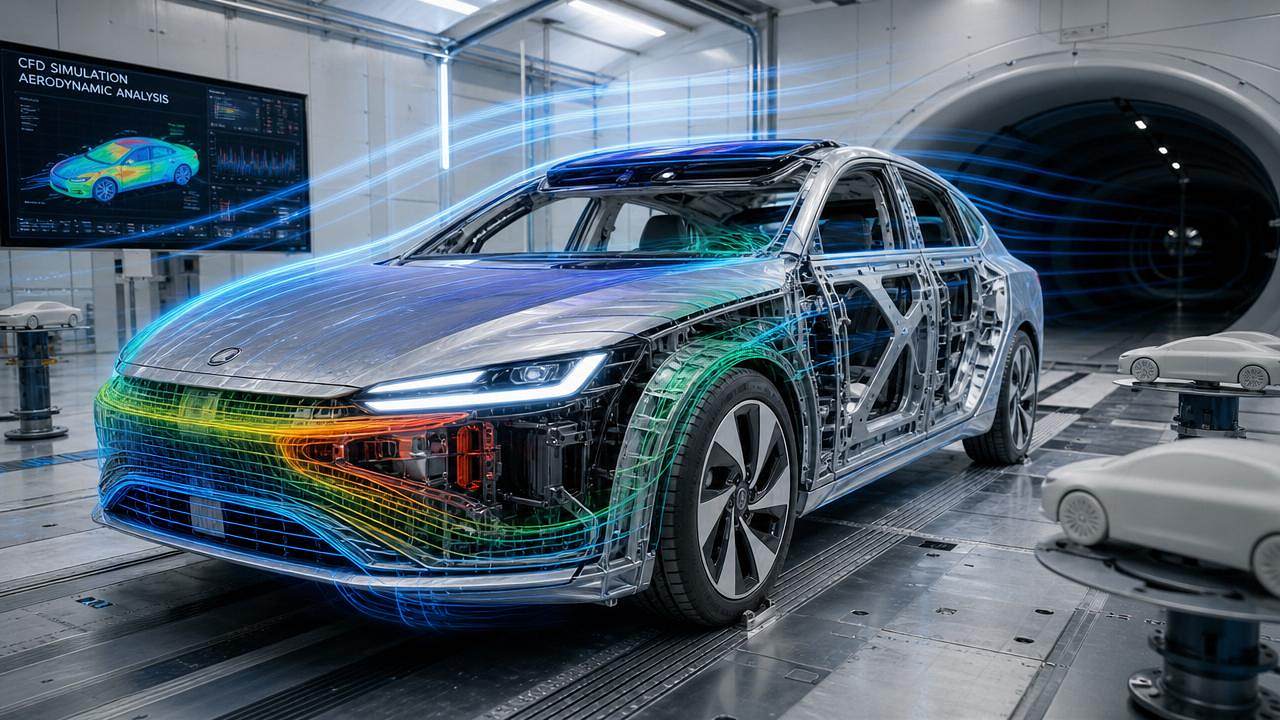
For project managers and engineering leads, CFD simulations offer a practical way to spot airflow, cooling, and performance issues before tooling begins. In automotive exterior and vision system development, this means fewer design errors, faster validation, and better cost control across wheels, lighting, and related components. Getting these insights early helps teams reduce rework, protect timelines, and make smarter decisions with greater confidence.
Why do CFD simulations matter before tooling starts?
In vehicle exterior programs, tooling is the point where design intent becomes expensive. Once molds, dies, and fixtures are released, every airflow mistake, thermal blind spot, or packaging conflict can trigger delays, engineering change orders, and supplier friction.
That is why CFD simulations have become a decision tool, not just an engineering exercise. For project leaders managing wheel programs, LED headlight assemblies, sensor covers, or sunroof airflow paths, simulation helps identify hidden risks when changes are still manageable.
At AEVS, this matters because exterior performance is no longer judged by styling alone. NEV platforms demand low drag, reliable thermal behavior, stable optical performance, and compliance with evolving regional standards. CFD simulations connect these requirements early, before capital is locked into tooling.
- They reveal airflow separation, stagnant zones, and heat accumulation that are difficult to detect through CAD review alone.
- They support faster design freeze decisions by comparing multiple concepts with measurable criteria.
- They reduce the risk of costly late-stage testing failures, especially in EV wheel aerodynamics and lighting thermal management.
- They improve communication between program management, design, CAE, sourcing, and manufacturing teams.
What changes when simulation is moved earlier?
The main shift is strategic. Instead of using CFD simulations to confirm a nearly finished design, teams use them to steer concept selection. That reduces the number of assumptions carried into prototype builds and shortens the path to validated geometry.
For engineering managers, early simulation also improves budget discipline. It is far cheaper to revise vent geometry, spoke design, lens airflow channels, or sensor housing contours in digital models than after pilot tooling has started.
Which automotive exterior and vision components benefit most from CFD simulations?
Not every component needs the same depth of analysis, but several AEVS focus areas consistently benefit from CFD simulations because airflow and heat directly affect function, range, noise, durability, or user perception.
The table shows why CFD simulations are especially valuable in parts where airflow influences both engineering performance and customer-facing quality. In modern NEVs, exterior design elements increasingly carry thermal, aerodynamic, and sensor integration functions at the same time.
Application scenarios that deserve early review
- Low-drag wheel programs where aerodynamic covers or narrow spoke layouts may compromise brake cooling.
- Matrix LED systems with dense electronics that create local thermal peaks inside compact housings.
- Exterior sensor integration projects where water management and contamination control affect reliability.
- Premium roof systems where wind comfort and cabin perception are part of the product promise.
How do CFD simulations reduce design errors for project managers?
Project managers are often not asking for deeper physics. They are asking for fewer surprises. CFD simulations help by translating invisible flow behavior into visible risks that can be discussed across functions before release gates are passed.
Key decision benefits
- Earlier issue ranking. Teams can separate critical airflow problems from cosmetic concerns and focus engineering time where it matters.
- Better supplier alignment. Shared simulation outputs make it easier to discuss venting, cooling, material limits, and manufacturability with Tier 1 and tooling partners.
- Controlled change management. When geometry changes are justified by simulation, approval decisions become faster and more objective.
- Lower validation risk. CFD simulations reduce the chance that bench or vehicle tests expose basic design flaws late in the program.
In practical terms, this means fewer tool modifications, fewer late prototype loops, and more predictable sourcing discussions. For teams under launch pressure, that stability matters as much as the technical result itself.
CFD simulations versus late-stage physical testing: what is the smarter balance?
Physical testing remains essential, especially for final validation and compliance. However, relying on testing alone is expensive when design options are still fluid. The smarter approach is to use CFD simulations to narrow choices, then use testing to confirm the best path.
For most automotive exterior projects, the strongest cost-performance balance comes from combining CFD simulations with targeted testing. Simulation should reduce uncertainty early, while testing should confirm critical assumptions rather than discover avoidable design errors.
What should you evaluate when selecting a CFD simulation workflow?
Not all simulation programs deliver equal business value. Project leaders should judge a CFD workflow by how well it supports decisions, not by software complexity alone. The right setup depends on product geometry, timing, internal CAE capability, and supplier coordination needs.
Selection checklist for engineering and sourcing teams
- Define the decision question first. Are you comparing wheel spoke concepts, checking headlamp thermal paths, or screening water management around sensor zones?
- Confirm model inputs. Boundary conditions, ambient assumptions, heat loads, and vehicle integration data must reflect actual use cases.
- Check output relevance. Useful CFD simulations should report actionable metrics such as pressure drop, local velocity, temperature gradients, recirculation areas, or contamination risk zones.
- Assess turnaround time. A perfect analysis delivered too late will not protect the program. Program phase and decision deadlines should shape the simulation scope.
- Link simulation to manufacturing. Geometry recommendations must remain compatible with tooling, surface quality, parting lines, and material constraints.
Procurement questions worth asking suppliers or technical partners
If you are buying design support, ask how the provider handles iteration speed, validation logic, and reporting clarity. A useful partner should explain not only what the model predicts, but also which assumptions carry the most project risk.
This is where AEVS creates value. By combining expertise in wheel aerodynamics, lighting thermal behavior, tire dynamics, and exterior architecture, the platform helps teams interpret CFD simulations in a broader product and market context rather than as isolated engineering outputs.
How can CFD simulations support cost control and timeline protection?
The financial case for CFD simulations is often strongest when viewed through avoided disruption. Project budgets are usually damaged less by one major redesign than by many small corrections that cascade across sourcing, validation, and launch planning.
The cost benefit is not just fewer engineering hours. It also includes better release discipline, lower supplier conflict, and fewer rushed trade-offs between aesthetics and function. In exterior and vision systems, that balance is especially important because visual design often competes with airflow and thermal needs.
What compliance and technical checkpoints should teams keep in view?
CFD simulations do not replace compliance work, but they help teams design with compliance in mind. For automotive exterior and lighting projects, engineering decisions often sit close to performance thresholds tied to market regulations and customer specifications.
Common checkpoints linked to simulation-driven decisions
- Thermal margins in lighting systems, especially where heat affects optical consistency or electronic durability.
- Aerodynamic efficiency targets for NEV platforms, where wheel and exterior details can influence range.
- NVH expectations in roof and exterior trim systems, where airflow behavior can shape customer comfort.
- Regional market expectations tied to ECE or DOT-related design constraints, particularly in vision-related components.
AEVS is well positioned in this area because its Strategic Intelligence Center tracks not just technology evolution, but also traffic compliance trends and material cost movement. That broader view helps project teams avoid making simulation-led design choices that later clash with market or sourcing realities.
Common mistakes teams make with CFD simulations
Mistake 1: Treating simulation as a final-stage report
When CFD simulations are scheduled only after styling or packaging is nearly locked, teams lose most of the flexibility that makes simulation valuable. The result is often a report that confirms risk but cannot prevent it.
Mistake 2: Asking for too much precision too early
Early-phase analysis should guide choices, not create false certainty. Overcomplicated models can slow decisions and create debate around details that do not yet affect the gate decision.
Mistake 3: Ignoring manufacturability and cost
A flow-optimized design that cannot be tooled efficiently or sourced competitively is not a strong program solution. CFD simulations should be interpreted alongside casting, forging, molding, sealing, and assembly constraints.
Mistake 4: Failing to connect results across systems
Exterior components rarely act alone. A wheel change may influence brake cooling and drag. A lamp housing revision may affect optics, sealing, and serviceability. Strong project control requires system-level thinking.
FAQ: what do project leaders usually ask about CFD simulations?
How early should CFD simulations begin in an automotive program?
They should begin when major geometry choices are still open. For wheels, lamps, roof systems, and sensor housings, that usually means concept selection or early design development rather than post-release validation.
Are CFD simulations only useful for high-end or complex parts?
No. The strongest value often appears in parts that look simple but influence drag, cooling, noise, or contamination. Even modest geometry changes in exterior systems can create outsized downstream cost if errors are found late.
What should a project manager request from a simulation report?
Ask for clear assumptions, a comparison of options, key risk zones, and direct design recommendations. A useful report should support a decision meeting, not just document technical work.
Can CFD simulations help with supplier discussions?
Yes. They create a neutral technical basis for discussing geometry revisions, cooling strategies, vent paths, and manufacturability trade-offs. This is especially useful when multiple suppliers influence the same exterior system.
Why choose us for insight on CFD simulations and exterior system decisions?
AEVS brings together intelligence on vehicle aesthetics, aerodynamic performance, optical perception, thermal behavior, and market-facing compliance needs. That combination is valuable for project managers who need more than isolated technical data.
If you are evaluating CFD simulations for alloy wheels, LED headlight assemblies, sunroof airflow, tire-related aero effects, or sensor integration, we can help frame the right questions before tooling investment is committed.
- Discuss parameter confirmation for airflow, cooling, thermal loads, and integration assumptions.
- Review product selection logic for low-drag wheels, lighting systems, and exterior sensing components.
- Compare design options against delivery timing, supplier capability, and likely validation pressure points.
- Clarify certification and market requirements that may influence early design decisions.
- Explore sample support, quotation discussions, and custom solution pathways for premium exterior and vision applications.
For teams balancing styling ambition, launch deadlines, and engineering risk, early CFD simulations are not just a technical upgrade. They are a practical way to cut design errors before tooling and build more confident decisions across the full exterior and vision system program.