Industry Portal
Related News
- 00
0000-00
Selecting NEV Exterior Components for Aerodynamics, Durability, and EV Integration - 00
0000-00
How Tire Dynamics Shape Braking Distance, Stability, and ABS Performance - 00
0000-00
How to Specify Automotive Trim Parts for Durable Interior and Exterior Finishes - 00
0000-00
Choosing Joining Technologies for Lightweight Multi-Material Vehicle Structures - 00
0000-00
Vehicle Lightweighting for Automotive Design: Balancing Mass, Safety, and Cost
Tags
When CFD simulations fail to match road test results
When CFD simulations fail to match road test results
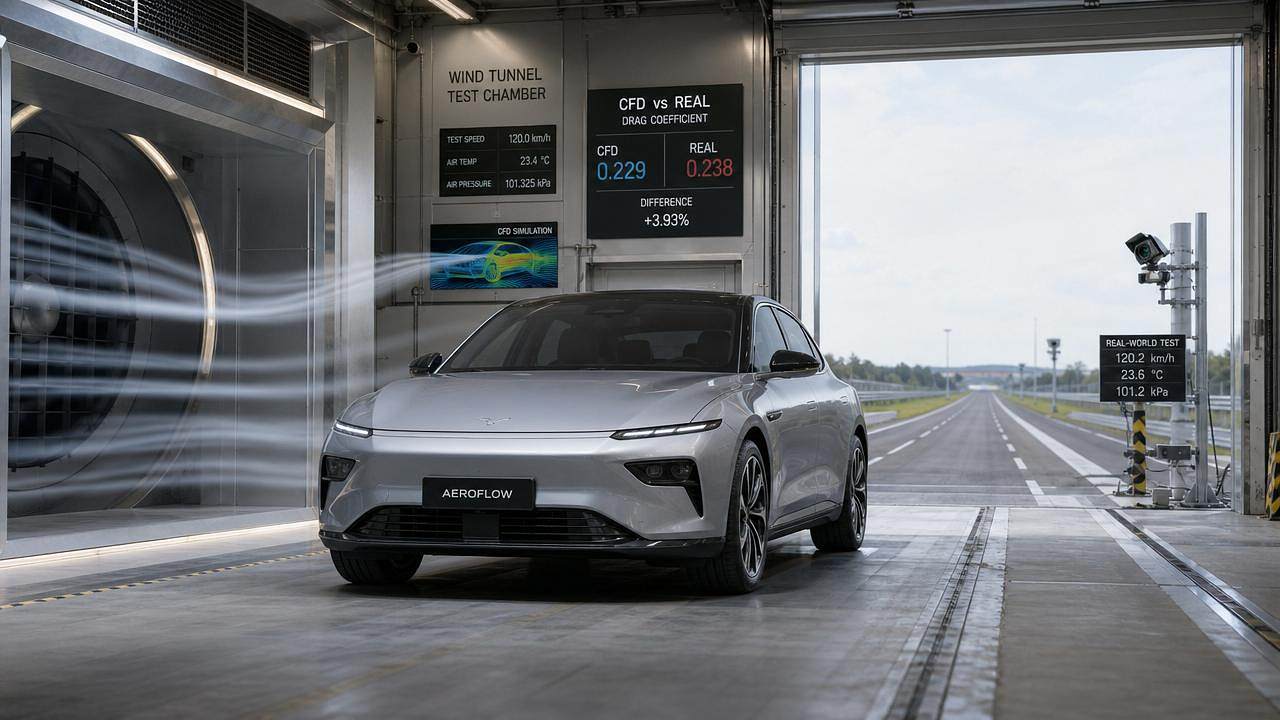
When CFD simulations fail to match road test results, the problem is rarely a single bad assumption.
It usually comes from interacting variables across airflow, tire behavior, wheel geometry, lighting packaging, sensor placement, and changing road environments.
For automotive exterior and vision development, this gap matters because design decisions now affect range, aero noise, thermal stability, safety, and perception performance at once.
Understanding why CFD simulations diverge from validation helps teams correct models faster and improve confidence before expensive design freezes.
Why a structured review is necessary
Road tests combine wind, temperature, road texture, contamination, driver inputs, and component tolerances that no simplified digital setup fully captures.
A structured review prevents random troubleshooting and makes CFD simulations more traceable, especially in EV programs with tight efficiency targets.
It also helps connect aerodynamics with exterior systems such as sunroofs, alloy wheels, tires, matrix LED headlamps, and body-mounted sensors.
Core checks when CFD simulations and road tests disagree
- Verify whether the simulation used the same vehicle ride height, rake, load state, and tire inflation pressure as the physical road test.
- Confirm wheel design details, spoke openness, brake cooling paths, and rotating tire surfaces were modeled with sufficient geometric fidelity.
- Check if underbody shields, panel gaps, fasteners, sunroof edges, and local surface steps were simplified beyond acceptable aerodynamic limits.
- Review boundary conditions, including crosswind angle, ambient temperature, turbulence intensity, road speed, and moving ground treatment.
- Compare road surface realism, because rough asphalt changes tire wake behavior, rolling resistance, splash patterns, and aeroacoustic response.
- Audit mesh quality around mirrors, A-pillars, wheelhouses, sensor covers, and lamp contours where flow separation is highly sensitive.
- Determine whether thermal effects from brakes, battery cooling, lamps, and power electronics altered density fields during road validation.
- Validate that sensor pods, camera housings, radar covers, and headlamp lenses included real production tolerances and assembly offsets.
- Examine transient behavior, because gusts, steering inputs, suspension motion, and tire deformation can defeat steady-state CFD simulations.
- Check instrumentation alignment, calibration drift, and sensor mounting locations before blaming CFD simulations for every mismatch.
- Separate aerodynamic drag differences from rolling losses, drivetrain corrections, and coastdown processing assumptions in test data reduction.
- Document every revision step so repeated CFD simulations can be correlated against one controlled change at a time.
Where mismatches appear most often
Wheels, tires, and brake airflow
Rotating components are a frequent source of error in CFD simulations.
Small differences in tire shoulder shape, tread wear, or wheel spoke thickness can shift wake structures and brake cooling airflow.
In EVs, heavier curb weight and instant torque amplify tire deformation, making real contact patch behavior hard to match with simplified rotating-wall models.
Exterior openings and roof systems
Sunroof seals, flush glazing, door cutlines, and roof trim can trigger local separation and aero noise that road testing exposes quickly.
If CFD simulations use nominal geometry while prototypes carry slight assembly variation, the pressure map may shift more than expected.
Lighting and optical packaging
LED headlamp assemblies influence both drag and thermal behavior.
Lens curvature, cooling vents, heat sinks, and surrounding bezel transitions can modify local flow and affect dirt deposition in real driving.
When CFD simulations ignore these details, road test contamination or temperature results may look inconsistent.
Sensors and smart exterior perception
Radar, camera, rain-light, and body sensor modules sit in aerodynamically sensitive areas.
Road tests can reveal fogging, splash interference, or vibration responses that steady CFD simulations did not represent.
This is especially important when sensor performance must stay stable across weather and compliance conditions.
Commonly overlooked causes
Production tolerance is treated as negligible
A few millimeters at a lamp edge, wheel arch liner, or sensor bezel can change local flow attachment.
CFD simulations based only on ideal CAD often understate this variability.
Test environment corrections are overtrusted
Road data reduction can hide uncertainty from wind, grade, ambient density, and traffic disturbances.
Before changing CFD simulations, confirm the correction method is stable and repeatable.
Steady-state assumptions miss transient events
Crosswind bursts, steering corrections, suspension heave, and tire enveloping are highly dynamic on public roads.
If the validation target is transient, steady CFD simulations may be directionally useful but numerically incomplete.
Contamination effects are ignored
Water, dust, road salt, and insects change local surface roughness and optical clarity.
This matters for headlamps, cameras, radar covers, and wheelhouse flow more than many models assume.
Practical steps to improve correlation
- Build a correlation matrix linking each road test signal to a matching CFD simulations output, geometry version, and environmental assumption.
- Use a staged refinement process, starting with ride height, wheel rotation, and moving ground before adding secondary complexity.
- Create tolerance bands for drag, lift, wheelhouse pressure, brake cooling, and sensor contamination rather than chasing one exact value.
- Run sensitivity studies for wheel design, tire growth, lamp venting, and sensor cover shape to identify dominant error sources.
- Compare coastdown, wind tunnel, and road data together so CFD simulations are not judged against one noisy reference only.
- Introduce transient or hybrid methods when the target involves splash, gust response, thermal soak, or rotating component interaction.
How this supports exterior and vision system development
Better correlation in CFD simulations improves more than drag numbers.
It helps optimize silent tire performance, forged wheel airflow, smart headlight cooling, sensor cleanliness, and sunroof NVH behavior together.
That systems view is increasingly important in the global NEV market, where efficiency, safety, and appearance must support each other.
For intelligence platforms following exterior lightweighting and optical perception, these insights reveal where physical validation still carries decisive engineering value.
FAQ
Why do CFD simulations look accurate in the tunnel but not on the road?
Road conditions add surface roughness, crosswinds, temperature drift, contamination, and driver-induced transients that controlled facilities reduce or isolate.
Which component most often causes mismatch?
Wheels and tires are common drivers because rotation, deformation, and brake airflow are hard to reproduce exactly in CFD simulations.
Should every mismatch trigger a full model rebuild?
No. First isolate boundary conditions, instrumentation, and data reduction. Then refine CFD simulations according to the largest sensitivity drivers.
Conclusion and next action
When CFD simulations fail to match road test results, the best response is disciplined comparison, not guesswork.
Start with geometry fidelity, boundary conditions, rotating components, and measurement quality.
Then expand into thermal, optical, and contamination effects across exterior systems.
This approach improves validation speed, strengthens technical credibility, and supports better decisions for future vehicle exterior and vision platforms.