
Industry Portal
Related News
- 00
0000-00
Automotive Exterior and Vision Systems: Supplier Qualification Checklist - 00
0000-00
How to Evaluate an Automotive Exterior Systems Manufacturer for OEM Program Supply - 00
0000-00
Automotive Component Sourcing in China: How Buyers Verify Quality, Cost, and Supply Risk - 00
0000-00
Headlight Thermal Management Standards: Testing LED Heat Dissipation and Reliability - 00
0000-00
ECE-Compliant Waterproof Lighting: What Tests Prove Road-Ready Sealing?
What Determines Automotive Vision Systems Accuracy in ADAS Detection?
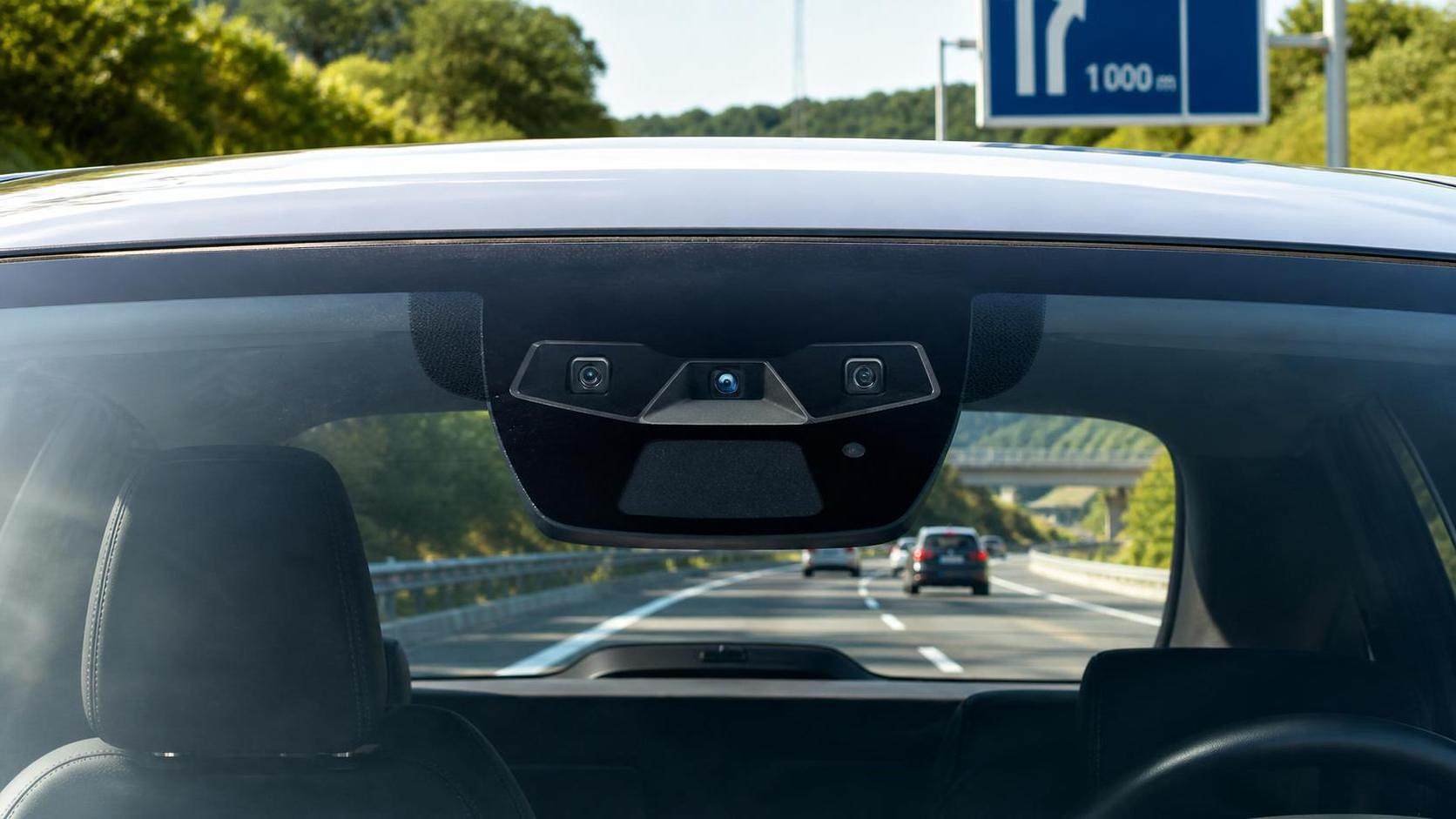
For technical evaluators, the practical question behind ADAS camera performance is rarely whether a vision system can detect an object in a lab. The real question is whether it can keep detection reliable when optics age, the windshield is imperfect, the scene is overexposed, and the vehicle is moving fast enough that milliseconds matter. That is what makes automotive vision systems accuracy a system-level issue rather than a simple sensor specification.
In current ADAS programs, especially those supporting lane keeping, forward collision warning, pedestrian detection, traffic sign recognition, surround view, and driver assistance functions that feed into higher automation stacks, accuracy determines more than feature quality. It influences safety case confidence, homologation readiness, validation cost, warranty exposure, and how much engineering margin remains when the vehicle enters messy real roads instead of controlled proving grounds.
A common mistake in sourcing and technical reviews is to treat accuracy as equivalent to camera resolution or AI model performance. In practice, detection accuracy is shaped by a chain of dependencies: lens quality, image sensor behavior, optical contamination control, calibration retention, ECU compute latency, dataset coverage, algorithm tuning, and environmental robustness. A weakness at any point degrades the entire stack. This is why two systems built around similar megapixel counts can behave very differently in rain, low sun, tunnel exits, or night-time urban traffic.
Accuracy starts with the optical path, not the neural network
Many discussions around ADAS perception jump too quickly to algorithms. But the model only sees what the optical system delivers. If the incoming image suffers from distortion, flare, motion blur, low contrast, or poor dynamic range, downstream software has less usable information and must rely more heavily on inference. That may work in nominal conditions, but it tends to fail first at the edge cases that matter most in safety evaluation.
For that reason, technical evaluators should look closely at the full optical path:
- Lens modulation transfer performance across the field of view
- Resistance to ghosting, flare, and chromatic aberration
- Sensor dynamic range in mixed lighting scenes
- Low-light signal-to-noise behavior
- Shutter behavior under vibration and speed
- Windshield transmission effects and mounting tolerances
One persistent industry misconception is that wider field of view automatically improves detection. A wider field can support coverage, especially for parking or surround applications, but it also increases distortion management complexity and may reduce effective pixel density on distant targets. For forward ADAS functions, the trade-off between range, object scale, and angular coverage is fundamental. Evaluators should ask whether the optical design matches the operational design domain rather than assuming that more visual coverage means more usable accuracy.
Environmental adaptation is where nominal performance gets exposed
Most ADAS vision systems look competent on clear days. The real separation appears under glare, rain, fog, road spray, snow residue, sodium-vapor or LED street lighting, windshield haze, and high-contrast transitions such as tunnel portals. These conditions do not merely reduce image quality; they change the statistical structure of the scene that the detection stack was trained to interpret.
This matters because detection accuracy in the field is often constrained by adaptation quality rather than baseline classification strength. A camera that performs well in daytime lane detection may still lose reliability when lane markings are wet, partially worn, or contaminated by reflected headlamps. Pedestrian detection may appear acceptable in standard validation sets but degrade sharply when clothing contrast is low and vehicle headlight spill creates partial silhouettes.
For evaluation teams, the better question is not “What is the top-line detection rate?” but “Under which environmental envelopes does performance remain stable, and how fast does it degrade outside them?” That framing is more useful for platform planning, especially as automakers push broader ADAS deployment into mass-market NEV architectures where cost pressure is high but user expectations are moving upward.
Calibration stability is underrated and often expensive when ignored
Even a strong camera module and perception model cannot maintain accuracy if calibration drifts. In automotive production and service life, camera-to-vehicle alignment is affected by bracket tolerances, body repair variation, vibration, thermal cycling, windshield replacement, and long-term mechanical stress. This is one of the less visible but more commercially significant risks in ADAS vision performance.
Technical buyers sometimes focus on initial calibration procedures without asking enough about retention. Yet long-term calibration stability influences several downstream costs: service complexity, warranty claims, post-collision repair requirements, and false confidence in field performance data.
Points worth examining include:
- Mechanical rigidity of the camera mount and surrounding structure
- Thermal expansion behavior across the module, bracket, and vehicle interface
- Sensitivity of perception performance to small angular misalignment
- Recalibration requirements after glass replacement or front-end service
- Diagnostic capability for calibration drift detection in operation
For evaluators, this is also where vision system design intersects with broader exterior engineering. The placement of the camera behind the windshield, the local thermal environment, the vibration path, and even the interaction with rain sensors, wiper sweep, and headlamp glare all influence retained accuracy over time. A technically elegant algorithm can be undermined by an average mounting architecture.
Latency, not just recognition quality, determines usable detection accuracy
In ADAS, accuracy is temporal as well as spatial. A detection that is correct but delayed can be functionally wrong. This is especially important in high-speed scenarios, cut-in events, vulnerable road user detection, and braking support workflows where perception must feed prediction and control within strict timing windows.
That means technical assessment should include the end-to-end pipeline:
Teams sometimes isolate vision accuracy from system timing because they are validated by different groups. That separation is convenient organizationally but weak technically. For a vehicle program decision, what matters is whether the ADAS stack recognizes the right target early enough and robustly enough to support the intended function with acceptable risk.
Dataset coverage matters more than benchmark headlines suggest
Another common misunderstanding is that strong benchmark results imply broad deployment readiness. Public and internal benchmarks can be useful, but they are often shaped by the selection of scenes, annotation policies, geographic bias, and weather distribution. A system trained heavily on one road environment may struggle when lane conventions, road furniture, signage style, or lighting behavior differ across regions.
This is increasingly relevant for global vehicle platforms. A vision stack validated in Western Europe may not generalize cleanly to Southeast Asia, the Middle East, India, or Latin America without additional tuning. The issue is not only object appearance; it includes road edge ambiguity, motorcycle density, informal traffic behavior, reflective surfaces, seasonal contamination, and local infrastructure variation.
For technical evaluators, dataset questions should be concrete:
- How broad is the weather and lighting coverage?
- How are rare but safety-critical events represented?
- What regional road environments are included?
- How is annotation quality controlled for occlusion and object boundaries?
- How often is the dataset refreshed to reflect field feedback?
This is also where overconfidence enters procurement discussions. Suppliers may present average detection metrics that look mature, but average values can hide performance cliffs in low-frequency edge cases. If the business case includes higher-volume deployment, fleet learning, or future software-defined upgrades, those cliffs become more important than the headline average.
False positives and false negatives are not symmetrical business risks
When people say they want more accurate detection, they often mean fewer misses. But a system that aggressively minimizes false negatives may create too many false positives, which can degrade driver trust, increase nuisance interventions, and create disengagement. In consumer-facing ADAS, this is not a minor user-experience issue. It affects real feature usage and therefore actual safety benefit.
Technical evaluation should therefore separate accuracy into error types and function context. A surround-view parking aid can tolerate a different false-positive profile than forward emergency braking support. Lane departure functions, traffic sign recognition, blind-spot sensing, and driver monitoring each sit on different safety and usability curves.
That is why mature teams do not ask for a single universal accuracy figure. They ask how detection thresholds are tuned by use case, whether confidence scores are calibrated, and how the system behaves when visual certainty is low. A conservative fallback strategy is often more valuable than an ambitious model that is only reliable in ideal scenes.
Standards and compliance shape evaluation, even when they do not fully define accuracy
There is no single global metric that completely captures vision-system detection accuracy across ADAS functions. Still, regulatory and assessment frameworks increasingly influence how accuracy must be evidenced. Depending on vehicle market and feature set, evaluators may need to consider UNECE-related requirements, NCAP test protocols, functional safety expectations, cybersecurity interfaces, software update governance, and SOTIF-oriented risk analysis. Exact applicability should be checked by region and function scope【待核实】.
The important point is that compliance does not equal technical sufficiency, but lack of compliance discipline usually indicates weak process maturity. For example, a supplier may demonstrate impressive model performance while having limited traceability from field issues back to training updates and validation closure. That becomes a serious concern once over-the-air updates, cross-market deployment, and liability exposure enter the picture.
For B2B evaluation, useful signals include:
- Validation methodology across day, night, rain, and glare conditions
- Traceability from requirements to test evidence
- Field monitoring and feedback-loop capability
- Change-control discipline for model or ISP updates
- Alignment between performance claims and operational limitations
Thermal and contamination control are practical determinants of sustained accuracy
Vision-system discussions often understate two very physical problems: heat and contamination. Yet both are major determinants of whether a camera remains accurate after months or years on the road. Elevated temperature can affect sensor noise, image quality consistency, processing stability, and component lifespan. Contamination from dust, road film, water spotting, insects, salt, and washer-fluid residue can reduce contrast and create artifacts that mislead perception models.
In NEV platforms, where packaging density and thermal management trade-offs are already tight, this issue becomes more visible. A camera mounted near a windshield with poor heat evacuation, or positioned in a way that falls outside effective wiper cleaning patterns, may show acceptable launch performance and disappointing field stability.
Evaluators should review whether the system includes meaningful contamination monitoring, image-quality diagnostics, thermal derating logic, or cleaning support. This is not glamorous engineering, but it often separates durable ADAS products from systems that perform well only during launch validation.
Sensor fusion changes the meaning of camera accuracy, but does not eliminate it
As more ADAS architectures combine cameras with radar, ultrasonic sensing, or in some cases lidar, some buyers assume camera accuracy becomes less critical. That is too simplistic. Fusion can improve robustness and redundancy, but the camera remains the primary source for classification-rich understanding in many functions, including lane interpretation, sign recognition, drivable-space estimation, and object semantics.
What changes is the evaluation framework. Instead of asking whether the camera alone is accurate enough, teams need to ask whether the vision subsystem provides timely, stable, and trustworthy inputs to the fusion layer. If the camera is noisy, poorly calibrated, or inconsistent across lighting conditions, fusion logic becomes more complicated and can still fail under conflict scenarios.
In other words, fusion does not excuse weak vision fundamentals. It raises the need for disciplined interface definition, confidence handling, and fault management.
What technical evaluators should actually compare
When assessing suppliers, platforms, or upgrade paths, the most useful comparison is not a generic spec sheet ranking. It is a structured review of where the system maintains performance margin and where it relies on favorable assumptions.
A practical evaluation lens usually includes:
- Optical quality under real windshield and glare conditions
- Performance stability in rain, low light, and high dynamic range scenes
- Calibration robustness across production, service, and aging
- Latency from photons to ADAS action
- Regional and long-tail dataset coverage
- Error-type balance by function, especially nuisance versus missed detection
- Thermal, contamination, and diagnostics capability
- Validation traceability and update governance
That list is less tidy than a megapixel number or an AI marketing claim, but it is closer to how field performance is actually determined.
For the broader industry, the direction is clear. As ADAS features move deeper into mainstream vehicle portfolios and regulators scrutinize real-world safety outcomes more closely, automotive vision systems accuracy will be judged less by isolated component specifications and more by sustained detection reliability across the full operating life of the vehicle. The companies that understand this early will make better sourcing decisions, design better validation programs, and avoid paying later for assumptions that looked harmless in a brochure.