Industry Portal
Related News
- 00
0000-00
China’s NEV Export Surge Opens Opportunities for Quiet Tire Suppliers - 00
0000-00
Choosing a Photoelectric Sensor OEM Supplier: Quality and Lead Time - 00
0000-00
Japan's Koito Studies Chinese Car Lamps in Bid to Cut Costs 30% - 00
0000-00
Choosing EV Wheels: How Size, Load Rating and Aerodynamics Affect Range - 00
0000-00
Japan's Koito Studies Chinese Automakers' Vehicle Lighting Products
Low-MOQ Private Label Tires: How to Evaluate Suppliers and Costs
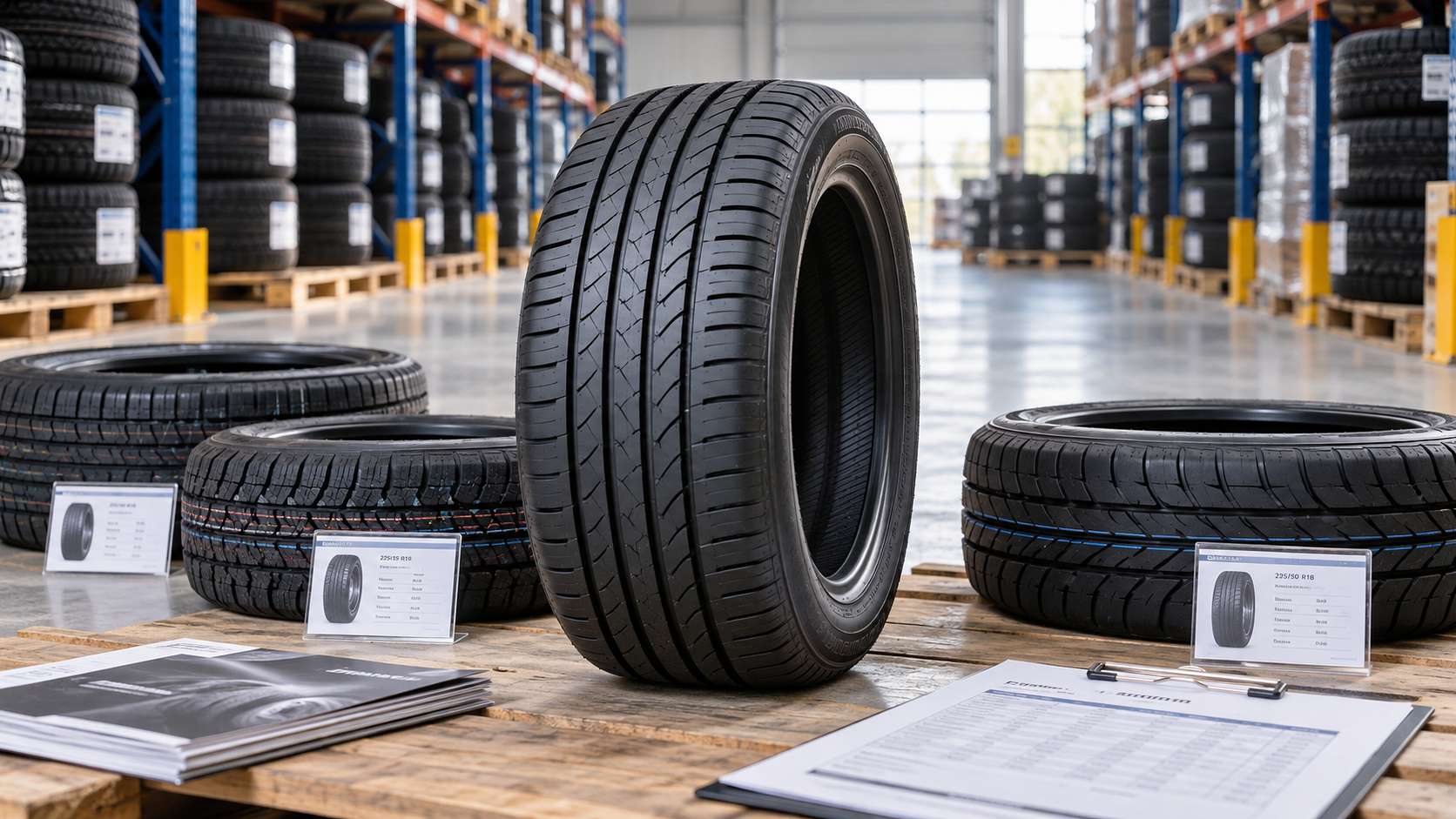
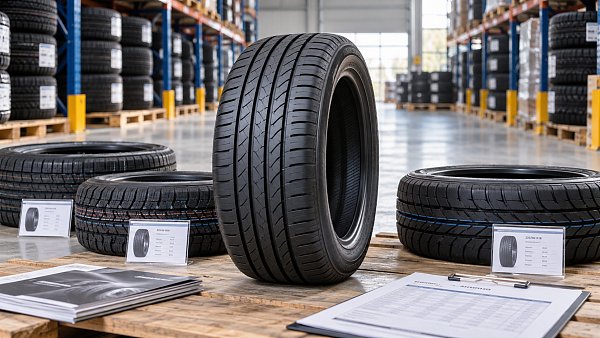
Searching for private label tires low MOQ can uncover suppliers willing to support a small launch, but the minimum order alone does not tell you whether the program is affordable or practical. A quotation may apply to one tire size, one sidewall design, or an entire shipment, and each arrangement carries different costs and inventory risks.
The strongest proposal is the one that matches the intended market, meets the required product specifications, and makes the total landed cost clear. Before comparing prices, establish what the supplier means by “private label,” what can be customized, and which minimums apply to each part of the order.
What does the minimum order actually cover?
A tire supplier may quote a minimum order quantity by model, size, production run, brand, or shipment. These are not interchangeable. A quantity that looks manageable at the brand level may become much larger when the supplier requires a separate minimum for every size and tread pattern.
Ask for the order structure in writing. For example, can several sizes share one production commitment? Must each size use the same tread pattern? Does the minimum change when the sidewall carries your brand name? A mixed order can reduce exposure to any one size, but only if the supplier can produce the mix without adding costs or extending the schedule beyond what your launch can support.
Also distinguish between a first-order minimum and a reorder minimum. A supplier may accommodate a small initial batch but require a larger repeat order, or charge a different price when production is restarted. If demand is uncertain, the ability to replenish a proven size can be more valuable than a low introductory commitment.
Choose the right level of private labeling
Private label can describe arrangements ranging from branded packaging around an existing tire to a product with a dedicated sidewall design. The distinction matters because the customization offered determines both the brand presentation and the costs that may survive even if the launch stops.
These are commercial options, not guarantees that every manufacturer offers them at a low MOQ. Ask the supplier to identify exactly what changes: packaging, sidewall artwork, tread, compound, or construction. A branded sidewall on an existing tire does not necessarily mean the underlying product has been developed for your brand.
For a first launch, an established specification may be a sensible way to limit development risk. It is less suitable when the business depends on an exclusive product or a specific performance claim that the existing tire cannot support.
Compare landed cost, not just the tire price
A low unit price can hide the cost of creating and delivering the order. Request an itemized quotation and calculate the cost per saleable tire at the intended destination, using the same assumptions for every supplier.
A practical comparison includes:
- Product cost: The price for each size, specification, and quantity, including any price differences within a mixed order.
- Branding and tooling: Sidewall artwork, mold or mold-insert charges where applicable, packaging, labels, and setup fees.
- Testing and documentation: Any separately charged work needed for the product and destination market.
- Transport and import costs: Freight, insurance if purchased, duties, taxes where applicable, customs handling, and delivery to the receiving warehouse.
- Handling and working capital: Storage, financing, inspection, and the cost of holding slow-moving sizes.
- After-sales exposure: The agreed treatment of manufacturing defects, returns, and warranty claims.
For comparison, add the costs expected to bring the shipment into inventory and divide by the number of saleable tires. Keep recoverable taxes separate from non-recoverable costs, and do not count a supplier’s warranty promise as cash reimbursement unless the agreement specifies how claims are handled.
The delivery term matters as much as the quoted price. Two suppliers may quote the same amount per tire while assigning freight, export handling, insurance, and import responsibilities differently. Record the named delivery point and the applicable Incoterms rule, then add the remaining costs under your responsibility. Avoid treating an estimated freight charge as a fixed cost unless the quotation says it is fixed.
Tooling can also change the economics of a small run. Spread a one-time branding charge over the first order to see the initial cost per tire; then calculate a separate repeat-order cost if the tooling can be reused. Ask who owns it, where it is held, whether storage or maintenance is charged, and whether it can be used for later production. Do not assume that paying for tooling gives you the right to transfer it to another factory.
Screen suppliers against the actual product and market
Start with a written specification, not a broad request for “passenger car tires.” The supplier needs the intended vehicle application, tire sizes, load and speed ratings, seasonal or usage category, target markets, and any commercial requirements for branding and packaging. For an EV-oriented range, define the intended vehicle fitment and performance priorities rather than accepting “EV tire” as a complete specification.
Claims about low noise, rolling resistance, wet grip, or suitability for heavy vehicles should be tied to the specific tire and an agreed method of assessment. A tire that performs well on one priority may involve trade-offs elsewhere; the right balance depends on the vehicles, roads, climate, and customer expectations in the target market.
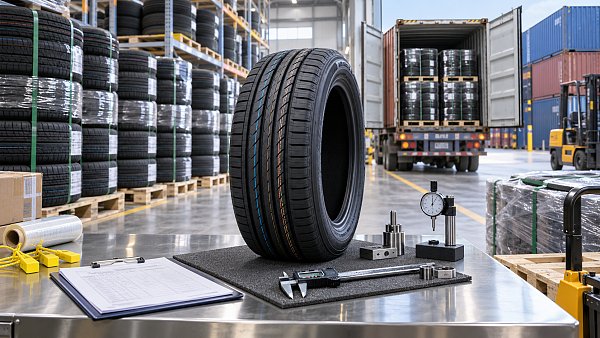
When evaluating a manufacturer or trading company, establish which factory will produce the tires and whether that factory has experience with the relevant product category. A trading company can coordinate sourcing and logistics, but the buyer still needs visibility into the production site, product documentation, and process for resolving defects.
Ask each shortlisted supplier for:
- The exact product specification and available sizes, including load and speed ratings.
- The producing factory’s identity and the quality-control process for the proposed order.
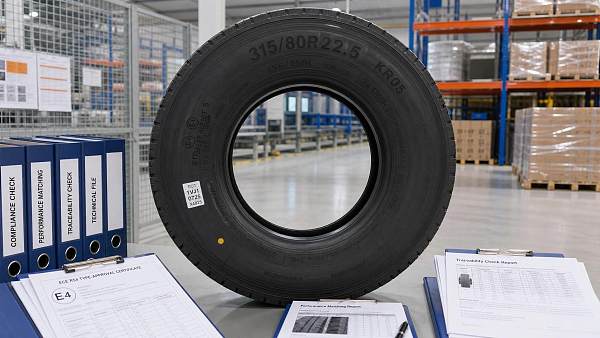
- Product-specific compliance documentation and markings relevant to the destination market.
- Production lead time, shipment preparation time, and the assumptions behind both.
- Sample availability and whether samples match the proposed production specification.
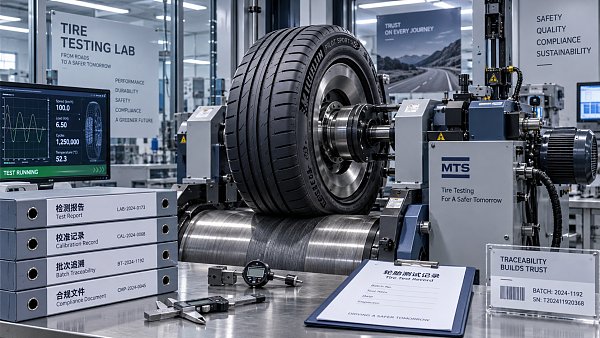
- Traceability arrangements, including how production batches can be identified after delivery.
Responses should connect the documentation to the actual tire being purchased, not merely to the supplier’s general catalog. A certificate or test report for a different size, construction, or product family may not establish that the proposed tire meets the buyer’s requirements.
Understand DOT and ECE requirements before approving artwork
Compliance depends on the destination, tire category, and applicable rules. In the United States, DOT-related requirements involve more than placing letters on the sidewall. In markets that apply UNECE tire regulations, the relevant approval and markings depend on the product and jurisdiction. Other markets can have their own requirements.
Build the compliance work into the quotation stage. Identify the destination markets and ask the supplier for the relevant approvals, test evidence, and a sidewall marking layout for the exact product. Establish who is responsible for each required action as manufacturer, importer, or brand owner. An attractive private-label design should not obscure, replace, or conflict with mandatory information.
Documentation should also align with the commercial arrangement. If production is moved to another factory, a construction changes, or a new size is added, treat that as a change to the approved supply rather than assuming the original paperwork covers it. The purchasing agreement should require advance notice and approval of material changes.
Use samples to reduce uncertainty, not to replace production controls
Samples help assess appearance, labeling, dimensions, and documentation, and they can support independent evaluation where needed. They do not guarantee that later production will use the same materials, process, or quality controls. A generic sample from a supplier’s existing range may also tell you little about the final branded product.
Agree on what the sample represents: the proposed construction, size, tread pattern, sidewall, and manufacturing source. If the private-label sidewall is not ready, separate approval of the base tire from approval of the final artwork. Record the agreed specification and retain an approved reference so that discrepancies can be assessed when the shipment arrives.
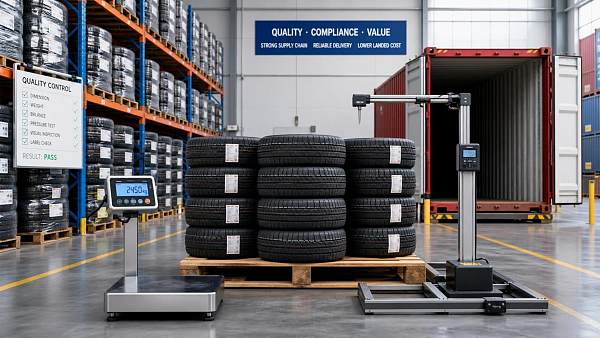
For the production order, define inspection points and acceptance criteria before payment. These may cover visible defects, sidewall markings, packaging, quantities by size, and documentation. Where performance testing is necessary, agree on the test method, laboratory or testing party, timing, and who pays if the product does not meet the agreed specification.
Make the commercial terms work beyond the first shipment
A low-MOQ launch can still create a long-term commitment. Before issuing a purchase order, resolve the terms that determine whether the range can be replenished, changed, or discontinued without an unexpected cost.
Lead time and scheduling. Ask when the production clock starts: after deposit, artwork approval, tooling completion, or another milestone. Include time for inspection, documentation, freight, and customs clearance in the launch plan. A factory lead time is not the same as a warehouse arrival date.
Price and reorder terms. Identify the validity period of the quotation and the conditions under which repeat-order prices or minimums may change. A small first order may be viable only if the supplier can support subsequent orders at a price and volume compatible with demand.
Exclusivity. If exclusivity matters, define the territory, products, brand rights, duration, and any purchase obligations. A private label does not automatically make the underlying tread or tire construction exclusive.
Defects and claims. Specify how defects are reported, what evidence is required, who evaluates a claim, and whether the remedy is replacement, credit, or another agreed action. Include responsibilities for freight and disposal. Batch traceability is useful only if both parties have a workable process for acting on it.
Brand and tooling rights. Confirm who owns the artwork and trademarks, how the supplier may use them, and what happens to branded inventory or tooling if the relationship ends. This is especially important when a distributor may later change manufacturing partners.
When a low-MOQ program makes sense
A small private-label order is most useful when it answers a specific commercial question: whether a defined customer base will buy a particular range, which sizes move, or whether the brand can support a sustainable selling price. It works best when the initial range is narrow enough to manage and the supplier offers a credible path to replenishment.
It is a weaker choice when the program needs broad size coverage from day one, relies on unproven performance claims, or cannot absorb the fixed costs of branding and compliance. In those circumstances, selling an established brand or beginning with a less customized arrangement may provide a clearer test of demand.
Before committing, compare suppliers on the same specification, delivery basis, and cost assumptions. Choose the offer that leaves a workable margin after landed costs and gives you control over product consistency, documentation, and repeat supply. The smallest opening order is only an advantage if the business can sell, support, and reorder the tires on acceptable terms.
Have questions about this sector analysis, or seeking best practices specific to your niche? Drop us a line below and let the senior consultants at AEVS assist you.
Related News
 Commercial InsightsChoosing a Smart Optical Systems Manufacturer: Capabilities and Quality ChecksChoose a smart optical systems manufacturer with confidence. Compare automotive capabilities, quality checks, compliance, and total program costs.MORE+
 Commercial InsightsChoosing an Aftermarket Wheels Manufacturer: Quality and Lead TimesChoosing an aftermarket wheels manufacturer? Compare quality controls, test evidence, lead times and landed costs to source with confidence.MORE+
 Commercial InsightsLow-MOQ Private Label Tires: How to Evaluate Suppliers and CostsPrivate label tires low MOQ: discover how to compare suppliers, calculate landed costs, verify compliance, and launch your tire brand with confidence.MORE+
 Commercial InsightsEvaluating Automotive Solution Suppliers: What to Ask Customer ReferencesAutomotive solution reference buyers: discover what to ask customer references to uncover quality risks, verify delivery claims, expose hidden costs, and choose suppliers with confidence.MORE+
 Commercial InsightsBuying LED Headlight Assemblies in Europe: Approval and Fitment ChecksSourcing LED headlight assemblies Europe-wide? Discover key approval, beam pattern and vehicle fitment checks to avoid costly mistakes and buy with confidence.MORE+
 Commercial InsightsChoosing a Precision Forging Supplier: Tolerances, Traceability, and Lead TimesChoose a precision forging supplier with confidence. Learn how to verify tolerances, traceability, and lead times to reduce sourcing risks and secure reliable production.MORE+
 Commercial InsightsOver 200 Taiwan Auto Parts Suppliers Target U.S. Buyers at AAPEX 2026Explore 200+ Taiwan auto parts suppliers at AAPEX 2026 in Las Vegas, November 3–5. Discover headlights, collision parts and smart aftermarket solutions for U.S. buyers.MORE+
 Commercial InsightsChoosing a Smart Headlight Distributor: Fitment, Compliance, and Warranty SupportChoose a smart headlights distributor with confidence. Learn how to verify fitment, compliance, and warranty support to reduce costly returns and compare true installed costs.MORE+
 Commercial InsightsMichelin Defender LTX Platinum Tops 2026 Truck and SUV Tire Mileage RankingMichelin Defender LTX Platinum leads the 2026 truck and SUV tire mileage ranking with over 104,000 miles in Treadwell testing. Discover what this means for long-term tire value.MORE+
 Commercial InsightsAluminum Price Fluctuations: Fixed vs. Indexed Supply ContractsNavigate the raw material cost fluctuations aluminum buyers face. Compare fixed vs. indexed contracts, uncover hidden risks, and choose supply terms that protect your margins.MORE+
 Commercial InsightsAutomotive Product Comparison Charts: How Buyers Can Compare Specs, Cost, and FitAutomotive product comparison chart guide for buyers to evaluate specs, total cost, compliance, supplier capability, and vehicle fit for smarter sourcing decisions.MORE+
 Commercial InsightsVan Tire Comparison: Which Specifications Protect Delivery Fleet Uptime?Which commercial van tires should a delivery fleet be comparing when uptime is the governing constraint? Compare load, casing, tread, wet grip, and supply to reduce downtime.MORE+
 Commercial InsightsWhen Does a New Fleet Tire Supplier Repay the Loss of Fitment Data?Changing supplier would cost us a season of fitment data—learn which fleet tire specifications justify switching across 60 vans, from load capacity to wear, wet grip, and EV efficiency.MORE+
 Commercial InsightsQualifying Imported Tires: A Buyer Checklist for Testing, Traceability, and CustomsQualifying imported tires made practical: use this buyer checklist to verify testing, traceability, labeling, and customs documents before ordering.MORE+
 Commercial InsightsHow to Vet a Tire Compliance Supplier for Documentation, Testing, and Recall RiskTire compliance supplier vetting made practical: evaluate documentation, testing controls, traceability, and recall readiness to reduce safety and market-entry risk.MORE+
 Commercial InsightsWhat Supplier Risks Should NEV Buyers Check Before Part Approval?How can vehicle aesthetics be improved without increasing drag? Discover essential NEV supplier-risk checks for traceability, change control, compliance, capacity, and reliable part approval.MORE+
 Commercial InsightsHow Do ECE, DOT, and CCC Rules Differ for Exterior Components?How do ECE, DOT, and CCC rules differ for exterior components? Compare approval, testing, labeling, and compliance strategies to speed global market access.MORE+
 Commercial InsightsHow to Evaluate a Low-Pressure Casting Manufacturer for Automotive Quality PartsLow-pressure casting manufacturer evaluation guide for automotive quality parts—compare process control, tooling, traceability, certifications, capacity, and total cost before sourcing.MORE+
 Commercial InsightsAn automotive supplier assessment that reveals quality-system riskAutomotive supplier assessment insights that uncover quality-system risks, strengthen traceability, and protect safety, compliance, and supplier performance.MORE+
 Commercial InsightsHow to verify automotive supplier capacity before a production ramp-upAutomotive supplier capacity verification: assess bottlenecks, tooling, quality yield, sub-tier supply, and recovery plans before production ramp-up.MORE+
 Commercial InsightsNEV configuration features that matter most for long-term reliabilityWhat are the most reliable NEV configuration features? Explore durable wheels, EV tires, lighting, sensors, sunroofs, and service-ready design for lasting confidence.MORE+
 Commercial InsightsTyre Retreading Machine Inspection Before Reconditioning a Used UnitTyre retreading machine inspection guide: assess safety, structure, controls, heat, pressure and vacuum systems before reconditioning a used unit.MORE+
 Commercial InsightsAutomotive Exterior and Vision Systems: Supplier Qualification ChecklistAutomotive Exterior & Vision Systems procurement checklist: qualify suppliers for sunroofs, wheels, tires, LED lamps, and sensors with confidence.MORE+
 Commercial InsightsAutomotive Component Sourcing in China: How Buyers Verify Quality, Cost, and Supply RiskAutomotive component sourcing China: learn how to verify supplier quality, total landed cost, compliance, and supply risk for reliable wheels, tires, lighting, and EV components.MORE+
 Commercial InsightsHow to Evaluate a Replacement Tire Manufacturer for Fleet Uptime and Cost ControlReplacement tires manufacturer evaluation guide for fleets: compare uptime, cost per kilometer, durability, supply reliability, and pilot performance.MORE+
 Commercial InsightsVehicle Lightweighting for Automotive Design: Balancing Mass, Safety, and CostVehicle lightweighting for automotive design: explore practical strategies to balance mass, EV range, safety, durability, cost, and smart exterior system performance.MORE+
 Commercial InsightsPrivate Label Tire Export: Evaluating Suppliers, Compliance, and Landed CostPrivate label tires export guide: evaluate suppliers, compliance, quality control, warranty terms, and landed cost to build a profitable, reliable tire brand.MORE+
 Commercial InsightsHow to Evaluate a Vehicle Exterior Systems Manufacturer for OEM ProgramsVehicle exterior systems manufacturer selection can make or break OEM programs. Learn how to assess engineering, quality, cost, compliance, and launch readiness before sourcing.MORE+
 Commercial InsightsWhich Tire Compliance Standards Matter Most for Road Safety and Market Access?Automotive compliance standards tires teams must track most: ECE, DOT, labeling, and production controls. Learn what protects road safety, avoids recalls, and secures market access.MORE+
 Commercial InsightsWhat Determines Automotive Vision Systems Accuracy in ADAS Detection?Automotive vision systems accuracy depends on optics, calibration, latency, and environmental robustness. Learn what truly drives reliable ADAS detection in real-world conditions.MORE+
 Commercial InsightsHow to Evaluate a Precision Forging Supplier for Complex Auto PartsPrecision forging supplier evaluation for complex auto parts: learn how to assess process control, tooling, heat treatment, traceability, and total cost to reduce risk and choose a reliable source.MORE+
 Commercial InsightsHow to Evaluate OEM Sourcing References for Automotive Solution Projects?Automotive solution reference OEM sourcing starts with credible proof. Learn how to verify supplier quality, compliance, delivery, and execution records to reduce project risk and choose with confidence.MORE+
 Commercial InsightsVehicle Lightweighting for EVs: Which Materials Deliver Range Gains Without Costly Trade-Offs?Vehicle lightweighting for EVs: discover how aluminum, AHSS, polymers, and selective composites can boost range while controlling cost, safety, and manufacturing trade-offs.MORE+
 Commercial InsightsLow-Pressure Casting Process Explained: Steps, Benefits, and Ideal Alloy ApplicationsLow-pressure casting process explained for automotive and industrial buyers: learn key steps, porosity benefits, alloy fit, and how it compares with gravity casting, die casting, and forging.MORE+
 Commercial InsightsHow to Evaluate an NEV Exterior Components Exporter for Global OEM ProgramsNEV exterior components exporter selection starts with program fit, compliance, and launch control—not price alone. Learn how to assess OEM readiness, cost transparency, and global delivery risk.MORE+
 Commercial InsightsHow to Evaluate an Automotive Sensor Systems Distributor for OEM and Aftermarket SupplyAutomotive sensor systems distributor selection affects quality, compliance, and supply continuity. Learn how to assess OEM and aftermarket capabilities before you buy.MORE+
 Commercial InsightsHow to Verify Replacement Tires Are ECE Approved Before Fleet Purchase?Replacement tires ECE approved verification starts with marks, documents, and supplier traceability. Learn how fleets avoid compliance risks, wrong specs, and costly purchase mistakes.MORE+
 Commercial InsightsHow to Evaluate a NEV Exterior Components Exporter for Quality, Capacity, and ComplianceNEV exterior components exporter selection starts with quality, capacity, and compliance. Discover a practical guide to reduce sourcing risk and choose a reliable long-term partner.MORE+
 Commercial InsightsAutomotive Exterior & Vision Systems Pricing: What Drives Cost in OEM and Aftermarket Supply?Automotive Exterior & Vision Systems pricing explained: discover how materials, compliance, tooling, and supplier capability shape OEM and aftermarket costs—and how smarter sourcing protects margin.MORE+
 Commercial InsightsDOT Compliant Lighting Bulk Orders: What Fleet Buyers Should Verify Before PurchaseDOT compliant lighting bulk buyers should verify true certification, beam performance, durability, supplier consistency, and warranty terms before purchase to reduce fleet risk and total lifecycle cost.MORE+