
Industry Portal
Related News
- 00
0000-00
Natural Rubber Prices Fluctuate as Chinese Tire Buying Provides Support - 00
0000-00
Vehicle Lightweighting Materials: Comparing Steel, Aluminum and Composites - 00
0000-00
Vehicle Lightweighting Solutions: Balancing Weight, Safety and Performance - 00
0000-00
Michelin Showcases 75% Renewable-Material Tire and Touch Intelligence at CIIE - 00
0000-00
Choosing an Electric Sunroof Systems Manufacturer: Key Supplier Criteria
Tags
Qualifying Imported Tires: A Buyer Checklist for Testing, Traceability, and Customs
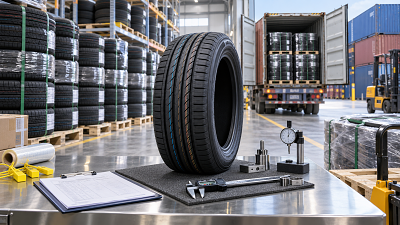
A tire shipment can look acceptable on a quotation sheet and still create problems at three different points: during incoming inspection, at customs clearance, or after fitment in the market. A low unit price does not offset a container held for incomplete documents, a batch that cannot be linked to its test records, or a tire whose load and speed markings do not match the intended application.
For buyers qualifying imported tires, the practical rule is simple: do not approve a supplier on samples, tread appearance, or a general certificate alone. Approval should connect the exact tire specification, manufacturing location, production batch, performance evidence, labeling, and import paperwork into one verifiable record. That approach protects purchasing continuity as well as product quality, especially where replacement tires may serve passenger vehicles, light commercial fleets, or heavier electric vehicles.
Start with the tire you are actually buying
The first qualification failure often occurs before testing begins. A supplier may submit data for one tire construction while quoting another. A pattern name can be shared across several dimensions, load indexes, speed ratings, reinforcement packages, compounds, or production plants. None of those variants should be treated as automatically equivalent.
Create a controlled specification sheet before asking for technical evidence. It should identify the complete size and service description, not merely the nominal tire width and rim diameter. Include the intended vehicle category, operating environment, required markings, preferred construction, and any application-specific priorities such as wet grip, durability, noise, rolling resistance, winter capability, or high-load suitability.
- Full tire size designation and aspect ratio
- Load index and speed symbol
- Radial, bias, reinforced, extra-load, or other construction designation where applicable
- Tubeless or tube-type requirement
- Target tread pattern and sidewall marking artwork
- Approved production country and factory, if sourcing is restricted by policy or market access
- Vehicle use: passenger, SUV, light truck, commercial, trailer, or mixed service
- Special conditions such as EV weight, high torque, low-noise expectations, or frequent urban stop-start use
Be particularly careful with EV-oriented replacement demand. A tire may fit the wheel and carry a familiar size code while being poorly suited to sustained higher axle loads or rapid torque application. The procurement decision should not assume that “EV compatible” is a performance category unless the supplier can explain which construction or test evidence supports that claim.
Separate product testing from supplier promises
Test reports are useful only when they can be tied to the quoted product. A report without a clear size, model, production identity, test method, issuing body, and date may confirm very little. It can also be difficult to know whether the tested sample represents normal production or a specially prepared submission.
Ask for the performance evidence required in the destination market and compare it to the exact SKU under review. Depending on the tire type and market, the file may need to address endurance, high-speed performance, bead retention, strength, dimensions, rolling resistance, external rolling noise, wet grip, snow performance, or other regulated characteristics. The applicable tests are not universal; requirements vary by jurisdiction, tire category, and intended use.
Questions that make test data more usable
Rather than asking broadly whether the tire has been “tested,” ask the supplier to identify the tire sample tested and the basis for its selection. Request the report number, test laboratory details, the regulation or method applied, and the date of issue. Confirm whether the sample was produced at the same factory proposed for supply. If the purchase covers several sizes, determine whether each size has direct evidence or whether a family approval is permitted and adequately documented in the relevant market.
Performance claims should also be read in context. A tire described as low rolling resistance may involve trade-offs in wet grip, wear, or cost. A quiet tread design can behave differently when mounted on different vehicles or driven on coarse road surfaces. A procurement file does not need to predict every real-world outcome, but it should show that the buyer understands which claims are regulated, which are supplier declarations, and which are merely sales language.
Where a report leaves uncertainty, resolve it before issuing the production purchase order. Re-testing after the shipment is on the water may be necessary in some circumstances, but it is not a substitute for pre-approval. It can delay distribution while inventory, customs exposure, and payment obligations continue to accumulate.
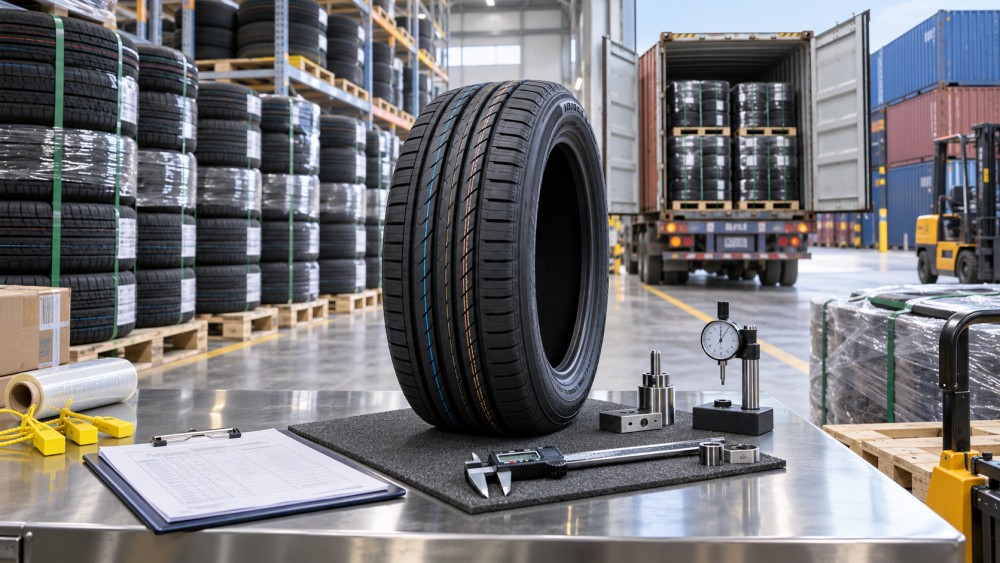
Traceability must survive the trip from factory to warehouse
Tires are consumable products, but they still need a disciplined traceability path. When a warehouse identifies an issue such as unusual vibration, inconsistent sidewall marking, premature tread separation, or mismatched labeling, the buyer should be able to isolate the affected stock. That requires more than a commercial invoice and a container number.
At a minimum, capture the manufacturer’s identity, factory location, tire identification markings, production date code, batch or lot reference, size, and SKU. The packing list should allow those details to be reconciled to pallet, bundle, or container positions. The more mixed the shipment, the more important that reconciliation becomes.
Production date deserves careful treatment. A date code helps identify manufacturing age and supports stock rotation, but it does not independently prove storage quality or remaining service life. Procurement teams should establish an internal acceptance rule for maximum production age at delivery, then account for transit duration, clearance time, and warehouse dwell time. Avoid vague wording such as “recent production” in a purchase order; define what will be accepted and how it will be measured.
Build a traceability pack, not a loose document folder
A useful traceability pack links the commercial and technical records in one chain. The purchase order states the approved specification. The supplier’s confirmation identifies the production plant and ordered SKU. The inspection record records what was checked. The packing list maps quantities and lots. Shipping papers connect those lots to the consignment. Receiving records confirm which batches entered inventory.
- Assign an internal SKU and revision-controlled specification to each approved tire.
- Require the supplier to state the factory and production lot or date-code range before shipment.
- Inspect a statistically appropriate portion of finished goods for size, markings, appearance, date codes, and packaging consistency.
- Record inspection findings against container and packing-list references rather than keeping photographs without identifiers.
- Quarantine any mixed, unmarked, or undocumented lots until their identity is clarified.
- Retain records long enough to support market obligations, warranty handling, and supplier corrective action.
The inspection scope should reflect product risk. Sidewall markings, visible defects, bead condition, tread contamination, damage from handling, and inconsistent date codes are practical checks at shipment or receiving. Dimensional or laboratory checks may be appropriate for initial supplier approval, a new mold, a changed plant, recurring quality concerns, or higher-risk applications. The decision should be documented so inspection is repeatable rather than dependent on whoever receives the container.
Customs readiness begins before the goods are booked
A compliant tire can still be delayed if import documentation is incomplete or inconsistent. Customs and border requirements vary by country, and trade measures can change, so buyers should confirm the current rules for the import destination before committing to a supplier or production origin.
Core documents commonly include the commercial invoice, packing list, bill of lading or airway bill, and customs declaration data. Depending on origin, destination, product classification, and trade arrangement, the shipment may also require origin evidence, conformity documentation, labeling records, inspection records, or other product-specific materials. The exact list should be confirmed with the importer of record, customs broker, and relevant regulatory channels rather than copied from a previous shipment.
Classification matters because the tariff treatment of tires can depend on their type and intended use. Passenger-car tires, bus and truck tires, motorcycle tires, agricultural tires, and other categories may not be treated the same way. Incorrect classification can affect duty calculation, documentation, and the ability to use a preferential trade arrangement. Do not ask a supplier simply to “use the usual code.” Require the classification rationale to be reviewed internally or by the appointed customs specialist.
Documents should agree on the same commercial reality
Discrepancies that appear minor can trigger questions during clearance. The invoice description should align with the packing list, purchase order, shipping records, and declared classification. Tire quantities, brand or model identifiers where relevant, country of origin, unit values, currency, and Incoterms should be consistent. A mismatch in country of origin between documents is especially serious because origin can influence duty, trade remedies, and admissibility.
Incoterms require attention because they define commercial responsibilities, not every legal obligation. A supplier arranging freight does not automatically remove the buyer’s responsibility to ensure that imported goods meet market requirements. Identify who acts as importer of record, who provides product documentation, who pays duties and taxes, who controls customs declarations, and who bears cost if cargo is held or rejected.
Use samples carefully: they are a gate, not full approval
A physical sample remains valuable because it reveals matters that paperwork may not show: sidewall clarity, finish consistency, tread pattern accuracy, packaging condition, odor from excessive processing residues, bead protection, and obvious handling damage. It also gives purchasing, quality, and sales teams a shared reference before production begins.
Yet a sample cannot validate an entire shipment. It may have been produced from a different mold, compound batch, or factory line. Approval should therefore state exactly what the sample represents. Preserve an approved reference sample where practical, photograph identification marks, and attach the approval record to the relevant specification revision. When the supplier changes a mold, material formulation, manufacturing location, key subcontractor, labeling artwork, or construction detail, require written notification and assess whether requalification is necessary.
Change control is often where otherwise capable suppliers become difficult to manage. A purchasing contract should define changes that require prior approval, the evidence expected for a change, and the buyer’s right to reject unapproved substitutions. This is especially important when identical-looking tires can differ in carcass reinforcement, belt package, compound formulation, or service rating.
Decide when a supplier is ready for a commercial order
Supplier qualification does not need to become an endless audit exercise. It needs clear release conditions. Before placing an initial commercial order, the buyer should be able to answer several practical questions: Is the exact tire specification approved? Is there adequate performance and regulatory evidence for the destination market? Can the supplier trace goods to a factory and production lot? Are the customs documents and origin details understood? Has an inspection and nonconformance process been agreed?
Some gaps are manageable before a trial order, while others should stop the purchase. A missing packaging photo may be corrected quickly. A missing report tied to the quoted service description, unclear country of origin, absent mandatory marking, or inability to identify the producing factory is more fundamental. Moving forward on those points transfers uncertainty from the supplier to the importer.
Questions buyers raise during tire import approval
Can a supplier’s general quality certificate replace tire-specific testing?
No. A general quality-system document may indicate that the manufacturer follows a documented process, but it does not prove that a particular tire size, construction, and service description meets the requirements of the target market. Product-specific evidence is still needed.
Is a tire date code enough to establish traceability?
It is only one part of the record. The date code should be connected to the factory, SKU, batch or lot information, shipment documentation, and receiving records. Without that link, it may be difficult to isolate affected inventory or verify what was supplied.
When should an independent inspection be considered?
It can be useful for an initial order, a newly approved factory, a high-value shipment, a supplier with incomplete control records, or a product intended for demanding service. The inspection scope should be defined in advance and should not replace required regulatory testing or customs documentation.
Have questions about this sector analysis, or seeking best practices specific to your niche? Drop us a line below and let the senior consultants at AEVS assist you.
Related News
 Commercial InsightsChoosing a Smart Optical Systems Manufacturer: Capabilities and Quality ChecksChoose a smart optical systems manufacturer with confidence. Compare automotive capabilities, quality checks, compliance, and total program costs.MORE+
 Commercial InsightsChoosing an Aftermarket Wheels Manufacturer: Quality and Lead TimesChoosing an aftermarket wheels manufacturer? Compare quality controls, test evidence, lead times and landed costs to source with confidence.MORE+
 Commercial InsightsLow-MOQ Private Label Tires: How to Evaluate Suppliers and CostsPrivate label tires low MOQ: discover how to compare suppliers, calculate landed costs, verify compliance, and launch your tire brand with confidence.MORE+
 Commercial InsightsEvaluating Automotive Solution Suppliers: What to Ask Customer ReferencesAutomotive solution reference buyers: discover what to ask customer references to uncover quality risks, verify delivery claims, expose hidden costs, and choose suppliers with confidence.MORE+
 Commercial InsightsBuying LED Headlight Assemblies in Europe: Approval and Fitment ChecksSourcing LED headlight assemblies Europe-wide? Discover key approval, beam pattern and vehicle fitment checks to avoid costly mistakes and buy with confidence.MORE+
 Commercial InsightsChoosing a Precision Forging Supplier: Tolerances, Traceability, and Lead TimesChoose a precision forging supplier with confidence. Learn how to verify tolerances, traceability, and lead times to reduce sourcing risks and secure reliable production.MORE+
 Commercial InsightsOver 200 Taiwan Auto Parts Suppliers Target U.S. Buyers at AAPEX 2026Explore 200+ Taiwan auto parts suppliers at AAPEX 2026 in Las Vegas, November 3–5. Discover headlights, collision parts and smart aftermarket solutions for U.S. buyers.MORE+
 Commercial InsightsChoosing a Smart Headlight Distributor: Fitment, Compliance, and Warranty SupportChoose a smart headlights distributor with confidence. Learn how to verify fitment, compliance, and warranty support to reduce costly returns and compare true installed costs.MORE+
 Commercial InsightsMichelin Defender LTX Platinum Tops 2026 Truck and SUV Tire Mileage RankingMichelin Defender LTX Platinum leads the 2026 truck and SUV tire mileage ranking with over 104,000 miles in Treadwell testing. Discover what this means for long-term tire value.MORE+
 Commercial InsightsAluminum Price Fluctuations: Fixed vs. Indexed Supply ContractsNavigate the raw material cost fluctuations aluminum buyers face. Compare fixed vs. indexed contracts, uncover hidden risks, and choose supply terms that protect your margins.MORE+
 Commercial InsightsAutomotive Product Comparison Charts: How Buyers Can Compare Specs, Cost, and FitAutomotive product comparison chart guide for buyers to evaluate specs, total cost, compliance, supplier capability, and vehicle fit for smarter sourcing decisions.MORE+
 Commercial InsightsVan Tire Comparison: Which Specifications Protect Delivery Fleet Uptime?Which commercial van tires should a delivery fleet be comparing when uptime is the governing constraint? Compare load, casing, tread, wet grip, and supply to reduce downtime.MORE+
 Commercial InsightsWhen Does a New Fleet Tire Supplier Repay the Loss of Fitment Data?Changing supplier would cost us a season of fitment data—learn which fleet tire specifications justify switching across 60 vans, from load capacity to wear, wet grip, and EV efficiency.MORE+
 Commercial InsightsQualifying Imported Tires: A Buyer Checklist for Testing, Traceability, and CustomsQualifying imported tires made practical: use this buyer checklist to verify testing, traceability, labeling, and customs documents before ordering.MORE+
 Commercial InsightsHow to Vet a Tire Compliance Supplier for Documentation, Testing, and Recall RiskTire compliance supplier vetting made practical: evaluate documentation, testing controls, traceability, and recall readiness to reduce safety and market-entry risk.MORE+
 Commercial InsightsWhat Supplier Risks Should NEV Buyers Check Before Part Approval?How can vehicle aesthetics be improved without increasing drag? Discover essential NEV supplier-risk checks for traceability, change control, compliance, capacity, and reliable part approval.MORE+
 Commercial InsightsHow Do ECE, DOT, and CCC Rules Differ for Exterior Components?How do ECE, DOT, and CCC rules differ for exterior components? Compare approval, testing, labeling, and compliance strategies to speed global market access.MORE+
 Commercial InsightsHow to Evaluate a Low-Pressure Casting Manufacturer for Automotive Quality PartsLow-pressure casting manufacturer evaluation guide for automotive quality parts—compare process control, tooling, traceability, certifications, capacity, and total cost before sourcing.MORE+
 Commercial InsightsAn automotive supplier assessment that reveals quality-system riskAutomotive supplier assessment insights that uncover quality-system risks, strengthen traceability, and protect safety, compliance, and supplier performance.MORE+
 Commercial InsightsHow to verify automotive supplier capacity before a production ramp-upAutomotive supplier capacity verification: assess bottlenecks, tooling, quality yield, sub-tier supply, and recovery plans before production ramp-up.MORE+
 Commercial InsightsNEV configuration features that matter most for long-term reliabilityWhat are the most reliable NEV configuration features? Explore durable wheels, EV tires, lighting, sensors, sunroofs, and service-ready design for lasting confidence.MORE+
 Commercial InsightsTyre Retreading Machine Inspection Before Reconditioning a Used UnitTyre retreading machine inspection guide: assess safety, structure, controls, heat, pressure and vacuum systems before reconditioning a used unit.MORE+
 Commercial InsightsAutomotive Exterior and Vision Systems: Supplier Qualification ChecklistAutomotive Exterior & Vision Systems procurement checklist: qualify suppliers for sunroofs, wheels, tires, LED lamps, and sensors with confidence.MORE+
 Commercial InsightsAutomotive Component Sourcing in China: How Buyers Verify Quality, Cost, and Supply RiskAutomotive component sourcing China: learn how to verify supplier quality, total landed cost, compliance, and supply risk for reliable wheels, tires, lighting, and EV components.MORE+
 Commercial InsightsHow to Evaluate a Replacement Tire Manufacturer for Fleet Uptime and Cost ControlReplacement tires manufacturer evaluation guide for fleets: compare uptime, cost per kilometer, durability, supply reliability, and pilot performance.MORE+
 Commercial InsightsVehicle Lightweighting for Automotive Design: Balancing Mass, Safety, and CostVehicle lightweighting for automotive design: explore practical strategies to balance mass, EV range, safety, durability, cost, and smart exterior system performance.MORE+
 Commercial InsightsPrivate Label Tire Export: Evaluating Suppliers, Compliance, and Landed CostPrivate label tires export guide: evaluate suppliers, compliance, quality control, warranty terms, and landed cost to build a profitable, reliable tire brand.MORE+
 Commercial InsightsHow to Evaluate a Vehicle Exterior Systems Manufacturer for OEM ProgramsVehicle exterior systems manufacturer selection can make or break OEM programs. Learn how to assess engineering, quality, cost, compliance, and launch readiness before sourcing.MORE+
 Commercial InsightsWhich Tire Compliance Standards Matter Most for Road Safety and Market Access?Automotive compliance standards tires teams must track most: ECE, DOT, labeling, and production controls. Learn what protects road safety, avoids recalls, and secures market access.MORE+
 Commercial InsightsWhat Determines Automotive Vision Systems Accuracy in ADAS Detection?Automotive vision systems accuracy depends on optics, calibration, latency, and environmental robustness. Learn what truly drives reliable ADAS detection in real-world conditions.MORE+
 Commercial InsightsHow to Evaluate a Precision Forging Supplier for Complex Auto PartsPrecision forging supplier evaluation for complex auto parts: learn how to assess process control, tooling, heat treatment, traceability, and total cost to reduce risk and choose a reliable source.MORE+
 Commercial InsightsHow to Evaluate OEM Sourcing References for Automotive Solution Projects?Automotive solution reference OEM sourcing starts with credible proof. Learn how to verify supplier quality, compliance, delivery, and execution records to reduce project risk and choose with confidence.MORE+
 Commercial InsightsVehicle Lightweighting for EVs: Which Materials Deliver Range Gains Without Costly Trade-Offs?Vehicle lightweighting for EVs: discover how aluminum, AHSS, polymers, and selective composites can boost range while controlling cost, safety, and manufacturing trade-offs.MORE+
 Commercial InsightsLow-Pressure Casting Process Explained: Steps, Benefits, and Ideal Alloy ApplicationsLow-pressure casting process explained for automotive and industrial buyers: learn key steps, porosity benefits, alloy fit, and how it compares with gravity casting, die casting, and forging.MORE+
 Commercial InsightsHow to Evaluate an NEV Exterior Components Exporter for Global OEM ProgramsNEV exterior components exporter selection starts with program fit, compliance, and launch control—not price alone. Learn how to assess OEM readiness, cost transparency, and global delivery risk.MORE+
 Commercial InsightsHow to Evaluate an Automotive Sensor Systems Distributor for OEM and Aftermarket SupplyAutomotive sensor systems distributor selection affects quality, compliance, and supply continuity. Learn how to assess OEM and aftermarket capabilities before you buy.MORE+
 Commercial InsightsHow to Verify Replacement Tires Are ECE Approved Before Fleet Purchase?Replacement tires ECE approved verification starts with marks, documents, and supplier traceability. Learn how fleets avoid compliance risks, wrong specs, and costly purchase mistakes.MORE+
 Commercial InsightsHow to Evaluate a NEV Exterior Components Exporter for Quality, Capacity, and ComplianceNEV exterior components exporter selection starts with quality, capacity, and compliance. Discover a practical guide to reduce sourcing risk and choose a reliable long-term partner.MORE+
 Commercial InsightsAutomotive Exterior & Vision Systems Pricing: What Drives Cost in OEM and Aftermarket Supply?Automotive Exterior & Vision Systems pricing explained: discover how materials, compliance, tooling, and supplier capability shape OEM and aftermarket costs—and how smarter sourcing protects margin.MORE+
 Commercial InsightsDOT Compliant Lighting Bulk Orders: What Fleet Buyers Should Verify Before PurchaseDOT compliant lighting bulk buyers should verify true certification, beam performance, durability, supplier consistency, and warranty terms before purchase to reduce fleet risk and total lifecycle cost.MORE+


