Industry Portal
Related News
- 00
0000-00
China Tire Exports Rise 3.4% as Major Producers' Quotes Climb - 00
0000-00
Japan's Koito Targets 30% Lower Headlamp Costs Amid Chinese Competition - 00
0000-00
Choosing an LED Headlight Assembly Manufacturer: Quality and Supply Criteria - 00
0000-00
Ningbo NEV Export Value Hits October Record; EU Exports Rise 52.4-Fold - 00
0000-00
Choosing an LED Headlights Manufacturer: Quality and Supply Checks
Choosing an LED Headlight Assembly Manufacturer: Quality and Supply Criteria
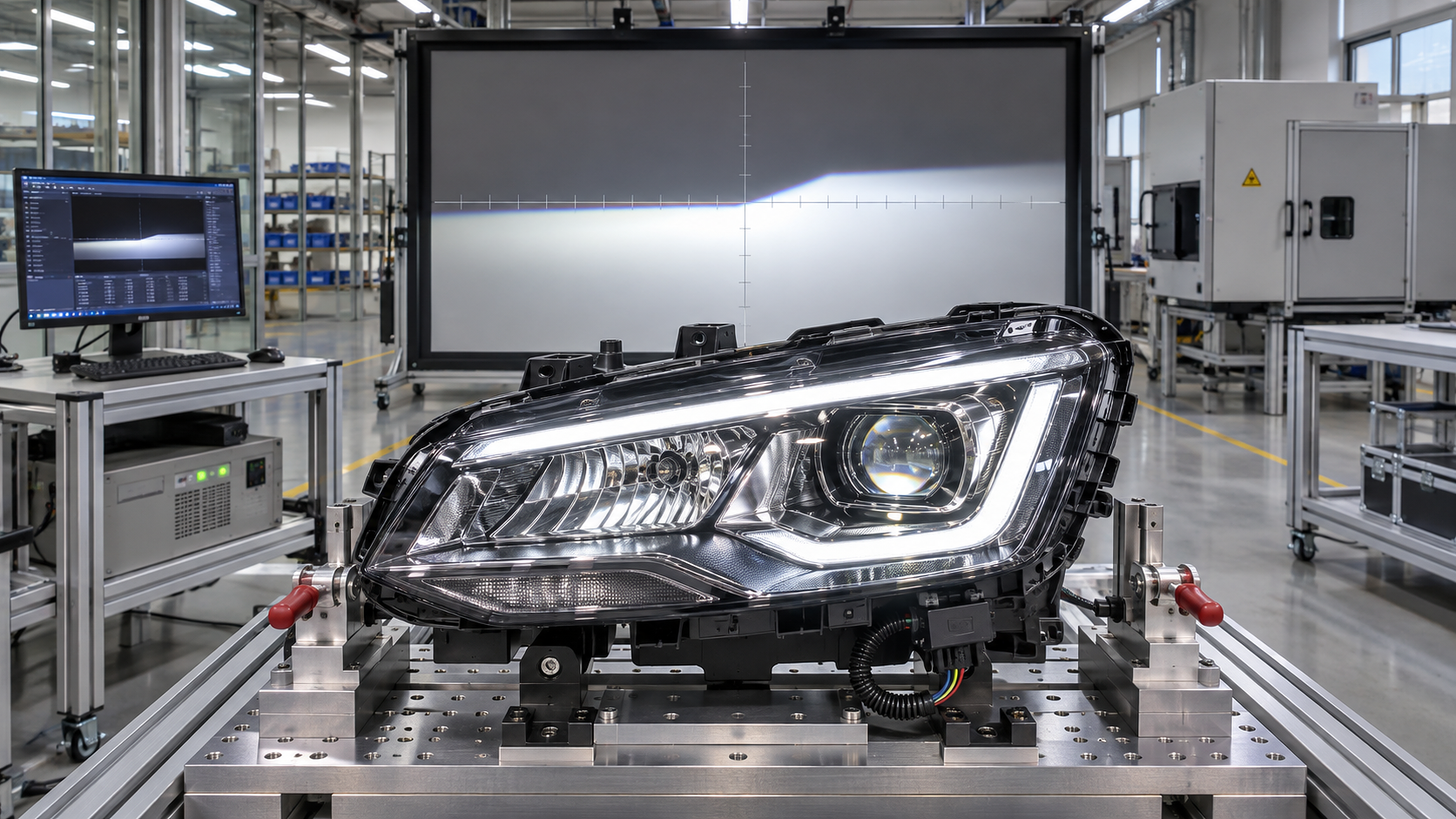
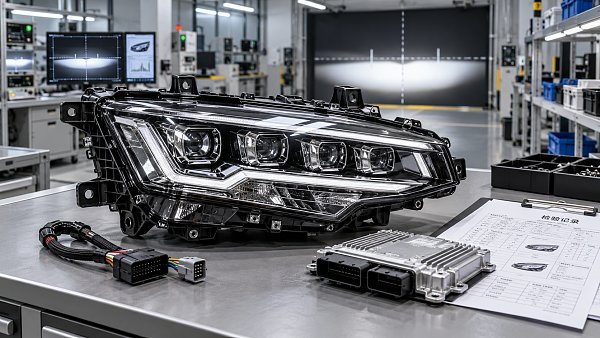
The lowest quoted price for an LED headlight assembly can become expensive when optical rework, unplanned tooling changes, warranty returns, or delivery interruptions are added. A sound comparison starts with a common vehicle specification and follows each offer through validation, production, and replacement support. The strongest evidence is a set of traceable results from representative production parts, matched to the intended markets and installation conditions.
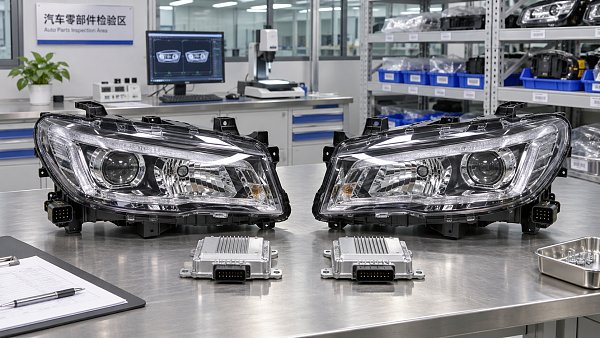
An LED headlight assemblies manufacturer should be assessed against the complete lamp, including its optics, electronics, housing, seals, mounting points, and interfaces. Strong LED component data alone cannot establish that an assembled headlamp will maintain its beam, survive vehicle conditions, or arrive consistently throughout the program.
Define the assembly before comparing quotations
Issue the same technical package to each candidate. Identify the vehicle application, left- or right-hand traffic requirements, destination markets, expected annual and peak volumes, service life, and production and replacement-part schedules. Include available space, mounting datums, electrical interfaces, control signals, styling surfaces, and the required lighting functions. A low-beam-only replacement and an integrated assembly with adaptive functions have different validation and supply demands.
State whether the quotation covers a complete lamp, an LED module, or a housing supplied without control electronics. Assemblies that look interchangeable can require different drivers, wiring, aiming procedures, or vehicle software. Record assumptions for connectors, bulbs or modules where applicable, brackets, packaging, and labeling. Unresolved interface assumptions often surface as late engineering changes rather than visible line items in the initial offer.
For aftermarket applications, define fitment by vehicle configuration and production change level, not model name alone. Mounting geometry, lamp leveling, connector pinout, and control-module compatibility can change within the same vehicle line. If a listing covers several variants, request evidence for each claimed configuration and a process for controlling fitment data.
Evaluate optical performance in the finished lamp
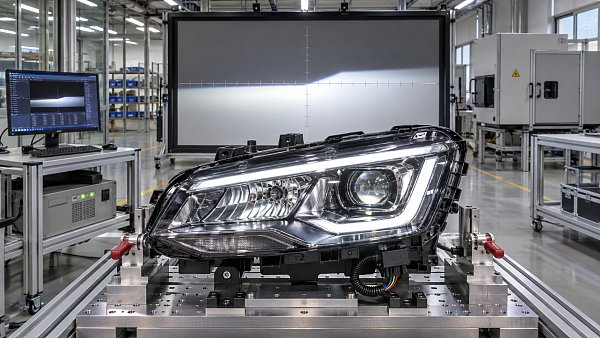
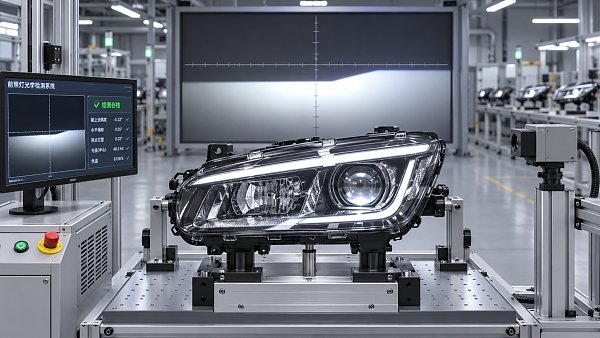
Compare measured beam distributions against the applicable specification, using the intended lens, reflector or projection optics, LED module, driver, and aiming position. Request the test configuration, operating voltage, stabilization conditions, sample identification, and measurement locations. A luminous-flux figure for the LED package does not establish road illumination or glare control after light passes through the optical system.
Beam shape and aim retention deserve separate attention. An assembly can meet a photometric target when precisely aimed on a fixture yet produce poor results after mounting variation or vibration changes its orientation. Ask for dimensional controls on optical datums and brackets, together with evidence that the assembled lamp maintains aim through the agreed mechanical tests.
Color consistency also needs a defined measurement method. LED binning, lens transmission, and optical geometry influence appearance; matching individual LEDs does not guarantee that left and right lamps look alike in the vehicle. Set acceptance limits and viewing or measurement conditions for paired lamps where visible consistency matters.
Adaptive and matrix functions
For a headlamp that switches segments or adjusts its beam, static photometry covers only part of the assessment. Define which controller commands each function, the communication interface, fault response, calibration responsibilities, and software version used for validation. Evidence should connect the lamp to the representative vehicle system or an agreed test environment. A functioning LED matrix on a bench does not establish correct glare avoidance when camera inputs, vehicle speed, and calibration are involved.
Thermal design, moisture control, and durability
LED junction temperature affects light output and long-term performance, but it is rarely measured directly in a finished lamp. Review the supplier's thermal model, the chosen temperature measurement points, and the relationship between those points and LED limits. Results should reflect the installed orientation, restricted airflow, electrical load, and ambient conditions in the vehicle package. A result obtained with an exposed lamp on an open bench cannot by itself demonstrate performance behind a tightly packaged front fascia.
Ask how the design handles heat soak, prolonged operation, and low-speed conditions. A thermal foldback strategy can protect components while reducing output; the trigger, behavior, and recovery should be compatible with the vehicle specification. If active cooling is used, include fan noise, obstruction, and failure behavior in the assessment. Passive heat sinks avoid fan-related failure modes but still require adequate heat transfer and space.
Condensation and water ingress should be treated as distinct observations. Temporary internal fogging can occur as temperature and humidity change, while droplets, persistent moisture, or water marks can indicate a sealing or venting problem. Define the test cycle, acceptable appearance, and recovery time before interpreting a result. Examine lens-to-housing joints, adhesive controls, vent placement, connector seals, and pressure equalization together; sealing every opening without a suitable vent strategy can create pressure loads on the assembly.
Durability evidence should cover the stresses relevant to the installation: vibration at actual mounting points, thermal cycling, humidity, chemical exposure, and impact where specified. Lens coatings require particular attention when cleaning agents, abrasion, or ultraviolet exposure are part of service. Review failures as well as passes: a repaired sample, altered fixture, or revised acceptance limit can change the meaning of a test report.
Regulatory evidence and production conformity
Identify the rules that apply to each destination, lamp function, and vehicle category before design freeze. Requirements and approval routes differ between markets, and a marking or report for one configuration does not automatically cover another. Request the relevant approval documents or compliance evidence, the exact part numbers and variants covered, and confirmation that the production design matches the tested configuration.
Where formal approval is required, establish who holds it and who is responsible for maintaining it after a design or manufacturing change. Where a market relies on certification by the responsible party, agree on the supporting test evidence and record retention. Descriptions such as “compliant” or “approved” in a quotation are insufficient without the underlying scope and documentation.
Production conformity matters after initial validation. Ask how optical aim, electrical operation, sealing, and critical dimensions are controlled during routine manufacture, including sampling frequency and reaction plans when results drift. A laboratory report from an early prototype does not demonstrate that later production lamps use the same LED source, optics, driver settings, and assembly process.
Manufacturing control and traceability
Map the actual production flow from incoming LEDs and electronic components through printed circuit board assembly, optical alignment, lens bonding, sealing, end-of-line testing, and packing. Identify work performed at external sites. A supplier that assembles lamps in one location can still depend on separate sources for drivers, molded lenses, coatings, or LED packages; a disruption or uncontrolled substitution at any of those points can affect the finished part.
Traceability should connect each finished lamp or defined batch to relevant material lots, production records, inspection results, and software or calibration versions where applicable. The useful level of detail depends on the containment decision: if a field failure appears, records should identify which shipments share the affected process or material. Confirm the retention period and the time needed to retrieve records.
Request the process for engineering changes, including proposed LED substitutions, optical material changes, tooling transfers, bonding materials, firmware revisions, and changes of sub-supplier. The agreement should specify notification, approval rights, validation evidence, and the point at which revised parts enter production. Even a component with similar nominal specifications can alter beam color, heat transfer, or electromagnetic behavior in the assembled lamp.
Capacity and delivery commitments
Capacity claims are useful only when tied to a defined product mix, shift pattern, yield, and bottleneck. Ask which steps constrain output: molding, coating, circuit-board assembly, optical alignment, sealing cure, or testing. Shared tooling or a single end-of-line station can limit a particular lamp even when the factory has spare space elsewhere.
Compare the forecast with the supplier's committed capacity, not its theoretical maximum. Include launch ramp-up, seasonal peaks, service parts, and recovery after downtime. Clarify lead times for LEDs, electronic components, lenses, housings, and dedicated tooling; a finished-goods buffer does not protect a program indefinitely if a critical component has a long replenishment cycle.
Document the response to a shortage: notification timing, allocation rules, alternative sources, transport options, and recovery plans. A second source is meaningful only when the alternative design, production process, and required approvals have been validated for the application. For replacement lamps, establish the period for which tooling, electronics, and fitment records will remain available after vehicle production ends.
Compare total cost on a common basis
Build a landed-cost model using the same forecast, delivery point, currency assumptions, and commercial terms for every offer. Separate one-time charges from recurring costs and identify which party owns the tooling and design records. A lower piece price can be offset by a different packaging assumption, an excluded control unit, or a minimum order that creates excess inventory.
Use a small set of demand scenarios rather than a single annual volume. Fixed tooling and validation costs are spread over fewer lamps when demand falls, while peak demand can require additional capacity or premium freight. Agree on price-adjustment terms, forecast commitments, cancellation liabilities, and ownership of unused materials before using the model to select an offer.
Resolve evidence gaps before awarding supply
Rank candidates against the requirements that determine vehicle acceptance and continuity: applicable regulatory evidence, optical and thermal performance, production controls, capacity, and commercial terms. Separate an existing capability from a promise to develop one. A missing report, unbuilt tool, or unqualified sub-supplier is an open action with a cost, owner, and deadline.
Before committing to volume production, align the drawing revision, approved samples, test plan, inspection limits, packaging specification, and change-control procedure. Define escalation and containment responsibilities for nonconforming shipments, including who authorizes sorting, replacement, and root-cause work. These records give both parties a practical basis for resolving deviations when the first production lots arrive.
Have questions about this sector analysis, or seeking best practices specific to your niche? Drop us a line below and let the senior consultants at AEVS assist you.
Related News
 Commercial InsightsChina Tire Exports Rise 3.4% as Major Producers' Quotes ClimbChina tire exports rose 3.4% as major producers raised quotes. Explore what higher tire prices and lower raw material costs could mean for buyers and margins.MORE+
 Commercial InsightsChoosing an LED Headlight Assembly Manufacturer: Quality and Supply CriteriaChoose an LED headlight assemblies manufacturer with confidence. Compare optical quality, compliance, production controls, supply reliability, and total cost.MORE+
 Commercial InsightsNingbo NEV Export Value Hits October Record; EU Exports Rise 52.4-FoldNingbo NEV export value hit an October record as EU exports rose 52.4-fold. Explore the trade signal and key checks for exporters and buyers.MORE+
 Commercial InsightsChoosing an LED Headlights Manufacturer: Quality and Supply ChecksChoosing an LED headlights manufacturer? Discover the quality, compliance and supply checks that help buyers reduce risk and source with confidence.MORE+
 Commercial InsightsHeadlight Assembly Price: OEM vs Aftermarket Costs and Buying FactorsCompare headlight assembly prices for OEM and aftermarket options. Discover key buying factors, hidden costs, and fitment checks before you choose.MORE+
 Commercial InsightsPep Boys Road Report: Chicago Tops List as Southern Tire Repairs RisePep Boys Road Report ranks Chicago first for worst roads as Southern tire repairs rise. Explore the findings and their impact on auto service businesses.MORE+
 Commercial InsightsChoosing a Smart Optical Systems Manufacturer: Capabilities and Quality ChecksChoose a smart optical systems manufacturer with confidence. Compare automotive capabilities, quality checks, compliance, and total program costs.MORE+
 Commercial InsightsChoosing an Aftermarket Wheels Manufacturer: Quality and Lead TimesChoosing an aftermarket wheels manufacturer? Compare quality controls, test evidence, lead times and landed costs to source with confidence.MORE+
 Commercial InsightsLow-MOQ Private Label Tires: How to Evaluate Suppliers and CostsPrivate label tires low MOQ: discover how to compare suppliers, calculate landed costs, verify compliance, and launch your tire brand with confidence.MORE+
 Commercial InsightsEvaluating Automotive Solution Suppliers: What to Ask Customer ReferencesAutomotive solution reference buyers: discover what to ask customer references to uncover quality risks, verify delivery claims, expose hidden costs, and choose suppliers with confidence.MORE+
 Commercial InsightsBuying LED Headlight Assemblies in Europe: Approval and Fitment ChecksSourcing LED headlight assemblies Europe-wide? Discover key approval, beam pattern and vehicle fitment checks to avoid costly mistakes and buy with confidence.MORE+
 Commercial InsightsChoosing a Precision Forging Supplier: Tolerances, Traceability, and Lead TimesChoose a precision forging supplier with confidence. Learn how to verify tolerances, traceability, and lead times to reduce sourcing risks and secure reliable production.MORE+
 Commercial InsightsOver 200 Taiwan Auto Parts Suppliers Target U.S. Buyers at AAPEX 2026Explore 200+ Taiwan auto parts suppliers at AAPEX 2026 in Las Vegas, November 3–5. Discover headlights, collision parts and smart aftermarket solutions for U.S. buyers.MORE+
 Commercial InsightsChoosing a Smart Headlight Distributor: Fitment, Compliance, and Warranty SupportChoose a smart headlights distributor with confidence. Learn how to verify fitment, compliance, and warranty support to reduce costly returns and compare true installed costs.MORE+
 Commercial InsightsMichelin Defender LTX Platinum Tops 2026 Truck and SUV Tire Mileage RankingMichelin Defender LTX Platinum leads the 2026 truck and SUV tire mileage ranking with over 104,000 miles in Treadwell testing. Discover what this means for long-term tire value.MORE+
 Commercial InsightsAluminum Price Fluctuations: Fixed vs. Indexed Supply ContractsNavigate the raw material cost fluctuations aluminum buyers face. Compare fixed vs. indexed contracts, uncover hidden risks, and choose supply terms that protect your margins.MORE+
 Commercial InsightsAutomotive Product Comparison Charts: How Buyers Can Compare Specs, Cost, and FitAutomotive product comparison chart guide for buyers to evaluate specs, total cost, compliance, supplier capability, and vehicle fit for smarter sourcing decisions.MORE+
 Commercial InsightsVan Tire Comparison: Which Specifications Protect Delivery Fleet Uptime?Which commercial van tires should a delivery fleet be comparing when uptime is the governing constraint? Compare load, casing, tread, wet grip, and supply to reduce downtime.MORE+
 Commercial InsightsWhen Does a New Fleet Tire Supplier Repay the Loss of Fitment Data?Changing supplier would cost us a season of fitment data—learn which fleet tire specifications justify switching across 60 vans, from load capacity to wear, wet grip, and EV efficiency.MORE+
 Commercial InsightsQualifying Imported Tires: A Buyer Checklist for Testing, Traceability, and CustomsQualifying imported tires made practical: use this buyer checklist to verify testing, traceability, labeling, and customs documents before ordering.MORE+
 Commercial InsightsHow to Vet a Tire Compliance Supplier for Documentation, Testing, and Recall RiskTire compliance supplier vetting made practical: evaluate documentation, testing controls, traceability, and recall readiness to reduce safety and market-entry risk.MORE+
 Commercial InsightsWhat Supplier Risks Should NEV Buyers Check Before Part Approval?How can vehicle aesthetics be improved without increasing drag? Discover essential NEV supplier-risk checks for traceability, change control, compliance, capacity, and reliable part approval.MORE+
 Commercial InsightsHow Do ECE, DOT, and CCC Rules Differ for Exterior Components?How do ECE, DOT, and CCC rules differ for exterior components? Compare approval, testing, labeling, and compliance strategies to speed global market access.MORE+
 Commercial InsightsHow to Evaluate a Low-Pressure Casting Manufacturer for Automotive Quality PartsLow-pressure casting manufacturer evaluation guide for automotive quality parts—compare process control, tooling, traceability, certifications, capacity, and total cost before sourcing.MORE+
 Commercial InsightsAn automotive supplier assessment that reveals quality-system riskAutomotive supplier assessment insights that uncover quality-system risks, strengthen traceability, and protect safety, compliance, and supplier performance.MORE+
 Commercial InsightsHow to verify automotive supplier capacity before a production ramp-upAutomotive supplier capacity verification: assess bottlenecks, tooling, quality yield, sub-tier supply, and recovery plans before production ramp-up.MORE+
 Commercial InsightsNEV configuration features that matter most for long-term reliabilityWhat are the most reliable NEV configuration features? Explore durable wheels, EV tires, lighting, sensors, sunroofs, and service-ready design for lasting confidence.MORE+
 Commercial InsightsTyre Retreading Machine Inspection Before Reconditioning a Used UnitTyre retreading machine inspection guide: assess safety, structure, controls, heat, pressure and vacuum systems before reconditioning a used unit.MORE+
 Commercial InsightsAutomotive Exterior and Vision Systems: Supplier Qualification ChecklistAutomotive Exterior & Vision Systems procurement checklist: qualify suppliers for sunroofs, wheels, tires, LED lamps, and sensors with confidence.MORE+
 Commercial InsightsAutomotive Component Sourcing in China: How Buyers Verify Quality, Cost, and Supply RiskAutomotive component sourcing China: learn how to verify supplier quality, total landed cost, compliance, and supply risk for reliable wheels, tires, lighting, and EV components.MORE+
 Commercial InsightsHow to Evaluate a Replacement Tire Manufacturer for Fleet Uptime and Cost ControlReplacement tires manufacturer evaluation guide for fleets: compare uptime, cost per kilometer, durability, supply reliability, and pilot performance.MORE+
 Commercial InsightsVehicle Lightweighting for Automotive Design: Balancing Mass, Safety, and CostVehicle lightweighting for automotive design: explore practical strategies to balance mass, EV range, safety, durability, cost, and smart exterior system performance.MORE+
 Commercial InsightsPrivate Label Tire Export: Evaluating Suppliers, Compliance, and Landed CostPrivate label tires export guide: evaluate suppliers, compliance, quality control, warranty terms, and landed cost to build a profitable, reliable tire brand.MORE+
 Commercial InsightsHow to Evaluate a Vehicle Exterior Systems Manufacturer for OEM ProgramsVehicle exterior systems manufacturer selection can make or break OEM programs. Learn how to assess engineering, quality, cost, compliance, and launch readiness before sourcing.MORE+
 Commercial InsightsWhich Tire Compliance Standards Matter Most for Road Safety and Market Access?Automotive compliance standards tires teams must track most: ECE, DOT, labeling, and production controls. Learn what protects road safety, avoids recalls, and secures market access.MORE+
 Commercial InsightsWhat Determines Automotive Vision Systems Accuracy in ADAS Detection?Automotive vision systems accuracy depends on optics, calibration, latency, and environmental robustness. Learn what truly drives reliable ADAS detection in real-world conditions.MORE+
 Commercial InsightsHow to Evaluate a Precision Forging Supplier for Complex Auto PartsPrecision forging supplier evaluation for complex auto parts: learn how to assess process control, tooling, heat treatment, traceability, and total cost to reduce risk and choose a reliable source.MORE+
 Commercial InsightsHow to Evaluate OEM Sourcing References for Automotive Solution Projects?Automotive solution reference OEM sourcing starts with credible proof. Learn how to verify supplier quality, compliance, delivery, and execution records to reduce project risk and choose with confidence.MORE+
 Commercial InsightsVehicle Lightweighting for EVs: Which Materials Deliver Range Gains Without Costly Trade-Offs?Vehicle lightweighting for EVs: discover how aluminum, AHSS, polymers, and selective composites can boost range while controlling cost, safety, and manufacturing trade-offs.MORE+
 Commercial InsightsLow-Pressure Casting Process Explained: Steps, Benefits, and Ideal Alloy ApplicationsLow-pressure casting process explained for automotive and industrial buyers: learn key steps, porosity benefits, alloy fit, and how it compares with gravity casting, die casting, and forging.MORE+