Industry Portal
Related News
- 00
0000-00
Ningbo NEV Export Value Hits October Record; EU Exports Rise 52.4-Fold - 00
0000-00
Choosing an LED Headlights Manufacturer: Quality and Supply Checks - 00
0000-00
How Does a Smart LED Headlight System Adapt to Oncoming Traffic? - 00
0000-00
Smart Tire Growth Shifts to Integrated Sensors as Tire Makers Gain Pricing Power - 00
0000-00
Headlight Assembly Price: OEM vs Aftermarket Costs and Buying Factors
Choosing an LED Headlights Manufacturer: Quality and Supply Checks
Choosing an LED Headlights Manufacturer: Quality and Supply Checks
Choosing an LED headlights manufacturer involves more than comparing unit prices and product specifications. For procurement teams, inconsistent beam performance, inadequate thermal management, and unreliable delivery can lead to costly delays and compliance risks. A thorough supplier assessment should examine optical testing, applicable ECE or DOT requirements, production capacity, component traceability, and quality controls. This guide outlines the key quality and supply checks buyers can use to evaluate potential partners and make more confident sourcing decisions.
The first distinction is what you are buying. A complete headlamp assembly, an LED module for integration, and an aftermarket replacement part place different responsibilities on the supplier and customer. Unless those boundaries are clear, two quotations can look comparable while leaving very different amounts of testing, engineering, and compliance work to the buyer.
Define the sourcing scope before requesting prices
A useful request for quotation identifies the vehicle application, destination markets, expected annual volumes, launch schedule, and required service life. It should also state whether the supplier is responsible for the complete lamp, its electronics and software, or only selected components. Include the required vehicle interfaces, mounting envelope, power supply conditions, and any customer-specific validation procedures.
For replacement assemblies, specify vehicle model years, variants, left- or right-hand traffic requirements, and whether the lamp must work with existing control modules. A visually similar housing does not guarantee correct mounting, beam aim, electrical compatibility, or diagnostic behavior. For an original-equipment program, agree on who owns the optical design, tooling, calibration, and change approval process.
Buyers should also separate mandatory functions from desirable features. Adaptive driving beam, automatic leveling, and complex matrix control may be justified for one vehicle program but add cost and integration work to another. A feature is not genuinely included until the quotation covers the hardware, software, validation, and vehicle inputs needed to make it operate.
Ask for evidence of beam performance, not just brightness
LED output figures alone say little about how effectively a headlamp illuminates the road. Lens design, reflectors, LED positioning, and manufacturing tolerances all influence the resulting beam. A lamp can appear bright in a showroom yet produce poor distribution or excessive glare when installed and aimed on a vehicle.
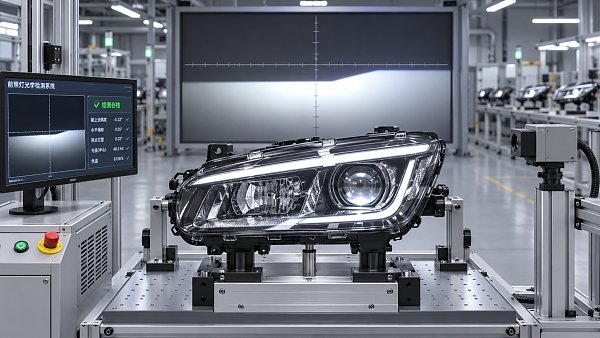
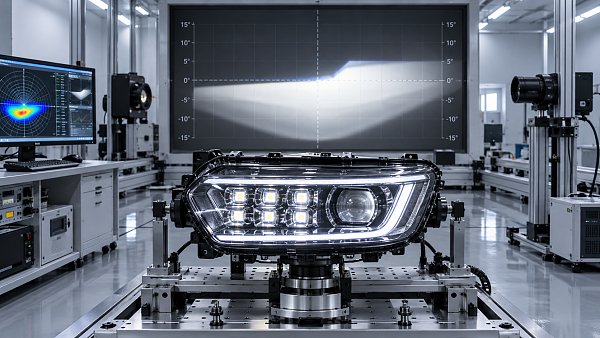
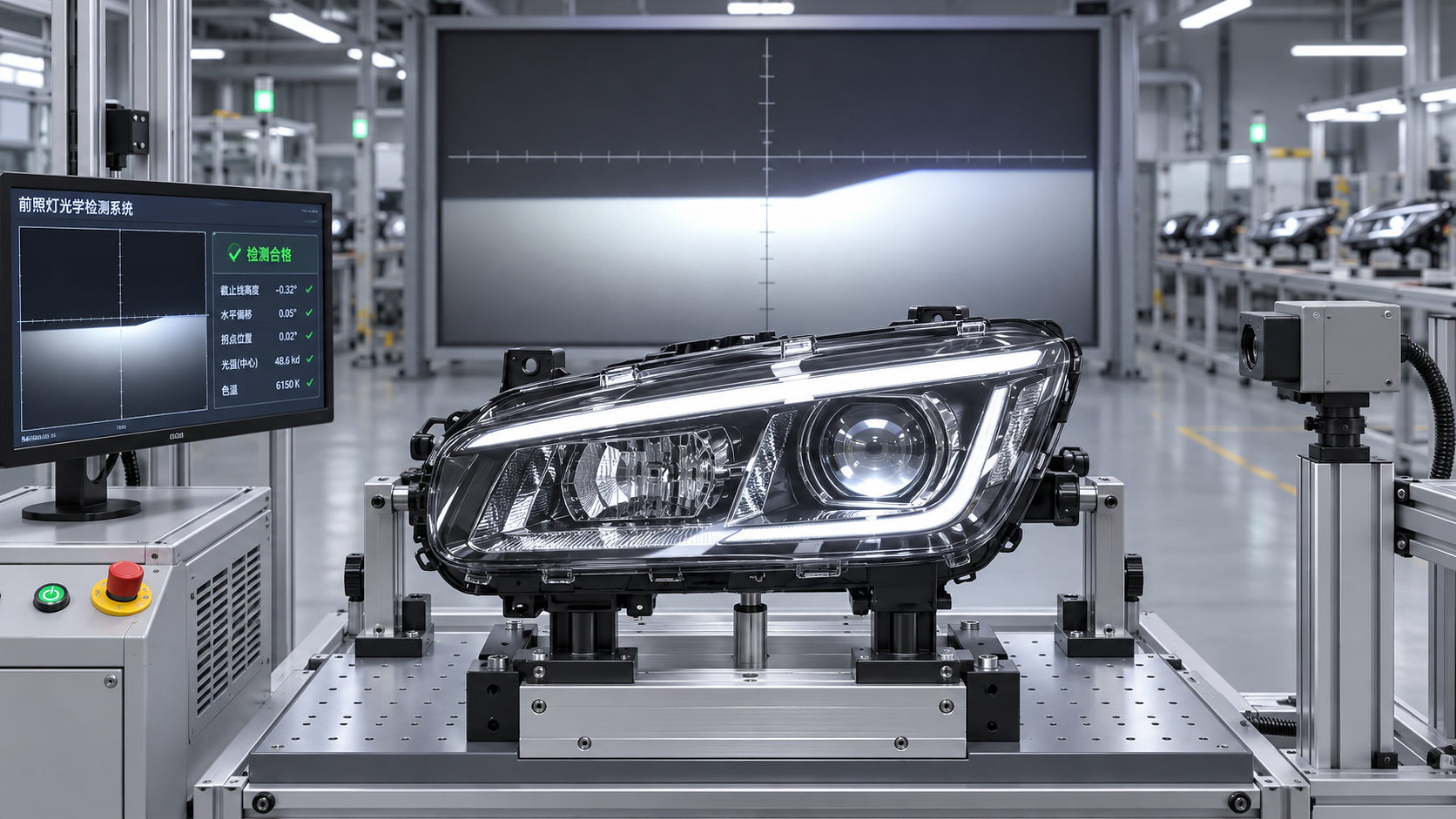
Request photometric test reports for the relevant lamp configuration and functions. The reports should identify the tested part number, revision, test conditions, and applicable requirements. Where appropriate, ask how the supplier verifies low- and high-beam performance, cutoff positioning, aiming adjustment, and consistency between production units. For matrix systems, review how individual segments are controlled and how the system responds to faulty or unavailable inputs.
Prototype results are useful, but they do not prove that production will match them. Ask which optical characteristics are checked at the end of the line, how test equipment is calibrated, and what happens when a lamp fails. A supplier should be able to explain the connection between development validation and routine production control without treating them as the same test.
Check compliance against the actual market and part
A claim that a lamp is “ECE approved” or “DOT compliant” is a starting point for verification, not a complete purchasing specification. Requirements differ by destination, lamp function, vehicle category, and product configuration. Confirm the applicable rules with the responsible compliance specialists for each market before finalizing the design or purchase order.
In markets applying relevant UN regulations, ask for the applicable approval documentation and markings, then check that they correspond to the quoted lamp and its intended use. In the United States, applicable federal requirements include FMVSS No. 108; manufacturers generally certify compliance rather than obtain a routine DOT product approval. Ask for the supplier’s compliance evidence and confirm the responsibilities of the manufacturer, importer, and seller for the specific transaction.
Pay particular attention to changes after testing. A new LED source, lens material, electronic driver, or production location may require assessment against the original approval or compliance basis. Agree in writing that the supplier will notify the buyer before making such changes and identify who decides whether additional testing or regulatory action is needed.
Look beyond the LED to heat, moisture, and electronics
Thermal management is a purchasing issue because a headlamp’s performance depends on the complete assembly, not just the rated life of its LEDs. Heat paths through the circuit board, housing, heat sink, and surrounding vehicle structure affect component temperatures. Ask for thermal validation under agreed operating conditions, including any relevant high-temperature, low-speed, and prolonged-use scenarios.
Review what the lamp does when temperatures rise. Does the driver reduce output, record a fault, or shut down? Those choices can affect both road performance and vehicle diagnostics. A bench result obtained with unrestricted airflow may not represent a tightly packaged electric vehicle front end, so installation assumptions matter.
Moisture control deserves similar scrutiny. Ask about sealing, vent design, condensation behavior, and the acceptance criteria used during environmental testing. Some temporary condensation may be assessed differently from persistent water accumulation; the contract should define what is acceptable for the application. Also review vibration, thermal cycling, connector durability, electromagnetic compatibility, and resistance to chemicals or cleaning agents where relevant.
For a smart headlamp, include software and electrical behavior in the assessment. Establish the communication interface, diagnostic requirements, update responsibilities, and expected behavior if a sensor signal is lost. A matrix lamp’s hardware cannot deliver its intended function without compatible vehicle inputs and calibration.
Examine the factory’s control of variation
A factory tour is more useful when it follows the flow of a specific part: incoming LEDs and electronic components, assembly, sealing, aiming, final inspection, packaging, and shipment. Ask where process parameters are recorded and how nonconforming material is contained. If a critical assembly step is automated, determine how the equipment detects a fault and prevents an incomplete lamp from moving downstream.
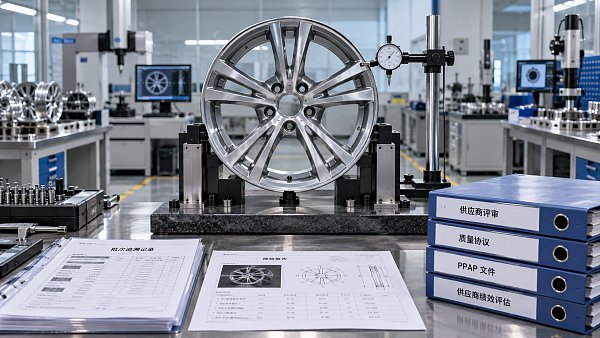
A quality-management certificate can help establish the supplier’s framework, but its scope, site, and validity should be checked. For automotive programs, buyers may request evidence relevant to IATF 16949 where applicable, alongside the actual control plan, process failure analysis, and production part approval documentation required by the customer. A certificate does not replace a review of the processes used for the quoted part.
Traceability should be practical in both directions. Can the supplier identify which batches of LEDs, drivers, lenses, and sealants went into a finished lamp? Can it identify affected shipments if a component lot is later questioned? Ask to see a sample trace rather than accepting a general statement that batches are recorded. The level of traceability and record-retention period should reflect the customer’s requirements and the commercial agreement.
Test delivery promises against real capacity
Quoted capacity is not the same as available capacity. Ask which production line will make the lamp, what other programs share it, and how capacity changes during maintenance, holidays, or demand peaks. A supplier may have sufficient assembly space but still depend on a constrained LED, semiconductor, lens, or tooling source.
Request lead times for production tooling, initial samples, validation, and serial shipments separately. Clarify when the clock starts: after the purchase order, after design approval, or after receipt of a deposit. For a new program, require a milestone schedule with named owners and an escalation route for missed dates. For an established aftermarket part, ask whether stock is finished inventory or material that still needs assembly and testing.
Continuity planning should cover more than a promise of backup supply. Identify single-source components, alternative sites or materials, and the approvals required before a substitute can be used. An unapproved substitution may resolve a short-term shortage while creating a larger optical or compliance problem.
Compare total landed and lifecycle cost
The lowest piece price can be misleading if quotations use different assumptions. Put suppliers on a common basis for forecast volume, order frequency, packaging, delivery terms, currency, and payment conditions. Separate one-time engineering and tooling charges from recurring unit costs, and confirm who owns the tooling and pays for maintenance or replacement.
Then examine the costs outside the quotation: freight, duties where applicable, inventory, testing, installation differences, and warranty administration. A lamp requiring a separate control module or additional vehicle calibration may be more expensive than a higher-priced assembly that includes them. Likewise, a short quoted lead time can lose its value if minimum order quantities force the buyer to carry excess stock.
Warranty terms need operational detail. Agree on the claim period and exclusions, the evidence required for a claim, failure analysis timing, and responsibility for replacement parts and associated costs. For service programs, confirm how long the supplier expects to support the part and how design changes will be managed after the vehicle leaves production.
Use samples to close the gaps before nomination
Samples are most valuable when the buyer defines acceptance criteria before they arrive. Check fit and electrical interfaces on the intended vehicle or a representative fixture, review beam aim and distribution, and compare the sample’s part number and construction with the quoted specification. Where feasible, involve engineering, quality, compliance, and service teams rather than leaving approval to one function.
Record open issues alongside the supplier’s proposed corrective actions and due dates. A working prototype is not a substitute for evidence that production tooling, inspection methods, component sources, and capacity are ready. If a supplier cannot provide a required report, the decision is not automatically negative—but the missing work, cost, owner, and timing must be visible before a commitment is made.
The Global Automotive Exterior & Vision Systems (AEVS) tracks developments in automotive optics and exterior systems, including the interaction between headlamp thermal design, smart sensing, and vehicle packaging. That broader view is useful when a sourcing decision crosses component boundaries: the cheapest lamp on paper may depend on cooling space, sensor inputs, or integration work that sits elsewhere in the vehicle budget.
Before selecting a supplier, bring the commercial and technical reviews back together. Confirm the exact part revision, target markets, validation evidence, production site, delivery assumptions, and change-control terms in the purchasing documents. Those details make it easier to compare offers fairly—and to identify the risks that a unit price cannot show.
Have questions about this sector analysis, or seeking best practices specific to your niche? Drop us a line below and let the senior consultants at AEVS assist you.
Related News
 Commercial InsightsNingbo NEV Export Value Hits October Record; EU Exports Rise 52.4-FoldNingbo NEV export value hit an October record as EU exports rose 52.4-fold. Explore the trade signal and key checks for exporters and buyers.MORE+
 Commercial InsightsChoosing an LED Headlights Manufacturer: Quality and Supply ChecksChoosing an LED headlights manufacturer? Discover the quality, compliance and supply checks that help buyers reduce risk and source with confidence.MORE+
 Commercial InsightsHeadlight Assembly Price: OEM vs Aftermarket Costs and Buying FactorsCompare headlight assembly prices for OEM and aftermarket options. Discover key buying factors, hidden costs, and fitment checks before you choose.MORE+
 Commercial InsightsPep Boys Road Report: Chicago Tops List as Southern Tire Repairs RisePep Boys Road Report ranks Chicago first for worst roads as Southern tire repairs rise. Explore the findings and their impact on auto service businesses.MORE+
 Commercial InsightsChoosing a Smart Optical Systems Manufacturer: Capabilities and Quality ChecksChoose a smart optical systems manufacturer with confidence. Compare automotive capabilities, quality checks, compliance, and total program costs.MORE+
 Commercial InsightsChoosing an Aftermarket Wheels Manufacturer: Quality and Lead TimesChoosing an aftermarket wheels manufacturer? Compare quality controls, test evidence, lead times and landed costs to source with confidence.MORE+
 Commercial InsightsLow-MOQ Private Label Tires: How to Evaluate Suppliers and CostsPrivate label tires low MOQ: discover how to compare suppliers, calculate landed costs, verify compliance, and launch your tire brand with confidence.MORE+
 Commercial InsightsEvaluating Automotive Solution Suppliers: What to Ask Customer ReferencesAutomotive solution reference buyers: discover what to ask customer references to uncover quality risks, verify delivery claims, expose hidden costs, and choose suppliers with confidence.MORE+
 Commercial InsightsBuying LED Headlight Assemblies in Europe: Approval and Fitment ChecksSourcing LED headlight assemblies Europe-wide? Discover key approval, beam pattern and vehicle fitment checks to avoid costly mistakes and buy with confidence.MORE+
 Commercial InsightsChoosing a Precision Forging Supplier: Tolerances, Traceability, and Lead TimesChoose a precision forging supplier with confidence. Learn how to verify tolerances, traceability, and lead times to reduce sourcing risks and secure reliable production.MORE+
 Commercial InsightsOver 200 Taiwan Auto Parts Suppliers Target U.S. Buyers at AAPEX 2026Explore 200+ Taiwan auto parts suppliers at AAPEX 2026 in Las Vegas, November 3–5. Discover headlights, collision parts and smart aftermarket solutions for U.S. buyers.MORE+
 Commercial InsightsChoosing a Smart Headlight Distributor: Fitment, Compliance, and Warranty SupportChoose a smart headlights distributor with confidence. Learn how to verify fitment, compliance, and warranty support to reduce costly returns and compare true installed costs.MORE+
 Commercial InsightsMichelin Defender LTX Platinum Tops 2026 Truck and SUV Tire Mileage RankingMichelin Defender LTX Platinum leads the 2026 truck and SUV tire mileage ranking with over 104,000 miles in Treadwell testing. Discover what this means for long-term tire value.MORE+
 Commercial InsightsAluminum Price Fluctuations: Fixed vs. Indexed Supply ContractsNavigate the raw material cost fluctuations aluminum buyers face. Compare fixed vs. indexed contracts, uncover hidden risks, and choose supply terms that protect your margins.MORE+
 Commercial InsightsAutomotive Product Comparison Charts: How Buyers Can Compare Specs, Cost, and FitAutomotive product comparison chart guide for buyers to evaluate specs, total cost, compliance, supplier capability, and vehicle fit for smarter sourcing decisions.MORE+
 Commercial InsightsVan Tire Comparison: Which Specifications Protect Delivery Fleet Uptime?Which commercial van tires should a delivery fleet be comparing when uptime is the governing constraint? Compare load, casing, tread, wet grip, and supply to reduce downtime.MORE+
 Commercial InsightsWhen Does a New Fleet Tire Supplier Repay the Loss of Fitment Data?Changing supplier would cost us a season of fitment data—learn which fleet tire specifications justify switching across 60 vans, from load capacity to wear, wet grip, and EV efficiency.MORE+
 Commercial InsightsQualifying Imported Tires: A Buyer Checklist for Testing, Traceability, and CustomsQualifying imported tires made practical: use this buyer checklist to verify testing, traceability, labeling, and customs documents before ordering.MORE+
 Commercial InsightsHow to Vet a Tire Compliance Supplier for Documentation, Testing, and Recall RiskTire compliance supplier vetting made practical: evaluate documentation, testing controls, traceability, and recall readiness to reduce safety and market-entry risk.MORE+
 Commercial InsightsWhat Supplier Risks Should NEV Buyers Check Before Part Approval?How can vehicle aesthetics be improved without increasing drag? Discover essential NEV supplier-risk checks for traceability, change control, compliance, capacity, and reliable part approval.MORE+
 Commercial InsightsHow Do ECE, DOT, and CCC Rules Differ for Exterior Components?How do ECE, DOT, and CCC rules differ for exterior components? Compare approval, testing, labeling, and compliance strategies to speed global market access.MORE+
 Commercial InsightsHow to Evaluate a Low-Pressure Casting Manufacturer for Automotive Quality PartsLow-pressure casting manufacturer evaluation guide for automotive quality parts—compare process control, tooling, traceability, certifications, capacity, and total cost before sourcing.MORE+
 Commercial InsightsAn automotive supplier assessment that reveals quality-system riskAutomotive supplier assessment insights that uncover quality-system risks, strengthen traceability, and protect safety, compliance, and supplier performance.MORE+
 Commercial InsightsHow to verify automotive supplier capacity before a production ramp-upAutomotive supplier capacity verification: assess bottlenecks, tooling, quality yield, sub-tier supply, and recovery plans before production ramp-up.MORE+
 Commercial InsightsNEV configuration features that matter most for long-term reliabilityWhat are the most reliable NEV configuration features? Explore durable wheels, EV tires, lighting, sensors, sunroofs, and service-ready design for lasting confidence.MORE+
 Commercial InsightsTyre Retreading Machine Inspection Before Reconditioning a Used UnitTyre retreading machine inspection guide: assess safety, structure, controls, heat, pressure and vacuum systems before reconditioning a used unit.MORE+
 Commercial InsightsAutomotive Exterior and Vision Systems: Supplier Qualification ChecklistAutomotive Exterior & Vision Systems procurement checklist: qualify suppliers for sunroofs, wheels, tires, LED lamps, and sensors with confidence.MORE+
 Commercial InsightsAutomotive Component Sourcing in China: How Buyers Verify Quality, Cost, and Supply RiskAutomotive component sourcing China: learn how to verify supplier quality, total landed cost, compliance, and supply risk for reliable wheels, tires, lighting, and EV components.MORE+
 Commercial InsightsHow to Evaluate a Replacement Tire Manufacturer for Fleet Uptime and Cost ControlReplacement tires manufacturer evaluation guide for fleets: compare uptime, cost per kilometer, durability, supply reliability, and pilot performance.MORE+
 Commercial InsightsVehicle Lightweighting for Automotive Design: Balancing Mass, Safety, and CostVehicle lightweighting for automotive design: explore practical strategies to balance mass, EV range, safety, durability, cost, and smart exterior system performance.MORE+
 Commercial InsightsPrivate Label Tire Export: Evaluating Suppliers, Compliance, and Landed CostPrivate label tires export guide: evaluate suppliers, compliance, quality control, warranty terms, and landed cost to build a profitable, reliable tire brand.MORE+
 Commercial InsightsHow to Evaluate a Vehicle Exterior Systems Manufacturer for OEM ProgramsVehicle exterior systems manufacturer selection can make or break OEM programs. Learn how to assess engineering, quality, cost, compliance, and launch readiness before sourcing.MORE+
 Commercial InsightsWhich Tire Compliance Standards Matter Most for Road Safety and Market Access?Automotive compliance standards tires teams must track most: ECE, DOT, labeling, and production controls. Learn what protects road safety, avoids recalls, and secures market access.MORE+
 Commercial InsightsWhat Determines Automotive Vision Systems Accuracy in ADAS Detection?Automotive vision systems accuracy depends on optics, calibration, latency, and environmental robustness. Learn what truly drives reliable ADAS detection in real-world conditions.MORE+
 Commercial InsightsHow to Evaluate a Precision Forging Supplier for Complex Auto PartsPrecision forging supplier evaluation for complex auto parts: learn how to assess process control, tooling, heat treatment, traceability, and total cost to reduce risk and choose a reliable source.MORE+
 Commercial InsightsHow to Evaluate OEM Sourcing References for Automotive Solution Projects?Automotive solution reference OEM sourcing starts with credible proof. Learn how to verify supplier quality, compliance, delivery, and execution records to reduce project risk and choose with confidence.MORE+
 Commercial InsightsVehicle Lightweighting for EVs: Which Materials Deliver Range Gains Without Costly Trade-Offs?Vehicle lightweighting for EVs: discover how aluminum, AHSS, polymers, and selective composites can boost range while controlling cost, safety, and manufacturing trade-offs.MORE+
 Commercial InsightsLow-Pressure Casting Process Explained: Steps, Benefits, and Ideal Alloy ApplicationsLow-pressure casting process explained for automotive and industrial buyers: learn key steps, porosity benefits, alloy fit, and how it compares with gravity casting, die casting, and forging.MORE+
 Commercial InsightsHow to Evaluate an NEV Exterior Components Exporter for Global OEM ProgramsNEV exterior components exporter selection starts with program fit, compliance, and launch control—not price alone. Learn how to assess OEM readiness, cost transparency, and global delivery risk.MORE+
 Commercial InsightsHow to Evaluate an Automotive Sensor Systems Distributor for OEM and Aftermarket SupplyAutomotive sensor systems distributor selection affects quality, compliance, and supply continuity. Learn how to assess OEM and aftermarket capabilities before you buy.MORE+