
Industry Portal
Related News
- 00
0000-00
ECE-Compliant Lighting for Commercial Vehicles: Approval and Installation Checks - 00
0000-00
Laser Adaptive Headlights: What to Check for Range and Glare Control - 00
0000-00
Precision Forging for Aluminum Wheels: Alloy Selection and Fatigue Performance - 00
0000-00
NEV Industry Standards in China: Which Battery Safety Tests Are Required? - 00
0000-00
Automotive Exterior Lighting Systems: Lamp Types, Functions, and Placement
Tags
Geely Galaxy Becomes CCTV Broadcast Partner for 2026 FIFA World Cup
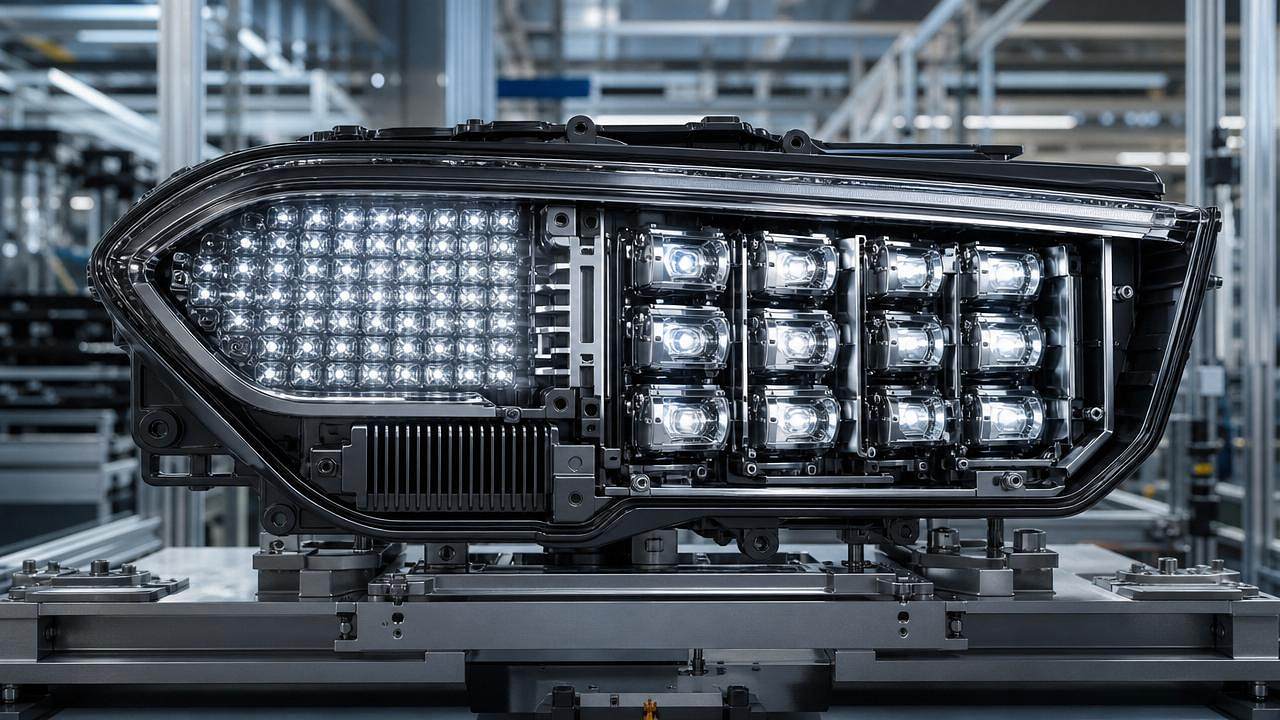
On May 28, 2026, Geely Galaxy officially became the Central Television (CCTV) broadcast partner for the FIFA World Cup co-hosted by the United States, Canada, and Mexico — and the exclusive title sponsor of the flagship program Hao Men Sheng Yan ("Summit Feast"). This partnership brings global exposure to Geely Galaxy’s in-house matrix LED headlamps and ADB (Adaptive Driving Beam) intelligent glare-control modules, reaching an estimated audience of over 1 billion viewers. The event is particularly relevant for automotive lighting component suppliers, ADAS hardware integrators, and export-oriented OEMs targeting Tier-1 markets.
Event Overview
On May 28, 2026, Geely Galaxy was announced as the official broadcast partner of CCTV for the 2026 FIFA World Cup (USA/Canada/Mexico). The brand holds exclusive naming rights for the program Hao Men Sheng Yan. As part of the collaboration, Geely Galaxy’s matrix LED headlamps and ADB intelligent anti-glare control modules — deployed across its Galaxy vehicle lineup — will be featured during broadcast coverage.
Industries Affected
Automotive Lighting Component Suppliers
This partnership signals heightened visibility for high-end adaptive lighting systems in mainstream international broadcasting. Suppliers of LED modules, micro-mirror arrays, or ADB control units may see increased inquiry volume from Chinese OEMs seeking scalable, TV-ready optical systems — especially those certified to UNECE R149 or SAE J3069 standards.
ADAS Hardware Integrators
ADB functionality relies on integration with camera-based perception and vehicle network architecture (e.g., CAN FD or Ethernet). Integrators specializing in sensor fusion or lighting control logic may face rising demand for validation support — particularly for real-world glare mitigation performance under broadcast-grade lighting conditions.
Export-Oriented Automotive OEMs and Tier-1 Suppliers
For Chinese OEMs expanding into North America or Latin America, this exposure serves as third-party-validated evidence of functional safety and regulatory readiness for adaptive lighting. It may influence buyer due diligence processes — especially where ECE/SAE compliance documentation and field reliability data are scrutinized.
What Stakeholders Should Monitor and Act On
Track official technical disclosures from CCTV or Geely Galaxy
Monitor whether CCTV releases production notes or broadcast metadata specifying which Galaxy models and lighting configurations appear on-air — as this indicates actual deployment scale versus conceptual branding.
Review ADB-related certification timelines for key export markets
Confirm current status of UNECE R149 approvals (for Europe), FMVSS 108 amendments (for US), and NOM-007-SE (for Mexico) — as broadcast visibility may accelerate regulatory review cycles or trigger new market-specific testing requirements.
Distinguish between promotional exposure and commercial adoption signals
Note that broadcast presence does not equate to volume production orders or aftermarket retrofit demand. Focus on follow-up announcements — such as supply agreements, joint development projects, or export shipment data — rather than media placements alone.
Assess internal capability gaps in optical system validation
If supplying to OEMs pursuing similar broadcast or global certification pathways, verify capacity for photometric testing (e.g., IESNA LM-79/80), glare metric evaluation (UGR, TI), and real-time beam pattern logging — as these may become standard requirements in future RFQs.
Editorial Perspective / Industry Observation
Observably, this partnership functions primarily as a high-visibility validation milestone — not an immediate commercial inflection point. It reflects growing confidence among Chinese OEMs in the production maturity of domestically developed adaptive lighting systems, but does not yet indicate broad regulatory acceptance or cross-border supply chain integration. Analysis shows that the impact lies less in direct sales uplift and more in recalibrating international expectations around China’s capacity for complex, safety-critical optical hardware. The broader industry should treat this as a signal of accelerating technical convergence — not as evidence of market penetration.
From an industry perspective, this moment underscores how broadcast partnerships are evolving into de facto technical credibility benchmarks — especially where functional safety, real-time responsiveness, and regulatory alignment are involved. Continued attention should focus on whether subsequent public disclosures include test reports, certification documents, or fleet deployment metrics.
Current interpretation should emphasize context: while exposure is global, the underlying technology remains subject to jurisdiction-specific homologation. Its significance lies in demonstrated scalability and broadcast-grade robustness — not in bypassing formal approval pathways.
Conclusion: This collaboration marks a notable step in the international recognition of China-developed adaptive automotive lighting systems — but its practical implications remain contingent on parallel progress in certification, supply chain localization, and OEM-level integration. It is best understood as a visibility milestone aligned with long-term technical maturation, not as an immediate shift in market access or procurement behavior.
Source: Official announcement by Geely Galaxy and China Central Television (CCTV), dated May 28, 2026. Ongoing developments related to regulatory filings, export certifications, and supply chain disclosures remain under observation.