
Industry Portal
Related News
- 00
0000-00
ECE-Compliant Lighting for Commercial Vehicles: Approval and Installation Checks - 00
0000-00
Laser Adaptive Headlights: What to Check for Range and Glare Control - 00
0000-00
Precision Forging for Aluminum Wheels: Alloy Selection and Fatigue Performance - 00
0000-00
NEV Industry Standards in China: Which Battery Safety Tests Are Required? - 00
0000-00
Automotive Exterior Lighting Systems: Lamp Types, Functions, and Placement
Tags
Pakistan Auto Sales Surge 52%: EV Silent Tires Import Substitution Accelerates
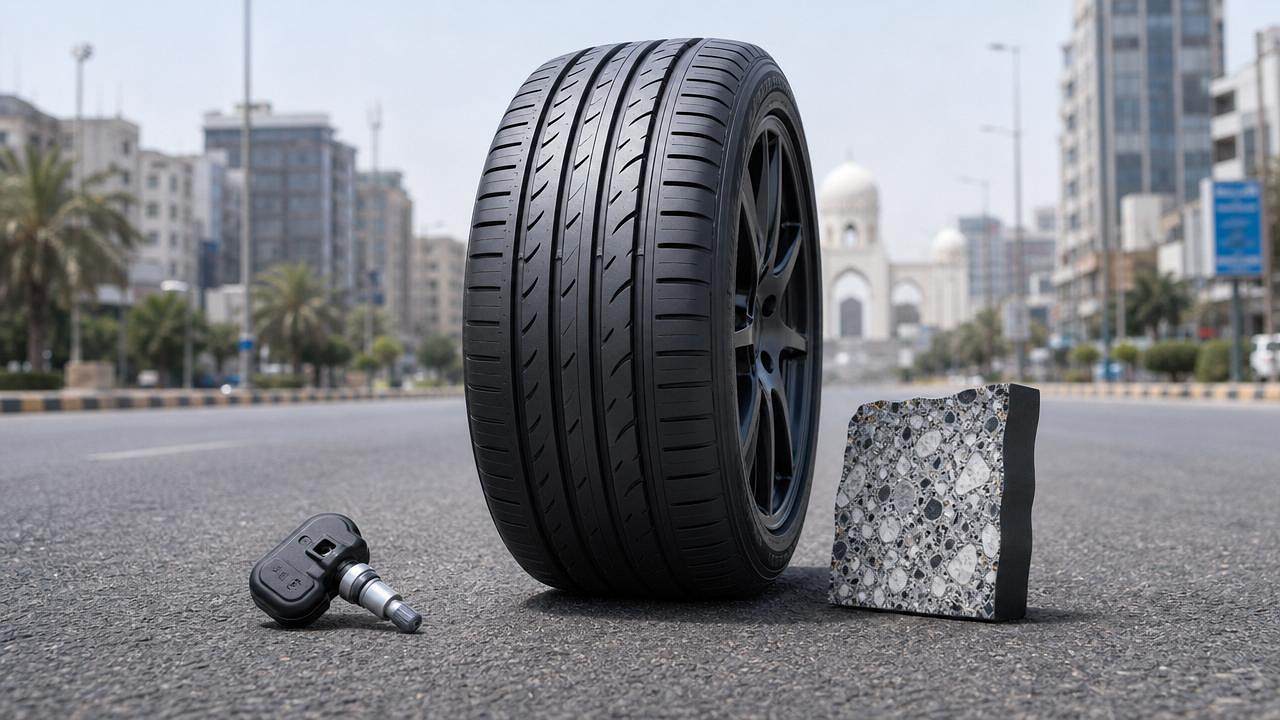
Pakistan’s automotive market experienced sharp growth in vehicle sales from July 2025 to April 2026, driven by rising fuel prices and stronger local demand for new energy vehicles. The exact event date was not specified, but the trend has clear implications for international suppliers of EV-specific tires — particularly those offering noise-reduction, low-rolling-resistance, and TPMS-integrated solutions.
Confirmed Market Data from Industry Association
According to data released by the Pakistan Automotive Manufacturers Association (PAMA), total vehicle sales in Pakistan reached 127,000 units between July 2025 and April 2026 — a 52% year-on-year increase. In April 2026 alone, sales jumped 117% compared to April 2025. This surge coincides with steep increases in gasoline and diesel prices, which have significantly boosted consumer interest in new energy vehicles.
Impact Across Supply Chain Roles
Export-oriented trading companies
These firms face immediate opportunities in exporting EV Silent Tires, low-rolling-resistance tires, and TPMS-integrated tires to Pakistan. Demand acceleration requires rapid alignment with local import regulations, customs classification, and documentation standards — especially for products classified under HS codes related to specialized pneumatic tires.
Raw material procurement enterprises
Suppliers of silica, functionalized polymers, and noise-dampening compounds may see increased order visibility. However, they must verify whether Pakistani importers require specific material certifications — such as REACH-compliant declarations or VOC emission test reports — for tire components entering the country.
Tire manufacturing enterprises
Manufacturers producing EV-optimized tires must ensure product specifications meet local adaptation needs, including load index, speed rating, and temperature resistance suitable for Pakistan’s climate and road conditions. Certification readiness for PSV (Passenger Service Vehicle) or LCV (Light Commercial Vehicle) applications is increasingly relevant.
Logistics and compliance service providers
Third-party certification support, customs brokerage, and technical documentation translation services are seeing heightened demand. Providers must prepare for potential requests for SGS-type pre-shipment inspections, conformity assessment reports, and bilingual labeling compliance — particularly for tire sidewall markings and warranty terms.
Strategic Priorities for Exporters
Verify Pakistan-specific regulatory acceptance
While no national mandatory standard for EV Silent Tires has been publicly announced, exporters should proactively confirm whether PAMA-endorsed specifications or voluntary PSQCA (Pakistan Standards and Quality Control Authority) guidelines apply — especially for noise performance (e.g., ISO 10844-compliant testing) and rolling resistance metrics.
Prepare technical documentation aligned with local procurement practices
Pakistani importers and distributors increasingly request full technical dossiers — including EU Type Approval certificates (if available), TPMS compatibility statements, and laboratory test reports on wet grip and braking performance under tropical ambient conditions.
Assess lead time and packaging adaptability
Given the rapid sales uptick, delivery responsiveness is critical. Exporters should review warehouse readiness, container loading configurations for mixed-size SKUs, and moisture-resistant packaging — essential for monsoon-season shipments to Karachi and Lahore ports.
Review after-sales traceability infrastructure
Emerging EV tire distributors in Pakistan are beginning to require batch-level traceability, QR-coded tire sidewalls, and digital warranty registration capabilities — indicating early-stage maturity in post-sale quality management systems.
Industry Observation: Beyond Short-Term Demand
Analysis shows that this sales surge reflects more than cyclical fuel-price sensitivity — it signals an inflection point in Pakistan’s light-vehicle electrification trajectory. What deserves closer attention is how rapidly local importers are shifting from generic tire sourcing to application-specific procurement. Observably, specifications for ‘EV Silent Tires’ are now being referenced explicitly in RFPs — suggesting formalization of technical requirements may follow. From an industry perspective, the current window favors exporters with prior experience in ASEAN or Middle Eastern EV tire markets, where similar acoustic and efficiency criteria have already shaped tender language and certification expectations.
Key Takeaway for Global Suppliers
This growth phase presents a tangible opportunity — but one requiring precision, not just volume. Success hinges less on broad market entry and more on targeted readiness: validated acoustic performance claims, localized compliance scaffolding, and responsive supply chain coordination. It is more appropriate to understand this as the beginning of structured demand — not a transient spike.
Source Attribution
This article was generated based solely on the provided title, event timing note (‘not specified’), and summary text. Specific official source links were not provided in the input and should be verified continuously. Ongoing monitoring is recommended for updates on PSQCA regulatory notices, PAMA technical advisories, tender documents issued by major Pakistani EV distributors, and customs tariff revisions affecting HS code 4011.99 (other pneumatic tires).