Industry Portal
Related News
- 00
0000-00
ECE-Compliant Lighting for Commercial Vehicles: Approval and Installation Checks - 00
0000-00
Laser Adaptive Headlights: What to Check for Range and Glare Control - 00
0000-00
Precision Forging for Aluminum Wheels: Alloy Selection and Fatigue Performance - 00
0000-00
NEV Industry Standards in China: Which Battery Safety Tests Are Required? - 00
0000-00
Automotive Exterior Lighting Systems: Lamp Types, Functions, and Placement
When CFD simulations prevent costly design changes later
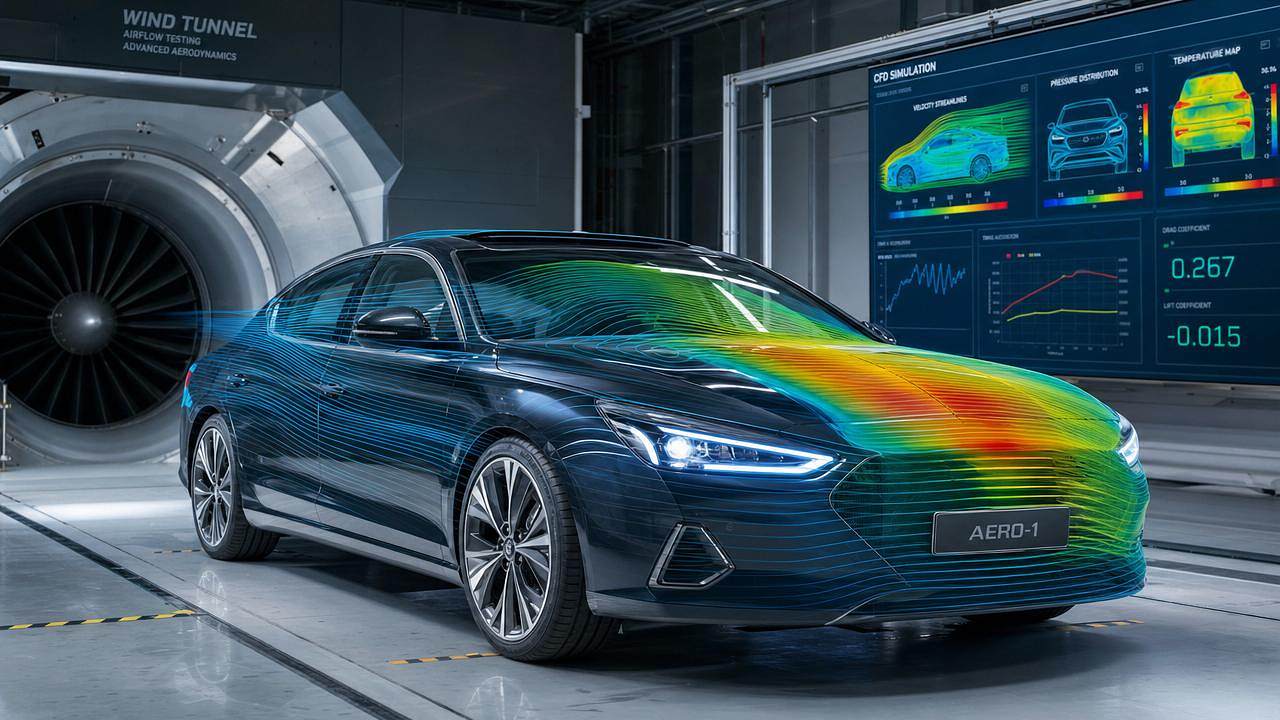
For project teams, late design changes often trigger cascading cost, timing, and validation problems. CFD simulations reduce that risk by revealing airflow, heat, drag, noise, and contamination issues before tooling is frozen.
In automotive exterior and vision systems, CFD simulations support better decisions for wheels, tires, sunroofs, headlights, sensors, and body surfaces. Early virtual testing improves efficiency, safety, compliance confidence, and launch readiness.
What are CFD simulations, and why do they matter so early?
CFD simulations, or Computational Fluid Dynamics simulations, model how air, heat, water, and particles move around and through a design. They convert geometry into measurable performance predictions.
That matters early because physical prototypes are expensive, slow, and limited. A digital study can expose weak zones before molds, dies, optics housings, or wheel tooling lock the design direction.
For AEVS-relevant systems, CFD simulations are not only about drag. They also examine brake cooling, tire wake behavior, headlamp thermal control, sensor cleanliness, cabin wind noise, and water management.
A small airflow issue can become a major program risk later. For example, a stylish wheel may increase turbulence, reduce cooling, and hurt range. CFD simulations expose those trade-offs while change costs remain low.
The early phase is also where teams can compare alternatives quickly. Instead of debating opinions, CFD simulations give visible pressure maps, velocity fields, and temperature distributions to guide objective decisions.
Why virtual analysis beats waiting for test hardware
- More concepts can be screened in less time.
- Hidden thermal and airflow issues appear earlier.
- Cross-functional trade-offs become easier to visualize.
- Supplier changes are reduced after technical reviews.
- Validation plans become more targeted and efficient.
Which automotive exterior and vision components benefit most from CFD simulations?
Many parts benefit, but some show especially strong returns. CFD simulations are valuable wherever airflow affects energy efficiency, thermal stability, visibility, contamination, acoustic comfort, or component durability.
Aluminum alloy wheels and brake airflow
Low-drag wheel design is a major EV concern. CFD simulations evaluate spoke geometry, venting, and rotating flow structures that affect aerodynamic drag and brake cooling performance.
Without early modeling, a wheel may look efficient in static review yet perform poorly in motion. Later fixes often require tooling changes, finish revisions, or structural compromise.
High-performance tires and wake management
Tires generate complex wake patterns. CFD simulations help study how tread shoulders, sidewall shape, and wheelhouse geometry influence drag, spray, road noise, and nearby sensor contamination.
LED headlight assemblies and thermal behavior
Advanced lighting needs strict thermal control. CFD simulations predict heat build-up around LEDs, drivers, heat sinks, vents, and lens surfaces, helping preserve brightness, lifespan, and optical precision.
Auto sensor switches and contamination control
Sensors fail when dirt, water, fog, or snow accumulate. CFD simulations show how local airflow behaves around covers, bezels, and mounting surfaces, supporting cleaner sensing zones and better reliability.
Electric sunroof systems and cabin comfort
Sunroof geometry affects wind buffeting, leakage paths, and cabin NVH. CFD simulations allow teams to improve edge sealing, deflector behavior, and pressure balance before expensive trim revisions appear.
How do CFD simulations prevent costly design changes later?
The main value comes from timing. A problem found during concept review is usually manageable. The same problem found after tooling release can affect procurement, testing schedules, certification plans, and launch confidence.
CFD simulations reduce uncertainty before major commitments. They help narrow design options, identify failure mechanisms, and reveal interactions between styling, thermal loads, airflow, and sensor function.
Consider a headlamp housing with poor vent placement. Without CFD simulations, condensation or overheating may appear late. Fixing that can require housing redesign, optical retesting, and supplier coordination.
Another example is a sleek wheel cover that improves appearance but traps heat. CFD simulations can show the temperature rise and pressure distribution before test vehicles are built.
This early visibility protects budgets in several ways:
- Fewer tooling modifications after design freeze.
- Lower prototype iteration count.
- Less rework across optics, sealing, and thermal parts.
- Reduced validation repetition and schedule slip.
- Better supplier alignment around measurable targets.
A simple way to view the savings
When change cost curves rise, late fixes become disproportionately expensive. CFD simulations shift discovery forward, where geometry edits, vent changes, and packaging adjustments remain relatively affordable.
When should teams use CFD simulations, and what inputs matter most?
The best time is earlier than many expect. CFD simulations are most effective when they begin during concept development and continue through architecture refinement, not only after detailed CAD is mature.
Early models do not need perfect detail. Even simplified geometry can reveal directional risks, compare concepts, and support layout choices. Accuracy then improves as the design matures.
Key inputs that improve decision quality
- Clear performance targets for drag, cooling, or contamination.
- Realistic operating conditions and duty cycles.
- Reasonable material and heat source assumptions.
- Boundary conditions aligned with test environments.
- Cross-functional agreement on success criteria.
For vehicle exteriors, geometry simplification must be careful. Removing a small lip, vent, or gap can hide local flow effects that matter to sensors, lighting, or sealing behavior.
For lighting, thermal CFD simulations should reflect realistic power states, ambient temperatures, and packaging limits. For wheels and tires, rotating effects and wheelhouse interactions are essential.
What common mistakes reduce the value of CFD simulations?
CFD simulations are powerful, but not automatically reliable. Their value depends on the question being asked, the model setup, and how results are interpreted against real design constraints.
Mistake 1: Using CFD simulations too late
If CFD simulations begin only after styling freeze, they often become a confirmation exercise. At that point, major improvement options may be politically or financially difficult.
Mistake 2: Chasing visual plots without engineering context
Colorful flow images can mislead. Teams should connect CFD simulations to measurable outcomes such as temperature limit, drag count, splash protection, sensor uptime, or optical stability.
Mistake 3: Ignoring validation correlation
CFD simulations should guide testing, not replace it entirely. Correlation with wind tunnel, thermal bench, or road data builds confidence and improves future simulation accuracy.
Mistake 4: Evaluating parts in isolation
A component may perform well alone yet fail in full-vehicle conditions. CFD simulations should capture relevant system interactions, including adjacent surfaces, vents, rotating parts, and contamination paths.
How can teams judge whether CFD simulations are worth the investment?
The answer depends on change risk, product complexity, and performance sensitivity. Where airflow or heat can affect compliance, efficiency, durability, or user experience, CFD simulations usually justify themselves quickly.
In many AEVS-related applications, CFD simulations are most valuable when they are part of a decision process, not an isolated engineering task. Their return grows when findings influence design gates.
Practical implementation checklist
- Define the design risk that matters most.
- Start CFD simulations before architecture locks.
- Compare multiple concepts, not one favorite.
- Link results to measurable program targets.
- Validate critical findings with focused physical tests.
When CFD simulations are integrated this way, they become a preventive tool. They reduce redesign risk, protect budgets, and strengthen technical credibility across exterior and vision system development.
The next step is simple: identify one high-risk airflow or thermal decision in the current program and model it early. That single move can prevent a costly change later.