Industry Portal
Related News
- 00
0000-00
ECE-Compliant Lighting for Commercial Vehicles: Approval and Installation Checks - 00
0000-00
Laser Adaptive Headlights: What to Check for Range and Glare Control - 00
0000-00
Precision Forging for Aluminum Wheels: Alloy Selection and Fatigue Performance - 00
0000-00
NEV Industry Standards in China: Which Battery Safety Tests Are Required? - 00
0000-00
Automotive Exterior Lighting Systems: Lamp Types, Functions, and Placement
What automotive exterior components affect repair costs most
For procurement teams, understanding which automotive exterior components drive repair costs is essential to balancing quality, durability, and lifecycle value.
Among all automotive exterior components, repair expense usually depends on material complexity, embedded electronics, calibration needs, and regional compliance rules.
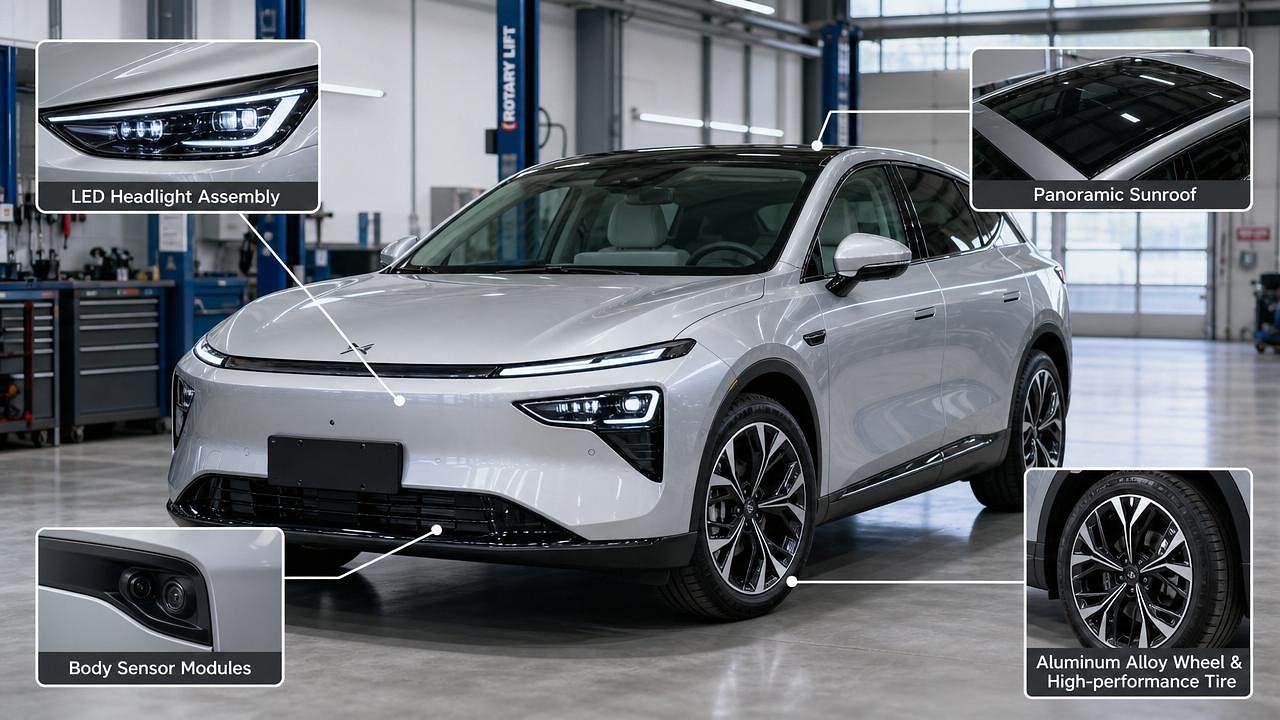
From LED headlight assemblies to alloy wheels, tires, sunroof systems, and body-mounted sensors, every component carries a different risk profile after damage.
For the broader automotive supply chain, this cost logic affects sourcing strategy, aftermarket planning, warranty exposure, and total ownership economics.
Understanding repair economics in automotive exterior components
Automotive exterior components include visible and road-facing parts that shape vehicle safety, aerodynamics, perception, and styling.
Repair cost is not driven by appearance alone. It reflects parts pricing, labor intensity, tooling availability, paint matching, software integration, and sensor recalibration.
In modern vehicles, especially NEVs, many automotive exterior components have become smarter, lighter, and more tightly integrated.
That integration improves efficiency and perception, but it also raises post-damage complexity. A small impact can trigger replacement of several linked systems.
- Material choice affects crack behavior, repairability, and replacement price.
- Optical and electronic content increases diagnostic and calibration costs.
- Regulatory standards influence approved replacement options.
- Vehicle design integration can expand the damage zone.
Which automotive exterior components affect repair costs most
Not all automotive exterior components create the same financial impact. The highest-cost categories usually combine expensive materials with precision technology.
LED headlight assemblies
Among automotive exterior components, headlights often rank first in repair cost escalation.
Modern LED and matrix units contain lenses, drivers, cooling paths, control boards, and adaptive beam functions.
Damage that once required a bulb change now may require replacing the full assembly and recalibrating smart lighting systems.
Aluminum alloy wheels
Lightweight wheels support EV efficiency, but premium finishes and structural tolerances raise repair stakes.
Cosmetic curb rash may be repairable. Cracks, bends, or hidden fatigue often require complete replacement.
Forged wheels are usually costlier to replace than low-pressure cast designs, especially in limited aftermarket sizes.
High-performance tires
Tires are consumables, yet advanced EV-oriented tires can create significant replacement expense.
Higher load ratings, acoustic foam, self-sealing compounds, and low rolling resistance engineering all increase unit cost.
If one tire fails, matching tread depth or axle-pair replacement can further expand total repair cost.
Electric sunroof systems
Sunroof repairs often look simple from outside, but hidden complexity is substantial.
Glass panels, guides, drainage, motors, seals, and anti-pinch systems must work together under tight dimensional control.
A leak, impact, or motor failure can create labor-heavy repair work and recurring warranty risk if sealing is imperfect.
Sensor-integrated exterior parts
Auto sensor switches and body-mounted detection modules are rising cost factors across automotive exterior components.
Rain sensors, light sensors, blind-spot modules, and camera-adjacent housings can be damaged by minor collisions or windshield-related work.
The part itself may be modestly priced, but diagnosis, coding, and calibration can raise the final invoice sharply.
Industry signals shaping repair costs today
Current market conditions make repair planning for automotive exterior components more difficult than in previous product cycles.
- ECE and DOT compliance narrows substitute options for lamps, glazing, and tire specifications.
- Aluminum and rubber price volatility changes replacement part economics.
- NEV weight and torque accelerate wear on tires and wheels.
- Smart lighting and sensing increase software-linked service steps.
- Aftermarket demand for premium wheel and tire upgrades affects supply availability.
AEVS closely tracks these shifts because exterior systems now combine aesthetics, safety, energy efficiency, and regulatory accountability.
That means repair cost analysis must move beyond unit price and include technical compatibility across the whole exterior ecosystem.
Business value of evaluating automotive exterior components by lifecycle cost
A lifecycle view helps reduce cost surprises and improves selection of automotive exterior components from the beginning.
The cheapest part at purchase may become the most expensive part after one common failure event.
Lifecycle evaluation should compare acquisition cost with expected damage frequency, replacement complexity, and parts availability.
- Lower downtime through easier serviceability.
- Better warranty control through validated component performance.
- More accurate aftermarket stocking decisions.
- Improved brand consistency in appearance and safety outcomes.
This approach is especially useful for smart headlights, EV tires, forged wheels, and panoramic sunroof systems.
Typical cost-risk categories across exterior systems
Different automotive exterior components create different repair patterns depending on usage, exposure, and integration level.
Practical evaluation points before sourcing or replacement
To control risk in automotive exterior components, practical review criteria should be used before approval or stocking.
- Check whether the component is repairable or replacement-only after typical damage.
- Review calibration requirements for lighting, sensing, or electronically controlled movement.
- Confirm ECE, DOT, and vehicle-specific compatibility standards.
- Assess lead times for premium variants, finishes, and region-specific sizes.
- Compare aftermarket depth against original equipment exclusivity.
- Estimate hidden labor from sealant, alignment, programming, or pair replacement.
These checkpoints make repair cost forecasting more realistic and improve decisions involving advanced automotive exterior components.
Next-step direction for smarter exterior cost planning
The automotive sector is moving toward lighter, smarter, and more integrated automotive exterior components.
As a result, repair costs will increasingly be shaped by optical intelligence, wheel and tire engineering, sensor fusion, and compliance constraints.
A practical next step is to build a repair-cost matrix covering headlights, wheels, tires, sunroof systems, and sensor-linked exterior hardware.
That matrix should combine failure frequency, part cost, labor intensity, calibration need, and replacement lead time.
With intelligence-led tracking of technology evolution and aftermarket demand, decisions around automotive exterior components become more resilient and commercially sound.