
Industry Portal
Related News
- 00
0000-00
ECE-Compliant Lighting for Commercial Vehicles: Approval and Installation Checks - 00
0000-00
Laser Adaptive Headlights: What to Check for Range and Glare Control - 00
0000-00
Precision Forging for Aluminum Wheels: Alloy Selection and Fatigue Performance - 00
0000-00
NEV Industry Standards in China: Which Battery Safety Tests Are Required? - 00
0000-00
Automotive Exterior Lighting Systems: Lamp Types, Functions, and Placement
What raw material cost fluctuations mean for quote accuracy
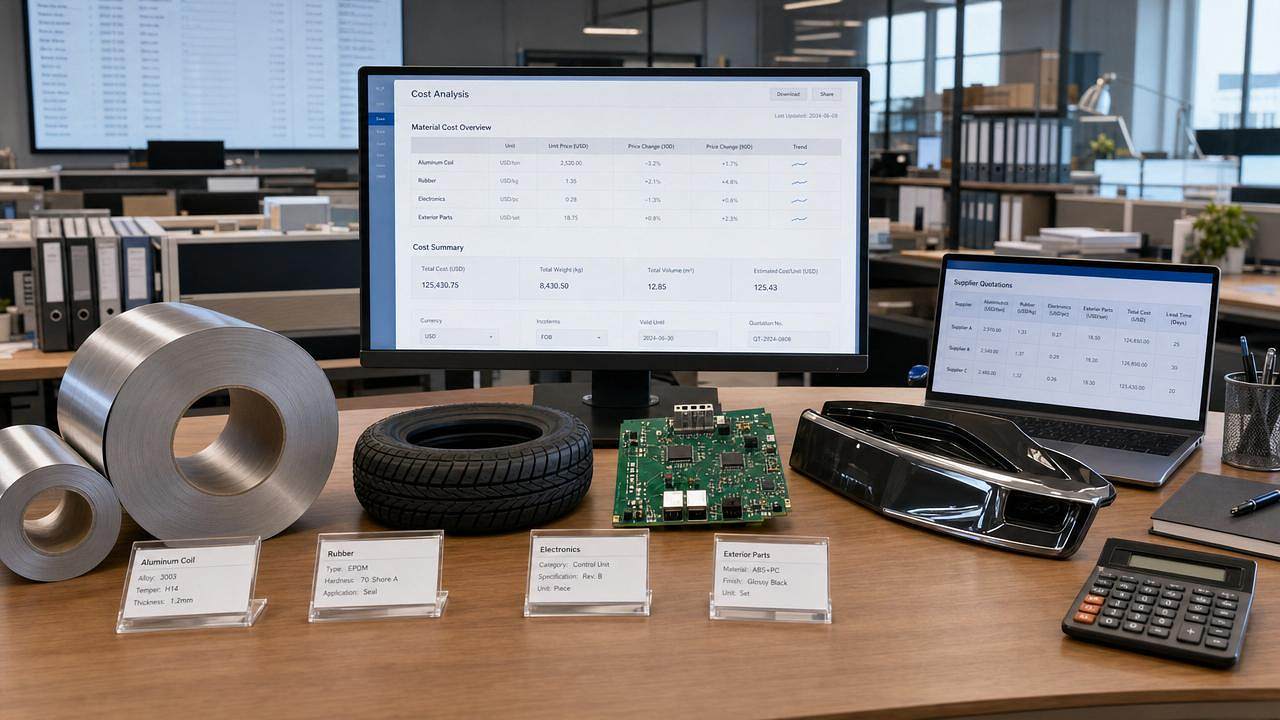
Raw material cost fluctuations are becoming a constant variable in quote accuracy
For procurement functions, raw material cost fluctuations can quickly undermine quote accuracy, compress margins, and disrupt supplier negotiations.
In markets linked to aluminum, rubber, resins, electronics, and automotive exterior systems, small price swings often reshape total cost assumptions.
This matters even more in New Energy Vehicle supply chains, where lightweighting, smart lighting, sensor integration, and tire performance depend on volatile inputs.
When quote validity is based on outdated indexes, cost escalation appears late, and commercial exposure widens.
Understanding raw material cost fluctuations is now essential for better forecasting, stronger cost control, and more reliable commercial planning.
Signals from the market show quote accuracy is under sharper pressure
Across the broader industrial landscape, pricing cycles have become shorter and less predictable.
Aluminum reacts to energy costs, smelting capacity, and global trade policy.
Rubber prices move with weather patterns, plantation output, logistics bottlenecks, and regional demand.
Electronic subcomponents add another layer, especially in LED headlight assemblies and sensor-based switching systems.
For sectors covered by AEVS, these signals are practical, not theoretical.
Aluminum alloy wheels, high-performance tires, electric sunroof systems, and optical assemblies all carry material-sensitive cost structures.
As vehicle programs demand lighter weight, better aerodynamics, and smarter perception, quote models require faster updates and tighter assumptions.
Why quote accuracy weakens faster than before
- Commodity indexes move faster than annual or quarterly quote cycles.
- Multi-tier supply chains delay visibility into actual input cost changes.
- Mixed material products hide indirect exposure to metals, rubber, coatings, and chips.
- Freight, energy, and compliance costs amplify base material inflation.
- Program launch assumptions often stay fixed while supplier realities change weekly.
The drivers behind raw material cost fluctuations are broader than commodity charts suggest
Raw material cost fluctuations rarely come from one source.
They result from overlapping forces across extraction, processing, transport, regulation, and end-market demand.
These drivers explain why quote accuracy cannot rely only on static price sheets or historical averages.
Different business links feel raw material cost fluctuations in different ways
The impact of raw material cost fluctuations spreads unevenly across the value chain.
Some links face direct cost inflation, while others absorb timing risk, inventory risk, or pricing disputes.
Commercial quoting and bid preparation
Quote accuracy declines when bill-of-material assumptions are not aligned with live market indexes.
This is common in wheel programs, tire compounds, and smart lighting assemblies with mixed material content.
Program profitability and margin protection
A quote may win business but become unprofitable before SOP if raw material cost fluctuations are ignored.
Long development cycles increase exposure, especially in engineered automotive exterior components.
Supplier relationship stability
When price changes are not transparently modeled, suppliers and buyers enter defensive negotiations.
That weakens trust and reduces room for technical collaboration or quality improvement.
Inventory and replenishment decisions
Volatile markets create pressure to buy forward, but excess inventory adds carrying cost and obsolescence risk.
Quote accuracy therefore depends on timing strategy, not just unit price inputs.
In automotive exterior and vision systems, sensitivity to material moves is especially high
AEVS-focused categories illustrate how raw material cost fluctuations affect advanced components differently.
- Aluminum alloy wheels depend on metal price, energy-intensive processing, and finishing chemistry.
- High-performance tires depend on natural rubber, synthetic rubber, carbon black, and specialty additives.
- LED headlight assemblies combine plastics, heat sinks, semiconductors, lenses, and optical coatings.
- Electric sunroof systems involve glass, seals, motors, rails, and noise-control materials.
- Auto sensor switches add sensing elements, electronic packaging, and compliance-related testing costs.
As product complexity rises, quote accuracy depends on understanding direct materials and hidden conversion costs together.
The most important signals to watch are cost timing, index linkage, and specification drift
Better control starts with better visibility.
Several indicators deserve continuous monitoring when raw material cost fluctuations are intense.
- Commodity index direction versus quote validity period
- Supplier surcharge clauses and reset frequency
- Exchange rate movements on imported inputs
- Engineering changes affecting material grade or weight
- Energy and freight trends in key sourcing regions
- Regulatory or compliance shifts that alter approved materials
Specification drift is often underestimated.
A small change in wheel strength targets, tire noise standards, or optical performance can multiply cost sensitivity.
A stronger response combines faster data, structured governance, and scenario-based quoting
Improving quote accuracy under raw material cost fluctuations requires a system, not a single action.
Useful operating principles
- Shorten quote validity when volatility rises sharply.
- Separate direct material risk from conversion cost in pricing discussions.
- Review high-risk categories weekly, not monthly.
- Link contract language to published indexes where possible.
- Build cross-functional review between sourcing, engineering, and finance.
The next step is to turn raw material cost fluctuations into a managed input, not a surprise
Raw material cost fluctuations will remain a defining challenge for quote accuracy across industrial and automotive-linked markets.
The strongest response is disciplined visibility, faster decision cycles, and clear cost-sharing logic.
For businesses tracking aluminum, rubber, optics, and smart exterior technologies, this approach supports both margin protection and commercial credibility.
Use current index monitoring, supplier formula reviews, and scenario-based quoting to improve quote accuracy before volatility becomes a contract problem.
With a structured market intelligence framework, raw material cost fluctuations become measurable, discussable, and far easier to manage.