Industry Portal
Related News
- 00
0000-00
ECE-Compliant Lighting for Commercial Vehicles: Approval and Installation Checks - 00
0000-00
Laser Adaptive Headlights: What to Check for Range and Glare Control - 00
0000-00
Precision Forging for Aluminum Wheels: Alloy Selection and Fatigue Performance - 00
0000-00
NEV Industry Standards in China: Which Battery Safety Tests Are Required? - 00
0000-00
Automotive Exterior Lighting Systems: Lamp Types, Functions, and Placement
When do CFD simulations actually shorten design cycles?
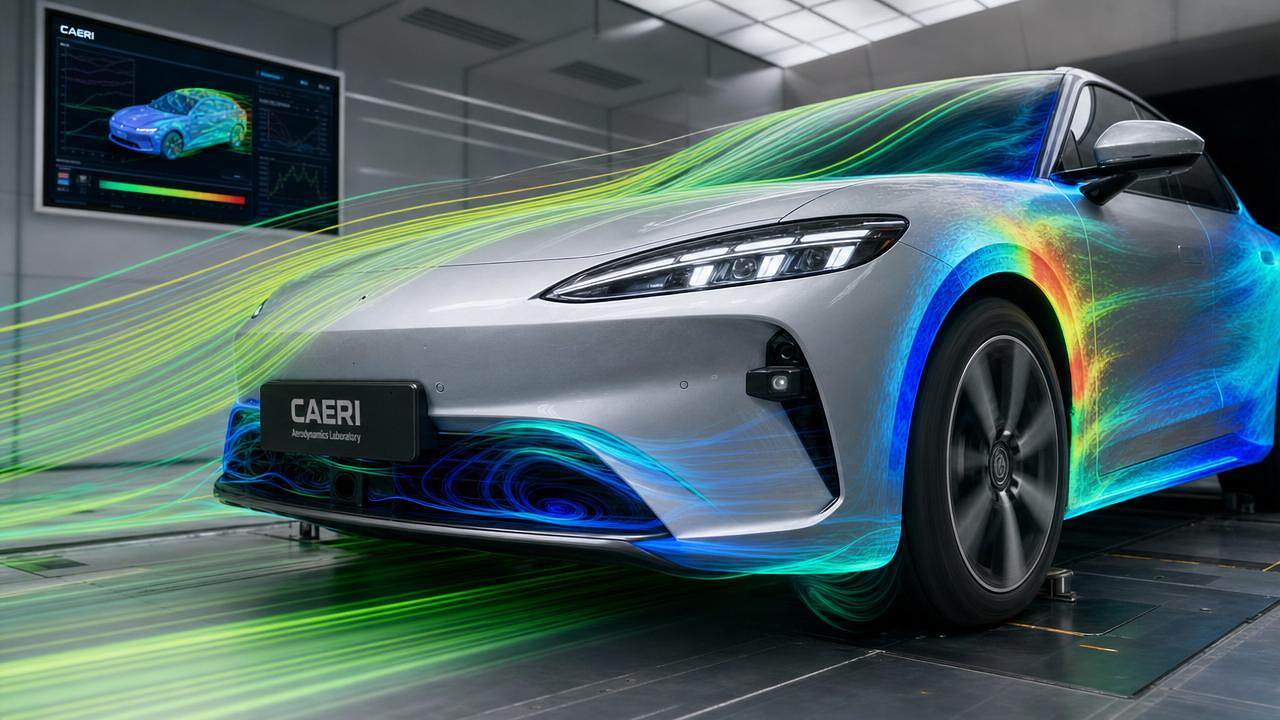
CFD simulations shorten design cycles only under specific conditions: when they answer the right engineering questions early, replace repeated prototype loops, and produce decision-ready results that teams actually trust. For technical evaluators in automotive exterior, wheels, tires, lighting, and sensor systems, the key issue is not whether CFD is advanced, but whether it reduces rework, accelerates concept screening, and supports compliance, efficiency, and durability targets before tooling and validation costs rise.
What technical evaluators are really trying to learn from this question
The core search intent behind “When do CFD simulations actually shorten design cycles?” is practical, not academic. Readers want to know when simulation delivers measurable schedule reduction instead of simply adding another engineering task.
Technical evaluators are usually comparing methods, workflows, suppliers, or internal investment priorities. They need to judge whether CFD simulations can identify aerodynamic, thermal, contamination, or airflow risks early enough to avoid expensive redesign later.
They also want boundaries. CFD does not automatically shorten development. In some programs, it speeds concept selection and optimization. In others, poor setup, weak correlation, or unclear decisions can turn simulation into additional complexity.
Short answer: CFD simulations reduce cycle time when they prevent late-stage design changes
The fastest way to understand the value of CFD simulations is to focus on design timing. They shorten cycles when they move key decisions forward, especially before tooling release, prototype build, or test campaign scheduling.
That means CFD is most effective when it replaces repeated physical trial-and-error with early insight into flow separation, drag contribution, heat rejection, spray behavior, brake cooling, lamp thermal loads, or sensor contamination exposure.
In automotive exterior systems, the time savings often come less from raw computation speed and more from avoiding engineering resets. One avoided redesign loop can save far more time than many days of simulation runtime.
For technical evaluation, this is the main lens: does the simulation change decisions soon enough to reduce downstream iterations? If the answer is yes, design cycle compression is realistic.
Where CFD simulations usually create the biggest schedule advantage
CFD simulations are most valuable in development stages where geometry is still flexible. Early concept and pre-detail design phases usually benefit the most because alternatives can be screened before design freezes narrow available options.
For alloy wheels, CFD can quickly compare spoke designs, ventilation strategies, and drag effects while also supporting brake airflow analysis. This helps teams avoid discovering cooling or aerodynamic compromises after styling approval.
For high-performance tires, simulation can support external airflow studies around wheelhouses, wake behavior, splash and spray patterns, and rolling resistance-related thermal considerations within broader vehicle performance programs.
For LED headlight assemblies, CFD becomes especially useful when thermal management determines optical stability, LED lifetime, housing durability, and packaging feasibility. Catching heat accumulation issues early can prevent major layout changes.
For auto sensor switches and smart perception systems, CFD can help evaluate airflow-driven contamination risk, water intrusion tendencies, or fogging behavior around sensing surfaces, which directly influences functional reliability and cleaning strategies.
Even electric sunroof systems can benefit when wind noise, pressure distribution, cabin airflow interaction, or sealing performance are linked to shape changes. In these cases, CFD simulations support faster convergence between comfort targets and exterior styling.
When CFD simulations do not shorten the design cycle
CFD simulations fail to accelerate programs when they are used too late. If the geometry is already frozen and tooling constraints dominate decisions, simulation may only document problems that are difficult to fix.
They also underperform when the engineering question is vague. Running models without a clear decision objective often produces attractive plots but limited design direction. Technical evaluators should be cautious about simulation done for presentation rather than action.
Another common problem is poor model fidelity relative to the decision being made. If mesh quality, boundary conditions, turbulence modeling, or thermal assumptions are not appropriate, teams may need rework that erodes schedule gains.
CFD also slows projects when every design change triggers an overly heavy workflow. If turnaround takes too long for the pace of product decisions, engineers return to intuition, and simulation becomes disconnected from the program timeline.
Finally, weak correlation with physical testing reduces trust. If engineers, validation teams, or management do not believe the results, the organization will still repeat the same prototype loops, eliminating most cycle-time benefit.
How to tell whether a CFD workflow will be decision-ready
For technical evaluators, the best question is not “Can this be simulated?” but “What decision will this simulation enable, and by when?” That shifts assessment from software capability to design process relevance.
A decision-ready CFD workflow usually has five characteristics. First, it is tied to a specific engineering choice, such as selecting a wheel vent geometry, confirming a lamp cooling path, or ranking sensor cover concepts.
Second, it delivers results within the program’s decision window. A highly accurate model that arrives after design release does not shorten the cycle. Speed must match milestone timing, not just computational ambition.
Third, the outputs are interpretable by cross-functional teams. Aerodynamics, thermal, optics, durability, compliance, and manufacturing stakeholders must all understand what the simulation means for their constraints and trade-offs.
Fourth, the model is validated at the right level. Not every project needs full-scale test correlation before useful decisions can be made, but there must be enough confidence to support action without excessive second-guessing.
Fifth, the workflow is repeatable. If only one specialist can run it, or setup quality varies by user, schedule risk remains high. Standardized templates, assumptions, and reporting formats are often more valuable than maximum complexity.
What technical evaluators care about most: not accuracy alone, but timing, trust, and actionability
In evaluation practice, readers rarely ask only whether CFD simulations are accurate. They want to know whether the results arrive early enough, are trusted enough, and are specific enough to influence engineering choices.
This is especially true in automotive exterior and vision systems, where performance targets interact. A low-drag design may worsen brake cooling. A compact lamp package may create thermal stress. A sensor location may improve coverage but increase contamination.
CFD simulations add value when they reveal these interactions before teams commit to expensive paths. That is why technical evaluators should look for evidence of trade-off resolution, not just isolated flow visualization.
In supplier or partner assessment, a useful sign is whether the simulation team can connect outputs to concrete design recommendations. Good CFD support should answer what to change, why it matters, and what risk remains.
Examples from automotive exterior and vision development
Consider a low-drag wheel program for a new energy vehicle. Styling proposes a visually open spoke pattern, while efficiency targets demand lower drag and brake thermal margins must still be protected.
Without CFD simulations, the team may build multiple prototype variants and discover too late that the chosen design hurts airflow behavior or creates cooling imbalance. That triggers redesign, test repetition, and supplier adjustments.
With an effective CFD process, several spoke concepts can be screened early. Engineers can identify which regions drive separation, where air exchange supports cooling, and which geometry changes preserve both performance and appearance.
Now consider a matrix LED headlight assembly. Optical performance may be strong, but thermal accumulation around LEDs, drivers, or housing interfaces can degrade output consistency and long-term reliability.
CFD simulations can map temperature distribution before hardware validation, enabling fin, vent, packaging, or material decisions sooner. If this happens before detailed release, the program avoids costly enclosure changes later.
For sensor-integrated exterior components, airflow and water behavior around covers, bezels, and mounting zones can influence false readings, lens fouling, and maintenance demands. Early simulation helps teams compare placements before physical trials multiply.
How CFD simulations should fit into a faster development process
To actually shorten design cycles, CFD simulations must be integrated into a staged workflow rather than treated as a one-time expert exercise. The goal is progressive decision support across concept, refinement, and validation preparation.
In the first stage, simplified models screen broad concepts quickly. Accuracy is important, but ranking and directional insight matter more. This stage should eliminate weak options before they consume prototype and engineering bandwidth.
In the second stage, more detailed CFD simulations refine promising designs. Here the focus shifts to local effects, target balancing, and interface risks, such as wheel-brake interactions, lamp hot spots, or sensor contamination paths.
In the third stage, simulation supports test planning and correlation. Instead of replacing physical validation, it helps reduce uncertainty, choose meaningful test conditions, and interpret why a design behaves the way it does.
This layered approach is usually where schedule savings become visible. Teams spend less time exploring low-value options and more time converging around technically defensible choices with fewer surprises.
Questions evaluators should ask before investing in a CFD-driven workflow
Technical evaluators should ask whether the product category has repeated fluid or thermal failure modes that routinely cause redesign. If yes, CFD simulations are more likely to generate measurable cycle-time gains.
They should also ask how early geometry becomes available, what design freedom remains at each milestone, and whether simulation results can still alter packaging, surfacing, venting, or component layout when findings emerge.
Another critical question is turnaround time. If the organization cannot get usable results within the decision cadence of the program, even strong models may not shorten the schedule in practice.
Evaluators should also examine data inputs and validation maturity. Material properties, environmental loads, operating scenarios, and boundary conditions must reflect realistic use cases, especially for EV thermal and aerodynamic applications.
Finally, they should assess internal adoption. A technically strong CFD capability has limited value if design, validation, sourcing, and program teams do not incorporate it into milestone decisions and risk reviews.
What “good ROI” looks like for CFD simulations in design cycle reduction
Return on investment should not be measured only by reduced prototype count, although that is one visible benefit. The broader value includes fewer late-stage engineering changes, faster concept elimination, and tighter alignment across teams.
In many cases, the strongest ROI comes from preventing a schedule slip tied to one major issue: overheating in a lamp enclosure, inadequate brake cooling through a wheel, contamination exposure on a sensor surface, or noise-related airflow around a roof system.
For technical evaluators, this means the business case should be linked to avoided rework cost and milestone protection, not simply to simulation throughput. Faster answers matter only if they change outcomes.
That is also why domain-specific expertise is essential. In automotive exterior and vision systems, CFD simulations create more value when they are interpreted in the context of styling constraints, compliance, durability, optics, and EV efficiency demands.
Conclusion: CFD simulations shorten design cycles when they are early, targeted, and trusted
The honest answer is that CFD simulations do not automatically accelerate development. They shorten design cycles when they help teams make earlier and better decisions on issues that would otherwise trigger physical trial-and-error and late rework.
For technical evaluators, the strongest use cases are those involving geometry-sensitive aerodynamic, thermal, spray, contamination, or airflow interactions across automotive exterior and vision systems. These are areas where design changes become expensive very quickly.
If the workflow is aligned with milestones, built around clear engineering questions, and trusted enough to guide action, CFD simulations can significantly compress iteration loops. If not, they become another layer of analysis without schedule impact.
The practical test is simple: use CFD where it changes choices before commitments harden. That is when simulation stops being a technical accessory and starts becoming a true design-cycle advantage.