
Industry Portal
Related News
- 00
0000-00
ECE-Compliant Lighting for Commercial Vehicles: Approval and Installation Checks - 00
0000-00
Laser Adaptive Headlights: What to Check for Range and Glare Control - 00
0000-00
Precision Forging for Aluminum Wheels: Alloy Selection and Fatigue Performance - 00
0000-00
NEV Industry Standards in China: Which Battery Safety Tests Are Required? - 00
0000-00
Automotive Exterior Lighting Systems: Lamp Types, Functions, and Placement
How raw material cost fluctuations reshape sourcing decisions
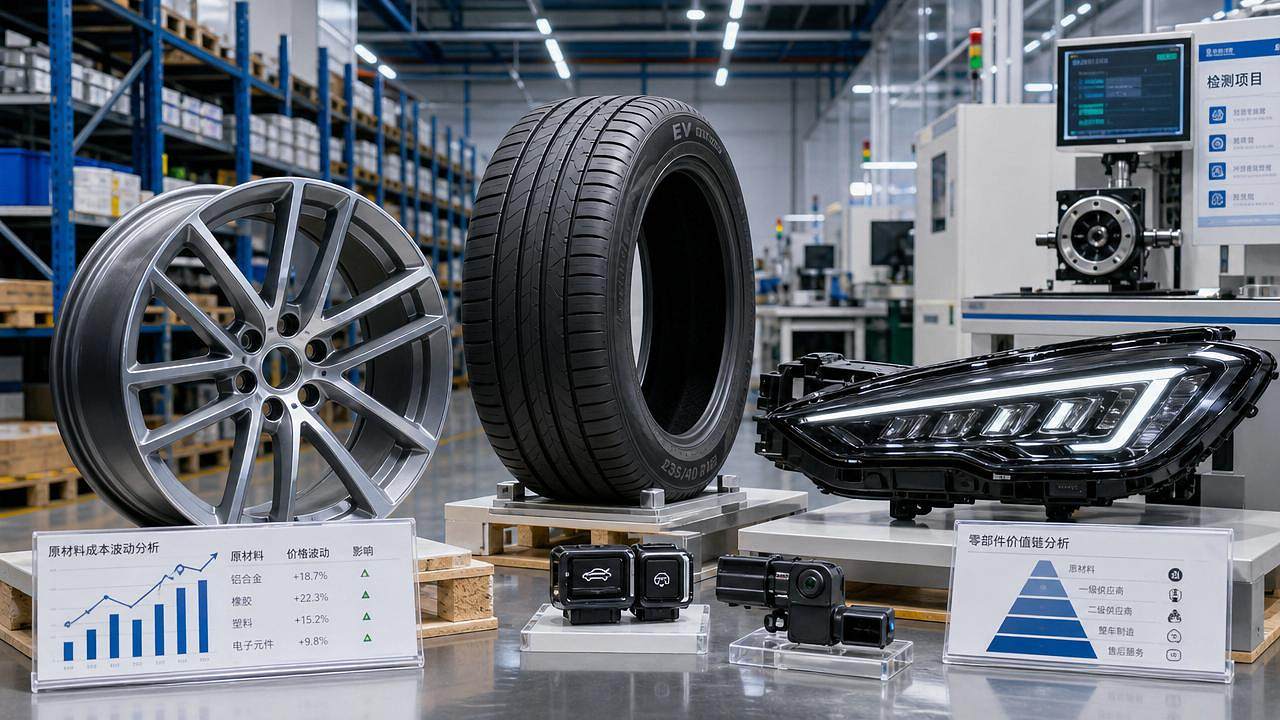
For automotive exterior and vision systems, raw material cost fluctuations now shape commercial timing, technical trade-offs, and sourcing resilience.
Aluminum, rubber, petrochemical inputs, copper, semiconductors, and specialty resins move faster than many annual budgets can absorb.
That pressure is especially visible in alloy wheels, EV tires, LED headlight assemblies, sensor switches, and electric sunroof systems.
As a result, sourcing decisions increasingly balance price exposure, compliance risk, engineering stability, and long-term platform profitability.
For AEVS-focused value chains, understanding raw material cost fluctuations is essential to protect margins without weakening performance, safety, or brand positioning.
Raw material cost fluctuations are moving from background noise to strategic signal
The old assumption was simple: input volatility could be managed through quarterly negotiations and volume leverage.
That assumption is breaking down as supply chains become more regionalized, regulated, and technology-dependent.
Raw material cost fluctuations now influence product architecture earlier, sometimes even before supplier nomination.
In lightweight wheel programs, aluminum pricing affects forged versus cast choices, surface finishing plans, and inventory commitments.
In high-performance tires, natural rubber, synthetic rubber, carbon black, and energy costs alter compound economics and replacement demand strategies.
In smart lighting, fluctuations in electronics, optical polymers, and thermal materials can shift sourcing toward modular designs.
The signal is clear: cost volatility is no longer only a finance issue.
It is a design, compliance, logistics, and market timing issue across the whole exterior and vision ecosystem.
Why raw material cost fluctuations are becoming harder to predict
Several forces are interacting at the same time, making procurement forecasting less stable than in previous cycles.
These drivers do not move in isolation.
When they overlap, raw material cost fluctuations become more abrupt and more difficult to neutralize through standard contracts.
Different component categories feel raw material cost fluctuations in different ways
Aluminum alloy wheels face direct metal sensitivity
Wheel economics react quickly to aluminum market swings, power costs, and scrap availability.
That can affect whether low-pressure casting, flow forming, or forging remains commercially attractive.
It also changes decisions on safety stock, machining allocation, and premium aftermarket positioning.
High-performance tires carry multi-layer material exposure
Tire costs depend on natural rubber, synthetic polymers, steel cord, chemicals, fillers, and transport conditions.
For EV applications, load requirements and rolling resistance targets reduce room for cheaper substitutions.
This makes raw material cost fluctuations especially difficult to offset without affecting noise, wear, or grip.
LED headlight assemblies and sensor switches absorb hidden cost shifts
Here, volatility often appears through optical plastics, electronic chips, copper, adhesives, and heat-management materials.
A single increase may look manageable, but cumulative changes can reshape module architecture and validation schedules.
Where ECE or DOT compliance is involved, material changes also trigger qualification complexity.
Sourcing decisions are shifting from lowest unit price to total risk-adjusted value
The practical response to raw material cost fluctuations is not simply finding the cheapest quote.
More organizations are evaluating total landed cost, engineering disruption cost, and continuity risk together.
- Dual sourcing gains value when qualified alternatives can protect supply during sharp market moves.
- Regional sourcing becomes attractive when freight, duties, and lead-time volatility offset nominal price differences.
- Index-linked contracts are used more often for aluminum, rubber, and energy-sensitive categories.
- Specification discipline matters more because uncontrolled changes can destroy cost visibility.
- Supplier transparency becomes a selection factor, not just a negotiation preference.
This is especially relevant in AEVS-related systems, where visual quality, aerodynamic performance, and safety functions are tightly connected.
A cheaper material path may create downstream testing, warranty, or brand-perception costs that outweigh early savings.
The biggest impact is often felt across planning, not only purchasing
Raw material cost fluctuations affect more than sourcing teams and supplier negotiations.
They influence budgeting, product timing, inventory policy, aftermarket pricing, and platform profitability assumptions.
That broader impact explains why raw material cost fluctuations increasingly appear in strategic reviews, not only monthly procurement meetings.
The most resilient organizations watch five signals continuously
- Commodity index movement versus contracted price formulas.
- Supplier concentration for critical optical, rubber, and alloy inputs.
- Lead-time expansion in energy-intensive or regulation-sensitive materials.
- Design areas where substitution would trigger expensive revalidation.
- Regional policy changes affecting duties, emissions, or local content rules.
These indicators help translate market noise into sourcing action before cost increases fully hit production or aftermarket channels.
A practical response starts with scenario discipline and technical credibility
The most useful response to raw material cost fluctuations is structured preparation, not reactive price chasing.
- Build three material scenarios: stable, elevated, and shock-driven.
- Map which components have high substitution risk and which have real flexibility.
- Review contract mechanisms for indexing, pass-through clauses, and review frequency.
- Align engineering and sourcing on approved alternatives before disruption occurs.
- Use market intelligence to compare short-term savings against lifecycle and compliance exposure.
For exterior and vision systems, technical credibility matters as much as price management.
AEVS intelligence supports this by linking raw material cost fluctuations with performance implications, regulatory realities, and market demand shifts.
The next step is clear: review current material exposure by component family, identify high-risk dependencies, and refresh sourcing assumptions before volatility forces rushed decisions.