
Industry Portal
Related News
- 00
0000-00
ECE-Compliant Lighting for Commercial Vehicles: Approval and Installation Checks - 00
0000-00
Laser Adaptive Headlights: What to Check for Range and Glare Control - 00
0000-00
Precision Forging for Aluminum Wheels: Alloy Selection and Fatigue Performance - 00
0000-00
NEV Industry Standards in China: Which Battery Safety Tests Are Required? - 00
0000-00
Automotive Exterior Lighting Systems: Lamp Types, Functions, and Placement
How to compare automotive exterior components without overspending
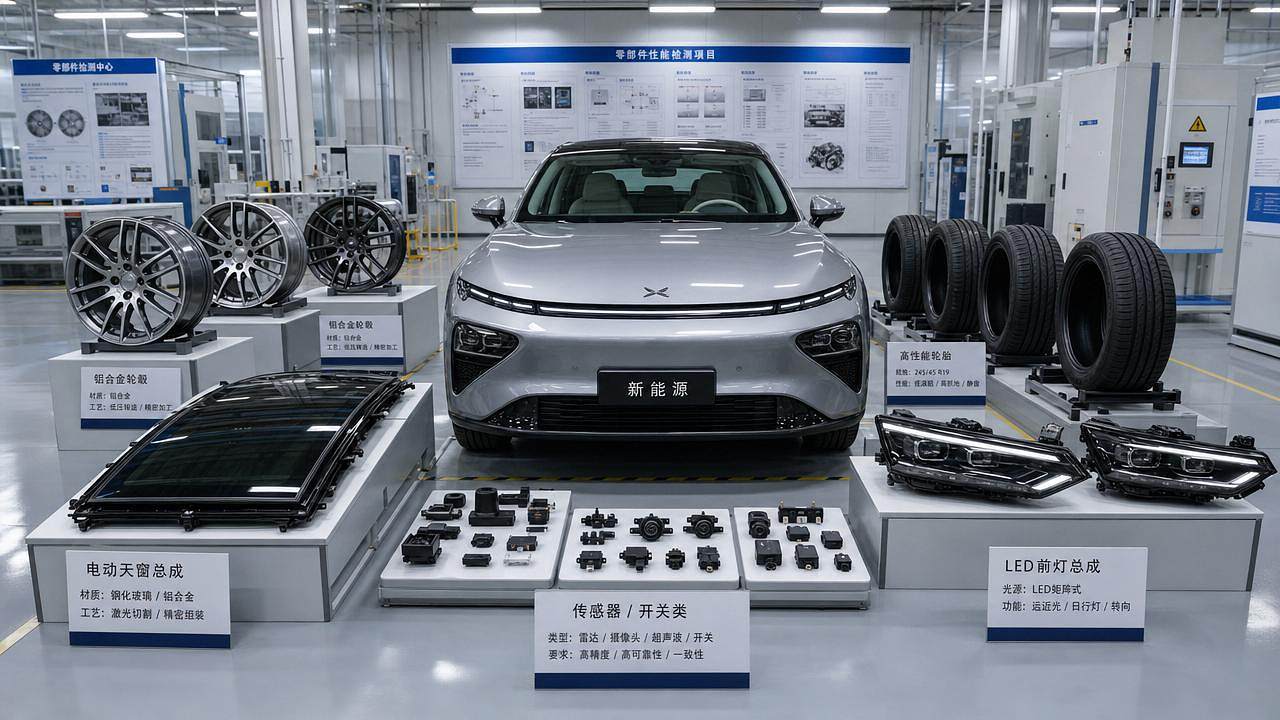
Comparing automotive exterior components should not mean sacrificing performance, compliance, or long-term value. For procurement teams, the key is to evaluate materials, durability, aerodynamic efficiency, safety standards, and lifecycle cost in one framework. This guide shows how to compare automotive exterior components strategically, helping buyers avoid overspending while selecting sunroofs, wheels, tires, lighting, and sensor systems that support both vehicle quality and competitive sourcing.
For buyers serving OEM, Tier 1, or aftermarket programs, cost pressure often appears early, while quality risks emerge later. A wheel that is 8% cheaper upfront may create warranty exposure. A sensor switch with a short validation file may slow launch by 2–4 weeks. The smarter approach is to compare automotive exterior components through a disciplined sourcing matrix that balances technical fit, compliance, supply resilience, and total cost.
This is especially relevant in the NEV market, where lightweighting, aerodynamic drag reduction, optical precision, and noise control directly influence vehicle range, safety, and perceived value. Platforms such as AEVS help procurement teams read beyond list prices by tracking material trends, exterior technology evolution, and commercial opportunities across sunroof systems, alloy wheels, tires, LED headlight assemblies, and auto sensor switches.
Build a comparison framework before requesting quotes
Many procurement teams overspend because they compare part prices before they define target performance. A more effective process starts with 5 core filters: application fit, regulatory compliance, technical performance, manufacturing capability, and lifecycle cost. When these filters are documented before RFQ release, supplier comparison becomes faster and more objective.
For automotive exterior components, the evaluation window should cover at least 12–36 months. That range captures not just unit price, but tooling amortization, defect risk, material volatility, logistics exposure, and aftersales replacement demand. A low-cost source may lose its advantage once rework, emergency freight, and field claims are added.
The 5 dimensions procurement teams should score
- Technical fit: dimensional tolerance, load rating, optical output, NVH performance, sealing, and interface compatibility.
- Compliance fit: ECE, DOT, local road safety rules, material traceability, and labeling requirements.
- Commercial fit: MOQ, price breaks, tooling charges, payment terms, and annual rebate structure.
- Supply fit: lead time, backup capacity, raw material sourcing, and change management process.
- Lifecycle fit: warranty exposure, service life, replacement cycle, maintenance impact, and residual value.
The table below gives a practical scoring model for comparing automotive exterior components across different purchasing scenarios. It is designed for teams that need a repeatable method across multi-supplier RFQs.
A weighted matrix prevents one low number from dominating the decision. In many cases, the supplier with the second-lowest quote wins on total value because it offers better validation support, more stable lead times, and lower field risk.
Why total landed cost matters more than ex-works price
When buyers compare automotive exterior components only by factory price, they miss at least 6 cost layers: packaging, freight, duties, PPAP or validation expense, warranty reserve, and service part management. For high-value components such as headlamps or forged wheels, these layers can add 10%–25% to the original quote.
Sunroof modules, for example, may have acceptable hardware pricing but require more careful packaging and water sealing tests. Tire sourcing may look straightforward until rolling resistance, wear life, and noise targets create added test iterations. The buyer’s job is not to buy the cheapest part, but to buy the most reliable value package for the program timeline.
A simple 4-step sourcing discipline
- Define target specifications and acceptable tolerances.
- Pre-qualify suppliers based on capability and documentation.
- Compare samples, test reports, and full landed cost.
- Lock supply terms with change-control and quality clauses.
How to compare key automotive exterior components category by category
Not all automotive exterior components should be compared in the same way. Procurement teams need different benchmarks for a roof system than for a tire or smart lighting module. The most effective method is to use one commercial framework, but category-specific technical checkpoints.
Electric sunroof systems
For sunroof sourcing, three technical areas usually drive long-term value: sealing performance, operating noise, and integration complexity. Buyers should ask for cycle durability, water management data, and NVH performance under real vehicle conditions. A low-cost unit that creates wind noise above target speeds can quickly damage customer perception.
Check opening mechanism life, motor reliability, glass option, and control system integration. In practical sourcing, teams often compare 2–3 glazing options, such as standard tempered glass, laminated acoustic glass, or electrochromic dimming glass. Each affects cost, weight, cabin comfort, and perceived premium positioning.
Aluminum alloy wheels
Wheel sourcing for NEVs should focus on mass, impact strength, brake cooling behavior, corrosion resistance, and aerodynamic design. Cast and forged wheels serve different cost-performance ranges. Forged options may reduce weight and improve strength, but procurement must test whether the premium is justified by vehicle range, handling, or market positioning.
Ask suppliers about production route, such as low-pressure casting versus forging, as well as finish durability and dimensional consistency. Even a tolerance shift of ±0.5 mm can affect balance, fitment, and rework risk. Where brake airflow and drag matter, engineering and procurement should review CFD-related evidence together.
High-performance tires
For tire purchasing, unit price should never be reviewed without rolling resistance, wet grip, wear life, and cabin noise. EVs create distinct demands because of higher curb weight and instant torque. A tire that performs well on a lighter ICE platform may wear too quickly or generate unwanted road noise on an EV program.
Request sidewall construction details, load index suitability, tread compound intent, and test range under expected vehicle mass. Buyers should also examine replacement market availability. If the OE tire becomes difficult to source after launch, service and customer satisfaction costs can rise sharply within the first 24 months.
LED headlight assemblies and auto sensor switches
For lighting, compare lumen performance, beam control, thermal management, electronics robustness, and compliance readiness. Modern LED headlight assemblies often add adaptive or matrix functions, which increases software and thermal complexity. The cheapest headlamp may fail to deliver stable output over temperature cycles or may require longer validation.
Sensor switches should be evaluated for detection accuracy, environmental durability, false-trigger rates, and communication compatibility. In rain/light sensing or blind-spot-related trigger systems, even a small error rate can affect safety features and customer trust. Procurement should verify not just the sensing hardware but also calibration and integration support.
The following table helps buyers compare major automotive exterior components using category-specific decision factors rather than generic price rankings.
The key takeaway is clear: each component family has its own overspending trigger. Sunroofs can fail on integration detail, wheels on process route, tires on lifecycle economics, and lighting or sensor systems on validation depth. Procurement gains leverage when these risks are identified before negotiation starts.
Use compliance, lead time, and supplier intelligence to avoid hidden cost
A technically good component can still become an expensive purchase if compliance files are weak or supply lead times are unstable. For global programs, buyers should verify which standards apply in target markets, how complete the supplier’s documentation is, and whether engineering changes are controlled within a formal process.
This is where specialized market intelligence becomes valuable. AEVS tracks external pressures that directly influence automotive exterior components, including aluminum and rubber price movement, regulatory interpretation, aerodynamic design trends, smart optics development, and premium aftermarket demand. That intelligence helps procurement anticipate cost swings before they hit the negotiation table.
Three supply-side risks that often cause overspending
- Raw material volatility, especially in aluminum alloys and tire-related rubber inputs.
- Validation incompleteness, which can add 1–3 extra approval rounds.
- Tooling or capacity concentration at a single plant with no backup path.
Lead time should be checked not only for mass production, but also for sample build, tooling adjustment, packaging confirmation, and service parts. In many sourcing programs, sample lead time may be 3–6 weeks, while full production readiness may require 8–16 weeks depending on part complexity and certification exposure.
Questions buyers should ask suppliers early
- What tests have already been completed, and what still depends on vehicle-level validation?
- Which raw materials are indexed to market price, and how often are prices reviewed?
- Is there a second-source plan for critical subcomponents or surface treatments?
- What is the process for engineering change notice and delivery recovery?
Practical negotiation strategies for procurement teams
Once technical comparison is complete, negotiation should target total value levers rather than headline price alone. Buyers can often save more through tooling terms, payment structure, packaging optimization, and service part agreements than through aggressive unit-price compression that weakens supplier commitment.
For example, if two suppliers are within a 3%–5% price band, the better deal may come from the source offering shorter lead time, stronger launch engineering support, and a more stable raw-material mechanism. This matters even more for automotive exterior components tied to visible quality, where failure costs are public and expensive.
Where to negotiate without damaging quality
- Volume ladder pricing linked to quarterly releases.
- Shared tooling amortization over 12 or 24 months.
- Packaging redesign to reduce freight cube and damage rate.
- Clear service-part pricing for 3–5 years after SOP.
- Defined scrap, rework, and claim responsibility in supply agreements.
Avoid negotiations that remove essential validation, weaken finish specifications, or compress lead times beyond realistic factory capability. Those concessions often return later as premium freight, line disruptions, or quality campaigns. Smart buyers protect the specification while improving the commercial structure around it.
Common buying mistakes in automotive exterior components
One common mistake is treating visible exterior parts as commodities. Wheels, lighting modules, and sunroof systems influence both engineering outcomes and customer perception. Another mistake is assuming all test reports are equally useful. Procurement should check test scope, date, sample condition, and market relevance rather than accepting summary claims at face value.
A third mistake is ignoring aftermarket implications. Some components may have strong premium replacement demand, especially forged wheels, high-end tires, and advanced lighting assemblies. Understanding these channels can improve sourcing decisions, spare parts planning, and long-term business margins.
A procurement checklist for faster, safer decisions
To compare automotive exterior components without overspending, buyers need a repeatable checklist that can be used across sourcing rounds. The goal is to reduce decision time while improving confidence on quality, compliance, and total commercial impact.
- Confirm the 5 core evaluation dimensions before RFQ issue.
- Use category-specific technical checks for sunroofs, wheels, tires, lighting, and sensor switches.
- Calculate landed cost, not just ex-works price.
- Review compliance files for each target market.
- Verify realistic lead times for samples, tooling, and SOP.
- Negotiate packaging, payment, service parts, and change control terms.
For procurement teams facing complex sourcing across NEV and smart mobility programs, the best results come from combining technical evidence with market intelligence. AEVS supports that process by connecting exterior design, aerodynamic performance, optical systems, tire dynamics, and material cost movements into one decision-ready view.
If you are evaluating suppliers, refining an RFQ strategy, or planning a higher-value sourcing roadmap for automotive exterior components, now is the right time to strengthen your comparison framework. Contact AEVS to get tailored procurement insights, explore component trends, and discuss smarter sourcing solutions for sunroofs, wheels, tires, lighting, and sensor systems.