
Industry Portal
Related News
- 00
0000-00
ECE-Compliant Lighting for Commercial Vehicles: Approval and Installation Checks - 00
0000-00
Laser Adaptive Headlights: What to Check for Range and Glare Control - 00
0000-00
Precision Forging for Aluminum Wheels: Alloy Selection and Fatigue Performance - 00
0000-00
NEV Industry Standards in China: Which Battery Safety Tests Are Required? - 00
0000-00
Automotive Exterior Lighting Systems: Lamp Types, Functions, and Placement
How raw material cost fluctuations affect pricing
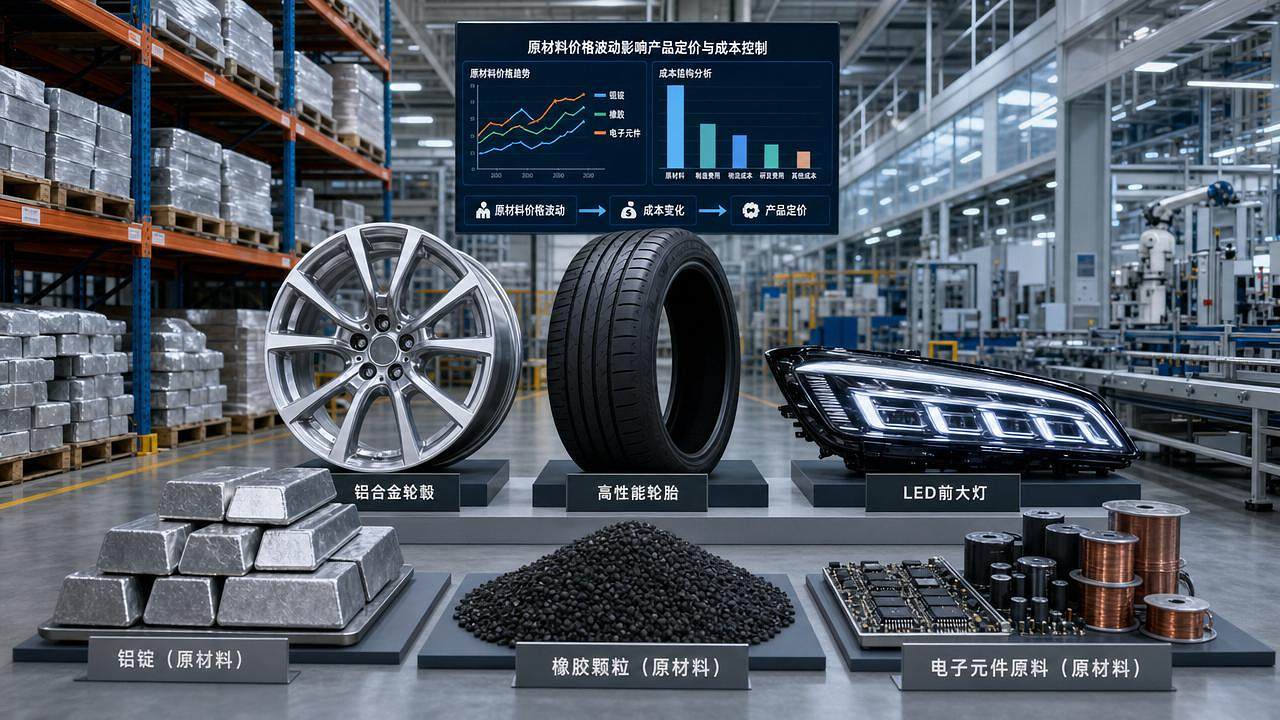
How raw material cost fluctuations affect pricing
For financial approvers in the automotive supply chain, raw material cost fluctuations can quickly reshape margins, cash flow, and pricing decisions.
From aluminum alloy wheels to high-performance tires and LED headlight systems, small input cost shifts can change profitability, negotiations, and long-term planning.
In the AEVS view, understanding raw material cost fluctuations is not only about tracking commodity charts.
It means linking metals, polymers, optics, logistics, compliance, and aftermarket demand into a practical pricing framework.
The questions below explain how raw material cost fluctuations affect pricing, what signals matter most, and how better decisions reduce avoidable risk.
What do raw material cost fluctuations actually mean in automotive pricing?
Raw material cost fluctuations describe repeated changes in the price of inputs used to build a product.
In automotive exterior and vision systems, these inputs include aluminum, steel, rubber, silica, petrochemicals, copper, rare earths, and electronic components.
Pricing changes rarely come from one material alone.
A forged wheel depends on alloy cost, energy rates, tooling wear, and freight.
A tire depends on natural rubber, synthetic rubber, carbon black, bead wire, and curing energy.
An LED headlight assembly also reacts to resin prices, chips, heat sinks, wiring, and optical module sourcing.
Raw material cost fluctuations affect pricing through direct cost pressure and indirect cost transmission.
Direct pressure raises the bill of materials.
Indirect pressure appears through exchange rates, supplier lead times, inventory carrying cost, and contract adjustment clauses.
- Direct impact: material spend rises immediately.
- Process impact: scrap, yield, and energy cost shift.
- Commercial impact: quotes, rebates, and payment terms change.
- Strategic impact: sourcing and pricing models require revision.
This is why raw material cost fluctuations affect pricing far beyond a simple percentage increase on a monthly purchase order.
Which automotive categories feel raw material cost fluctuations most strongly?
Not all products react at the same speed or intensity.
The most exposed categories are usually those with high raw material concentration, energy-intensive production, or strict performance requirements.
Aluminum alloy wheels
These products are highly sensitive to aluminum ingot prices and energy costs.
Low-pressure casting and forging processes also amplify cost changes through power consumption and machining intensity.
High-performance tires
Tires react quickly to natural rubber, synthetic rubber, oil derivatives, carbon black, and transportation rates.
For EV applications, load index and rolling resistance targets can limit substitution options.
LED headlight assemblies
Smart lighting systems face layered exposure.
Electronic components, optical resins, heat dissipation metals, and compliance testing all influence final pricing.
Sensor switches and exterior electronics
These products are especially vulnerable to semiconductor shortages, connector cost changes, and regional trade restrictions.
When raw material cost fluctuations hit electronics, lead time can become as important as unit cost.
How do raw material cost fluctuations affect pricing models and margin control?
The biggest mistake is treating every cost increase as a reason for an immediate price increase.
Effective pricing models separate temporary spikes from structural change.
Raw material cost fluctuations affect pricing in at least four ways.
- They compress gross margin when selling prices stay fixed.
- They increase working capital when higher-cost inventory is required.
- They weaken quote accuracy on long lead projects.
- They create timing gaps between cost movement and customer recovery.
For example, a wheel program quoted at stable aluminum prices may become unprofitable if energy and metal both rise before SOP.
A tire replacement line may face sudden margin erosion if rubber climbs while retail channels resist fast price updates.
Good pricing discipline uses indexed contracts, review windows, and pass-through logic.
It also defines which inputs trigger repricing and which must be absorbed internally through efficiency.
Useful pricing controls
- Material index linkage for aluminum or rubber.
- Quarterly rather than annual review clauses.
- Surcharge mechanisms for extreme volatility.
- Dual-source strategies for exposed inputs.
- Scenario-based quote approval before bid submission.
These steps help explain how raw material cost fluctuations affect pricing without overreacting to every market headline.
What signals should be monitored before approving prices or budgets?
Price approval works better when market signals are organized into a repeatable review checklist.
Commodity price charts matter, but they are only the starting point.
Track these signals together
- Spot versus contract pricing trends.
- Supplier inventory and lead time changes.
- Regional freight and energy movements.
- Exchange rate volatility.
- Trade policy, tariffs, or sanctions.
- Quality yield and scrap performance.
- Demand shifts in OEM and aftermarket channels.
AEVS intelligence is especially useful where technical and commercial variables intersect.
Brake airflow design inside low-drag wheels may alter machining needs.
Headlight thermal management changes may alter metal and resin consumption.
Tire compound updates for lower rolling resistance may affect dependence on specific additives.
These technical changes influence how raw material cost fluctuations affect pricing at a much deeper level than market averages suggest.
What are the biggest risks and common mistakes when responding to cost volatility?
One common mistake is assuming every supplier quote fully reflects unavoidable cost pressure.
Another is delaying pricing action until margin damage becomes visible in monthly reporting.
Raw material cost fluctuations affect pricing most dangerously when decisions rely on incomplete timing.
Frequent errors
- Using outdated standard cost assumptions.
- Ignoring freight, energy, and compliance costs.
- Confusing a temporary spike with a long-term trend.
- Approving fixed-price contracts without adjustment clauses.
- Overbuying inventory at the peak of the market.
There is also a technical risk.
Trying to replace expensive inputs too quickly can damage durability, optics, NVH performance, or safety compliance.
In automotive systems, lower material cost is not always lower total cost.
How can pricing decisions become more resilient in a volatile market?
Resilient pricing begins with better information, but it succeeds through better structure.
The goal is not to predict every movement.
The goal is to respond faster and more accurately when raw material cost fluctuations affect pricing.
Practical next steps
- Build a cost map for every major product family.
- Separate commodity exposure from process exposure.
- Set trigger points for quote review and repricing.
- Review technical changes alongside financial assumptions.
- Use market intelligence to compare supplier claims with industry reality.
AEVS supports this approach by connecting material movements with real product engineering and commercial context.
That is especially valuable for exterior lightweight systems, smart lighting, advanced tires, and sensor-driven body functions.
When raw material cost fluctuations affect pricing, stronger decisions come from linking cost data with design, compliance, and channel demand.
Quick FAQ summary table
Raw material cost fluctuations affect pricing in ways that are immediate, layered, and often underestimated.
The most reliable response is a disciplined framework that combines commodity tracking, engineering understanding, and commercial timing.
Use that framework to test quotes, protect margins, and improve budget approvals before volatility becomes a costly surprise.
For decisions involving wheels, tires, lighting, or smart exterior systems, deeper market intelligence can turn cost uncertainty into pricing confidence.