
Industry Portal
Related News
- 00
0000-00
ECE-Compliant Lighting for Commercial Vehicles: Approval and Installation Checks - 00
0000-00
Laser Adaptive Headlights: What to Check for Range and Glare Control - 00
0000-00
Precision Forging for Aluminum Wheels: Alloy Selection and Fatigue Performance - 00
0000-00
NEV Industry Standards in China: Which Battery Safety Tests Are Required? - 00
0000-00
Automotive Exterior Lighting Systems: Lamp Types, Functions, and Placement
Why the NEV industry is reshaping supplier decisions
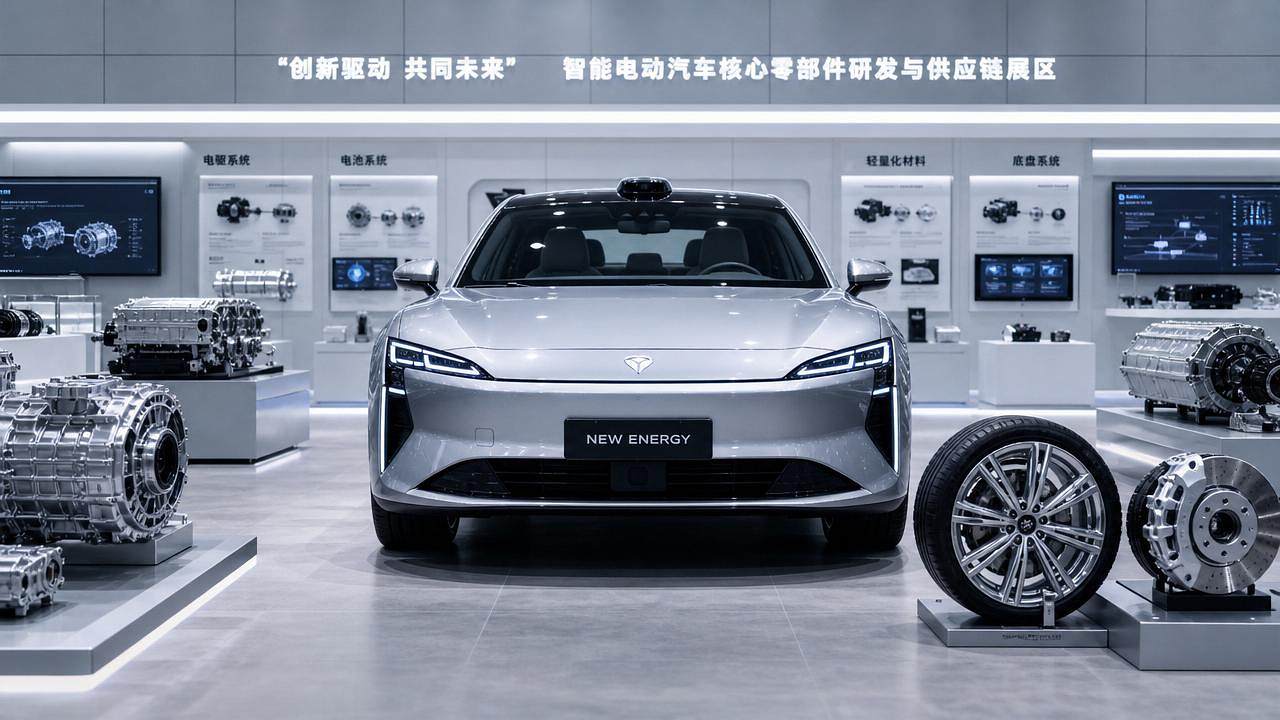
The NEV industry is forcing enterprise decision-makers to rethink how they evaluate suppliers, from lightweight components and tire performance to smart lighting and sensing systems. As electrification, safety standards, and cost volatility reshape priorities, choosing the right partners is no longer just a procurement task—it is a strategic move that directly affects efficiency, brand value, and long-term competitiveness.
For companies operating across automotive exterior systems, wheel and tire technologies, smart lighting, and sensing integration, the supplier question has become more technical and more strategic at the same time. In the past, a buyer could often prioritize unit price, tooling lead time, and basic quality consistency. In the NEV industry, those criteria still matter, but they no longer provide enough protection against performance risk, compliance pressure, and cost instability.
Electric vehicle platforms place unusual demands on every exterior and vision-related component. A wheel is no longer only a styling part; it influences aerodynamic drag, brake cooling, and vehicle mass. A tire is no longer a simple replacement item; it must manage high instant torque, greater curb weight, lower rolling resistance, and cabin noise expectations in one package. A headlight assembly now carries optical intelligence, thermal management requirements, and software-linked interaction functions. For enterprise decision-makers, that means supplier evaluation in the NEV industry must move from transactional purchasing to capability-based selection.
This shift is especially relevant to organizations following the AEVS perspective on vehicle aesthetics and dynamic driving perception. The intersection of lightweighting, optical performance, safety regulation, and aftermarket demand is where competitive differentiation now happens. The businesses that build better supplier networks in the next 12 to 24 months are more likely to secure lower lifecycle cost, faster platform adaptation, and stronger premium positioning.
Why supplier decisions in the NEV industry have become more complex
The NEV industry has changed the operating environment for Tier 1 suppliers, component manufacturers, and aftermarket distributors in at least five measurable ways: heavier vehicle weight, higher torque loads, stricter safety expectations, faster product iteration cycles, and more visible raw material volatility. Each factor affects how enterprises should compare vendors, negotiate technical specifications, and manage risk across sourcing programs.
From cost control to performance-linked procurement
In internal procurement reviews, many buyers still rely on 3 traditional checkpoints: purchase price, defect rate, and on-time delivery. In the NEV industry, that model is incomplete. A lower-cost supplier may introduce hidden losses through excess weight, higher rolling resistance, poor thermal stability, or repeated validation delays. Even a 2% to 4% difference in component mass or aerodynamic efficiency can influence vehicle range targets and platform tuning decisions.
For example, aluminum alloy wheels for EV platforms must balance low-pressure casting or forging decisions with impact strength, brake airflow behavior, and styling complexity. Similarly, LED headlight assemblies now require stronger coordination between optics, electronics, heat dissipation, and regulation. This means buyers need supplier scorecards that reflect total performance contribution rather than only landed cost.
The five AEVS pillars now affect sourcing criteria
AEVS focuses on electric sunroof systems, aluminum alloy wheels, high-performance tires, LED headlight assemblies, and auto sensor switches. These five pillars have become highly interconnected in the NEV industry because each one influences energy efficiency, comfort, safety, and perceived vehicle quality. A weak supplier in one category can undermine the commercial value of the entire vehicle program.
- Electric sunroof systems must support NVH control, sealing consistency, and smart dimming integration.
- Aluminum alloy wheels must manage lightweighting targets, structural strength, and low-drag design requirements.
- High-performance tires must deliver grip, silence, and low rolling resistance under EV torque conditions.
- LED headlight assemblies must combine illumination accuracy, thermal stability, and interactive intelligence.
- Auto sensor switches must ensure reliable triggering, environmental tolerance, and system-level integration.
As a result, enterprise decision-makers increasingly ask suppliers for engineering depth, simulation support, material transparency, and validation readiness before discussing annual volume pricing.
The table below outlines how procurement priorities have shifted in the NEV industry across major exterior and vision-related categories.
The key takeaway is that the NEV industry rewards suppliers that can explain system impact, not just part specifications. Buyers that continue using old scoring logic often discover problems late, usually during validation, launch preparation, or early market feedback.
Shorter development windows increase sourcing pressure
Product cycles in the NEV industry are often compressed into 9 to 18 months for major updates, with even shorter windows for trim-level enhancements and aftermarket variants. That puts pressure on suppliers to respond quickly with prototype support, simulation files, PPAP documentation, and cross-functional engineering communication. A supplier that needs 6 weeks for initial design feedback may be too slow for a program that requires technical closure in 10 business days.
This is why strategic intelligence matters. Buyers increasingly value vendors that can interpret ECE and DOT trends, monitor aluminum and rubber price movement, and identify downstream aftermarket demand for custom wheels or replacement tire segments. In the NEV industry, information speed has become part of supply capability.
What enterprise decision-makers should evaluate before choosing suppliers
A reliable sourcing decision in the NEV industry should combine technical review, compliance assessment, commercial resilience, and lifecycle service readiness. For enterprise buyers, the goal is not simply to reduce immediate procurement cost. The goal is to identify suppliers that can support product performance, launch timing, and market competitiveness over 2 to 5 years.
1. Engineering capability and validation depth
Start by checking whether the supplier can provide more than a catalog. In the NEV industry, suppliers should be able to discuss finite element analysis, thermal behavior, NVH considerations, sensor response logic, or aerodynamic implications depending on the component category. If a vendor cannot explain how its product behaves under real EV operating conditions, that is an early warning sign.
For wheels, ask about load range, impact testing logic, corrosion resistance cycles, and airflow considerations. For tires, ask about rolling resistance grades, wet grip balance, and noise tuning under heavier battery-electric vehicle loads. For headlights, request details on heat sink design, luminous stability, and anti-glare control. A serious supplier should support at least 4 to 6 core validation items with documented methods.
Recommended technical checkpoints
- Material consistency across 3 consecutive batches
- Prototype lead time within 2 to 4 weeks for standard programs
- Dimensional tolerance aligned with program needs, often within sub-millimeter ranges for key interfaces
- Performance validation under temperature, vibration, and moisture exposure
- Clear design change control and traceability process
2. Compliance readiness across target markets
The NEV industry is global, but compliance is not uniform. Enterprise buyers must confirm whether a supplier understands the regulatory expectations of each destination market. Exterior and vision systems often face direct scrutiny because they affect lighting performance, road safety, labeling, and environmental durability. If your sales footprint spans Europe, North America, and selected Asia-Pacific markets, one incomplete compliance package can delay multiple shipments.
A strong supplier should be able to map its documentation to the required standard path, explain testing readiness, and identify gaps before quotation finalization. This matters even more when sourcing smart optical systems or sensor-based switching modules, where hardware behavior and software logic must work together without creating regulatory conflict.
The following matrix can help decision-makers compare supplier readiness in the NEV industry during RFQ and technical review stages.
This type of matrix helps procurement and engineering teams align around evidence instead of assumptions. In the NEV industry, that alignment reduces the risk of selecting suppliers that look competitive on paper but struggle during execution.
3. Cost resilience, not just low price
Raw material volatility remains a major issue in the NEV industry, especially for aluminum-intensive products, rubber-based systems, and electronics-linked assemblies. A supplier offering the lowest quote today may become the least stable partner if it cannot absorb or transparently manage material swings over the next 6 to 12 months.
Decision-makers should ask three commercial questions early. First, what is the supplier’s mechanism for price adjustment when aluminum or rubber changes beyond an agreed threshold? Second, how many sourcing locations support the program? Third, what inventory or safety stock arrangement exists for critical launches? These questions often reveal more about supplier maturity than headline pricing does.
4. Aftermarket and premium demand awareness
The NEV industry is not limited to OEM sourcing. Replacement tires, custom forged wheels, lighting upgrades, and sensing-related exterior components are becoming more visible in premium aftermarket channels. That creates a second layer of supplier evaluation: can the supplier support both original equipment expectations and high-margin replacement demand?
For many enterprise buyers, especially distributors and platform-focused parts businesses, this is a major opportunity. A supplier with strong technical credibility can help win premium orders where documentation, performance explanation, and specification fit matter more than discount-based selling.
How AEVS-style intelligence supports better supplier strategy
In the NEV industry, information fragmentation is a real problem. Procurement teams track cost. Engineers track performance. Compliance teams track standards. Sales teams track market demand. When these functions work in isolation, supplier decisions become slower and less accurate. This is where a strategic intelligence model creates value.
Cross-functional intelligence improves decision speed
AEVS positions exterior and vision systems as a connected decision space rather than isolated product lines. That perspective is useful because the NEV industry increasingly rewards integrated thinking. A low-drag wheel decision affects tire selection, thermal behavior, and perceived ride quality. A smart headlight decision affects software compatibility, thermal packaging, and compliance preparation. An electric sunroof choice influences weight, NVH, and premium cabin perception.
When enterprise teams use a shared framework covering performance, compliance, and market trends, they can shorten evaluation cycles from several review rounds to a more manageable 3-step process: initial capability screening, application fit validation, and commercial risk confirmation. That saves time without lowering technical rigor.
Decision-makers need deeper technical context
The NEV industry makes it dangerous to buy outside your technical field without support. For example, selecting a headlight supplier now requires understanding optical matrix behavior, thermal control limits, and environmental durability. Choosing a tire partner requires knowledge of torque response, silence targets, and rolling resistance trade-offs. Reviewing forged wheel options may involve CFD-informed airflow discussions and strength-to-weight comparisons.
That is why intelligence-led sourcing is becoming a competitive advantage. Buyers do not need to become optics scientists or tire dynamics experts, but they do need structured access to the right interpretation. The NEV industry moves too fast for passive purchasing models.
Practical signs of an intelligence-ready sourcing process
- A unified supplier review template covering 5 to 8 critical dimensions
- Monthly tracking of raw material movement for aluminum and rubber categories
- Quarterly updates on compliance or market-entry changes
- Technical review meetings that include procurement, engineering, and business leads together
- Aftermarket demand monitoring for high-premium configurations
Common mistakes enterprises make when sourcing for the NEV industry
Even experienced buyers can make avoidable errors when sourcing in the NEV industry. Most failures do not come from one dramatic issue. They usually result from small omissions that compound over time, especially across validation, launch planning, and regional expansion.
Mistake 1: Treating EV requirements as a minor variant of conventional sourcing
This is one of the most common procurement mistakes. NEV platforms often have different weight distribution, thermal behavior, noise sensitivity, and energy-efficiency targets. A component that performs adequately in a traditional vehicle may need redesign or revalidation for an EV application. Assuming equivalence can lead to late engineering changes and avoidable cost.
Mistake 2: Overemphasizing quoted price at RFQ stage
In the NEV industry, the cheapest quote may carry the highest total program cost. Hidden expenses often appear in delayed prototypes, repeated test failures, weak documentation, or unstable material pricing. Enterprises should compare at least 4 cost layers: piece price, tooling or development cost, validation burden, and risk-related commercial exposure.
Mistake 3: Ignoring aftermarket implications
Some sourcing teams focus only on OE launch requirements and miss the aftermarket potential that follows. In the NEV industry, premium replacement tires, forged wheel upgrades, and intelligent lighting segments can produce attractive margins if the original supplier relationship supports product continuity and technical credibility. Overlooking this channel narrows long-term value capture.
Mistake 4: Failing to align procurement and engineering
A supplier may satisfy commercial requirements yet fail technical integration. Another may impress engineers but lack delivery resilience. The NEV industry requires a balanced decision model. Companies that hold joint reviews every 2 to 3 weeks during key sourcing stages typically identify risk earlier than teams that work in sequence.
Building a stronger supplier selection framework for the next 24 months
The NEV industry will continue reshaping supplier decisions because exterior systems, vision technologies, lightweight materials, and smart sensing are all moving toward higher integration. Enterprise decision-makers should respond by building a sourcing framework that is technical, cross-functional, and adaptable to market volatility.
A practical framework starts with 4 questions. Can the supplier improve vehicle-level performance? Can the supplier support compliance across target markets? Can the supplier manage raw material and delivery risk transparently? Can the supplier contribute to both OE and aftermarket value? When all four answers are strong, the sourcing decision is more likely to hold up under real NEV industry pressure.
For companies following the AEVS business direction, the priority is clear: link aerodynamic efficiency, optical intelligence, dynamic road contact, and exterior aesthetics through better information and better supplier judgment. That approach helps buyers move beyond fragmented decision-making and toward stronger commercial outcomes.
If your team is reviewing suppliers for wheels, tires, smart headlights, sensor switches, or advanced exterior systems, now is the right time to strengthen your evaluation model. Contact us to discuss your sourcing priorities, get a tailored intelligence perspective, and explore more solutions for the evolving NEV industry.