Industry Portal
Related News
- 00
0000-00
ECE-Compliant Lighting for Commercial Vehicles: Approval and Installation Checks - 00
0000-00
Laser Adaptive Headlights: What to Check for Range and Glare Control - 00
0000-00
Precision Forging for Aluminum Wheels: Alloy Selection and Fatigue Performance - 00
0000-00
NEV Industry Standards in China: Which Battery Safety Tests Are Required? - 00
0000-00
Automotive Exterior Lighting Systems: Lamp Types, Functions, and Placement
When CFD simulations reveal hidden airflow risks
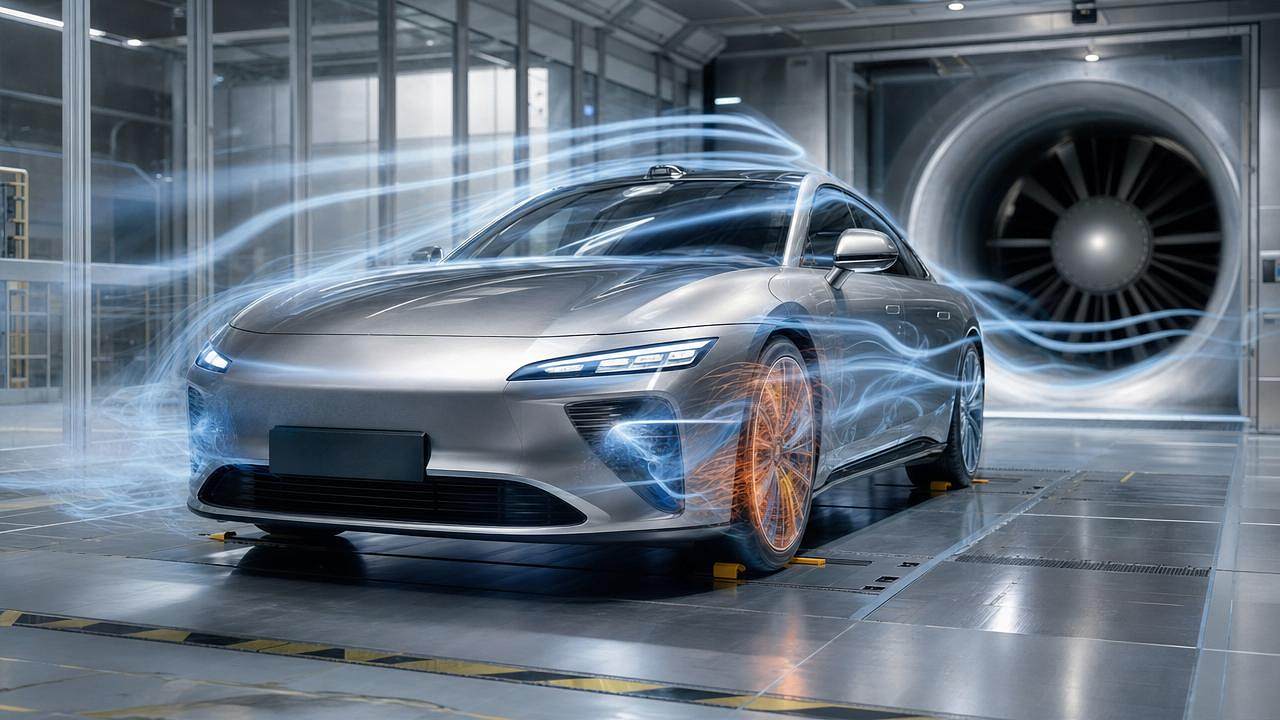
When CFD simulations expose airflow risks that remain invisible in physical testing, project managers gain a critical edge in balancing performance, safety, cost, and launch timing. In automotive exterior and vision systems, these insights can directly influence wheel cooling, headlight thermal stability, cabin comfort, and sensor reliability—turning hidden aerodynamic issues into actionable engineering decisions before they become expensive program delays.
For project leaders in the NEV supply chain, that advantage is no longer optional. Programs now move through tighter validation windows, more aggressive drag targets, and stricter safety and compliance reviews. AEVS tracks these changes across alloy wheels, tires, LED headlight assemblies, sensor switches, and electric sunroof systems, where airflow behavior often links directly to both engineering risk and business outcome.
The challenge is simple to describe but difficult to manage: many airflow issues only emerge under transient conditions, crosswinds, rotating geometries, heat load buildup, or contamination scenarios that are expensive to reproduce repeatedly in physical testing. CFD simulations help teams identify those hidden risks earlier, often during the 2–4 design loops when geometry is still flexible and corrective action costs far less.
Why hidden airflow risks matter in exterior and vision programs
In automotive exterior development, airflow is not only about drag reduction. It also governs brake cooling inside low-drag wheel designs, the thermal stability of matrix LED modules, wind noise around sunroof interfaces, water management near optical sensors, and debris transport around tire cavities. A 3%–5% aerodynamic improvement can be valuable, but a single overlooked hot spot or flow separation zone can delay SOP by weeks.
For project managers, the commercial impact is immediate. Late-stage geometry changes can trigger tooling rework, revised validation plans, new supplier coordination, and repeated test bookings. In many programs, a design update made after mold freeze or hard tooling release costs several times more than the same correction found during virtual analysis. CFD simulations reduce this exposure by turning invisible flow behavior into measurable engineering evidence.
Where physical testing alone may miss critical airflow behavior
Physical testing remains essential, but it has practical limits. Wind tunnels, road tests, thermal chambers, and splash tests cannot always cover every speed range, yaw angle, loading condition, and contamination state. For example, behavior at 80–120 km/h under 5°–10° crosswind may differ sharply from straight-line test results, especially near wheel spokes, lamp vents, and sensor housings.
Rotating wheels create another blind spot. Air recirculation around brake packages, spoke openings, and tire sidewalls can shift significantly with small geometry changes. A wheel optimized only for appearance or nominal drag may unintentionally trap heat, raising local temperatures enough to affect brake durability, coating life, or nearby sensor components. CFD simulations are especially effective in visualizing these enclosed or rotating flow structures before prototypes are locked.
Typical hidden risk zones
- Brake airflow paths inside aero wheel designs with narrow spoke windows
- Headlight heat extraction channels around LED drivers and projection modules
- Sunroof perimeter gaps that amplify whistle noise above 90 km/h
- Sensor switch covers exposed to water film, dust accumulation, or wake turbulence
- Tire and wheelhouse interfaces where drag, spray, and cooling compete
The table below helps project teams map common subsystem risks to the type of airflow problem CFD simulations can reveal early in development.
A key takeaway is that airflow risk rarely stays isolated within one part. A wheel design decision can affect cooling and drag simultaneously, while a headlight vent revision can influence dust protection and condensation behavior at the same time. This cross-functional effect is why project managers benefit from CFD simulations not as a specialist report, but as a program control tool.
How CFD simulations support faster and safer project decisions
The strongest value of CFD simulations is not just visualization. It is decision speed with technical depth. In a typical development cycle, teams may compare 3–6 design variants in the same week, screen weak concepts, and focus physical testing on the 1–2 options most likely to pass thermal, aerodynamic, and packaging targets. That can reduce unnecessary prototype iterations and improve alignment between styling, engineering, and sourcing.
For AEVS-relevant programs, this matters most where airflow performance must coexist with aesthetics. Low-drag wheels, slim lamp packaging, flush sensor integration, and panoramic roof sealing all create narrow design windows. CFD simulations help quantify trade-offs instead of leaving them to debate. For example, a spoke geometry that lowers drag by a small margin but raises brake thermal load beyond acceptable limits may not be commercially viable once validation cost is included.
Decision points where virtual analysis pays back
- Concept screening before surface release, when geometry can still shift without tooling impact
- Design freeze review, where teams must balance performance, compliance, and appearance
- DV and PV planning, to focus physical tests on the highest-risk operating conditions
- Supplier change assessment, especially when vent shape, material thickness, or surface features vary
- Launch readiness reviews, where unresolved thermal or contamination risks threaten timing
In many programs, using CFD simulations at these 5 checkpoints helps avoid the most expensive form of delay: late discovery. Even a 7–10 day slip in one subsystem can cascade across tooling, procurement, validation booking, and customer approval timing.
What project managers should ask from the simulation team
Not every analysis delivers decision-grade output. To make CFD simulations useful for program control, project managers should request clear assumptions, boundary conditions, scenario ranges, and acceptance logic. A colorful airflow image is not enough. Teams need to know whether the model covers rotating parts, transient heat loads, water spray, contamination paths, or crosswind effects, and whether the result can inform a gate decision.
Minimum review checklist
- Speed range included, such as urban, highway, and high-speed conditions
- Yaw or crosswind conditions, typically at least 0°, 5°, and 10°
- Thermal load assumptions for LEDs, brakes, electronics, or cabin interface zones
- Geometry state, including prototype, nominal CAD, and tolerance-sensitive details
- Correlation plan with tunnel, road, or bench testing within 1–2 validation stages
The table below outlines a practical way to connect CFD simulations with project milestones and expected management decisions.
This milestone-based approach keeps CFD simulations linked to delivery outcomes rather than isolated engineering effort. It also improves communication with sourcing teams, because each virtual result is tied to timing, cost exposure, and supplier action requirements.
Application scenarios across wheels, lighting, tires, sunroofs, and sensor systems
Different AEVS categories face different airflow risks, but the management principle is the same: detect early, quantify clearly, and correct before validation cost escalates. The value of CFD simulations increases when multiple exterior systems compete for the same aerodynamic envelope on EV and NEV platforms.
Low-drag wheels and brake cooling
Wheel programs often aim to reduce drag while preserving impact strength, styling identity, and brake thermal performance. On EVs, the pressure is higher because range targets are sensitive to aerodynamic losses, yet vehicle mass and instant torque place added demands on tires and braking systems. CFD simulations help compare spoke openness, dish depth, and vent routing before expensive wheel tooling is released.
Even small changes matter. A reduction in open area may improve aero appearance, but it can alter mass flow around the rotor and caliper enough to raise thermal risk during repeated deceleration events. Project managers should require at least 2–3 brake duty scenarios in the analysis, not just a single cruise condition.
LED headlight assemblies and thermal stability
Modern headlights combine illumination, styling, electronics, and sometimes interactive projection. This compresses heat sources into tighter packaging volumes. CFD simulations support vent placement, airflow channel optimization, and thermal load balancing around LED boards, optics, and control modules. If a hotspot remains undetected, lumen performance, color consistency, or component life can drift outside acceptable limits during long operation cycles.
For matrix systems, where thermal variation can affect precision and reliability, simulation should cover both steady-state and transient conditions. A 20–30 minute heat soak profile may reveal risks that short bench tests do not capture, especially under low vehicle speed and high ambient conditions.
Sunroof NVH and cabin comfort
Electric sunroof systems must do more than seal against water. They influence wind noise, pressure pulsation, and perceived cabin comfort. CFD simulations can identify recirculation zones and edge vortices that create whistle noise at highway speed. This is especially relevant when flush glazing, slim seals, and panoramic openings leave little room for trial-and-error revisions.
From a project perspective, NVH fixes are notoriously disruptive late in development. A seal lip update or deflector change may look minor, but it can require new parts, new tests, and new supplier coordination within a narrow 3–5 week window.
Sensor switch reliability in real-world airflow
Auto sensor switches and related mm-wave or photoelectric elements depend on stable environmental conditions. Airflow can carry dust, water droplets, and spray residue into sensing zones, reducing signal quality or creating false triggers. CFD simulations help teams study splash trajectories, wake effects, and airflow shielding around these small but critical components.
For project managers, this is a classic hidden risk because the part cost may be low compared with the functional consequence. A minor housing geometry issue can create major warranty exposure or customer dissatisfaction if auto wipers, lighting activation, or blind-spot related sensing behaves inconsistently.
How to build a practical CFD workflow for project control
The most effective CFD simulations are integrated into a repeatable project workflow rather than requested only after problems appear. For exterior and vision programs, a practical model usually combines concept screening, focused validation support, and release-stage risk confirmation. This creates a closed loop between engineering, testing, sourcing, and program timing.
A 4-step implementation model
- Define risk targets by subsystem, such as brake cooling margin, lamp temperature stability, or sensor contamination resistance
- Run early CFD simulations on baseline and alternative geometries before tooling commitment
- Correlate virtual findings with selected physical tests to confirm model reliability
- Use final simulations to support release decisions and supplier change control
This 4-step structure is useful because it limits over-analysis while still catching high-cost issues. It also helps project managers assign accountability: engineering owns assumptions, testing owns correlation, suppliers own geometry response, and program leadership owns timing decisions.
Common mistakes to avoid
- Using CFD simulations only after physical tests fail
- Reviewing images without asking for quantitative acceptance thresholds
- Ignoring tolerance effects on vents, gaps, or mounting interfaces
- Evaluating drag without checking thermal and contamination consequences
- Failing to update simulations after supplier-driven geometry changes
In fast-moving NEV programs, these mistakes often convert a manageable engineering issue into a launch risk. The better approach is to treat airflow as a cross-functional design parameter from day 1, especially when lightweighting, decarbonization, and premium exterior design all compete within the same package space.
When CFD simulations reveal hidden airflow risks, project managers gain more than technical insight. They gain schedule protection, cleaner supplier decisions, and stronger justification for design changes before cost multiplies. Across wheels, tires, lighting, sunroofs, and sensor systems, AEVS sees the same pattern: the earlier airflow risk becomes visible, the easier it is to convert uncertainty into a controlled engineering action.
If your team is balancing aerodynamic efficiency, thermal stability, NVH, and sensing reliability in one program, a structured CFD review can shorten decision cycles and reduce late-stage surprises. Contact us to discuss your application, request a tailored analysis approach, or explore more exterior and vision solutions for global NEV projects.