
Industry Portal
Related News
- 00
0000-00
ECE-Compliant Lighting for Commercial Vehicles: Approval and Installation Checks - 00
0000-00
Laser Adaptive Headlights: What to Check for Range and Glare Control - 00
0000-00
Precision Forging for Aluminum Wheels: Alloy Selection and Fatigue Performance - 00
0000-00
NEV Industry Standards in China: Which Battery Safety Tests Are Required? - 00
0000-00
Automotive Exterior Lighting Systems: Lamp Types, Functions, and Placement
Tags
Singapore Enforces MELS Labeling for Appliances from 1 July 2026
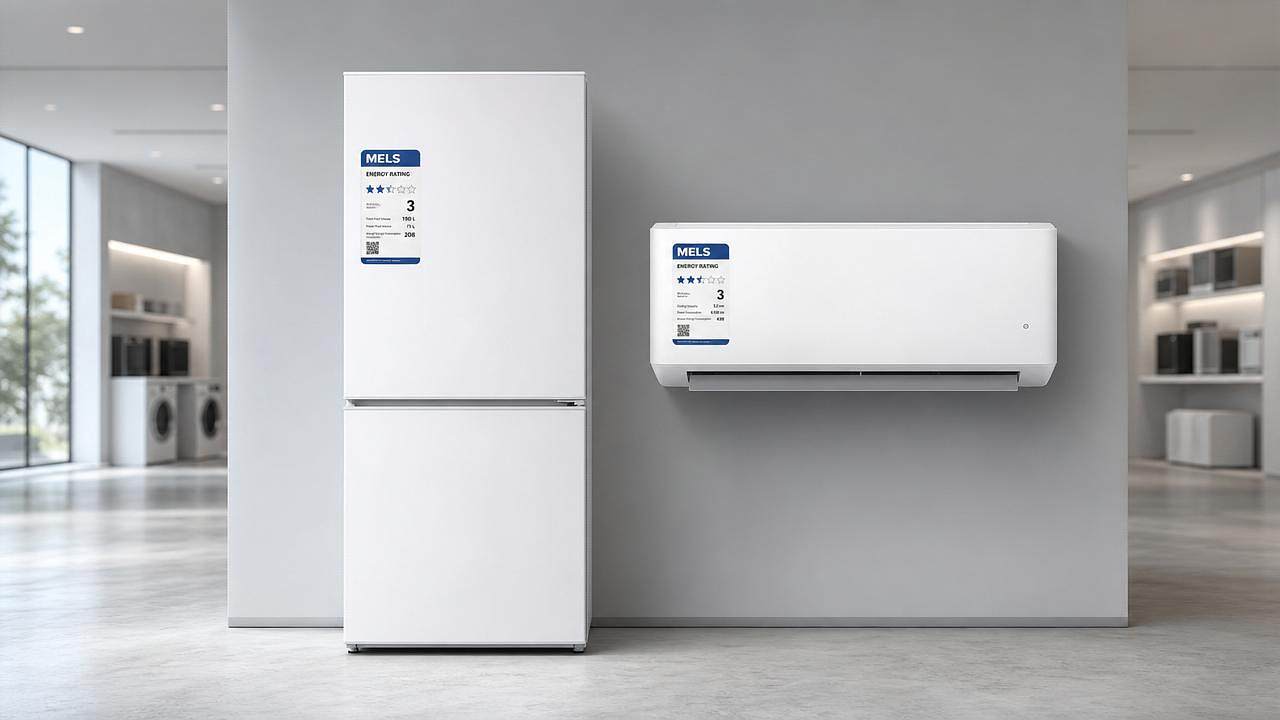
Singapore’s National Environment Agency (NEA) will implement mandatory energy efficiency compliance for key household appliances starting 1 July 2026 — requiring registration, adherence to Minimum Energy Performance Standards (MEPS), and visible MELS labeling. The regulation directly affects exporters, particularly Chinese OEM/ODM manufacturers supplying air conditioners, refrigerators, clothes dryers, televisions, and lighting products to the Singaporean market.
Regulatory Requirements Take Effect on 1 July 2026
Effective 1 July 2026, the NEA mandates that all air conditioners, refrigerators, clothes dryers, televisions, and lamps sold in Singapore must: (1) complete energy efficiency registration with the NEA; (2) meet applicable Minimum Energy Performance Standards (MEPS); and (3) display the official Mandatory Energy Labeling Scheme (MELS) label. Non-compliant products will be removed from e-commerce platforms without exception.
Impact Across the Supply Chain
Export Trading Companies
Trading firms handling cross-border sales of covered appliances must verify MELS registration status and label placement before shipment. Failure to confirm compliance may result in customs rejection or post-import delisting by online retailers — disrupting order fulfillment and damaging buyer trust.
Manufacturing Enterprises
OEM/ODM suppliers — especially those producing smart lighting systems, vehicle-integrated refrigeration modules, and home appliances designed for new energy vehicles — face urgent technical alignment needs. Product design, testing protocols, and documentation must now integrate MEPS verification and MELS label specifications from the earliest development stage.
Component and Material Sourcing Firms
Suppliers of critical subsystems — such as variable-speed compressors, LED drivers, or thermal management modules — may need to provide updated energy performance data and test reports aligned with Singapore’s MEPS thresholds. Procurement contracts may increasingly require pre-validated compliance evidence.
Supply Chain Service Providers
Logistics, certification support, and regulatory consultancy providers must expand service scope to include MELS-specific verification, label artwork approval, and NEA registration coordination. Lead times for compliance-related services are expected to lengthen as demand surges ahead of the 2026 deadline.
Key Compliance Actions for Exporters
Complete NEA Energy Registration Before Market Entry
Each appliance model must undergo formal registration with the NEA prior to sale. This includes submission of test reports from NEA-recognized laboratories, technical specifications, and label mock-ups — all in English and conforming to MELS format requirements.
Validate Product Design Against MEPS Thresholds
Manufacturers must re-evaluate energy consumption metrics — including annual energy usage (kWh/year), cooling capacity (W), and luminous efficacy (lm/W) — against updated MEPS levels. Smart features (e.g., adaptive dimming, standby power modes) must also be assessed for their impact on certified energy performance.
Integrate MELS Labeling into Packaging and Documentation
The MELS label must be physically affixed to the product (or its packaging if direct attachment is impractical) and reproduced accurately in digital storefronts. Label size, color contrast, font, and information hierarchy must follow NEA’s published guidelines — deviations risk non-acceptance by platforms.
Prepare for Platform-Level Enforcement
E-commerce operators in Singapore are instructed to enforce compliance automatically. Exporters should expect real-time checks during listing uploads — including validation of registration numbers and label image resolution — making pre-submission verification essential.
Industry Observation: A Strategic Shift Toward Pre-Market Alignment
Analysis shows this policy signals a broader regional trend: energy labeling is evolving from a post-market disclosure tool into a hard prerequisite for market access. Observably, the 2026 enforcement timeline provides a 12–18 month window — sufficient for technical recalibration but insufficient for full product redesign cycles. What deserves closer attention is how rapidly MEPS thresholds may tighten beyond 2026, especially for smart and vehicle-integrated appliances where functional complexity blurs traditional energy classification boundaries. From an industry perspective, early engagement with NEA-accredited labs and proactive label design review will likely become differentiators in time-to-market competitiveness.
Strategic Implications for Global Appliance Exporters
This requirement underscores that energy efficiency is no longer a secondary specification but a foundational market entry criterion — particularly in high-regulation ASEAN markets. For Chinese OEM/ODM suppliers, success hinges not only on meeting technical standards but also on embedding regulatory intelligence into R&D, procurement, and quality assurance workflows. The shift rewards agility in compliance integration rather than reactive certification.
Source Information and Verification Notes
This article is based solely on the user-provided title, event date (2026-07-01), and summary. Specific official source links were not provided in the input and should be verified continuously. Stakeholders are advised to monitor NEA’s official guidance updates, MELS label design revisions, laboratory accreditation announcements, and platform-specific enforcement policies — all of which may evolve before implementation.