
Industry Portal
Related News
- 00
0000-00
ECE-Compliant Lighting for Commercial Vehicles: Approval and Installation Checks - 00
0000-00
Laser Adaptive Headlights: What to Check for Range and Glare Control - 00
0000-00
Precision Forging for Aluminum Wheels: Alloy Selection and Fatigue Performance - 00
0000-00
NEV Industry Standards in China: Which Battery Safety Tests Are Required? - 00
0000-00
Automotive Exterior Lighting Systems: Lamp Types, Functions, and Placement
Tags
Shenzhen Int'l Convention & Exhibition Center Deploys AI Security with Smart Glass
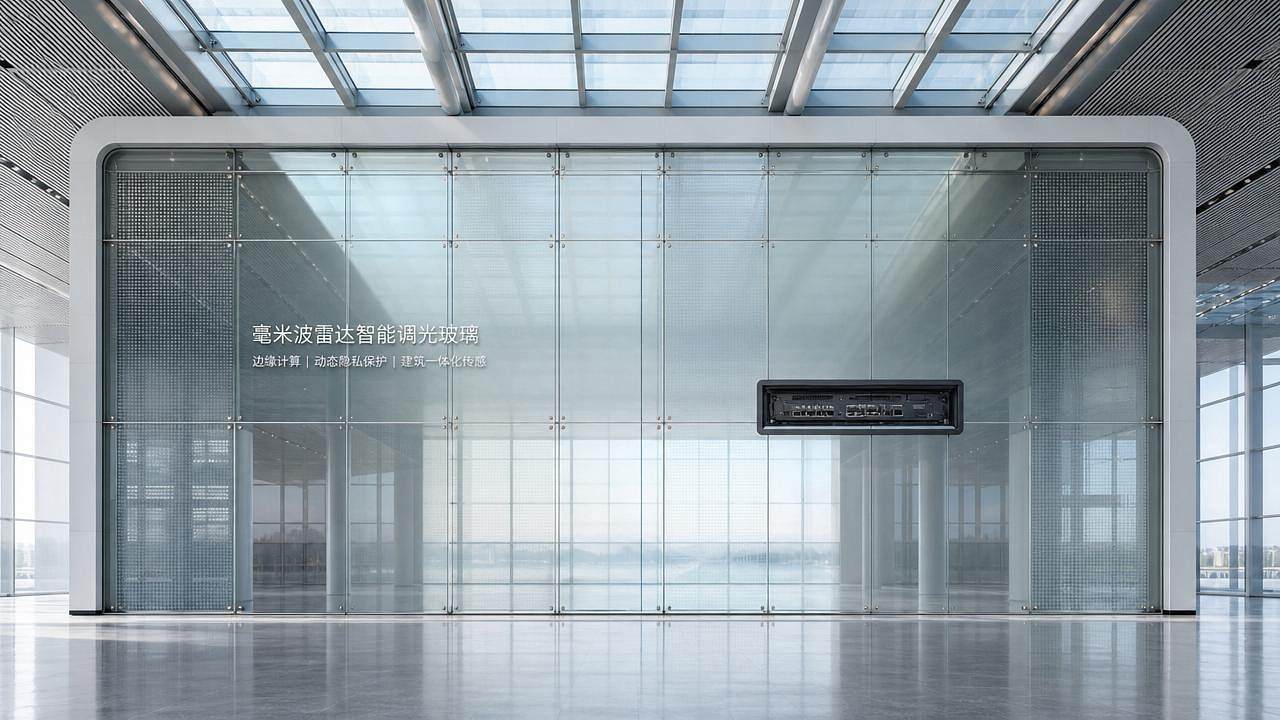
On May 29, 2026, the Shenzhen International Convention and Exhibition Center launched an AI-powered visual security system for the Greater Bay Area Auto Show, integrating domestically produced smart dimming glass and panoramic skylight components as edge computing nodes. This development signals material innovation convergence in building-integrated sensing — particularly relevant for smart building systems, automotive interior tech, and advanced glazing manufacturers.
Event Overview
On May 29, 2026, the main venue of the 2026 Guangdong-Hong Kong-Macao Greater Bay Area Auto Show deployed an AI visual security system. The perception layer of this system extensively uses domestically manufactured smart dimming glass and structural panoramic skylight elements as physical carriers for edge computing. Field testing at the exhibition confirmed that when miniature millimeter-wave radar is embedded into Smart Dimming Glass surfaces, the system simultaneously enables occupant posture recognition and adaptive cabin lighting control — advancing the commercialization of the 'glass-as-sensor' concept.
Impact on Specific Industry Segments
Smart Glazing Component Manufacturers: These firms face new demand drivers tied to functional integration — not just optical or thermal performance, but embedded sensing capability. Impact manifests in R&D prioritization (e.g., radar-compatible glass lamination processes), qualification timelines (e.g., meeting edge-computing interface standards), and supply chain coordination with sensor module suppliers.
Automotive Interior Systems Suppliers: As the demonstration links smart glass to in-cabin occupant monitoring and ambient light adaptation, Tier 1 and Tier 2 suppliers engaged in cockpit HMI, ADAS cabin sensing, or ambient lighting must assess compatibility requirements with glass-integrated radar and dynamic transmittance control — especially for next-generation EV platforms targeting regulatory compliance on driver monitoring and energy efficiency.
Building Automation & Smart Facility Integrators: The use of architectural glazing as a dual-purpose element (daylight management + security sensing) redefines specification criteria for large-scale venues. Integrators may need to reassess commissioning workflows, cybersecurity protocols for edge devices hosted on glass substrates, and interoperability frameworks between BMS and AI vision platforms.
What Relevant Enterprises or Practitioners Should Monitor and Act On
Track official technical specifications and certification pathways emerging from the project
Current implementation is tied to a specific exhibition deployment. Observably, formal standards or third-party validation frameworks for ‘sensor-integrated architectural glass’ have not yet been published. Enterprises should monitor announcements from China’s Ministry of Housing and Urban-Rural Development or national building materials standardization committees for upcoming test protocols.
Assess readiness for multi-function substrate qualification — not just optical or mechanical specs
Analysis shows that future procurement tenders for smart venues may begin requiring co-certification across domains: e.g., EN 14449 (laminated glass safety), ISO/IEC 27001 (edge device data handling), and IEEE 802.11ay (low-latency radar data backhaul). Suppliers should audit internal testing capacity against such cross-domain requirements now.
Distinguish between pilot-scale validation and scalable deployment conditions
The reported field test occurred under controlled exhibition conditions — fixed mounting geometry, limited environmental variables, and centralized AI inference. From industry perspective, real-world adoption hinges on durability under UV exposure, thermal cycling, and long-term radar signal stability through glass layers. Companies should prioritize accelerated aging tests focused on sensor-glass interface integrity.
Engage early with system integrators on interface definition — especially power, data, and mounting
Integration of radar modules into glass requires precise coordination on power delivery (e.g., PoE variants), data bandwidth allocation, and mechanical anchoring without compromising structural or optical performance. Current more suitable approach is to initiate joint interface design workshops with key facility integrators before bidding on similar projects.
Editorial Perspective / Industry Observation
This deployment is better understood as a technical proof point than a mature market signal. Analysis shows it validates feasibility — not economic scalability or regulatory acceptance — of embedding active sensing into architectural glass. Observably, the emphasis remains on edge-node functionality within a defined, high-visibility venue context, rather than broad infrastructure rollout. From industry angle, its significance lies less in immediate revenue impact and more in shifting technical expectations: glass is no longer a passive envelope component, but a potential distributed sensing surface. Sustained attention is warranted because subsequent deployments — especially in transportation hubs or government buildings — will likely clarify whether this model evolves toward standardized interfaces or remains bespoke.
Conclusion: This initiative reflects an incremental but structurally meaningful step in converging building materials, electronics, and AI infrastructure. It does not indicate imminent mass-market adoption, nor does it replace conventional security or lighting systems. Instead, it signals growing technical appetite for multifunctional substrates — a trend that favors vertically coordinated suppliers and cross-domain engineering teams. Currently, it is more appropriately interpreted as a capability benchmark for smart materials integration, not a near-term procurement trigger.
Source Attribution: Primary information derived solely from the provided event summary titled 'Shenzhen International Convention and Exhibition Center deploys AI security system, with panoramic skylights and smart dimming glass serving as key exhibition carriers', dated May 29, 2026. No external data, policy documents, or market statistics were referenced. Areas requiring ongoing observation include formal standardization activity, follow-up deployments beyond exhibition venues, and publicly disclosed performance metrics beyond the stated field test results.