
Industry Portal
Related News
- 00
0000-00
Natural Rubber Prices Fluctuate as Chinese Tire Buying Provides Support - 00
0000-00
Vehicle Lightweighting Materials: Comparing Steel, Aluminum and Composites - 00
0000-00
Vehicle Lightweighting Solutions: Balancing Weight, Safety and Performance - 00
0000-00
Michelin Showcases 75% Renewable-Material Tire and Touch Intelligence at CIIE - 00
0000-00
Choosing an Electric Sunroof Systems Manufacturer: Key Supplier Criteria
NEV Industry Standards in China: Which Battery Safety Tests Are Required?
NEV Industry Standards in China: Which Battery Safety Tests Are Required?
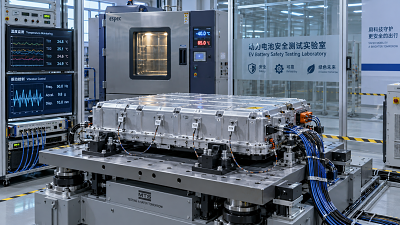
Which battery safety tests must a new energy vehicle pass before entering the Chinese market? The answer starts with the applicable edition of GB 38031, Electric vehicles traction battery safety requirements. It does not end with a supplier’s statement that its battery is “GB compliant.” The cell, battery pack or system, vehicle installation, and approval documentation must all match the intended application.
For technical evaluators, understanding NEV industry standards means separating mandatory requirements from supplementary validation. China’s traction battery framework covers mechanical abuse, electrical faults, environmental exposure, and thermal hazards, but the required tests differ between cells and packs or systems. An impressive cell report cannot establish that a complete underfloor battery assembly is safe.
Start with the standard edition—not the test certificate
GB 38031-2020 established China’s mandatory traction battery safety requirements for electric vehicles. Its successor, GB 38031-2025, was published in March 2025 with an implementation date of July 1, 2026. This change matters particularly for thermal propagation, underbody impact, and safety after repeated fast charging.
A project approaching that implementation date needs an explicit applicability decision. Do not assume that an older report will remain acceptable because testing began before the new edition took effect. Check the official implementation provisions and the requirements of the relevant vehicle approval or certification process, including how they treat existing models and subsequent modifications.
GB 38031 is also not the entire market-entry framework. GB 18384-2020, Electric vehicles safety requirements, addresses vehicle-level electrical safety. Applicable crash requirements and vehicle admission procedures add further obligations. Requirements for electric buses can introduce additional considerations. Battery test compliance supports vehicle approval; it is not a standalone authorization to sell a complete vehicle.
The distinction between GB and GB/T is useful here. GB identifies mandatory national standards, while GB/T generally identifies recommended national standards. A recommended test may still become contractually necessary or be referenced by another applicable requirement. Ask why a test is required rather than treating every standard number in a supplier presentation as equivalent.
Which battery safety tests belong in the compliance plan?
The table below summarizes the principal test families in the GB 38031 framework. It is a planning guide, not a substitute for the clause-by-clause test matrix. The applicable edition determines specimen preparation, state of charge, loading conditions, observation periods, and acceptance criteria.
Two distinctions prevent frequent misunderstandings. A simulated collision test on a battery assembly is not the same as a complete vehicle crash test. Likewise, an enclosure’s IP rating does not automatically demonstrate compliance with the prescribed battery immersion test. Similar terminology can conceal different specimens, conditioning, and pass criteria.
Cell safety and system protection answer different questions
Cell abuse testing examines how the electrochemical unit responds to defined stress. Pack-level protection testing examines how the integrated assembly manages hazardous conditions through its controls, wiring, switching devices, thermal management, and physical construction. Neither level makes the other redundant.
Consider a pack using cells with satisfactory abuse-test results but a revised contactor or current sensor. The cell reports say little about whether the new assembly interrupts an electrical fault correctly. Conversely, successful protection-system testing does not justify substituting a different cell design without reviewing the supporting evidence.
For this reason, “same chemistry” is not a reliable equivalence argument. Cell dimensions, capacity, internal construction, venting, and manufacturing specifications can affect the relevance of an existing report. Any proposed substitution needs a documented engineering and compliance assessment.
Thermal propagation is where the edition change becomes decisive
Thermal propagation testing evaluates the consequences of deliberately inducing thermal runaway in a cell within the battery assembly. It is not simply a heating test, and it is not a demonstration that thermal runaway can never occur.
Under the 2020 framework, the thermal-event warning and occupant escape window were central requirements, commonly associated with the five-minute warning provision before dangerous conditions develop in the passenger compartment. That should not be represented as an unconditional requirement that every pack remain free of fire indefinitely.
The 2025 edition strengthens thermal propagation requirements, including no fire or explosion under the prescribed test and requirements concerning smoke effects on occupants. A legacy report showing an adequate warning interval therefore does not, by itself, establish compliance with the revised edition.
Read the test setup closely. The triggered cell’s position, initiation method, cooling-system state, vent routing, and measurement locations matter. A headline result without this information is difficult to compare with another pack, particularly when the vehicle installation changes how gases or heat can reach the cabin.
The new bottom-impact and fast-charging-cycle provisions address different weaknesses. Underbody loading challenges the enclosure and its internal clearances. Fast-charge cycling examines safety after prescribed charging exposure, rather than only testing a fresh specimen. Neither should be replaced with a loosely related durability report without an accepted technical basis.
What counts as convincing compliance evidence?
A useful supplier package starts with a test matrix linking every applicable clause to a report, specimen, and result. A one-page certificate or presentation slide rarely provides enough information for engineering release.
Request the complete reports and check these points:
- Product identity: cell model, pack drawing revision, module arrangement, enclosure materials, and relevant component versions.
- Control configuration: BMS hardware and software, calibration, protection thresholds, and cooling-system configuration.
- Test conditions: state of charge, conditioning, specimen allocation, loading or fault application, and observation period.
- Results: measured data, event timelines, photographs where relevant, deviations, and explicit acceptance decisions.
- Laboratory scope: whether the laboratory’s qualifications and scope cover the tests and whether its reports are acceptable for the intended approval route.
Laboratory accreditation is valuable, but a logo is not enough. Check the actual scope. Also distinguish an accredited test report from a product certification document and from evidence accepted within vehicle admission. Those documents serve different purposes.
Report dates deserve attention without becoming an arbitrary expiry rule. An older report may remain technically relevant to an unchanged design; a recent report may be irrelevant if it covers a different enclosure or software release. Configuration traceability matters more than freshness alone.
Mandatory tests are the baseline, not the whole validation programme
Passing prescribed tests does not demonstrate safety under every operating condition. A vehicle intended for intensive fast charging, persistent road-salt exposure, or rough-road service may need additional validation. The justification should come from its duty cycle, failure analysis, and integration risks—not from adding impressive-sounding tests to a checklist.
UN 38.3 addresses lithium battery transport testing; it does not replace Chinese traction battery safety compliance. Similarly, evidence against UNECE R100 may support an international programme, but it should not be treated as automatic equivalence to GB 38031. Compare requirements explicitly and confirm acceptance through the applicable process.
For AEVS, the connection with exterior and driving systems is practical rather than promotional. Underbody aerodynamics, shields, wheel-and-tire choices, and packaging influence the environment surrounding the battery. A low-drag underbody revision may change local airflow or impact protection. A wheel-and-tire change may alter ground clearance or loading within the vehicle’s approved configuration. These changes do not automatically require every battery test to be repeated, but they deserve a documented impact assessment.
This is where separate component teams can miss a safety issue: the battery remains unchanged on paper while its installation conditions change around it.
Make the release decision configuration-specific
Before accepting a supplier’s compliance claim, establish three things: which edition applies, which tested configuration represents the production battery, and which vehicle-level obligations remain open. Unresolved differences should appear in a gap register with an owner and a closure plan.
Use the official texts of GB 38031-2020, GB 38031-2025, and the applicable vehicle safety standards as the controlling references. Publication and implementation information should be checked through the State Administration for Market Regulation and Standardization Administration of China; vehicle admission requirements should be checked through the relevant Ministry of Industry and Information Technology provisions.
The strongest conclusion is not “the supplier passed battery testing.” It is that the identified production configuration meets the applicable requirements, the reports are acceptable for the intended approval route, and installation or design changes have been assessed. That is a decision an engineering team can defend.
Have questions about this sector analysis, or seeking best practices specific to your niche? Drop us a line below and let the senior consultants at AEVS assist you.
Related News
 Latest Sector NewsNatural Rubber Prices Fluctuate as Chinese Tire Buying Provides SupportNatural rubber prices face supply pressure as Chinese tire buying provides support. Explore the latest market trends and what they mean for buyers.MORE+
 Latest Sector NewsVehicle Lightweighting Materials: Comparing Steel, Aluminum and CompositesCompare vehicle lightweighting materials, including steel, aluminum and composites, to find the right balance of mass, cost, durability and manufacturing.MORE+
 Latest Sector NewsVehicle Lightweighting Solutions: Balancing Weight, Safety and PerformanceExplore vehicle lightweighting solutions performance, compare materials and manufacturing options, and discover how to balance weight savings with safety, durability and cost.MORE+
 Latest Sector NewsMichelin Showcases 75% Renewable-Material Tire and Touch Intelligence at CIIEMichelin showcases a 75% renewable-material tire and Touch Intelligence at CIIE. Discover how these innovations aim to address EV performance and sustainability.MORE+
 Latest Sector NewsEU Launches Safeguard Investigation Into Hybrid Vehicle ImportsEU hybrid vehicle import investigation: explore potential safeguard measures, implications for exporters and what to watch in official updates.MORE+
 Latest Sector NewsChoosing 19-Inch Low-Pressure Cast Wheels: Fitment, Load Rating and WeightChoosing 19 inch low pressure cast wheels? Learn how to check fitment, load ratings, brake clearance and weight before you buy.MORE+
 Latest Sector NewsUSTMA 2025 Scrap Tire Report: 79% Reached End-Use MarketsUSTMA 2025 Scrap Tire Report: 79% reached end-use markets. Explore what shifting recycling demand, rising exports and stockpile cleanup mean for the industry.MORE+
 Latest Sector NewsBeam vs. Conventional Wiper Blades: Is the Upgrade Worth It for Your Car?Are beam auto wipers worth the upgrade? Compare winter performance, highway visibility, fitment, and cost with conventional blades to find the right choice for your car.MORE+
 Latest Sector NewsNinth CIIE Welcomes First Exhibits, Michelin Sustainable Tire Set for Asian DebutMichelin’s sustainable tire, made with 75% renewable and recycled materials, is set for its Asian debut at the ninth CIIE. Explore key material claims and what buyers should verify.MORE+
 Latest Sector NewsNHTSA Proposes FMVSS 108 Update for Automated Vehicle LightingExplore NHTSA’s proposed FMVSS 108 update for automated vehicle lighting and discover what greater design flexibility could mean for ADS developers and lighting suppliers.MORE+
 Latest Sector NewsReplacement Headlight Assemblies for Sedans: Fitment Checks Before You BuyBuying a headlight assembly for sedans? Check VIN fitment, lighting technology, connectors, and beam patterns before you order. Avoid costly returns with our practical buying guide.MORE+
 Latest Sector NewsPirelli and BKT Reach Agreement to Enter India's Passenger Car Tyre MarketPirelli and BKT plan passenger car tyre production in India, targeting up to 800,000 tyres by 2030. Explore what the deal could mean for buyers, suppliers and premium tyre sourcing.MORE+
 Latest Sector News2026 NEV Exterior Compliance: Key Standards for EU and China Market AccessWhich exterior standards matter most for the NEV industry in 2026? Explore EU and China rules for lighting, glazing, tires and more to close compliance gaps and plan market access.MORE+
 Latest Sector NewsTire Makers Face Profit Pressure as Raw Material Costs Outpace Price HikesTire makers face profit pressure as raw material costs outpace 2%–5% price hikes. Discover why higher tire prices may not translate into stronger margins.MORE+
 Latest Sector NewsECE-Compliant Fog Lamps: Which Approval Marks and Test Reports Should You Check?Evaluating ECE compliant lighting fog lamps? Learn which E-marks, UN approvals and test reports to check, avoid costly compliance gaps and qualify suppliers with confidence.MORE+
 Latest Sector NewsVehicle Perception System Accuracy: Which Metrics Matter in Rain and Fog?Compare vehicle perception systems accuracy in rain and fog. Discover the recall, tracking, and latency metrics that expose hidden risks and help you choose a more reliable system.MORE+
 Latest Sector NewsECE-Compliant Lighting for Commercial Vehicles: Approval and Installation ChecksExplore ECE compliant lighting commercial vehicles can rely on. Learn key approval, installation, aiming and wiring checks to reduce compliance risks before release.MORE+
 Latest Sector NewsNEV Industry Standards in China: Which Battery Safety Tests Are Required?Explore NEV industry standards in China, required battery safety tests, and GB 38031 updates. Learn how to verify compliance evidence and prepare for confident market-entry decisions.MORE+
 Latest Sector NewsAutomotive Exterior Lighting Systems: Lamp Types, Functions, and PlacementExplore the automotive exterior lighting system: lamp types, functions, and placement. Learn key differences, spot common issues, and make smarter lighting replacement choices.MORE+
 Latest Sector NewsWhere exterior systems engineering prevents late-stage automotive reworkExterior systems engineering automotive insights reveal how integrated reviews of wheels, lighting, roofs, and sensors prevent costly late-stage rework.MORE+
 Latest Sector News2026 urban bumper trends focus on low-speed impact resistanceUrban vehicle bumper design trends 2026 impact resistance: explore smarter materials, sensor protection, repairability, and low-speed resilience for city vehicles.MORE+
 Latest Sector NewsHow to Evaluate an Automotive Exterior Systems Manufacturer for OEM Program SupplyAutomotive exterior systems manufacturer evaluation guide for OEM programs—assess engineering, quality, compliance, supply resilience, and total lifecycle risk.MORE+
 Latest Sector NewsSelecting NEV Exterior Components for Aerodynamics, Durability, and EV IntegrationNEV exterior components selection guide: balance aerodynamics, durability, NVH, smart lighting, sensors, and EV integration for reliable vehicle performance.MORE+
 Latest Sector NewsSupplier Capability Evaluation Matrix: Criteria and Weighting for Reliable SourcingSupplier capability evaluation matrix guide: build weighted, evidence-based criteria for quality, compliance, capacity, delivery resilience, and cost control.MORE+
 Latest Sector NewsHow to Select NVH Control Materials for Automotive Panels and Powertrain SystemsNVH control materials for automotive panels and powertrain systems: learn how to balance damping, absorption, barriers, durability, and weight for a quieter vehicle.MORE+
 Latest Sector NewsHow to Evaluate a Photoelectric Sensing Supplier for Industrial Automation ProjectsChoose the right photoelectric sensing supplier for industrial automation. Compare technical fit, lifecycle cost, support, quality control, and supply reliability.MORE+
 Latest Sector NewsDOT-Compliant Truck Lighting: A Practical Guide to FMVSS 108 RequirementsDOT compliant truck lighting guide: understand FMVSS 108 requirements, LED replacements, lamp placement, conspicuity tape, and practical inspection steps.MORE+
 Latest Sector NewsOptical Sensing Systems in Europe: Key Selection Criteria for Industrial BuyersOptical sensing systems Europe: learn how industrial buyers compare accuracy, integration, durability, and lifecycle support to choose reliable solutions that reduce downtime.MORE+
 Latest Sector NewsWhat Smart Mobility Europe Means for Urban Fleets and EV Infrastructure PlanningSmart mobility Europe is reshaping urban fleets and EV infrastructure planning with smarter charging, fleet design, and scalable operations.MORE+
 Latest Sector NewsHow Automotive Sensor Systems Improve ADAS Performance and Vehicle SafetyAutomotive sensor systems improve ADAS with better detection, sensor fusion, and safer real-world driving. Learn how they enhance vehicle safety, lighting, and NEV performance.MORE+
 Latest Sector NewsAutomotive Sensor Systems and ISO 26262: What to Review for Functional Safety ComplianceAutomotive sensor systems ISO 26262 review: learn what to check for functional safety compliance, key failure risks, validation gaps, and practical sign-off steps for safer vehicle sensor integration.MORE+
 Latest Sector NewsPhotoelectric Sensors Supplier Selection: Key Sensing Range and Output FactorsPhotoelectric sensors supplier selection starts with real sensing range and output fit. Learn how to compare reliability, integration, and durability for smarter, lower-risk system performance.MORE+
 Latest Sector NewsPhotoelectric Sensing Failures in Dusty Lines: Causes, Fixes, and PreventionPhotoelectric sensing failures on dusty lines? Discover the real causes, practical fixes, and prevention strategies to reduce false triggers, missed detections, and costly downtime.MORE+
 Latest Sector NewsDynamic Driving Perception Explained: Core Functions, Benefits, and LimitsDynamic driving perception explained: discover its core functions, real-world benefits, and key limits in modern vehicles. Learn how dynamic driving perception improves safety, comfort, and smart mobility.MORE+
 Latest Sector NewsHow to Choose Automotive Tires for Daily Driving: Tread, Load Rating, and Ride ComfortAutomotive tires for daily driving should balance tread design, load rating, and ride comfort. Discover how to choose safer, quieter, and more efficient tires for city, highway, EV, and family use.MORE+
 Latest Sector Newsmm-Wave Sensing for In-Cabin and Exterior Detection: Use Cases, Limits, and Integration Tipsmm-wave sensing in vehicles: explore real use cases for in-cabin and exterior detection, key limits, and smart integration tips to improve safety, validation, and platform readiness.MORE+
 Latest Sector NewsWhat Is the NEV Industry? Market Structure, Supply Chain Roles, and Growth DriversNEV industry insights: explore market structure, supply chain roles, and key growth drivers shaping EV competitiveness, compliance, efficiency, and next-stage business opportunities.MORE+
 Latest Sector NewsTraffic Compliance Standards Checklist for Vehicle Exterior Lighting and VisibilityTraffic compliance standards checklist for vehicle exterior lighting and visibility. Help QC and safety teams reduce audit risk, speed certification, and prevent costly redesigns.MORE+
 Latest Sector NewsAre traffic compliance standards becoming harder to meet?Traffic compliance standards are getting tougher. Discover a practical checklist to reduce risk, control certification costs, and keep automotive programs launch-ready across global markets.MORE+
 Latest Sector NewsWhere the NEV industry is heading after the price warNEV industry trends after the price war: discover how innovation, compliance, lightweighting, and smarter exterior systems will shape profitable growth and future market leaders.MORE+


