
Industry Portal
Related News
- 00
0000-00
ECE-Compliant Lighting for Commercial Vehicles: Approval and Installation Checks - 00
0000-00
Laser Adaptive Headlights: What to Check for Range and Glare Control - 00
0000-00
Precision Forging for Aluminum Wheels: Alloy Selection and Fatigue Performance - 00
0000-00
NEV Industry Standards in China: Which Battery Safety Tests Are Required? - 00
0000-00
Automotive Exterior Lighting Systems: Lamp Types, Functions, and Placement
How do raw material cost fluctuations affect quotes?
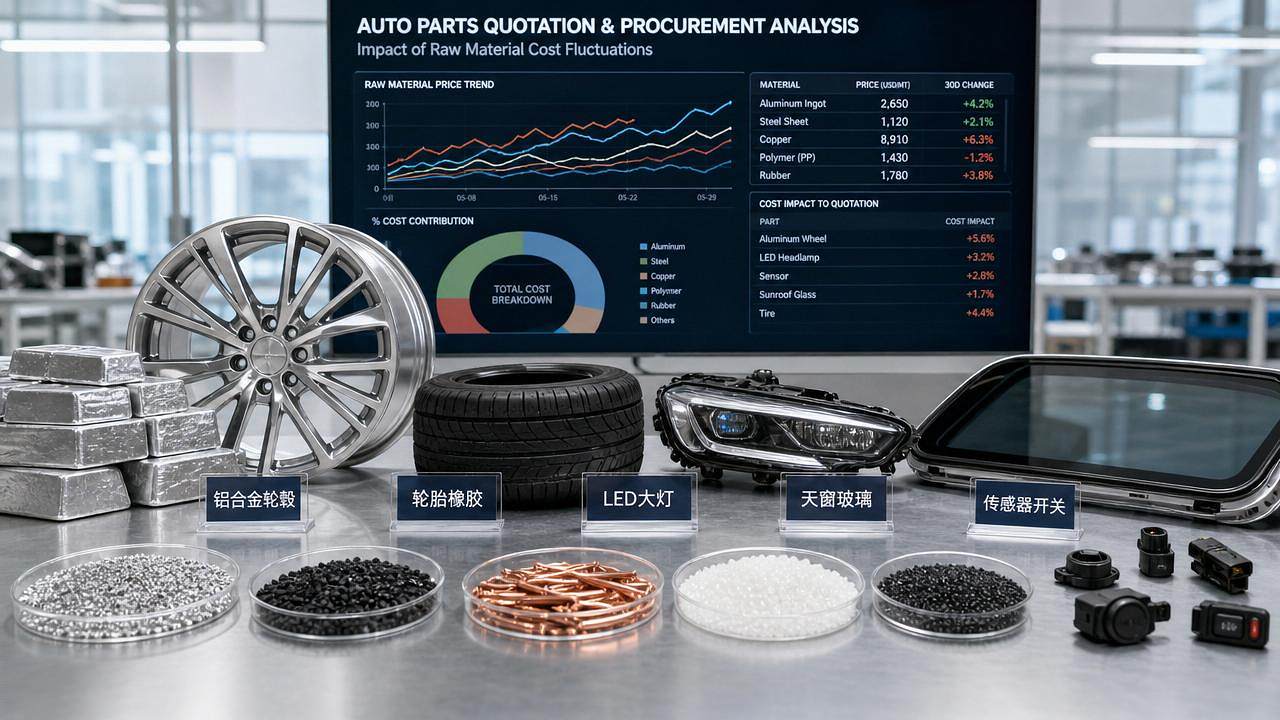
How Do Raw Material Cost Fluctuations Affect Quotes?
For the automotive exterior and vision systems supply chain, raw material cost fluctuations can quickly reshape supplier quotes, lead times, and margin expectations.
Aluminum, rubber, specialty polymers, electronic components, and optical materials all influence wheels, tires, sunroof systems, LED headlights, and sensor switches.
Understanding how raw material cost fluctuations are calculated, communicated, and negotiated helps compare quotations, reduce budget risk, and secure stable NEV supply.
What do raw material cost fluctuations mean in a supplier quote?
Raw material cost fluctuations describe upward or downward changes in the input materials used to manufacture a product or system.
In automotive exterior systems, these movements affect aluminum wheels, tire compounds, glass modules, lamp housings, sensors, coatings, and connector assemblies.
A quote is rarely based on material price alone. It also includes processing, labor, tooling, logistics, certification, scrap, warranty, and profit.
However, raw material cost fluctuations often trigger the fastest quote changes because commodity prices can move before production planning adjusts.
For aluminum alloy wheels, billet or ingot pricing may influence casting, forging, heat treatment, machining, and finishing assumptions.
For high-performance tires, natural rubber, synthetic rubber, carbon black, silica, steel cord, and textile reinforcement shape the cost base.
For LED headlight assemblies, raw material cost fluctuations may appear through chips, lenses, aluminum heat sinks, PCBs, adhesives, and optical coatings.
For electric sunroof systems, glass, guide rails, motors, seals, electronic dimming layers, and acoustic materials can all change quote logic.
For auto sensor switches, cost sensitivity may come from semiconductors, copper, plastics, rare metals, housings, and photoelectric sensing components.
Which materials usually affect exterior and vision system prices most?
The strongest impact depends on product design, material share, production process, and whether substitutes are technically acceptable.
Raw material cost fluctuations matter most when the material represents a high percentage of the finished part cost.
- Aluminum affects alloy wheels, sunroof rails, lamp heat sinks, brackets, and lightweight structural exterior parts.
- Rubber affects tire tread, sidewall compounds, seals, vibration isolation, and waterproofing performance.
- Optical-grade plastics affect lenses, light guides, covers, diffusion plates, and sensor windows.
- Copper affects wiring, motors, sensor circuits, defogging elements, and connector systems.
- Semiconductor-related inputs affect LEDs, matrix controllers, radar switches, and adaptive lighting modules.
When raw material cost fluctuations occur in aluminum, lightweighting programs can face immediate pricing pressure.
A forged wheel may use less waste than some casting routes, but its premium billet requirements can increase sensitivity.
Tires react differently. Compound recipes are complex, and material substitutions may affect rolling resistance, silence, grip, and wear.
LED assemblies may seem electronic-led, yet thermal materials and optical polymers can strongly influence durability and regulation compliance.
This is why raw material cost fluctuations should be reviewed by product family, not only by general commodity headlines.
How are raw material cost fluctuations converted into quote adjustments?
Suppliers usually translate raw material cost fluctuations through a cost breakdown, price index, surcharge, or periodic adjustment clause.
A transparent quote may show base material price, reference index, material weight, yield loss, conversion cost, and adjustment frequency.
For example, an aluminum wheel quote may connect material adjustment to an exchange-traded aluminum benchmark.
The formula may include alloy premium, processing loss, scrap recovery, surface treatment, and currency movement.
A tire quote may use multiple references because rubber, oil-linked chemicals, steel reinforcement, and silica do not move together.
A headlight quote may not expose every material. It may bundle resin, electronic, thermal, and optical cost movements.
Raw material cost fluctuations are often handled through three common mechanisms.
- Fixed price period: the quote remains stable for an agreed validity window.
- Index-linked adjustment: prices change when a benchmark passes a threshold.
- Open renegotiation: both sides revisit price after major market disruption.
The most reliable method defines the material baseline, adjustment trigger, calculation date, exchange rate, and documentary evidence.
Without those details, raw material cost fluctuations may become a vague reason for sudden price increases.
Why can two quotes react differently to the same cost movement?
Two quotes can differ even when raw material cost fluctuations come from the same market trend.
One supplier may hold inventory bought at older prices. Another may purchase spot material after the market rises.
Production technology also matters. Low-pressure casting, flow forming, and precision forging create different yield and energy profiles.
A more efficient process may absorb some raw material cost fluctuations through lower scrap or stronger material utilization.
Design maturity can also change exposure. A validated part has fewer engineering changes than an early-stage module.
In headlights, optical architecture affects resin grade, lens complexity, LED count, heat dissipation, and assembly precision.
In tires, EV load rating, low rolling resistance, acoustic foam, and self-sealing coatings can increase material sensitivity.
In sunroof systems, electrochromic dimming, laminated glass, NVH requirements, and motor reliability affect the final cost response.
Raw material cost fluctuations can also be amplified by logistics, energy prices, tariffs, and regional compliance requirements.
ECE, DOT, durability, photometric, and safety testing may limit the ability to switch to cheaper alternatives quickly.
What quote details should be checked before accepting a price change?
A price change should be reviewed against evidence, formula accuracy, product scope, and timing.
Raw material cost fluctuations are legitimate, but they should not hide unrelated inefficiency or unclear commercial assumptions.
Start with the baseline. Confirm which material price was used when the original quote was issued.
Then check the new reference price. It should match the agreed index, date range, region, and currency.
Next, review the material usage. The calculation should reflect actual part weight, BOM share, and manufacturing yield.
Scrap treatment deserves attention. Some processes recover valuable aluminum or metal scrap, reducing net cost impact.
For rubber and polymers, formulation secrecy may limit disclosure. Still, category-level exposure can be explained.
For electronics, clarify whether the increase comes from raw material cost fluctuations or component shortage premiums.
The distinction matters because shortages, allocation fees, and expedited logistics require different negotiation responses.
How can quote risk be reduced when markets remain volatile?
The best response is not simply demanding a lower price. It is building a fair and traceable pricing structure.
Raw material cost fluctuations can be managed when quote terms define both upward and downward adjustments.
A balanced clause should allow price reductions when commodity costs decline beyond the agreed threshold.
This prevents one-way pricing and encourages more disciplined cost communication throughout the supply chain.
Longer-term agreements can include quarterly reviews, ceiling limits, collar mechanisms, and shared savings from redesign.
Technical redesign can also reduce exposure. Lightweight geometry may lower aluminum usage without compromising impact strength.
Tire compound optimization may reduce dependence on one volatile material while preserving grip, noise, and rolling resistance.
Headlight thermal redesign may reduce aluminum heat sink mass while maintaining LED lifetime and photometric stability.
Sensor switch platforms can standardize housings, connectors, and circuit layouts to reduce unique material exposure.
Raw material cost fluctuations should also be reviewed alongside demand forecasts, inventory coverage, and launch schedules.
- Use indexed clauses for materials with transparent market benchmarks.
- Request cost bridges for major quote changes.
- Separate commodity movement from labor, logistics, and shortage premiums.
- Review alternative materials only after validation and compliance checks.
- Track both increases and decreases during each review period.
What mistakes often lead to poor quote decisions?
The first mistake is treating raw material cost fluctuations as a single market number.
Finished automotive parts contain multiple materials, conversion steps, engineering requirements, and quality obligations.
The second mistake is ignoring timing. A quote based on old inventory may not reflect future replenishment cost.
The third mistake is accepting a percentage increase without checking material content and index movement.
A 10% aluminum rise does not automatically justify a 10% finished wheel price increase.
The fourth mistake is pushing immediate substitution without considering safety, warranty, tooling, and homologation impact.
In vision systems, small optical material changes can affect beam pattern, glare control, aging, and legal compliance.
The fifth mistake is overlooking downward adjustment rights when raw material cost fluctuations reverse.
Good quote governance records the full cycle, not only the emergency moment when prices rise.
FAQ summary: how to interpret raw material cost fluctuations in quotes
Conclusion: turn volatility into better quote control
Raw material cost fluctuations affect quotes through material share, index movement, process yield, inventory timing, and technical requirements.
In AEVS-related categories, the effect can appear in wheels, tires, sunroofs, LED headlights, and sensor switch systems.
The strongest quote is not always the lowest number. It is the one with the clearest assumptions and risk-sharing logic.
Before accepting a change, verify the baseline, index, formula, material content, lead time, and compliance implications.
When raw material cost fluctuations are handled transparently, price discussions become more technical, predictable, and commercially fair.
The next step is to build a quote review checklist covering aluminum, rubber, polymers, electronics, optics, and logistics exposure.
Use it before negotiation, during supplier comparison, and whenever raw material cost fluctuations reshape the market again.