
Industry Portal
Related News
- 00
0000-00
ECE-Compliant Lighting for Commercial Vehicles: Approval and Installation Checks - 00
0000-00
Laser Adaptive Headlights: What to Check for Range and Glare Control - 00
0000-00
Precision Forging for Aluminum Wheels: Alloy Selection and Fatigue Performance - 00
0000-00
NEV Industry Standards in China: Which Battery Safety Tests Are Required? - 00
0000-00
Automotive Exterior Lighting Systems: Lamp Types, Functions, and Placement
Tags
Chery Launches Rhino Energy Tech with $50M Capital for Battery & Storage
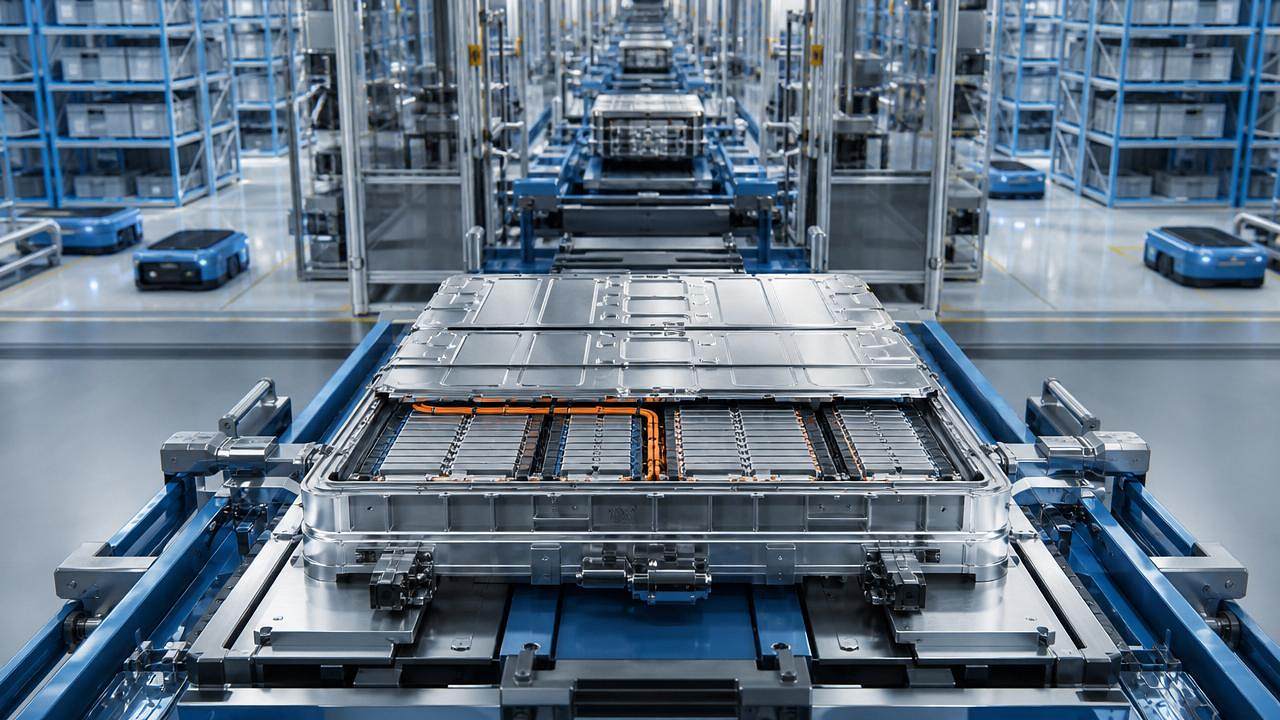
On May 28, 2026, Chery Automobile Co., Ltd. established Anhui Rhino Energy Technology Co., Ltd., a wholly owned subsidiary with registered capital of RMB 500 million (approx. USD 69 million). The move signals growing vertical integration in EV powertrain systems—and warrants attention from battery supply chain participants, NEV exporters, light commercial vehicle (LCV) component suppliers, and energy service providers operating in emerging markets.
Event Overview
On May 28, 2026, Anhui Rhino Energy Technology Co., Ltd. was incorporated as a wholly owned subsidiary of Chery Automobile Co., Ltd. Its registered capital is RMB 500 million. According to publicly available registration data, its business scope includes battery manufacturing and sales, as well as energy storage technology services.
Impact on Specific Industry Segments
Export-oriented NEV OEMs and Tier-1 Suppliers: Rhino Energy’s vertical capability—particularly in integrating cell production with thermal management and BMS—may shift sourcing expectations for overseas NEV customers relying on Chery’s platform-based solutions. This could affect demand patterns for standardized battery modules and pre-integrated pack subsystems used in A0-class passenger vehicles and light commercial vehicles destined for export markets.
Battery Component Manufacturers (e.g., thermal interface materials, BMS hardware vendors): As Chery advances internal battery system integration, third-party suppliers may face increased technical alignment requirements—especially around interface specifications, communication protocols, and validation timelines—when bidding for co-development or secondary-tier supply opportunities tied to Rhino Energy–branded products.
Energy Storage System (ESS) Integrators Serving Emerging Markets: Rhino Energy’s stated focus on ‘energy storage technology services’—rather than just hardware—suggests potential expansion into distributed or microgrid-scale applications aligned with Chery’s overseas infrastructure partnerships. This may influence tender criteria and after-sales service expectations in regions where Chery has joint ventures or localized assembly operations.
Logistics and Cross-Border Compliance Service Providers: With Rhino Energy positioned to support Chery’s export push—particularly for battery-integrated LCVs and compact models—customs classification, UN38.3 certification workflows, and regional battery recycling compliance documentation may require earlier engagement during product planning cycles.
What Relevant Enterprises or Practitioners Should Monitor and Do Now
Track official technical roadmaps and customer-facing announcements
Chery has not yet published detailed product timelines or performance targets for Rhino Energy. Stakeholders should monitor upcoming press releases, patent filings, and participation in industry forums (e.g., China EV Summit, Energy Storage World Forum) for early signals on cell chemistry strategy (e.g., LFP vs. sodium-ion), pack-level architecture, and target geographies.
Assess exposure to Chery’s A0-class and light commercial vehicle platforms
Since the initiative explicitly references supporting these vehicle segments for export, suppliers and distributors should review current or planned engagement with Chery’s QQ Ice Cream, Wujie, or Karry-branded models—and determine whether their offerings align with Rhino Energy’s anticipated delivery scope (e.g., full-pack vs. cell-only supply).
Distinguish between announced capability and near-term procurement impact
The establishment of Rhino Energy reflects strategic intent—not immediate volume displacement. Current battery procurement for Chery’s export models remains largely outsourced. Enterprises should avoid premature capacity reallocation or contract renegotiation until evidence emerges of pilot deployments or volume ramp plans.
Prepare for tighter interface coordination in joint development projects
If engaging with Chery on future electrified platforms, stakeholders should proactively align on data exchange formats, thermal simulation boundary conditions, and functional safety documentation standards—anticipating that Rhino Energy may assume more system-level responsibility than prior Chery battery procurement arrangements.
Editorial Perspective / Industry Observation
Observably, this is a structural signal—not an operational milestone. Rhino Energy’s incorporation formalizes Chery’s long-stated ambition toward powertrain vertical integration but does not yet indicate material shifts in supplier relationships or battery sourcing volumes. Analysis shows that its relevance lies less in immediate competition with existing battery makers, and more in reshaping downstream expectations: overseas NEV buyers may increasingly evaluate Chery not only as a vehicle OEM, but as a coordinated provider of cell + thermal + control solutions. From an industry perspective, this move reinforces a broader trend among Chinese automakers—where battery strategy is evolving from procurement discipline to embedded engineering capability. Continued monitoring is warranted, particularly for changes in Chery’s disclosed battery supply share or public references to Rhino Energy–branded products in overseas regulatory filings.
Chery’s launch of Rhino Energy represents a calibrated step toward deeper battery value-chain involvement—not a disruptive entry into mass-market cell production. For industry participants, it is best understood as a forward-looking alignment marker: one that clarifies Chery’s medium-term integration priorities and raises the bar for technical coordination across the EV powertrain ecosystem. The practical implication is not urgency, but heightened awareness—especially for firms whose commercial success depends on interoperability with Chery’s expanding global vehicle portfolio.
Source: State Administration for Market Regulation (SAMR) business registration database; Chery Automobile official announcement (May 28, 2026). Note: Rhino Energy’s production capacity, technology roadmap, and customer deployment timeline remain unconfirmed and are subject to ongoing observation.