
Industry Portal
Related News
- 00
0000-00
ECE-Compliant Lighting for Commercial Vehicles: Approval and Installation Checks - 00
0000-00
Laser Adaptive Headlights: What to Check for Range and Glare Control - 00
0000-00
Precision Forging for Aluminum Wheels: Alloy Selection and Fatigue Performance - 00
0000-00
NEV Industry Standards in China: Which Battery Safety Tests Are Required? - 00
0000-00
Automotive Exterior Lighting Systems: Lamp Types, Functions, and Placement
Tags
2026 World Automotive Standards Innovation Conference Held in Shenzhen
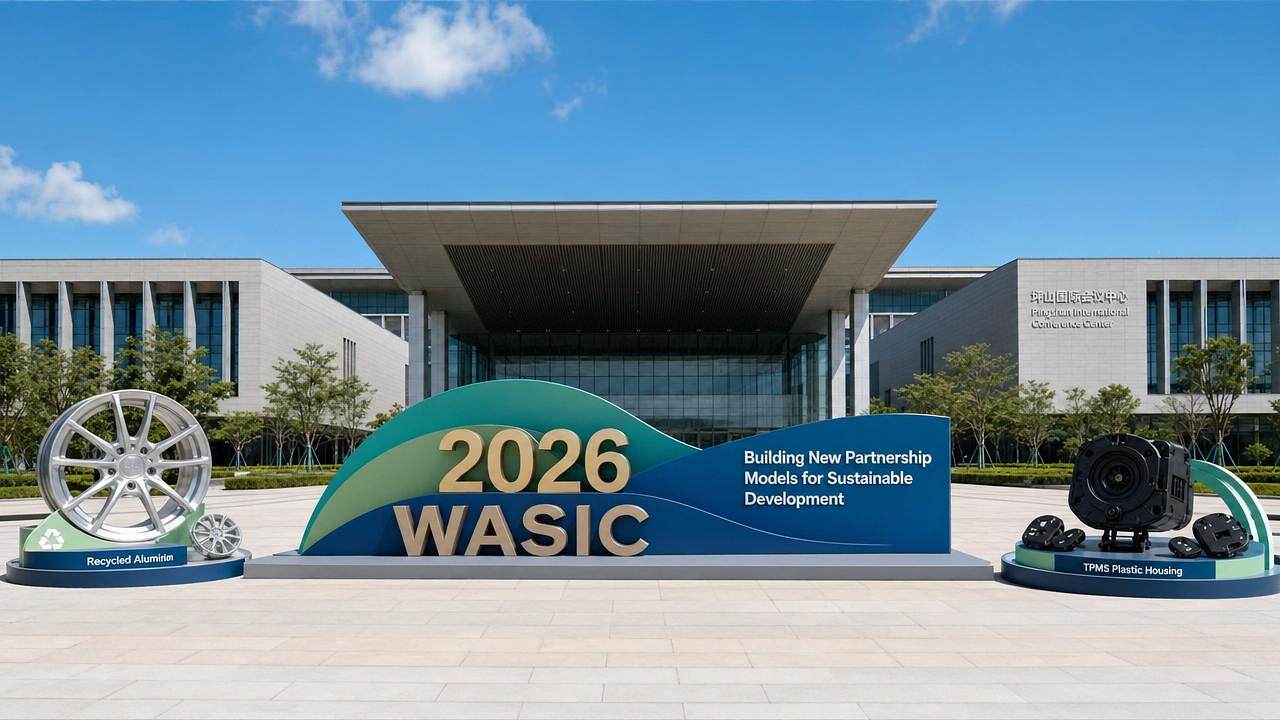
The 2026 World Automotive Standards Innovation Conference (WASIC) took place in Pingshan District, Shenzhen, from May 27 to 29. The event focused on global regulatory alignment and low-carbon automotive exports—topics of direct relevance to export-oriented auto parts manufacturers, ESG-compliant suppliers, and international procurement teams operating across EU, North America, and ASEAN markets.
Event Overview
The fourth edition of the WASIC conference was held in Shenzhen’s Pingshan District on May 27–29, 2026, under the theme ‘Building New Partnership Models for Sustainable Development’. China Automotive Technology & Research Center Co., Ltd. (CATARC), together with ISO, UNECE, and the ECE, jointly released the draft Roadmap for Promoting Automotive Recycled Materials Application (2026–2030). The draft outlines mutual recognition pathways for certification of components including recycled aluminum wheels and TPMS housings made from recycled plastics.
Industries Affected
Export-Oriented Auto Parts Manufacturers
These companies are directly impacted because the roadmap introduces formalized certification interoperability for recycled-content components—especially light-weight aluminum wheels and smart tire pressure monitoring system (TPMS) housings. Overseas buyers, particularly those subject to EU CSRD or US SEC climate disclosure rules, may now use this framework to assess ESG compliance during supplier onboarding.
Raw Material Sourcing & Recycling Firms
Firms supplying recycled aluminum ingots or post-consumer engineering plastics face new traceability and documentation expectations. The roadmap specifies material origin verification and process validation as prerequisites for certification alignment—raising the bar for upstream material data collection and chain-of-custody reporting.
Automotive Tier-2 Component Suppliers
Suppliers of TPMS modules and wheel sub-assemblies must now anticipate downstream requests for certified recycled content declarations. Since the draft identifies TPMS plastic housings as a priority application case, Tier-2 firms producing such parts may see early-stage audits or technical queries from OEMs or Tier-1 integrators seeking alignment with the roadmap’s timelines.
Supply Chain Compliance & Certification Service Providers
Third-party testing labs, certification bodies, and ESG advisory firms may experience increased demand for cross-jurisdictional validation services—particularly those supporting both Chinese GB standards and UNECE Regulation 100/152 or ISO 22628 conformance. However, the roadmap remains a draft; no mandatory compliance date or accreditation body designation has been announced.
What Enterprises and Practitioners Should Focus On Now
Monitor official updates on the final version of the Roadmap
The current document is a draft. Stakeholders should track CATARC’s official communications and UNECE Working Party on Brakes and Running Gear (GRRF) meeting minutes for revisions, implementation timelines, and designated conformity assessment procedures.
Identify high-priority product categories and target markets
Recycled aluminum wheels and TPMS plastic housings are explicitly named as initial focus areas. Exporters targeting EU, Canada, or South Korea—jurisdictions with active circular economy policies—should prioritize documentation readiness for these items ahead of potential buyer-led assessments.
Distinguish between policy signal and operational requirement
This initiative signals growing institutional coordination on automotive circularity—not an immediate regulatory mandate. Companies should treat it as a forward-looking benchmark, not a compliance deadline. Internal alignment efforts (e.g., material data tracking, supplier questionnaires) should be scoped accordingly.
Prepare internal documentation and supplier engagement protocols
Firms supplying regulated components should begin mapping existing material sourcing records and verifying whether current recycling claims meet the draft roadmap’s definitions (e.g., ‘post-industrial’ vs. ‘post-consumer’ feedstock). Early dialogue with key raw material suppliers on traceability capability is advisable.
Editorial Observation / Industry Perspective
Observably, this roadmap represents a coordinated signal—not yet an enforcement mechanism—from major standard-setting bodies toward harmonizing circular economy criteria in automotive trade. Analysis shows its primary function is to reduce friction in cross-border ESG evaluations, especially where recycled content serves as a proxy for decarbonization performance. From an industry perspective, it reflects a shift from voluntary sustainability reporting toward structured, internationally referenced technical baselines. That said, the absence of binding timelines or accredited testing pathways means its near-term impact remains procedural rather than regulatory. Continued attention is warranted as pilot implementations and bilateral recognition agreements emerge over the next 12–18 months.
Conclusion: This development marks a step toward standardized evaluation of recycled material use in automotive exports—not a sudden compliance threshold. It is best understood as an emerging reference framework for ESG-aligned procurement, rather than an immediate operational mandate. Stakeholders should prioritize awareness, documentation readiness, and selective engagement—not wholesale process overhauls—at this stage.
Source: Official announcements from China Automotive Technology & Research Center (CATARC), ISO, UNECE, and ECE regarding the draft Roadmap for Promoting Automotive Recycled Materials Application (2026–2030), released during the 2026 World Automotive Standards Innovation Conference (WASIC) in Shenzhen, May 27–29, 2026. Note: The roadmap remains in draft form; final publication status, timeline, and implementing mechanisms are pending further official communication.