
Industry Portal
Related News
- 00
0000-00
How to Specify Automotive Trim Parts for Durable Interior and Exterior Finishes - 00
0000-00
Choosing Joining Technologies for Lightweight Multi-Material Vehicle Structures - 00
0000-00
Vehicle Lightweighting for Automotive Design: Balancing Mass, Safety, and Cost - 00
0000-00
ISO 9001 Requirements for Automotive Exterior Component Suppliers - 00
0000-00
Supplier Capability Evaluation Matrix: Criteria and Weighting for Reliable Sourcing
Smart Mobility Bets That Look Practical Beyond the Hype
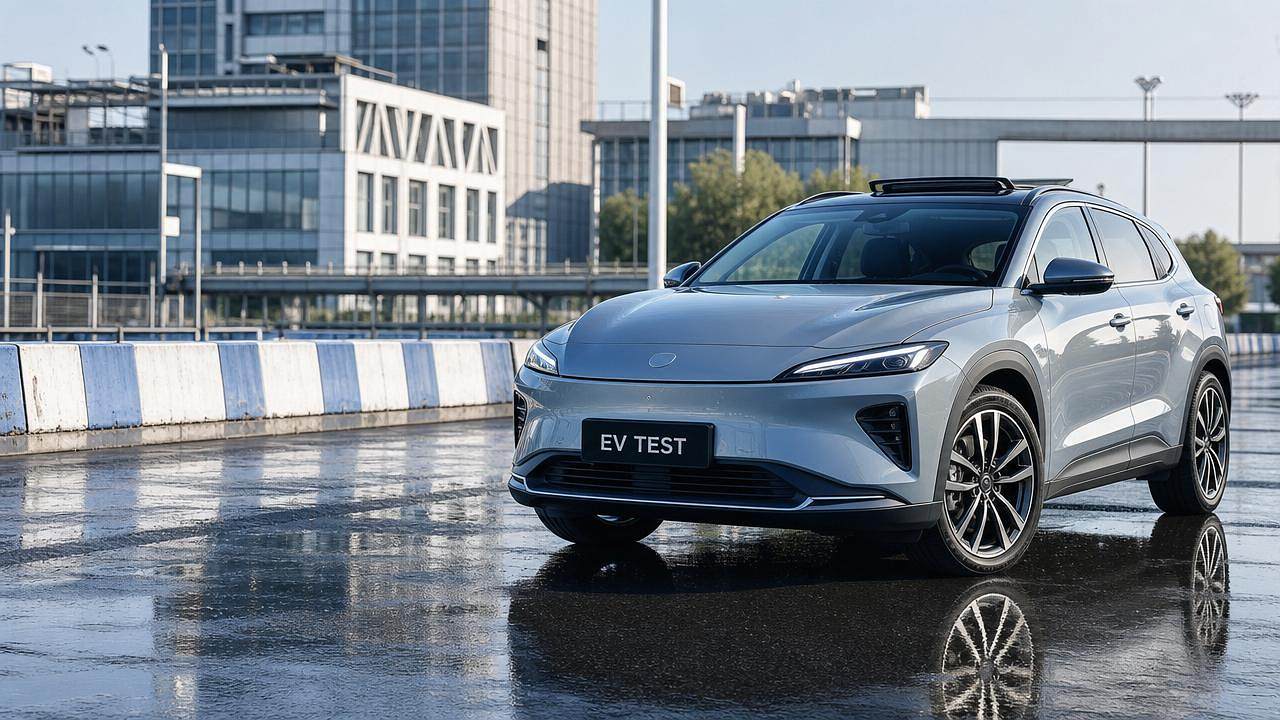
Smart mobility is moving beyond hype and into practical value, reshaping how automotive decision-makers evaluate exterior systems, vision technologies, and vehicle efficiency. From lightweight alloy wheels and high-performance tires to intelligent LED lighting and advanced sensor switches, the next competitive edge lies in solutions that balance safety, aesthetics, compliance, and total cost of ownership. For enterprises navigating the NEV era, understanding these real-world bets is essential to building durable advantage.
For B2B buyers, the practical question is no longer whether smart mobility will influence product planning, sourcing, and aftermarket strategy. The real question is where investment produces measurable operational value within 12 to 36 months. In automotive exterior and vision systems, the strongest bets are usually not the most theatrical technologies. They are the components and intelligence layers that improve efficiency, safety, compliance readiness, platform differentiation, and lifecycle economics at the same time.
This is where AEVS occupies a useful decision-support role. By focusing on electric sunroof systems, aluminum alloy wheels, high-performance tires, LED headlight assemblies, and auto sensor switches, AEVS helps enterprises connect design ambition with engineering feasibility and commercial timing. For decision-makers in OEM supply chains, Tier 1 manufacturing, and aftermarket distribution, smart mobility becomes practical when it can be translated into sourcing criteria, validation steps, and profitable market positioning.
Why Practical Smart Mobility Starts with Exterior and Vision Systems
In many boardroom discussions, smart mobility is still associated with autonomous driving software, connectivity platforms, or battery innovation. Those areas matter, but exterior and vision systems often deliver faster returns because they influence at least 4 business dimensions at once: energy consumption, user safety, regulatory fit, and perceived product quality. On NEV platforms, even a 1% to 3% improvement in aerodynamic efficiency or rolling resistance can become commercially relevant when scaled across annual production volume.
Vehicle exterior components are also exposed to visible customer judgment. Wheels, lighting signatures, roof systems, and tire behavior shape first impressions within seconds, while sensor-triggered functions affect day-to-day convenience over years of ownership. That combination makes smart mobility investments in this category easier to justify than speculative technologies with longer validation cycles or uncertain user adoption.
Five practical pillars enterprises should evaluate
- Electric sunroof systems that improve cabin comfort, UV control, and NVH performance without excessive weight penalty.
- Aluminum alloy wheels engineered for lightweighting, brake airflow management, and structural strength under EV torque loads.
- High-performance tires that balance grip, silence, load capacity, and low rolling resistance for heavier battery-electric vehicles.
- LED headlight assemblies that support adaptive illumination, anti-glare logic, and brand-defining light signatures.
- Auto sensor switches that enable closed-loop functions such as auto wipers, headlight activation, and blind-spot awareness.
The business logic is straightforward. Each pillar can be assessed through common procurement lenses: unit economics, validation time, standards compatibility, field reliability, and aftermarket potential. Most programs can be screened in 5 to 7 core checkpoints before they reach final sourcing decisions.
The table below shows why these five categories matter in smart mobility planning and where decision-makers usually find practical value rather than abstract promise.
The key conclusion is that practical smart mobility is built from components that influence both engineering output and customer perception. These are not fringe upgrades. They shape vehicle efficiency, safety signaling, warranty exposure, and premium pricing potential.
Where the Strongest Near-Term Bets Are Emerging
In the next 24 months, the most rational smart mobility bets are likely to come from technologies that solve known EV constraints: battery weight, instant torque, thermal load, night-driving complexity, and global compliance differences. Enterprises that frame sourcing decisions around those constraints can avoid overpaying for features that look impressive in demos but add little to fleet performance or aftermarket demand.
Aluminum alloy wheels: lightweighting with visible ROI
For EV and hybrid platforms, wheel design has moved beyond styling. A reduction of 1.5 kg to 3.5 kg per wheel can improve unsprung mass behavior, while optimized spoke geometry can support brake cooling and aerodynamic drag reduction. Low-pressure casting remains cost-effective for volume programs, while precision forging is often preferred for premium applications where strength-to-weight ratio and customization justify a higher unit price.
Decision-makers should also watch raw aluminum volatility and finishing durability. Wheel programs with 8 to 12 week tooling cycles may look attractive on paper, but if corrosion testing, coating adhesion, and impact certification are not aligned early, launch delays can erase the commercial advantage.
Selection checklist for wheel sourcing
- Confirm load and torque compatibility for heavier NEV platforms.
- Review weight target by wheel size, such as 18, 19, or 20 inches.
- Assess airflow and drag implications using CFD-backed design review.
- Verify coating durability under salt spray and thermal cycling conditions.
- Align MOQ, tooling commitment, and aftermarket variant potential.
High-performance tires: the practical edge in silence, grip, and efficiency
Tires remain the only contact point between vehicle and road, which makes them central to any smart mobility strategy. For NEVs, tire design must handle high curb weight and strong launch torque while keeping interior noise under control. Typical enterprise comparisons focus on rolling resistance grade, wet braking behavior, and wear life ranges such as 40,000 to 70,000 km depending on compound, climate, and usage profile.
A growing practical bet is self-sealing or noise-reduction tire technology for premium and upper-mid segment vehicles. These features can lower roadside failure risk and improve cabin experience, but they should be evaluated against replacement cost, serviceability, and distributor education needs in the aftermarket channel.
LED headlight assemblies: safety intelligence with brand value
Headlighting is one of the clearest examples of smart mobility becoming practical. Adaptive LED systems now serve 3 functions at once: forward visibility, selective anti-glare control, and interaction design. For suppliers and vehicle brands, the business case improves when thermal management, software calibration, and regional homologation are treated as one integrated program rather than separate handoffs.
Million-pixel matrix systems attract attention, but many programs can achieve strong real-world value with lower-complexity adaptive modules if the beam pattern, heat dissipation, and environmental sealing are robust. In most sourcing reviews, a stable and compliant lighting package outperforms a feature-rich system that risks revalidation across ECE and DOT markets.
Auto sensor switches: low-cost intelligence with broad usability
Compared with more expensive perception stacks, sensor switches are often among the most practical smart mobility upgrades. mm-wave and photoelectric sensing can support auto lights, rain detection, blind-spot adjacent functions, and body-network automation at relatively manageable cost. Response latency, false activation rate, and contamination tolerance are the 3 metrics that usually separate dependable systems from problematic ones.
For enterprise buyers, these components are especially relevant because they scale across multiple trims and markets. A sensor architecture validated for 2 or 3 vehicle lines can reduce engineering duplication and improve service parts efficiency.
How Decision-Makers Should Evaluate Real-World Fit
The best smart mobility decisions are rarely made on feature lists alone. They come from comparing lifecycle impact across sourcing, validation, launch, service, and replacement channels. Exterior and vision systems need a disciplined framework because visual appeal can easily overshadow durability, supply resilience, or regional compliance complexity.
A five-factor procurement model
An effective evaluation model should score at least 5 dimensions on a 1 to 5 scale: technical performance, compliance readiness, cost stability, integration complexity, and aftermarket upside. This method is especially useful when teams must compare different technology paths in less than 30 days during platform planning or annual supplier review cycles.
The following matrix helps decision-makers compare exterior and vision investments with a focus on implementation practicality rather than marketing appeal.
This framework is useful because it exposes a common smart mobility mistake: buying visibility before buying reliability. In practice, the strongest programs are usually the ones that pass compliance cleanly, fit manufacturing constraints, and create downstream revenue through replacement and upgrade channels.
Common procurement mistakes in smart mobility programs
One frequent error is isolating component decisions from system behavior. A low-drag wheel may improve aerodynamic targets, but if brake cooling airflow is compromised, thermal performance can suffer. A high-output LED module may appear attractive, but if heat management is underspecified, lumen stability and service life may decline before the vehicle reaches expected warranty thresholds.
Another mistake is underestimating service complexity. Smart mobility features that rely on calibration, special replacement procedures, or market-specific software can create friction for distributors and workshops. If technical support materials are weak, a feature that helped win a sale can become a warranty burden 6 to 18 months later.
Three questions every sourcing team should ask
- Does this solution improve at least 2 of these 4 priorities: safety, efficiency, compliance, or premium perception?
- Can the supplier explain validation logic in engineering terms rather than promotional language?
- Will the solution still be commercially attractive if raw material cost rises by 8% to 15%?
How AEVS Intelligence Supports Better Commercial Timing
Practical smart mobility decisions depend not only on technology quality but also on timing. A product that is technically strong can still fail commercially if it enters the market before distributor readiness, after a standards shift, or during raw material instability. That is why AEVS emphasizes intelligence stitching across exterior architecture, tire dynamics, optical systems, and global compliance signals.
For example, changes in aluminum or rubber pricing can influence sourcing strategy within a single quarter. Differences between ECE and DOT requirements can reshape lighting or sensor program costs before SOP. Meanwhile, aftermarket demand for custom forged wheels or premium replacement tires may open profitable channels even when OEM program timing slows. Enterprises that watch these moving parts together gain a clearer basis for investment sequencing.
What decision-makers should monitor every quarter
- Compliance changes affecting lighting, sensor response logic, or labeling.
- Raw material movements in aluminum, rubber, and optical-grade electronics.
- Lead-time changes for forgings, castings, coatings, chips, and sealing components.
- Aftermarket demand patterns for premium wheels, silent tires, and adaptive lighting replacements.
- Technical trend signals such as improved tire compounds, better thermal models, or lower-latency sensor designs.
This monitoring discipline helps B2B teams avoid two expensive extremes: waiting too long to adopt practical improvements, or chasing novelty before it is operationally mature. In smart mobility, timing is often as important as specification.
From intelligence to action
A useful implementation path typically follows 4 stages. First, define the platform or channel objective, such as reducing drag, improving cabin silence, or strengthening premium replacement sales. Second, shortlist component technologies that can realistically influence that objective within 1 model cycle. Third, run a cross-functional review covering engineering, procurement, compliance, and service. Fourth, tie the final decision to measurable outcomes like validation cycle time, cost-to-performance ratio, and replacement channel margin potential.
For enterprises operating across OEM and aftermarket segments, this structured approach makes smart mobility far more practical. It turns scattered innovation signals into sourcing discipline, technical credibility, and defendable market positioning.
The most durable smart mobility bets are not built on hype. They are built on components and intelligence that improve real vehicles in real markets: lighter wheels, quieter and more capable tires, adaptive lighting that meets regulation, sensor systems that automate everyday safety, and roof technologies that enhance comfort without compromising efficiency. For decision-makers, the advantage lies in selecting solutions that work across design, compliance, cost, and customer value at the same time.
AEVS is positioned to help enterprises interpret these shifts with technical depth and commercial relevance. If you are evaluating exterior lightweighting, optical perception systems, ground-contact performance, or premium aftermarket opportunities, now is the right time to align strategy with practical smart mobility priorities. Contact us to discuss your requirements, request a tailored solution perspective, or explore more high-value opportunities across exterior and vision systems.