
Industry Portal
Related News
- 00
0000-00
Selecting NEV Exterior Components for Aerodynamics, Durability, and EV Integration - 00
0000-00
How Tire Dynamics Shape Braking Distance, Stability, and ABS Performance - 00
0000-00
How to Specify Automotive Trim Parts for Durable Interior and Exterior Finishes - 00
0000-00
Choosing Joining Technologies for Lightweight Multi-Material Vehicle Structures - 00
0000-00
Vehicle Lightweighting for Automotive Design: Balancing Mass, Safety, and Cost
Tags
Global TPMS Chip Supply Eases Significantly
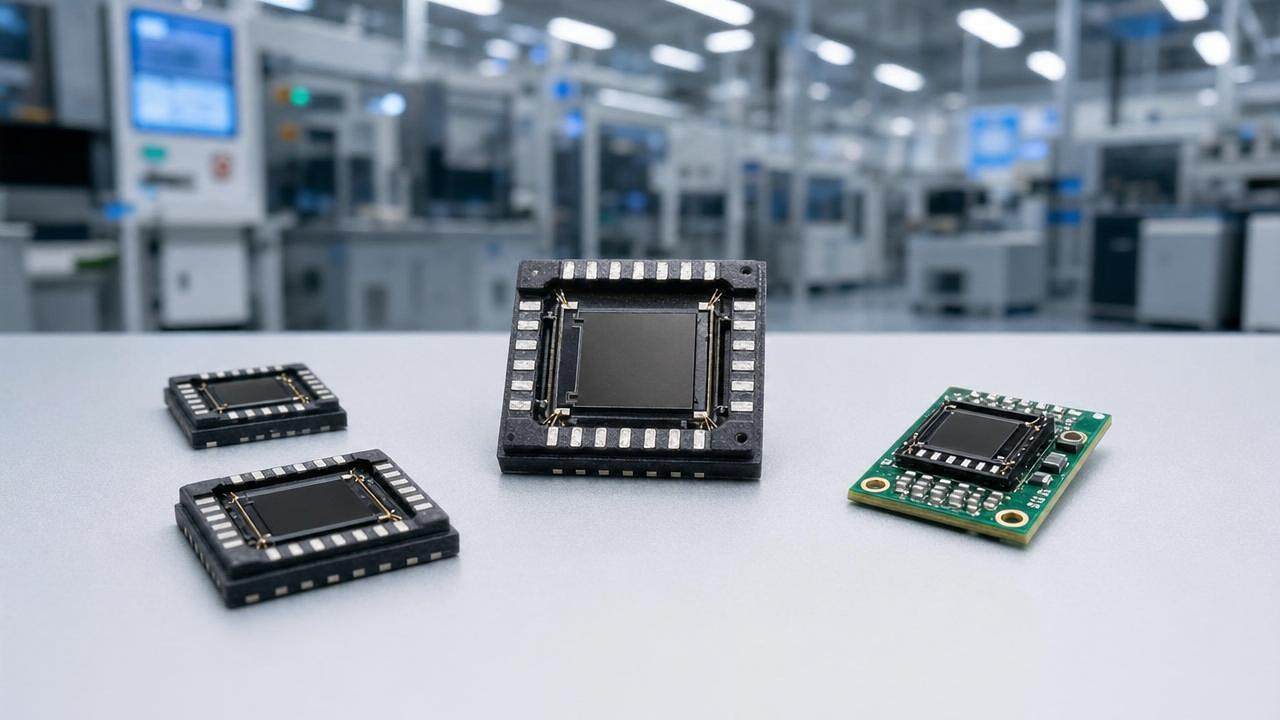
On May 10, 2026, Bosch and Infineon jointly announced a marked improvement in global supply conditions for TPMS pressure sensor chips (SP30/SP40 series), with lead times reduced from a peak of 24 weeks to just 8 weeks. This development—driven by stabilized fab utilization (92%) and accelerated automation rollout at Chinese TPMS module manufacturers—has immediate implications for automotive OEMs, aftermarket distributors, and Tier-2 electronics suppliers worldwide.
Event Overview
According to the joint notice issued by Bosch and Infineon on May 10, 2026, global lead times for TPMS pressure sensor chips (SP30/SP40 series) have contracted from 24 weeks to 8 weeks. Foundry capacity utilization has stabilized at 92%. Concurrently, major Chinese TPMS module manufacturers completed commissioning of new automated production lines in Q2 2026, enabling average order fulfillment cycles for mainstream OEMs to shorten to 6–8 weeks.
Impact on Key Industry Segments
Direct trading enterprises: Export-oriented distributors serving North American and European aftermarket channels benefit from faster replenishment cycles, reducing stockout risk during seasonal demand peaks. However, margin compression may occur if price adjustments lag delivery improvements.
Raw material procurement enterprises: Buyers sourcing bare die, ASICs, or calibrated MEMS elements face tighter timing windows for inventory planning. With chip availability improving but not yet elastic, procurement teams must rebalance safety stock levels without overcommitting to forward contracts.
Contract manufacturing & module assembly enterprises: Chinese TPMS module makers report improved throughput and yield consistency post-automation. Yet, integration complexity—especially in RF calibration and ISO/SAE compliance testing—remains a bottleneck; delivery acceleration does not automatically translate to higher unit margins without process optimization.
Supply chain service providers: Logistics and customs brokers supporting cross-border TPMS shipments observe reduced documentation delays and fewer expedited freight requests. Still, regulatory scrutiny on REACH, RoHS, and UNECE R141 certification remains unchanged—and may intensify as shipment volumes rise.
Key Considerations and Recommended Actions
Reassess JIT buffer strategies for Tier-1 OEM suppliers
With TPMS module delivery now consistently within 6–8 weeks, Tier-1 suppliers can reduce buffer inventory by 15–20%—but only if their internal quality gate checks (e.g., temperature cycling validation) are synchronized with incoming chip lot traceability data.
Verify qualification timelines for next-gen SP40-based modules
While SP30/SP40 chip supply has eased, OEMs launching SP40-integrated modules in late 2026 must confirm that their AEC-Q200 stress-test reports align with current wafer lot revisions—older qualification files may no longer cover revised packaging or trimming algorithms.
Monitor regional tariff classifications for assembled vs. unassembled modules
U.S. HTS code 8543.70.96 (TPMS transmitters) and EU CN code 8543 70 90 still treat fully assembled modules differently than board-level kits. Exporters should revalidate classification ahead of Q3 2026 customs audits, especially where firmware loading occurs offshore.
Editorial Insight / Industry Observation
This supply relief is better understood as a structural correction—not a return to pre-2022 availability norms. Analysis shows that the 8-week lead time reflects optimized allocation across existing 300mm fabs, not new capacity. Observably, Infineon’s Dresden and Bosch’s Reutlingen sites continue prioritizing automotive-grade wafers over industrial-grade splits, limiting upside elasticity. From an industry perspective, the real inflection point will be whether Chinese foundries (e.g., Hua Hong, SMIC) achieve AEC-Q100 qualification for TPMS ASICs by 2027—a shift that would diversify, rather than merely supplement, current supply architecture.
Conclusion
The easing of TPMS chip constraints marks a tangible step toward normalized electronics procurement in the light-vehicle supply chain—but it does not eliminate systemic dependencies. A rational interpretation is that this improvement enhances operational resilience for downstream players, while simultaneously raising the bar for technical due diligence on qualification continuity, regulatory alignment, and regional logistics compliance.
Source Attribution
Primary source: Joint press release, Bosch AG and Infineon Technologies AG, May 10, 2026. Secondary verification: China Automotive Technology and Research Center (CATARC) Q2 2026 TPMS Module Export Survey (preliminary data, released May 8, 2026). Note: Ongoing monitoring required for potential revisions to UNECE R141 Amendment 3 implementation timelines and U.S. NHTSA FMVSS No. 138 enforcement guidance updates scheduled for July 2026.