Industry Portal
Related News
- 00
0000-00
How to Specify Automotive Trim Parts for Durable Interior and Exterior Finishes - 00
0000-00
Choosing Joining Technologies for Lightweight Multi-Material Vehicle Structures - 00
0000-00
Vehicle Lightweighting for Automotive Design: Balancing Mass, Safety, and Cost - 00
0000-00
ISO 9001 Requirements for Automotive Exterior Component Suppliers - 00
0000-00
Supplier Capability Evaluation Matrix: Criteria and Weighting for Reliable Sourcing
Smart Optical Perception Is Expanding Beyond Basic ADAS Tasks
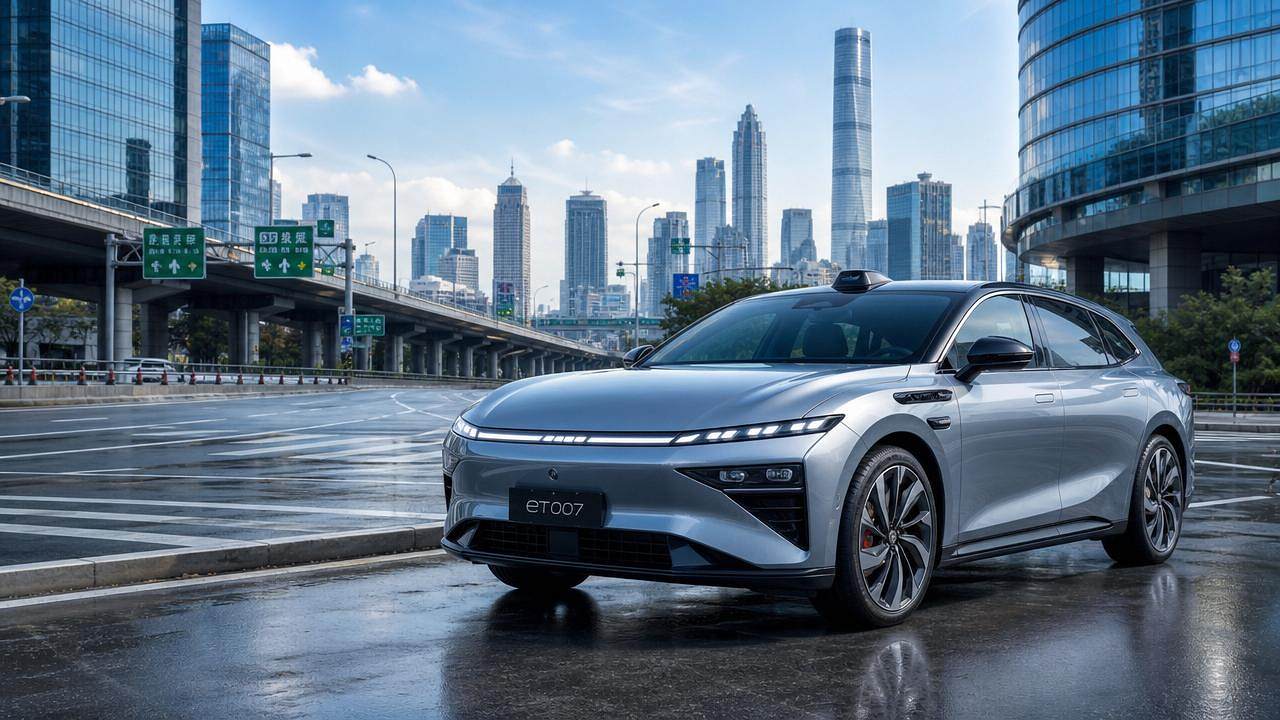
As vehicle intelligence accelerates, smart optical perception is moving far beyond basic ADAS tasks into a core enabler of safer, more interactive, and energy-efficient mobility. For researchers tracking automotive exterior and vision innovation, this shift connects lighting, sensing, aerodynamics, and compliance in new ways—reshaping how NEVs balance design aesthetics, dynamic perception, and real-world driving performance.
Why scenario differences matter more than the technology label
For information researchers, the term smart optical perception can sound broad enough to cover headlights, cameras, rain-light sensors, driver monitoring, surround view, projection systems, and even exterior human-machine interaction. But the real business value appears only when the technology is matched to a specific use case. A premium urban EV, a highway-focused crossover, a logistics fleet vehicle, and an aftermarket upgrade program may all use optical perception, yet each one prioritizes different outcomes.
That is why scenario-based evaluation is now more useful than feature-based comparison. In one project, the priority may be anti-glare accuracy under ECE or DOT expectations. In another, it may be low-power sensing that protects battery range. In still another, it may be how sensor switches, matrix LED systems, tires, and wheel aerodynamics work together to improve visibility, ride confidence, and energy efficiency. For a platform such as AEVS, this broader view is essential because exterior systems are no longer isolated hardware categories; they are converging into one perception-driven vehicle architecture.
Where smart optical perception is showing up first
The expansion beyond basic ADAS tasks is most visible in vehicles and programs where perception quality affects user trust, styling identity, and operating efficiency at the same time. In practice, researchers will most often encounter smart optical perception in five recurring application environments.
1. Premium NEV exterior and lighting platforms
In this scenario, optical perception supports more than forward detection. It enables adaptive beam shaping, road projection, glare-free high beam, signature lighting, and contextual response to rain, fog, tunnels, and urban traffic. These platforms treat LED headlight assemblies as both safety equipment and brand assets. Here, the decision focus is not just sensor count, but thermal management, algorithm consistency, and visual quality under varying ambient conditions.
2. Urban mobility and dense traffic environments
City driving creates a high-noise perception environment: reflective surfaces, pedestrians, micromobility users, stop-and-go behavior, mixed weather, and frequent low-speed maneuvers. In this context, smart optical perception must handle edge cases quickly and quietly. Auto sensor switches for headlamp activation, blind-spot support, curb recognition, and rain-triggered wiper logic matter because they reduce driver distraction in environments where reaction time is compressed.
3. Highway and long-range efficiency scenarios
On highways, the value proposition changes. Long-distance recognition, stable lane guidance, low false positives, and energy efficiency become more important than low-speed object complexity. Smart optical perception in this setting is closely linked with aerodynamic drag, clean lens surfaces, wheel airflow, and even tire behavior, because exterior contamination and vehicle dynamics can degrade sensing confidence over time.
4. Commercial and fleet-oriented vehicle programs
For fleets, optical perception is evaluated through uptime, maintenance cycles, standardization, and total cost of ownership. A technically advanced system that requires frequent recalibration or performs poorly in dust, heavy rain, or long operating hours may not be attractive. Fleet users care about repeatability, replacement availability, compliance, and how well the system integrates with body-mounted sensors and lighting controls.
5. Aftermarket and upgrade-led business opportunities
The aftermarket is becoming a meaningful demand center, especially for high-end lighting upgrades, custom exterior packages, forged wheels, premium replacement tires, and perception-enhancing accessories. In these cases, the question is not whether smart optical perception is advanced, but whether it can be installed safely, remain regulation-compliant, and deliver visible user benefit without destabilizing the vehicle’s broader sensing logic.
Scenario comparison: what changes from one use case to another
The table below helps researchers compare where smart optical perception creates the most value and what should be checked first in each scenario.
How demand shifts across different business stakeholders
Another reason smart optical perception should be analyzed by scenario is that different stakeholders define success differently. The same system can be attractive to one group and unsuitable for another.
OEM product planning teams
These teams care about platform differentiation, homologation readiness, supplier maturity, and scalability across trims. Their question is often: can this perception stack support both current ADAS expectations and future interactive exterior functions without forcing a complete architecture reset?
Tier 1 suppliers and module integrators
For suppliers, the issue is integration complexity. Smart optical perception may require coordination among lighting electronics, lenses, software logic, sensor switches, body controllers, wheel arch packaging, and thermal structures. Competitive advantage comes from reducing design trade-offs while still meeting compliance and cost targets.
Aftermarket distributors and specialist installers
This audience needs a simpler decision framework: what can be upgraded safely, what requires recalibration, and what creates measurable value for end users. Products that promise “smart” capability without clear compatibility guidance can create warranty, safety, and reputation risks.
Industry researchers and intelligence teams
For information-driven users, the opportunity lies in understanding cross-domain linkages. Smart optical perception should not be tracked only as a sensing trend. It affects vehicle exterior design, lightweight materials, road contact behavior, compliance strategy, and premiumization potential. AEVS is well positioned here because it interprets perception technology together with wheels, tires, sunroof systems, and advanced lighting rather than in separate silos.
What to prioritize in each application setting
A practical assessment framework should move from “what does the system do?” to “what job must it do in this exact scenario?” The following priorities can guide research and supplier screening.
If the goal is safer night driving
Focus on beam control resolution, anti-glare consistency, pedestrian visibility, rain and fog handling, and thermal durability. In this scenario, smart optical perception is only as strong as the optical package around it, including lens cleanliness and heat control.
If the goal is better urban convenience
Prioritize quick environmental switching, robust low-speed object detection support, automatic light and wiper logic, and smooth interaction with blind-spot and parking features. Urban usability depends less on peak spec sheets and more on stable daily behavior.
If the goal is NEV energy efficiency
Check power draw, aerodynamic packaging, weight impact, and contamination control. This is where the AEVS perspective becomes especially relevant: wheel airflow, tire rolling behavior, and exterior surfacing can directly influence how optical systems perform over long use cycles.
If the goal is premium user interaction
Look at projection clarity, signature coherence, software upgradability, and regulatory boundaries. Not every interactive lighting function is equally deployable across regions, so design ambition must be balanced with approval pathways.
Common misjudgments when evaluating smart optical perception
Many organizations still misread the category because they evaluate it as an isolated electronics feature. Several recurring errors deserve attention.
First, treating smart optical perception as camera-only intelligence. In reality, the strongest systems combine lighting, sensing, switching, software, and exterior integration. Ignoring these links can lead to overconfidence in nominal performance.
Second, underestimating environmental degradation. Dust, snow, water, vibration, heat load, and airflow disruption can reduce real-world perception quality. This is especially critical for EVs where body design often pursues ultra-low drag surfaces.
Third, assuming premium functions always justify premium cost. Some scenarios benefit more from robust sensor switches and dependable adaptive lighting than from the most advanced projection features. Fit-for-purpose often beats feature abundance.
Fourth, forgetting the compliance path. ECE and DOT alignment, regional lighting rules, and repairability expectations can reshape what is viable in both OEM and aftermarket channels.
Practical fit-check for researchers, sourcing teams, and market watchers
Before concluding that a smart optical perception solution is promising, ask five scenario-based questions:
- Which driving environment dominates the use case: urban, highway, mixed, or fleet duty?
- Is the main value safety, efficiency, user interaction, or aftermarket differentiation?
- How does the system interact with exterior components such as headlights, wheels, tires, and body-mounted sensors?
- What environmental and regulatory constraints will shape deployment?
- Can the system be maintained, calibrated, and scaled without undermining business economics?
FAQ: scenario-focused questions around smart optical perception
Is smart optical perception only relevant for high-end passenger cars?
No. While premium cars adopt it early, the value also extends to fleet safety, city vehicles, and replacement markets. The feature set should simply match the duty cycle and service model.
Which scenario benefits most from advanced optical systems?
There is no single winner. Urban mobility gains from responsive automation, highways gain from stable long-range visibility, and premium NEVs gain from interaction plus efficiency. The best fit depends on what problem the vehicle program is trying to solve.
Why should exterior and vision systems be studied together?
Because perception quality is shaped by packaging, heat, airflow, contamination, and structural design. This is why integrated intelligence platforms such as AEVS are valuable for understanding not just component news, but system-level performance logic.
From trend watching to better application decisions
The real story is not that smart optical perception is becoming more advanced. It is that the technology is becoming more situational, more connected to vehicle exteriors, and more important to how NEVs deliver safety, aesthetics, compliance, and efficiency at the same time. For information researchers, the strongest insights come from comparing application scenarios rather than tracking isolated features.
If you are assessing future opportunities, start by mapping the target scenario, the dominant operating conditions, and the interaction between lighting, sensing, wheel-tire behavior, and body design. That approach will produce better supplier judgments, stronger market intelligence, and more realistic expectations about where smart optical perception can create premium value next.