
Industry Portal
Related News
- 00
0000-00
How to Specify Automotive Trim Parts for Durable Interior and Exterior Finishes - 00
0000-00
Choosing Joining Technologies for Lightweight Multi-Material Vehicle Structures - 00
0000-00
Vehicle Lightweighting for Automotive Design: Balancing Mass, Safety, and Cost - 00
0000-00
ISO 9001 Requirements for Automotive Exterior Component Suppliers - 00
0000-00
Supplier Capability Evaluation Matrix: Criteria and Weighting for Reliable Sourcing
Automotive Solution Reference: How to Compare Specs, Cost, and Integration Risk
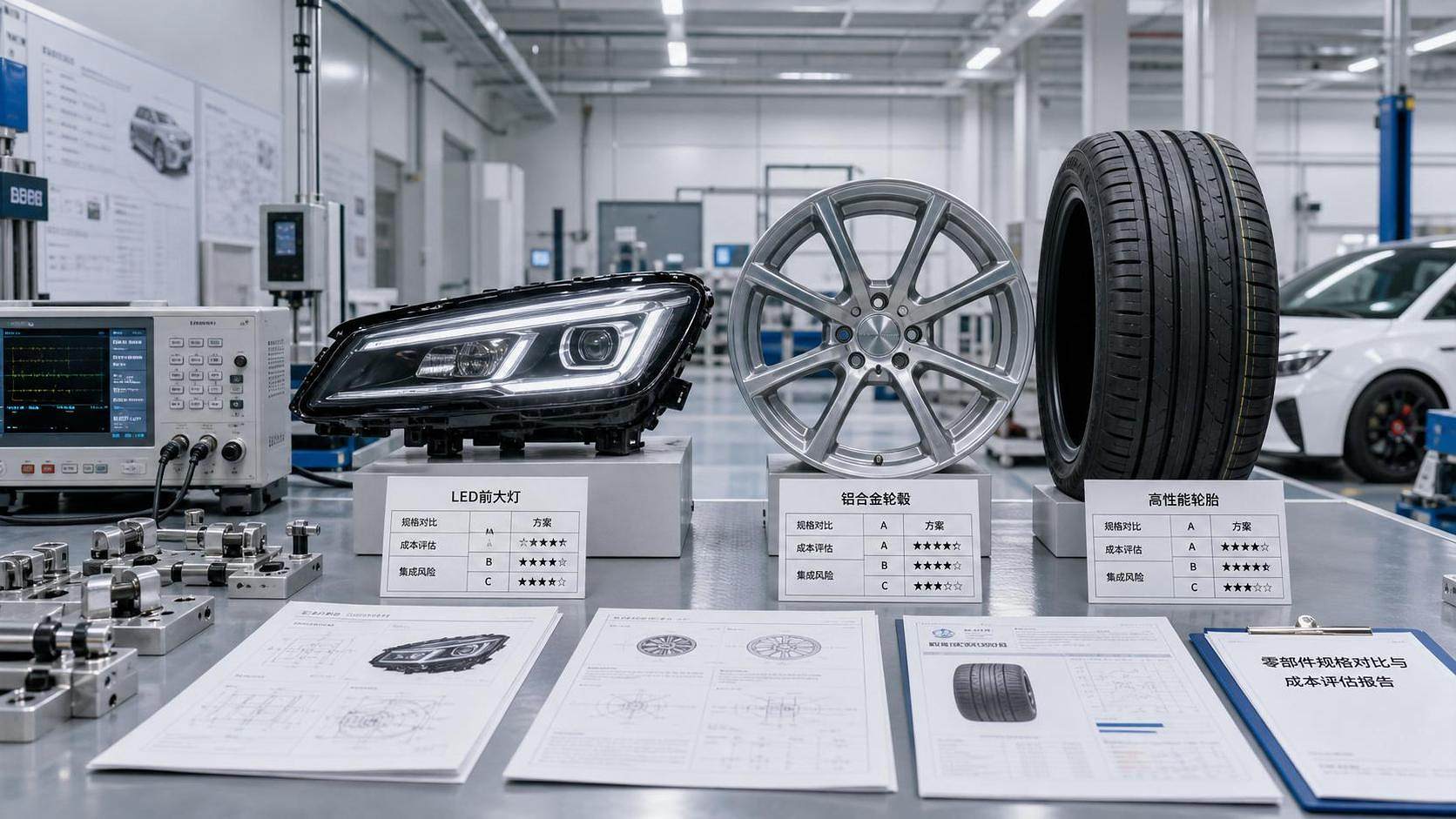
Automotive solution reference: what should be compared before any shortlist is made?
A useful automotive solution reference does more than list product features. It helps connect technical claims with commercial consequences across sourcing, validation, and long-term platform fit.
In exterior and vision systems, that link matters even more. A wheel, tire, headlight, sunroof, or sensor switch rarely works as an isolated part.
Each choice affects drag, range, thermal load, NVH, homologation, software logic, serviceability, and replacement cycles. That is where many comparisons become misleading.
AEVS follows this category closely because smart mobility programs now depend on coordinated decisions between lightweight exterior architecture and intelligent optical perception.
So when using an automotive solution reference, the better question is not which option looks strongest on paper. It is which option stays reliable after integration, compliance review, and cost pressure.
Why do spec sheets often fail to tell the full story?
Because most spec sheets describe peak capability, not system behavior. In actual programs, behavior under heat, vibration, road contamination, and supply variation decides value.
Take LED headlight assemblies as an example. Luminous output matters, but thermal management, anti-glare masking precision, and control unit compatibility often matter more during deployment.
The same applies to aluminum alloy wheels. Weight reduction sounds attractive, yet airflow around brakes, impact durability, coating quality, and runout tolerance may change program risk.
High-performance tires create another common trap. Low rolling resistance alone does not guarantee a good result if wet grip, EV torque handling, and cabin noise are compromised.
A practical automotive solution reference should therefore compare operating windows, not only headline numbers. That means asking how a component behaves across platform variants and usage conditions.
More often than not, the strongest candidate is the one with fewer surprises during validation, even if one or two catalog values look less aggressive.
A quick comparison framework helps
Before deeper supplier discussions, many teams use a simple judgment table like the one below to separate marketing strength from implementation strength.
How should cost be evaluated when purchase price is only one line item?
This is where many sourcing reviews become too narrow. Unit price is visible, but engineering adaptation, validation cycles, and field risk often consume more budget.
For electric sunroof systems, total cost may include extra sealing validation, glass control tuning, and NVH correction. A cheaper module can become expensive after rework.
For auto sensor switches, software calibration, network communication checks, and false-trigger mitigation should be counted early. Those costs are easy to underestimate.
A more reliable automotive solution reference tracks cost in three layers: acquisition cost, deployment cost, and ownership cost. This makes vendor quotes easier to compare fairly.
- Acquisition cost covers unit price, tooling, logistics, and approval samples.
- Deployment cost includes design adaptation, testing, calibration, and launch support.
- Ownership cost covers warranty claims, replacement parts, service complexity, and residual quality loss.
In practice, lifecycle economics are especially important for LED lighting and tire programs, where replacement behavior and field reputation can quickly affect downstream margin.
That is why AEVS often treats raw material trend monitoring as part of cost review, not as separate market news. Aluminum and rubber volatility can reshape the best option within months.
Where does integration risk usually hide in exterior and vision systems?
Integration risk usually hides at the boundaries between systems. A component may meet its own specification and still perform poorly once connected to the vehicle platform.
With matrix LED headlights, one common issue is the gap between optical performance and thermal control. If heat dissipation is marginal, light quality can degrade over time.
With wheels and tires, the problem may be more dynamic. Brake airflow, curb weight, torque delivery, and suspension tuning can change both efficiency and durability outcomes.
Sensor switches introduce another layer. Response logic may depend on body network architecture, environmental noise, and sensor placement, not only on sensor sensitivity.
A sound automotive solution reference should therefore check interface risk as carefully as component quality. The most expensive delays often come from mismatch, not outright defect.
The most common warning signs
- Performance data tested under conditions far from actual EV loads.
- No clear evidence of ECE or DOT pathway for target markets.
- Interfaces depend on custom adapters or late software changes.
- Lead times rely on a single material source with unstable pricing.
- Aftermarket service requires special tools or uncommon replacement parts.
What makes one automotive solution reference more useful than another?
The better references combine technical depth with market context. They do not stop at dimensions, wattage, or weight. They explain what those numbers mean commercially.
That is particularly valuable in AEVS categories. Exterior systems influence efficiency, appearance, safety perception, and service economics at the same time.
A strong automotive solution reference usually includes four things. It shows validated specifications, regional compliance direction, supply-side pressure, and realistic integration assumptions.
It also helps users compare unlike options on a common basis. For instance, a forged wheel and a cast wheel should not be judged only by mass difference.
The comparison should include impact resistance, brake cooling behavior, finish durability, scrap exposure, and premium aftermarket demand where relevant.
Likewise, for smart lighting, million-pixel projection features sound impressive, but the buying decision should still return to homologation, thermal stability, and controller complexity.
A compact decision checklist
How can a faster decision still remain low risk?
Speed improves when the comparison model is disciplined. The goal is not to study everything. The goal is to eliminate unknowns that are most likely to delay deployment.
Start by ranking requirements into non-negotiable, adjustable, and optional. Compliance, interface compatibility, and durability usually belong in the first group.
Then build a short automotive solution reference around the target platform. Include actual loading conditions, expected service life, regional standards, and replacement expectations.
In many cases, three well-structured comparisons are more useful than ten broad vendor summaries. Depth matters more than list length.
AEVS is relevant here because its value lies in connecting exterior aesthetics, dynamic driving perception, and intelligence signals into a decision-ready view rather than isolated updates.
If the next review round is approaching, focus on four actions: confirm the real use case, pressure-test cost assumptions, map integration dependencies, and verify compliance timing.
That approach keeps the automotive solution reference practical. It turns comparison from a catalog exercise into a reliable basis for sourcing, rollout, and long-term platform confidence.