
Industry Portal
Related News
- 00
0000-00
ECE-Compliant Lighting for Commercial Vehicles: Approval and Installation Checks - 00
0000-00
Laser Adaptive Headlights: What to Check for Range and Glare Control - 00
0000-00
Precision Forging for Aluminum Wheels: Alloy Selection and Fatigue Performance - 00
0000-00
NEV Industry Standards in China: Which Battery Safety Tests Are Required? - 00
0000-00
Automotive Exterior Lighting Systems: Lamp Types, Functions, and Placement
Tags
CAPAS Chengdu Closes: EV Powertrain Test Equipment Tops Overseas Buyer Lists
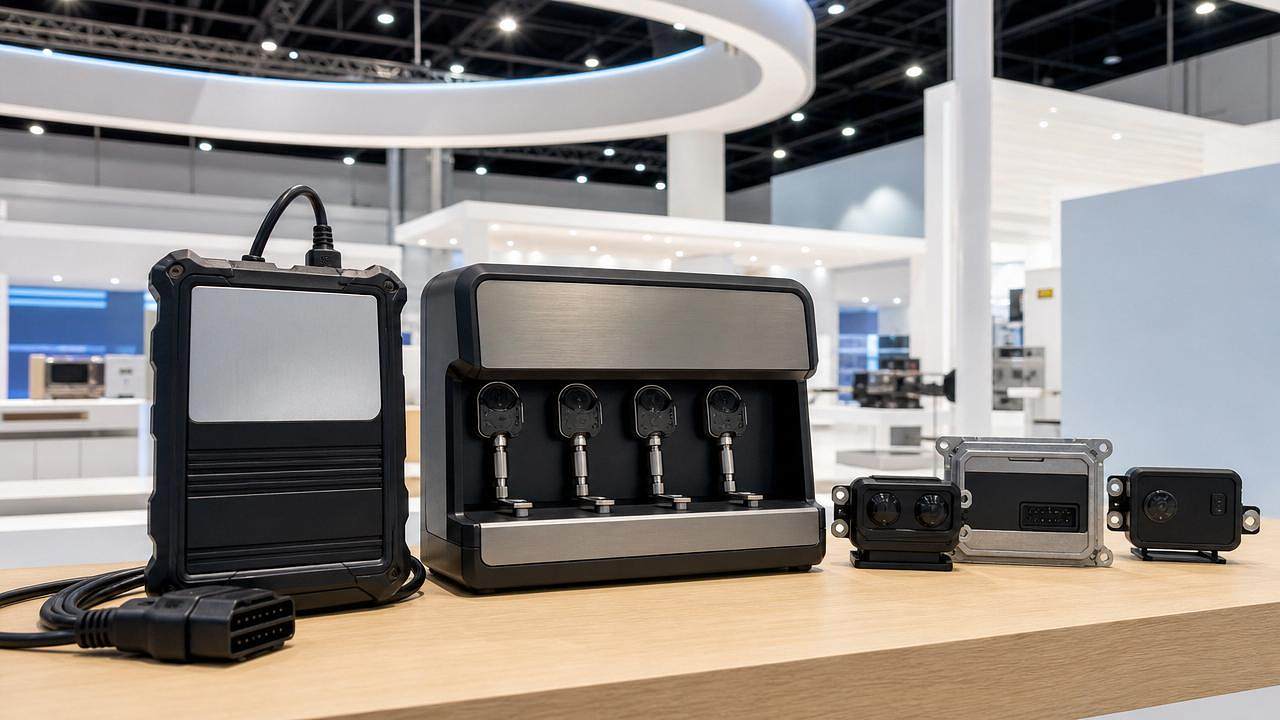
The 2026 CAPAS Southwest Automotive Aftermarket Exhibition concluded on May 23, 2026, signaling a marked shift in global aftermarket procurement priorities—particularly toward intelligent, protocol-compliant diagnostic and calibration tools for electric vehicle (EV) powertrain systems.
Event Summary: Key Facts from CAPAS 2026
The 2026 CAPAS Southwest Automotive Aftermarket Exhibition closed on May 23, 2026. The event attracted 56 professional buyer delegations from countries including the United Arab Emirates, Brazil, and Mexico. Purchasing lists submitted by these international buyers showed a notable increase in demand for ‘electric powertrain test equipment’ and ‘digital diagnostic solutions’. The exhibition underscored an observable transition in overseas after-sales service models—from traditional component replacement toward data-driven maintenance and repair. Demand surged specifically for smart sensors compliant with ISO 15031 and SAE J2534 protocols—including rain and light sensors, blind spot radars—as well as TPMS calibration tools.
Impact Across Supply Chain Roles
Export-Oriented Trading Enterprises
These firms face intensified scrutiny on product compliance documentation, especially proof of protocol support (e.g., ISO 15031/SAE J2534 conformance), communication interface certification, and regional regulatory alignment (e.g., GCC, INMETRO, or NOM requirements). Pre-shipment verification of firmware versioning and diagnostic software compatibility is now critical in order fulfillment.
Raw Material and Component Procurement Firms
Suppliers of microcontrollers, CAN FD transceivers, RF modules, and calibrated pressure sensors must align delivery timelines and traceability records with OEM-grade validation expectations. Increased demand for high-precision, temperature-stable sensor substrates and low-noise RF shielding materials reflects downstream technical requirements.
Manufacturers of Diagnostic Hardware and Software
Producers of scan tools, ECU reprogramming devices, and TPMS service kits must prioritize firmware upgradability, multi-protocol stack integration, and interoperability testing against major vehicle platforms. Support for standardized diagnostic message sets—and clear evidence of compliance testing—is now a baseline commercial requirement.
Supply Chain Service Providers
Logistics and certification support providers are seeing higher demand for expedited CE/UKCA conformity assessments, regional type approvals (e.g., ANATEL, NOM-010), and technical documentation localization—especially for user manuals, safety warnings, and diagnostic protocol reference guides.
Strategic Priorities for Manufacturers and Exporters
Protocol Compliance Verification and Certification Readiness
Manufacturers should confirm that all diagnostic hardware and embedded software explicitly declare support for ISO 15031 (diagnostic data exchange) and SAE J2534 (pass-through programming), including documented test reports and version-controlled firmware release notes.
Smart Sensor and Calibration Tool Portfolio Alignment
Product lines targeting overseas markets must include certified variants of rain/light sensors, blind spot radars, and TPMS recalibration stations—with supporting evidence of environmental testing (e.g., IP67, -40°C to +85°C operating conditions) and EMC compliance per CISPR 25 Class 3.
Technical Documentation and Tender Specification Mapping
Commercial teams need to map product specifications directly to common tender clauses used by international buyers—such as ‘bidder shall provide third-party test report verifying SAE J2534 Pass-Thru Mode compliance’ or ‘device must support UDS over CAN FD per ISO 14229-1:2020’.
After-Sales Technical Capacity and Traceability Infrastructure
Buyers increasingly require evidence of post-sale firmware update mechanisms, secure boot architecture, and serial-level traceability (e.g., unique device ID, production lot logging). This extends beyond hardware into service lifecycle management capabilities.
Industry Observation: From Replacement Logic to Diagnostic Sovereignty
Analysis shows that the rising emphasis on EV powertrain test equipment reflects deeper structural change—not merely a procurement trend. What deserves closer attention is how this shift redefines value capture points across the global aftermarket: diagnostic data ownership, software licensing models, and real-time vehicle health analytics are becoming decisive competitive differentiators. From an industry perspective, the move toward protocol-standardized, sensor-integrated tools signals growing demand for interoperable, vendor-agnostic service ecosystems—potentially compressing margins for proprietary-only solutions while raising barriers for entrants lacking deep protocol engineering expertise and certification infrastructure.
Conclusion: A Benchmark for Next-Generation Aftermarket Readiness
CAPAS 2026 serves not just as a trade show milestone but as a functional benchmark: it reveals that international buyers now assess supplier capability through technical compliance rigor—not just price or lead time. The convergence of ISO 15031, SAE J2534, and sensor-specific performance standards marks a de facto technical threshold for market access in key growth regions. Forward-looking enterprises will treat protocol adherence and diagnostic data integrity as core product attributes—not optional add-ons.
Source Attribution
This article was generated exclusively from the provided input: title, event date (May 23, 2026), and summary description of the 2026 CAPAS Southwest Automotive Aftermarket Exhibition. Specific official source links were not provided in the input and should be verified continuously. Stakeholders are advised to monitor upcoming updates to regional implementation guidelines for ISO 15031, national interpretations of SAE J2534, and evolving TPMS recalibration requirements in target markets.