
Industry Portal
Related News
- 00
0000-00
Electronica 2026 Preview: ADB Modules Gain Export Focus - 00
0000-00
European Port Delays Tighten Aluminum Supply for Forged Wheels - 00
0000-00
TÜV Rheinland Opens TPMS Self-Sealing Test Line, Lead Time Extends to 8 Weeks - 00
0000-00
US DOT Draft Targets Laser Headlight Glare Redundancy - 00
0000-00
EU Tire Dumping Ruling Delayed to July 7
Tags
28th Dalian Industrial Expo Closes: Matrix LED Systems Top Middle East Procurement Intentions
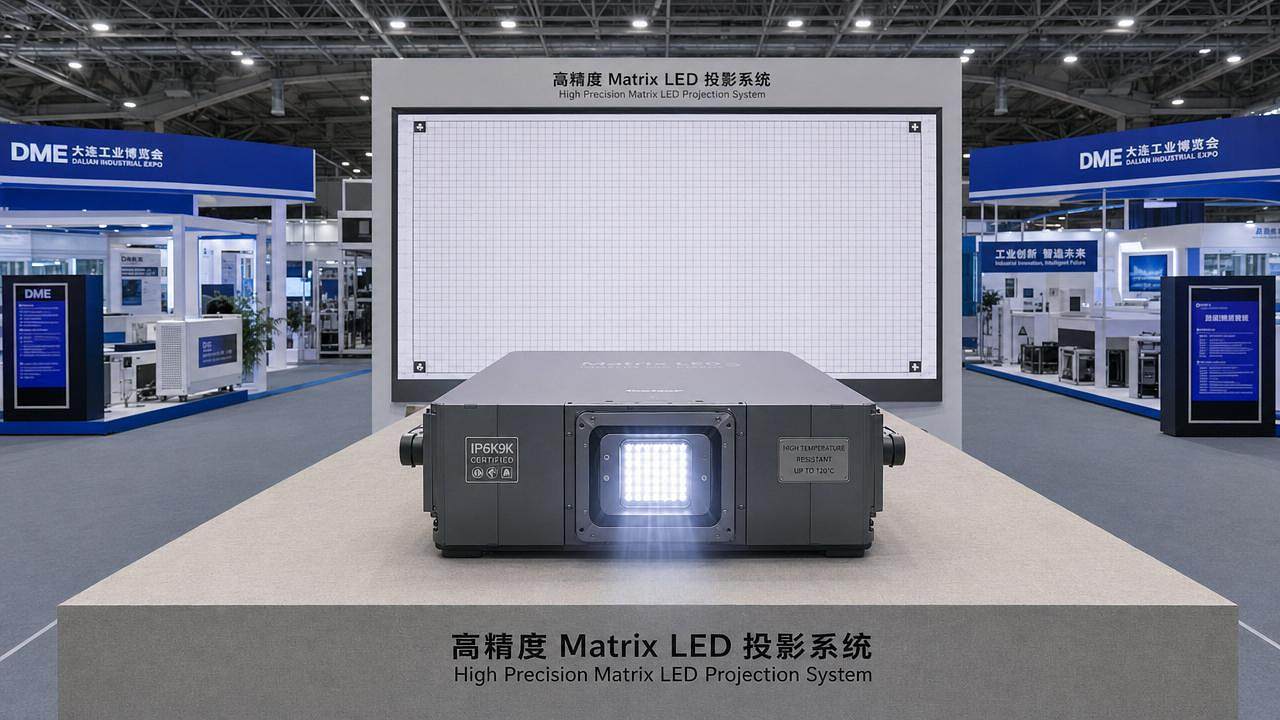
On May 16, 2026, the 28th Dalian International Industrial Expo concluded, marking a notable shift in cross-regional industrial procurement dynamics—particularly for high-reliability automotive and industrial lighting systems. The event signals heightened demand from Middle Eastern markets for precision-engineered LED projection solutions, with implications for exporters, component suppliers, and Tier 1 automotive lighting manufacturers.
Event Overview
The 28th Dalian International Industrial Expo closed on May 16, 2026. According to official statistics released by the organizers, procurement delegations from Saudi Arabia, the United Arab Emirates, and Qatar signed 87 letters of intent for Matrix LED systems, with an estimated total value of USD 230 million. These intents specifically emphasize three technical requirements: projection accuracy of ≥0.05° (equivalent to million-pixel resolution), compatibility with IP6K9K high-pressure cleaning standards, and continuous operational capability at ambient temperatures up to 85°C—conditions representative of desert environments. Among Chinese exhibitors, Xingyu Co., Ltd., Huayu Vision, and Zhejiang Chenhui ranked top three in bid success rate.
Industries Affected
Direct Exporters and Trade Enterprises
Export-oriented lighting system integrators and OEMs face immediate implications: the volume and technical specificity of these intents indicate a pivot toward performance-driven, application-validated procurement—not just price-led sourcing. This trend may accelerate demand for certified test reports (e.g., IP6K9K validation, thermal cycling logs) and regional compliance documentation (e.g., GCC Standardization Organization pre-market assessments).
Component Suppliers and Raw Material Procurement Firms
Suppliers of high-temperature LED chips, precision optics, and thermally stable encapsulation materials may see upstream demand shifts. The emphasis on 85°C sustained operation and IP6K9K resistance suggests tighter tolerances for thermal interface materials, lens coatings, and hermetic sealing compounds—potentially affecting material qualification timelines and vendor selection criteria.
Automotive Lighting System Manufacturers (Tier 1 & Tier 2)
For manufacturers developing or supplying Matrix LED modules, this outcome validates a growing market need for environmental robustness beyond standard automotive specifications (e.g., AEC-Q200). It also highlights competitive differentiation through domain-specific validation—not only functional performance but durability under extreme operational stressors.
Supply Chain and Logistics Service Providers
Logistics firms handling high-value, temperature-sensitive optoelectronic assemblies may need to reassess packaging protocols and transit climate control capabilities—especially for shipments destined to Gulf Cooperation Council (GCC) countries where customs clearance increasingly references technical conformity evidence alongside commercial documents.
Key Focus Areas and Practical Responses for Stakeholders
Monitor official follow-up announcements from the Dalian Expo organizers and GCC national trade promotion agencies
Letters of intent are non-binding; actual contract conversion rates and delivery timelines remain unconfirmed. Stakeholders should track official updates on order formalization, including any publicized pilot deployments or certification milestones tied to these intents.
Prioritize technical documentation alignment for IP6K9K and high-temperature operational validation
Manufacturers preparing bids or responding to RFPs from Middle Eastern entities should ensure internal test reports explicitly reference IP6K9K (not just IP67/IP68) and include verifiable 85°C continuous-on test data—ideally conducted per ISO 16750-4 or equivalent environmental stress protocols.
Distinguish between procurement signaling and near-term revenue impact
Analysis shows that while the 87 intents reflect strong regional interest, they do not equate to confirmed purchase orders. Companies should avoid premature capacity expansion or inventory buildup solely based on these figures—instead, treat them as indicators for targeted technical engagement and qualification roadmap planning.
Prepare for increased scrutiny of supply chain traceability and regional compliance readiness
Observably, GCC import regulations are tightening around optical safety (IEC 60825-1), electromagnetic compatibility (IEC 61000-6-3/4), and product labeling (Arabic language + GSO mark). Exporters should audit current documentation packages and initiate third-party verification where gaps exist—particularly for thermal management claims and ingress protection test methodology.
Editorial Perspective / Industry Observation
This outcome is better understood as a demand signal—not yet a market inflection point. From an industry perspective, it reflects evolving procurement maturity in emerging industrial markets: buyers are no longer selecting solely on cost or brand reputation, but on verifiable, application-specific performance attributes. It also underscores how regional environmental constraints (e.g., desert heat, dust, high-pressure cleaning in fleet maintenance) are becoming decisive technical filters—shifting competitive advantage toward engineering rigor over scale alone. Continued observation is warranted on whether subsequent expos or bilateral trade missions yield similar concentration of intent across narrowly defined technical parameters.
Conclusion: The Dalian Expo result does not represent immediate market transformation—but rather a measurable acceleration in specification-driven procurement behavior among key Middle Eastern industrial buyers. It is more appropriately interpreted as early-stage evidence of technical standard convergence across demanding operating environments, rather than a broad-based demand surge. Stakeholders are advised to calibrate response efforts around documentation readiness, validation alignment, and measured engagement—not reactive scaling.
Source: Official statistics released by the Organizing Committee of the 28th Dalian International Industrial Expo. Note: Letter-of-intent volumes and values remain subject to formal contract execution; technical requirement specifications are as publicly stated by the organizers and participating delegations. No further details on delivery schedules, payment terms, or certification pathways have been disclosed as of May 16, 2026.