
Industry Portal
Related News
- 00
0000-00
How to Specify Automotive Trim Parts for Durable Interior and Exterior Finishes - 00
0000-00
Choosing Joining Technologies for Lightweight Multi-Material Vehicle Structures - 00
0000-00
Vehicle Lightweighting for Automotive Design: Balancing Mass, Safety, and Cost - 00
0000-00
ISO 9001 Requirements for Automotive Exterior Component Suppliers - 00
0000-00
Supplier Capability Evaluation Matrix: Criteria and Weighting for Reliable Sourcing
Automotive Exterior Components Facing the Biggest Margin Pressure
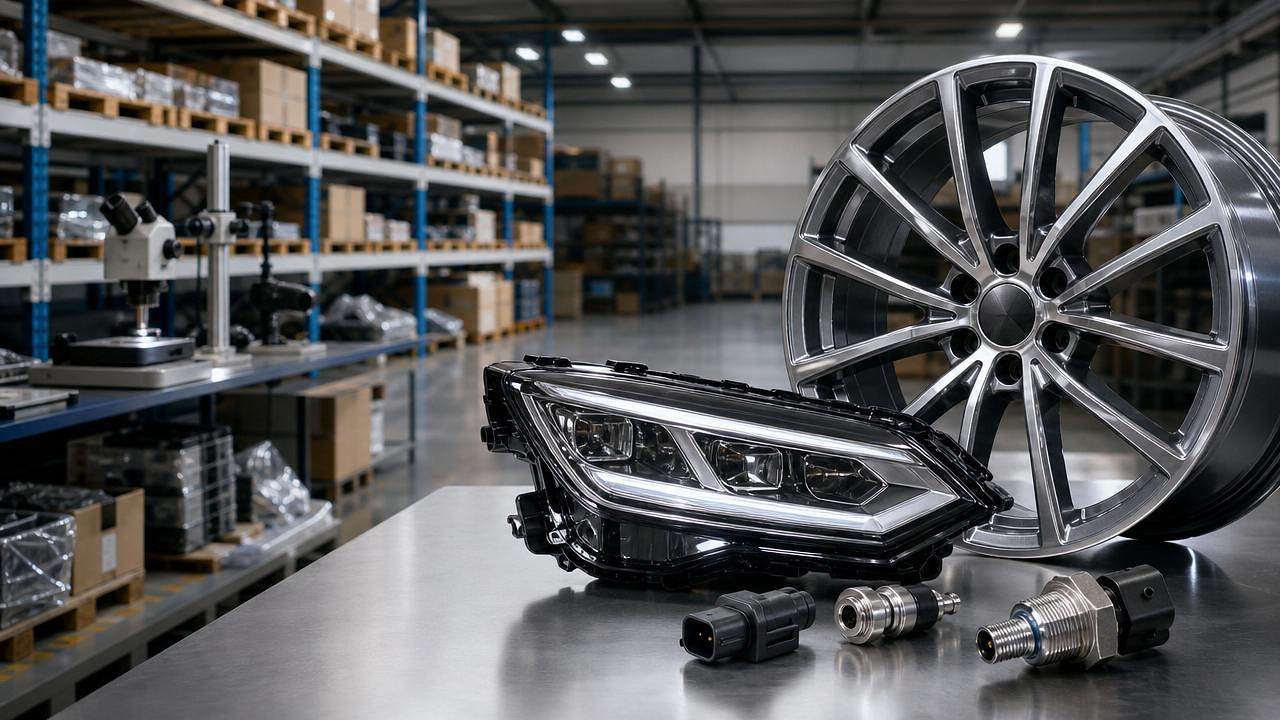
As electrification, raw material volatility, and intense price competition reshape the market, automotive exterior components are facing unprecedented margin pressure. For dealers, distributors, and agents, understanding where profits are shrinking—from wheels and tires to lighting and sensor systems—is essential to smarter sourcing, pricing, and portfolio decisions. This article explores the cost, technology, and channel forces behind margin compression and where new value opportunities are emerging.
Margin pressure is no longer isolated—it is becoming structural
The market for automotive exterior components has entered a new phase. In the past, distributors could often rely on steady replacement demand, moderate model upgrades, and a workable spread between factory price and channel price. That logic is weakening. Today, the pressure is broader and more persistent because multiple forces are moving at the same time: OEM cost-down programs are becoming more aggressive, EV platforms are changing product specifications, compliance requirements are rising, and buyers are comparing offers globally with greater speed.
For channel players, the result is clear. Selling prices are under pressure, but product complexity is increasing. That means more engineering content, tighter quality risk, and more capital tied up in inventory, yet not always more profit. In many categories of automotive exterior components, the margin squeeze is no longer a short-term market cycle. It is increasingly structural, especially where products are exposed to commodity swings, direct price comparison, or rapid technology migration.
Where the pressure is building fastest across automotive exterior components
Not all categories are under the same level of stress. Some are being compressed by raw materials, others by technology cost, and others by aftermarket pricing behavior. For dealers, distributors, and agents, category-by-category judgment matters more than broad market sentiment.
Among these, wheels, tires, and lighting are especially exposed because they sit at the intersection of visible design value, safety expectations, and pricing transparency. These are also categories where buyers increasingly expect premium performance without accepting premium markups.
Three major drivers are reshaping the margin logic
1. Electrification is changing the product mix faster than many channels expected
EVs and hybrid vehicles are not just changing powertrain demand; they are redefining automotive exterior components. Wheels must support lightweighting and aerodynamic efficiency. Tires must handle higher torque, increased curb weight, lower rolling resistance, and quieter cabin expectations. Headlights are evolving into smart optical systems with adaptive functions and software-linked performance. Sensor switches are becoming more connected to ADAS and body electronics.
This creates a difficult channel situation: specifications are becoming more complex, but standard replacement logic is less reliable. Legacy stock may move more slowly, while advanced products require stronger application knowledge. Distributors that treat EV-related exterior parts as a simple extension of ICE demand may find that margins shrink because the wrong products are stocked, priced, or explained to customers.
2. Raw material volatility is compressing pricing windows
Aluminum, rubber, specialty polymers, coated glass, electronic chips, and optical materials all affect automotive exterior components. When upstream costs move sharply, channel players often cannot pass increases downstream at the same speed. OEM contracts may be fixed for a period. Aftermarket buyers may compare alternative brands immediately. Competitors with older inventory may temporarily undercut the market.
The real issue is timing. Margin pressure does not come only from higher input costs; it comes from the lag between procurement cost change and market price acceptance. For agents and distributors, that lag can turn normal stock into margin risk. Categories with larger inventory value, such as wheels and premium lighting assemblies, are particularly vulnerable.
3. Price transparency is reducing the value of undifferentiated distribution
Digital sourcing platforms, cross-border B2B channels, and aggressive online retail comparison have reduced opacity in pricing. Buyers can compare basic specifications quickly, especially in highly standardized automotive exterior components. When the channel offers little more than availability, it becomes easier for customers to negotiate hard or switch suppliers.
This is why margin pressure is strongest in products that look interchangeable on paper. If a wheel is presented only by diameter and finish, or a tire only by size and speed rating, channel value gets compressed. But if the product is linked to EV range efficiency, impact resistance, noise performance, certification status, or smart sensing compatibility, the conversation becomes less commodity-driven.
Why wheels, tires, lighting, and sensor systems are under different kinds of pressure
Aluminum alloy wheels: visible value, invisible margin stress
Wheels remain one of the most visible automotive exterior components, making them attractive in both OEM and aftermarket channels. Yet this visibility creates a paradox. Buyers care about style and lightweight claims, but they also compare prices aggressively. EV platforms intensify the challenge because low-drag designs, brake cooling behavior, and weight reduction all matter more. That increases engineering and manufacturing requirements while market competition keeps selling prices tight.
For distributors, the risk is over-indexing on design trends without validating certification, strength performance, and fitment demand. The safer margin path is often not the broadest wheel catalog, but the one with better application accuracy, compliance credibility, and premium replacement positioning.
High-performance tires: volume can hide profitability erosion
Tires move quickly, which can create the illusion of healthy business. But high turnover does not guarantee healthy margin. In EV-related applications, tire development costs are rising because silence, grip, low rolling resistance, wear performance, and load capacity must be balanced more carefully. At the same time, online comparison makes discounting easier and more frequent.
For agents and dealers, the key signal is not only brand popularity but replacement economics. If a tire line drives traffic but pulls average selling prices downward, it may weaken the whole portfolio. The stronger opportunity is in technically justified premium replacement demand, where performance claims can be defended and where customer lifetime value is clearer.
LED headlight assemblies and sensor switches: higher value, higher complexity
Lighting and sensing products may appear better protected from margin pressure because they are more technical. In reality, they face a different challenge. Advanced LED headlight assemblies require thermal management, optical precision, electronics integration, and compliance awareness. Auto sensor switches are increasingly linked to safety features and smart activation logic. These factors can support higher pricing, but they also increase failure risk, return costs, and technical service expectations.
This means channel profit depends less on headline markup and more on execution quality. The wrong product, poor documentation, or weak technical support can destroy margin through claims and reputation damage. In these categories, disciplined supplier qualification is often more important than chasing the lowest buy price.
The impact is not the same for every business role
The takeaway is practical: margin pressure in automotive exterior components should not be measured only by product category, but by position in the channel. A product that remains profitable for a technical specialist may become highly exposed for a generalist distributor with broad undifferentiated stock.
What signals deserve close attention over the next 12 to 24 months
Several signals can help businesses judge whether margin pressure is deepening or whether a category is regaining pricing power. First, watch how quickly OEM and aftermarket specifications are converging around EV-friendly requirements such as low drag, low noise, lighter mass, and smart optical performance. Faster convergence usually pushes weaker suppliers out, but it also raises entry barriers for channels without technical support capability.
Second, track compliance and regional standards closely. In automotive exterior components, regulatory alignment can affect sourcing flexibility, product approval speed, and claim risk. Third, monitor not only raw material prices but also whether suppliers are improving process efficiency enough to offset them. Fourth, observe whether premium replacement demand is moving from appearance-driven buying toward measurable energy efficiency, safety, and smart feature value.
How channel businesses can defend margin without losing market relevance
The first step is to separate commodity exposure from technical value. Not every SKU in automotive exterior components deserves equal inventory commitment. Businesses should identify which items compete mainly on visible price and which can be sold through performance logic, compliance trust, or EV suitability. This changes how negotiations, stock planning, and sales training are managed.
The second step is to tighten supplier screening. A lower purchase price can be misleading if it brings unstable quality, unclear certification, or poor technical documentation. This is especially true for headlight assemblies, sensor switches, and structurally sensitive wheel products. Margin is not just the gap between buy and sell price; it is the residue after returns, warranty handling, and reputational cost.
The third step is to reframe the sales conversation. Dealers and distributors that explain how specific automotive exterior components improve EV efficiency, ride quietness, durability, safety, or compliance are less exposed to pure price comparison. In a compressed market, technical credibility becomes a commercial asset.
A practical decision framework for the next sourcing cycle
The emerging opportunity behind the squeeze
Although margin pressure is real, it is also forcing a more disciplined market structure. Businesses that treat automotive exterior components as technical categories rather than generic parts can still find attractive growth. Premium forged wheels, EV-optimized tires, intelligent lighting, and sensor-linked body systems are all areas where credible positioning matters. As smart mobility expectations rise, the channel value will increasingly move toward product interpretation, compliance assurance, and application insight.
For companies serving dealers, distributors, and agents, this is where intelligence-led market guidance becomes valuable. Understanding aerodynamic trends, material cost movements, thermal behavior in smart lighting, or sensing integration is no longer just engineering knowledge. It directly supports better portfolio decisions and more resilient margins.
Final judgment: focus less on volume growth alone, more on margin quality
The biggest lesson from today’s market is that not all growth in automotive exterior components is good growth. If revenue expands while discounting, warranty exposure, and inventory mismatch also rise, the business becomes weaker, not stronger. The winners in the next stage are likely to be those that read the signals early, reduce commodity dependence, and build stronger technical and commercial filters around what they sell.
If your business wants to judge how margin pressure in automotive exterior components will affect its own portfolio, start with five questions: Which categories are becoming more EV-specific? Where is raw material volatility hurting pricing discipline? Which SKUs are too easy for buyers to compare only by price? Which suppliers genuinely reduce compliance and warranty risk? And where can technical credibility create premium replacement demand? The answers to those questions will shape not just the next order cycle, but the long-term quality of channel profit.