
Industry Portal
Related News
- 00
0000-00
Precision Forging for Aluminum Wheels: Alloy Selection and Fatigue Performance - 00
0000-00
NEV Industry Standards in China: Which Battery Safety Tests Are Required? - 00
0000-00
Automotive Exterior Lighting Systems: Lamp Types, Functions, and Placement - 00
0000-00
Choosing an Electric SUV Sunroof: Key Fit, Safety, and Weather-Sealing Factors - 00
0000-00
Pop-Up Automotive Sunroof Systems: Key Design Factors for Vehicle Integration
Selecting NEV Exterior Components for Aerodynamics, Durability, and EV Integration
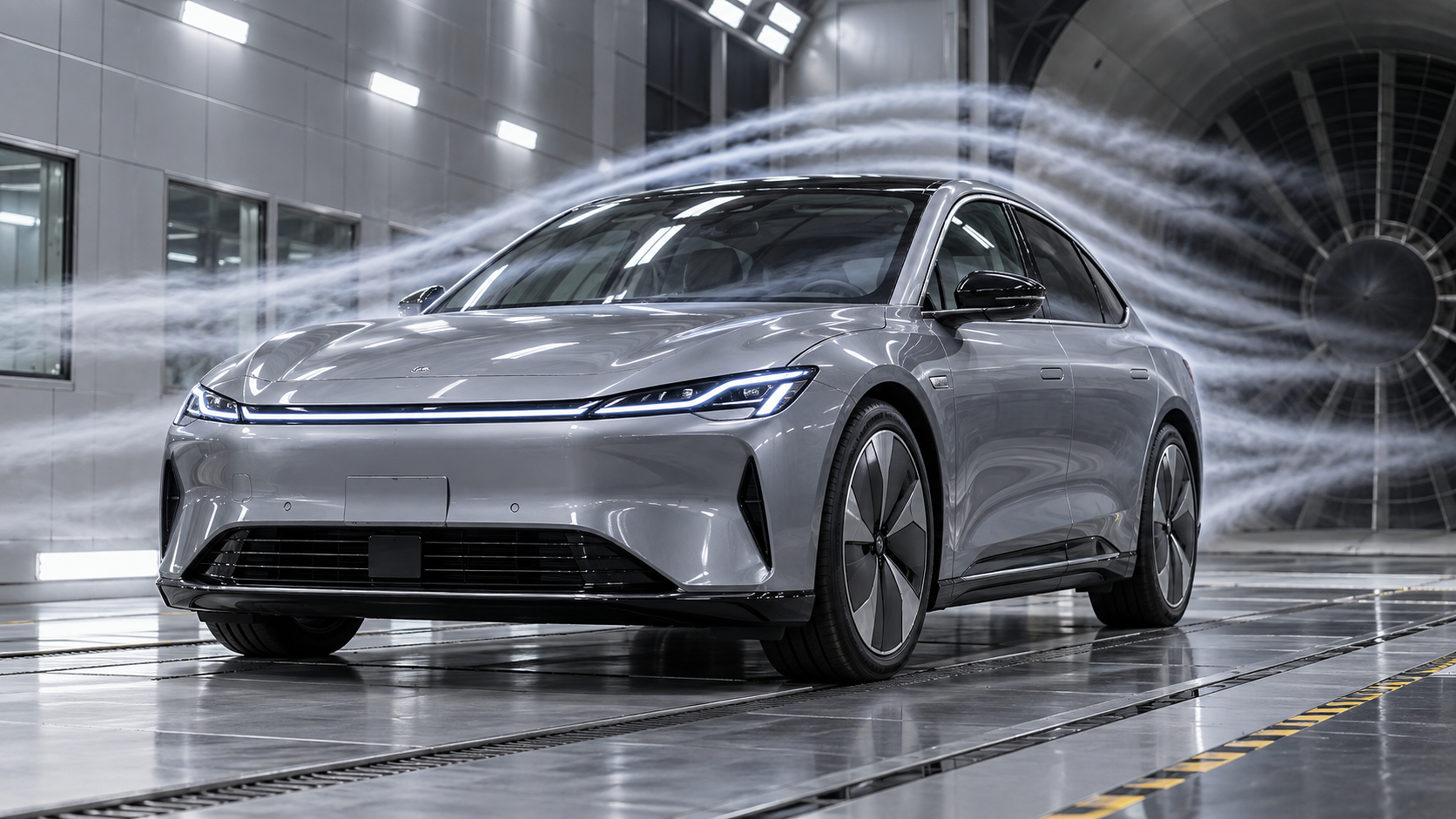
Selecting NEV exterior components is not a styling exercise. A wheel design, tire specification, lamp housing, roof module, bumper surface, or sensor cover can affect energy use, cabin noise, thermal behavior, perception performance, repairability, and compliance at the same time. The most reliable selection method is to start with the vehicle-level requirement, then test each component against its interfaces rather than evaluating it as an isolated part.
For technical evaluation, the central question is not “Which component has the best headline feature?” It is: Which design achieves the intended range, safety, durability, and user experience without creating integration risk elsewhere in the vehicle? A low-drag wheel that weakens brake cooling, a smart lamp that cannot maintain optical performance after thermal cycling, or a radar cover that changes sensor behavior in production may all look acceptable in a component-level review. They become expensive problems after vehicle integration.
Set the vehicle targets before comparing suppliers
Exterior systems are often sourced through separate commodity teams, but their effects overlap. Before issuing a request for quotation or reviewing technical proposals, define the vehicle conditions that govern the decision:
- Target driving range, aerodynamic direction, and expected high-speed duty cycle.
- Vehicle mass, wheel torque, braking load, suspension geometry, and intended tire category.
- Climate exposure, water management, corrosion environment, and cleaning chemicals likely to be encountered.
- ADAS sensor locations, field-of-view constraints, cleaning strategy, and electrical architecture.
- Cabin noise and vibration targets, especially for a quieter electric powertrain.
- Service strategy, repair zones, replacement-part cost expectations, and aftermarket availability.
- Applicable market approval and lighting, glazing, pedestrian-protection, and electromagnetic compatibility requirements.
This early definition prevents a common sourcing error: specifying a component based on the previous vehicle platform. A battery-electric vehicle may have different mass distribution, stronger low-speed acceleration, different thermal loads, and lower powertrain noise masking. Parts that worked well on an internal-combustion vehicle are not automatically appropriate for an NEV program.
Aerodynamics must be assessed as a system
Lower aerodynamic resistance can support energy efficiency, particularly at sustained road speeds. Yet an exterior part should not be judged only by its local drag contribution. Air leaving the front fascia affects the wheels; wheel design affects brake airflow; mirror, glass, roof, and rear-body geometry can alter wind noise and rear-end flow. A visually smooth part can still disrupt the surrounding flow path.
For wheels, the decision usually involves a three-way balance between aerodynamic closure, structural strength, and brake cooling. More enclosed spoke surfaces may reduce turbulence around the wheel, but they can restrict airflow around the brake assembly. The right answer depends on vehicle mass, brake specification, regenerative-braking strategy, wheel size, and expected repeated-load conditions. A low-drag wheel concept should therefore be reviewed with the brake package and wheelhouse geometry, not simply compared by face design.
Tires require the same discipline. Low rolling resistance can benefit efficiency, but it cannot be separated from wet grip, load capacity, wear behavior, ride comfort, and noise. Electric vehicles place substantial demands on tires because of vehicle mass and immediate torque delivery. A tire selected primarily for rolling resistance may produce unacceptable traction behavior, rapid wear, or cabin noise in the intended application. The evaluation package should consider the full vehicle load case, not only a nominal tire label or a supplier’s isolated claim.
Roof and glazing systems also deserve an aerodynamic review. Sunroof frames, seals, glass transitions, and wind deflectors influence airflow and wind noise. For a panoramic roof, the relevant question is not only whether the glass panel fits the roof opening. It is whether the completed roof system maintains sealing, flushness, structural behavior, and acoustic quality over temperature variation and vehicle life.
Durability is an interface problem, not only a material problem
When evaluating NEV exterior components, materials matter, but interfaces usually determine whether a design remains durable in real service. Mixed-material assemblies can experience different expansion rates. A coated sensor fascia can age differently from the surrounding painted bumper. A lamp lens, seal, housing, and vent arrangement must work together through heat, cold, moisture, vibration, and road contamination.
Technical reviews should therefore move beyond generic statements such as “high-strength,” “weather-resistant,” or “automotive-grade.” Ask how the proposed system addresses the actual failure paths:
- How are sealing surfaces controlled after repeated opening, vibration, and thermal movement?
- Where can water collect, freeze, drain, or migrate toward electrical connectors?
- What protects joints between aluminum, steel, plastics, coatings, and fasteners from corrosion mechanisms?
- How does the assembly tolerate stone impact, curb contact, wheel debris, and pressure washing?
- Can a damaged cover, lamp, sensor bracket, wheel, or roof seal be repaired without replacing an unnecessarily large module?
Lightweighting should be tested against these questions. Aluminum alloy wheels can reduce unsprung mass and are relevant to vehicle efficiency, but casting or forging method alone does not establish suitability. Geometry, load path, finish quality, impact resistance, and manufacturing consistency determine the practical result. Similarly, a thin exterior panel may save mass but introduce dent sensitivity, flutter, acoustic issues, or more demanding joining requirements.
Durability validation should represent the assembled condition. Testing an unpainted substrate, an unloaded wheel, or an electronic module outside its installed thermal environment can be useful during development, but it does not replace system-level validation. The final evaluation needs to reflect the actual mounting stiffness, nearby heat sources, harness routing, drainage, and surface treatment.
Smart lighting and sensors need protected functional freedom
LED headlamp assemblies and body-mounted sensors are no longer passive exterior hardware. They are electronic and optical systems embedded in a harsh mechanical environment. Their selection must include performance after integration, not just performance at the supplier bench.
For intelligent lighting, assess optical architecture, thermal path, condensation management, control electronics, service access, and mounting stability together. Higher-function lamp systems can provide adaptive beam behavior or projection functions, but their optical precision depends on stable alignment and managed heat. Thermal expansion or vibration-induced movement that is minor in a conventional lamp may become more significant in a highly controlled optical system.
Sensor integration has similar constraints. Radar, cameras, photoelectric sensors, and automatic switching functions depend on a clear, stable operating path. Surface coatings, decorative finishes, bumper substrates, lens curvature, bracket tolerance, water films, dirt accumulation, and heater placement can all influence field performance. A sensor cover should not be selected purely for color match or impact appearance. It needs to preserve the sensor’s operating characteristics across environmental exposure and manufacturing variation.
This is especially important when exterior styling changes late in the program. Moving a sensor by a small distance, changing fascia thickness, or applying a different coating process can require renewed integration assessment. Treating the perception system as a final packaging item is a frequent cause of rework.
NVH becomes more visible in an electric vehicle
Electric powertrains remove much of the noise that once concealed tire roar, wind noise, seal whistles, roof vibration, and component rattle. That changes the selection threshold for exterior parts. A design can meet basic structural and weathering expectations yet still reduce perceived vehicle quality because its acoustic behavior is exposed in the cabin.
Evaluate tires for their complete acoustic and dynamic behavior on the target platform. Consider cavity noise, tread pattern effects, sidewall response, and interaction with suspension tuning. For roof systems, examine seal compression stability, wind deflector behavior, panel flutter, mechanism rattle, and the effect of the headliner and roof reinforcement. For mirrors, lamps, grilles, and underbody shields, consider whether airflow edges and mounting points create noise at the vehicle speeds the product is intended to serve.
NVH issues are often attributed to one part when the actual cause is an interaction between parts. A tire change can expose an existing wheelhouse problem; a roof-glass change can alter the response of a body reinforcement; a revised bumper may shift airflow toward a mirror. The most useful supplier data is therefore data that clarifies interface assumptions and installed-condition limits.
Use a weighted evaluation matrix, but avoid false precision
A scoring matrix is useful when several suppliers meet the baseline specification. It creates a shared decision record and prevents an attractive feature from outweighing a more consequential risk. However, scoring should follow technical gates. A component that fails a mandatory functional, durability, packaging, or regulatory requirement should not remain competitive because it scores well on cost or appearance.
Weighting should reflect the program. A premium long-range vehicle may assign more importance to airflow, acoustic refinement, and optical sophistication. An urban fleet vehicle may prioritize curb-impact resistance, replacement cost, contamination tolerance, and predictable tire wear. A performance-oriented NEV may accept some aerodynamic compromise for brake cooling and tire grip. The matrix should make these trade-offs visible instead of assuming one component profile suits every vehicle.
Evidence to request before nominating a component
Supplier presentations often emphasize concepts and feature lists. Technical evaluators need evidence connected to the vehicle’s actual operating envelope. Request drawings with interface definitions, material and coating stacks, tolerance assumptions, environmental validation plans, manufacturing-control information, and proposed service procedures. For smart exterior systems, include electrical and communication interfaces, diagnostics, calibration dependencies, and failure behavior.
It is also useful to review the supplier’s assumptions explicitly. If a low-drag wheel proposal assumes a particular brake package, record it. If a lamp’s thermal performance relies on a defined airflow path, preserve that requirement in the vehicle integration plan. If a sensor cover requires a restricted paint formulation or thickness range, control it through production. Unstated assumptions are where otherwise sound component choices fail.
Platforms tracking exterior lightweighting, ground-contact systems, and smart optical perception, such as AEVS, can be useful for monitoring the technical connections between wheel aerodynamics, tire dynamics, lighting thermal management, and changing material conditions. The practical value lies in using that intelligence to challenge component claims against the whole vehicle, rather than treating trend information as a substitute for program validation.
Choose the component package, not a collection of parts
The strongest NEV exterior package is usually not made of individually optimized parts. It is a compatible set of wheels, tires, roof systems, lamps, sensors, surfaces, and mounting structures that meets the intended vehicle use case with manageable manufacturing and service risk.
Start each selection with vehicle-level constraints, establish non-negotiable technical gates, and then compare remaining options using evidence from the installed condition. This approach makes it easier to identify when a premium feature is justified, when a simpler solution is more robust, and where supplier proposals depend on assumptions that the vehicle program cannot support.