
Industry Portal
Related News
- 00
0000-00
Precision Forging for Aluminum Wheels: Alloy Selection and Fatigue Performance - 00
0000-00
NEV Industry Standards in China: Which Battery Safety Tests Are Required? - 00
0000-00
Automotive Exterior Lighting Systems: Lamp Types, Functions, and Placement - 00
0000-00
Choosing an Electric SUV Sunroof: Key Fit, Safety, and Weather-Sealing Factors - 00
0000-00
Pop-Up Automotive Sunroof Systems: Key Design Factors for Vehicle Integration
Silent Tire Prices: What Fleet Buyers Should Compare Beyond the Upfront Cost
Silent Tire Prices: What Fleet Buyers Should Compare Beyond the Upfront Cost
For fleet buyers, silent tires price is only the starting point—not the full cost of ownership. A lower quotation can look attractive in a replacement budget, yet become expensive if the tire wears quickly under EV torque, creates higher energy consumption, struggles with wet grip, or cannot be replenished reliably across operating regions. Conversely, a premium low-noise tire is not automatically the better fleet decision if its performance advantages do not match route conditions, axle loads, vehicle duty cycles, and service capability.
This matters more as electric passenger fleets, executive transport services, urban delivery operators, and mixed corporate fleets expand. Electric vehicles remove much of the powertrain noise that once masked tire and road sound. They also place different demands on tires: higher vehicle mass in many configurations, sharp instant torque, regenerative braking behavior, and a stronger expectation that cabin comfort will remain consistent through the replacement cycle.
The useful procurement question is not simply, “Which silent tire is cheapest?” It is: “Which approved tire specification produces the most acceptable cost, safety, efficiency, and passenger experience over the kilometers we expect to run?” That shift turns tire sourcing from a unit-price exercise into a controlled operating-cost decision.
Why a Quiet Tire Can Carry a Higher Purchase Price
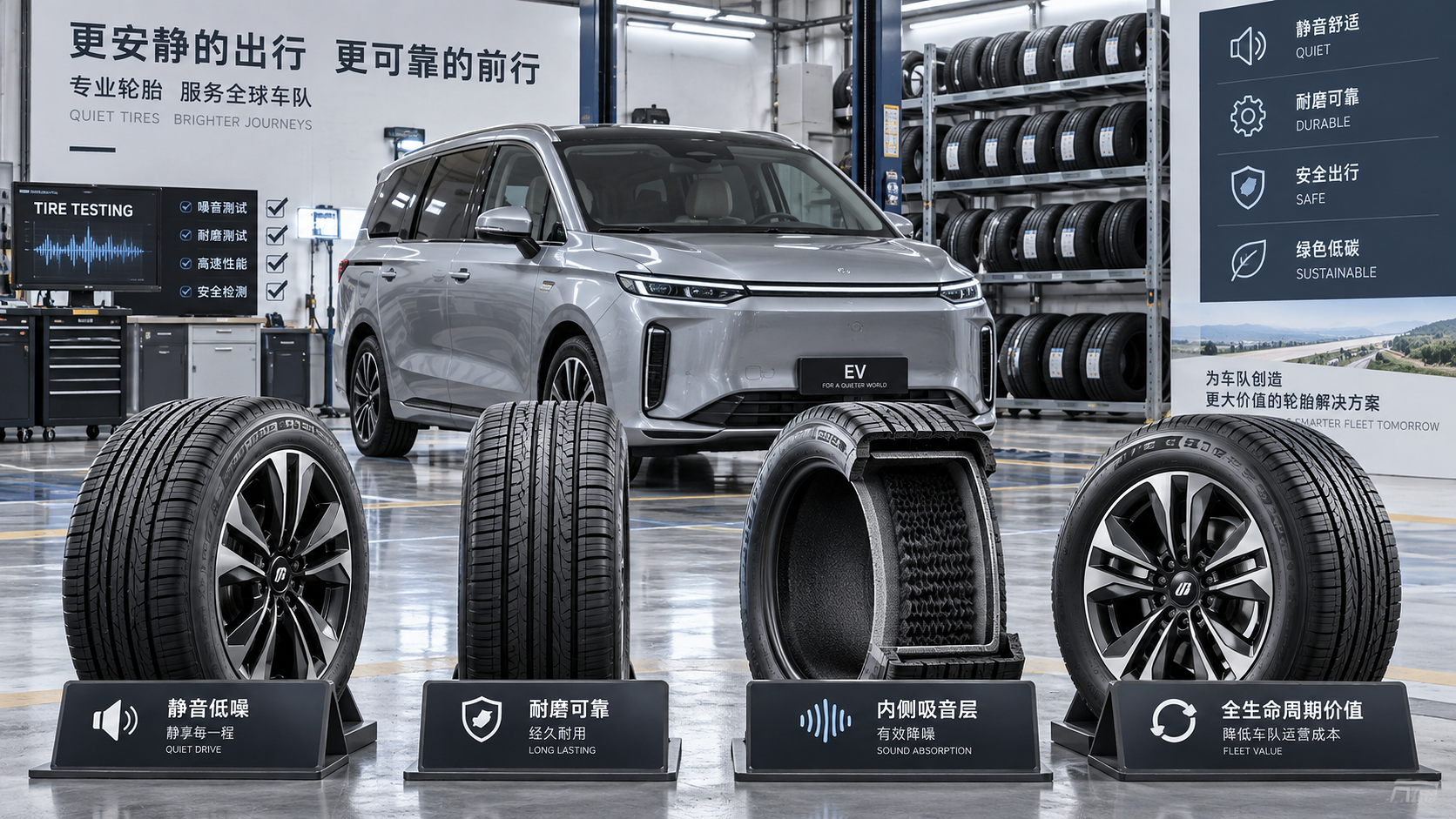
“Silent tire” is a market term rather than a single universal technical category. Depending on the supplier, it may describe a tire engineered with cavity-noise reduction materials, an optimized tread pitch sequence, specialized compound design, modified shoulder geometry, or a combination of these approaches. Some tires include a foam-like acoustic insert attached inside the tire cavity; others focus on tread and construction changes without an internal noise-absorbing layer.
Those design choices can influence manufacturing complexity, materials, quality control requirements, and service procedures. They may explain part of the difference in silent tires price, but they do not by themselves establish value. An acoustic insert, for example, may reduce a particular resonance inside the tire cavity, while the perceived noise in the cabin still depends on road surface, vehicle insulation, wheel design, suspension tuning, speed, and tire pressure.
For a fleet, the relevant issue is whether the offered tire is quiet in the operating environment that matters. A vehicle used mainly on smooth urban roads may experience a different benefit than one operating on coarse asphalt, concrete, poorly maintained suburban routes, or frequent highway travel. Procurement teams should resist comparing a branded “quiet” label with a generic tire description as though both represent identical performance.
Build the Comparison Around Cost per Usable Kilometer
Unit price remains important, especially when a fleet must replace many tires at once. But it should sit inside a broader cost model. The practical base calculation is the landed cost of a tire set divided by the usable distance delivered before replacement, adjusted for operating impacts that can reasonably be measured.
“Usable” is the key word. A tire may still have physical tread remaining but no longer meet the fleet’s safety threshold, ride-quality expectation, seasonal requirement, or internal replacement policy. Uneven wear can also remove a tire from service well before its theoretical tread life. That is why warranty language or a broad mileage claim should not be substituted for the fleet’s own replacement records.
A fleet does not need a perfect mathematical model before making a decision. It does need consistency. Compare competing offers using the same tire size, load and speed requirements, operating region, service assumptions, and replacement threshold. If one supplier quotes a tire with a different load index, construction, or seasonal positioning, the price comparison is not yet meaningful.
EV Load Capacity and Torque Are Not Secondary Checks
Many procurement mistakes begin when a fleet treats an EV tire as a conventional replacement tire with a quieter tread. Electric vehicles can impose substantial tire loads, particularly when vehicles carry larger battery packs, passengers, cargo, or equipment. Fast torque delivery can accelerate tread wear if drivers regularly make hard launches. Regenerative braking may alter longitudinal loading patterns as well, though its exact effect depends on the vehicle and driving behavior.
Before comparing silent tire prices, confirm that each candidate meets the vehicle manufacturer’s approved tire size and the required load index and speed rating. Then look beyond the sidewall markings. Ask whether the supplier’s product documentation addresses the intended EV or hybrid application, and whether the tire is suitable for the fleet’s actual load condition rather than an empty-vehicle assumption.
This is especially important for airport transfer fleets, ride-hailing fleets, executive shuttles, and urban vans converted to electric propulsion. Their tires may see frequent stop-start operation, curbing risk, full passenger loads, and narrow windows for maintenance. A low-noise tire that feels refined on a lightly loaded demonstration vehicle may not provide the same wear pattern in a heavily utilized commercial schedule.
Noise Reduction Must Be Read Alongside Wet Grip and Rolling Resistance
Quietness is desirable, but it should not displace core safety and operating requirements. Tire noise comes from several sources, including interaction between tread and road surface, air movement through tread grooves, structural vibration, and cavity resonance. Measures designed to reduce one source may involve design trade-offs elsewhere. The procurement task is to identify whether a quieter construction also provides the wet-weather behavior, wear stability, and energy profile required for the route.
Where relevant, request the applicable regional tire-label information and manufacturer technical documentation. Label formats and requirements vary by market, so teams should not assume that a rating from one jurisdiction can be interpreted as a complete comparison in another. Labels can be a useful screening tool, but they cannot replicate fleet-specific testing on actual vehicles and roads.
Wet grip deserves particular discipline. A lower rolling-resistance design may support energy efficiency, yet the fleet should not infer braking performance from that feature. Review wet-grip information separately, and consider route characteristics such as heavy rainfall, standing water, temperature range, road contamination, and driver behavior. For safety-critical operations, technical approval should involve fleet maintenance and safety personnel rather than remain solely within purchasing.
The Hidden Cost of Poor Replacement-Cycle Reliability
A silent tire specification can fail commercially even when its performance is sound. The problem is often supply continuity. If the chosen SKU is unavailable when a vehicle needs a matching replacement, the fleet may have to install a different tire model, defer service, move inventory between depots, or replace more tires than planned to preserve handling consistency. Each outcome can undermine the saving created during the original tender.
Availability should therefore be checked at the exact size and specification level, not only at brand level. Procurement teams should clarify whether the supplier can support regular replenishment, whether production origin may change, what lead-time assumptions apply, and how substitutions are managed. In cross-border fleets, regional warehousing and local workshop compatibility may matter as much as the initial supply contract.
Acoustic tires with internal inserts require another practical discussion: repair and replacement procedures. Workshop capability varies. A tire that can be inspected or repaired under one manufacturer’s guidance may be treated differently by another service network, and local practice or tire-maker instructions must be followed. The fleet should obtain clear written guidance before standardizing on a construction that its own service partners are not prepared to handle.
A Better Tender Process Starts With Operating Segments
One tire policy rarely fits every vehicle in a diverse fleet. A senior-executive EV fleet may place a high value on cabin refinement. A city delivery fleet may prioritize durability, curb resistance, and availability. Long-distance corporate vehicles may make rolling resistance and wet-weather stability more prominent. Segmenting the fleet before tendering avoids paying for acoustic features where they offer limited operational value, while preventing under-specification on passenger-facing routes.
A practical request for quotation can ask suppliers to provide more than a per-unit price. It can require the proposed tire specification, applicable load and speed ratings, relevant label or technical information, production and replenishment assumptions, warranty terms, workshop requirements, and recommended inflation-pressure management. It should also state the fleet’s vehicle types, expected payloads, annual mileage bands, road conditions, climate, rotation policy, and target replacement criteria.
For a large purchase, a controlled field evaluation is often more useful than a showroom comparison. Put a limited number of competing tire models on comparable vehicles and monitor wear, energy consumption, driver reports, damage incidents, and availability over a meaningful period. The test design must account for route differences, alignment condition, driver assignment, and tire pressure; otherwise, the result can reflect operations rather than tire performance.
Do Not Treat Wheels, Tires, and Vehicle NVH as Separate Decisions
Silent-tire procurement sits within a wider exterior and driving-quality system. Wheel width, rim contour, wheel mass, aerodynamic design, suspension condition, and tire pressure all influence the result experienced by the driver and passenger. A tire cannot compensate for a damaged wheel, unsuitable rim fitment, poor alignment, or inconsistent inflation-control practice.
This systems view is central to the research coverage of The Global Automotive Exterior & Vision Systems (AEVS). Its focus on high-performance ground contact systems connects tire dynamics with the lightweighting and aerodynamic considerations surrounding alloy wheels, as well as the broader NVH expectations of modern electric vehicles. For buyers, the value of that perspective is straightforward: a tire should be evaluated as part of the vehicle’s real operating architecture, not as an isolated consumable.
AEVS also tracks the practical forces behind procurement volatility, including developments in tire materials, self-sealing tire coatings, global compliance considerations such as ECE or DOT requirements where applicable, and fluctuations in raw-material markets. None of these inputs can determine a purchase decision on their own. Together, however, they help procurement teams ask better questions before a price change, supply interruption, or replacement-cycle issue becomes a fleet problem.
The Most Defensible Decision Is Rarely the Lowest Quote
A fleet buyer should be cautious of both extremes: assuming every premium quiet tire will justify its cost, and assuming a lower-priced alternative is equivalent because the dimensions match. The strongest choice is the tire that satisfies the required safety and load parameters, fits the fleet’s routes, delivers predictable replacement timing, and can be supplied and serviced without disruption.
Before approving a silent tire program, validate the total landed cost, vehicle fitment, wet-grip information, rolling-resistance evidence, expected wear behavior, workshop process, and replacement availability. Then retain the results by vehicle segment. That record gives procurement a clearer basis for the next tender—and turns silent tires price from a negotiation number into a decision that can stand up to operational scrutiny.