
Industry Portal
Related News
- 00
0000-00
NEV Industry Standards in China: Which Battery Safety Tests Are Required? - 00
0000-00
Automotive Exterior Lighting Systems: Lamp Types, Functions, and Placement - 00
0000-00
Choosing an Electric SUV Sunroof: Key Fit, Safety, and Weather-Sealing Factors - 00
0000-00
Pop-Up Automotive Sunroof Systems: Key Design Factors for Vehicle Integration - 00
0000-00
Automotive Product Comparison Charts: How Buyers Can Compare Specs, Cost, and Fit
Choosing Low Rolling Resistance Tires for Longer Mileage and Lower Fleet Fuel Costs
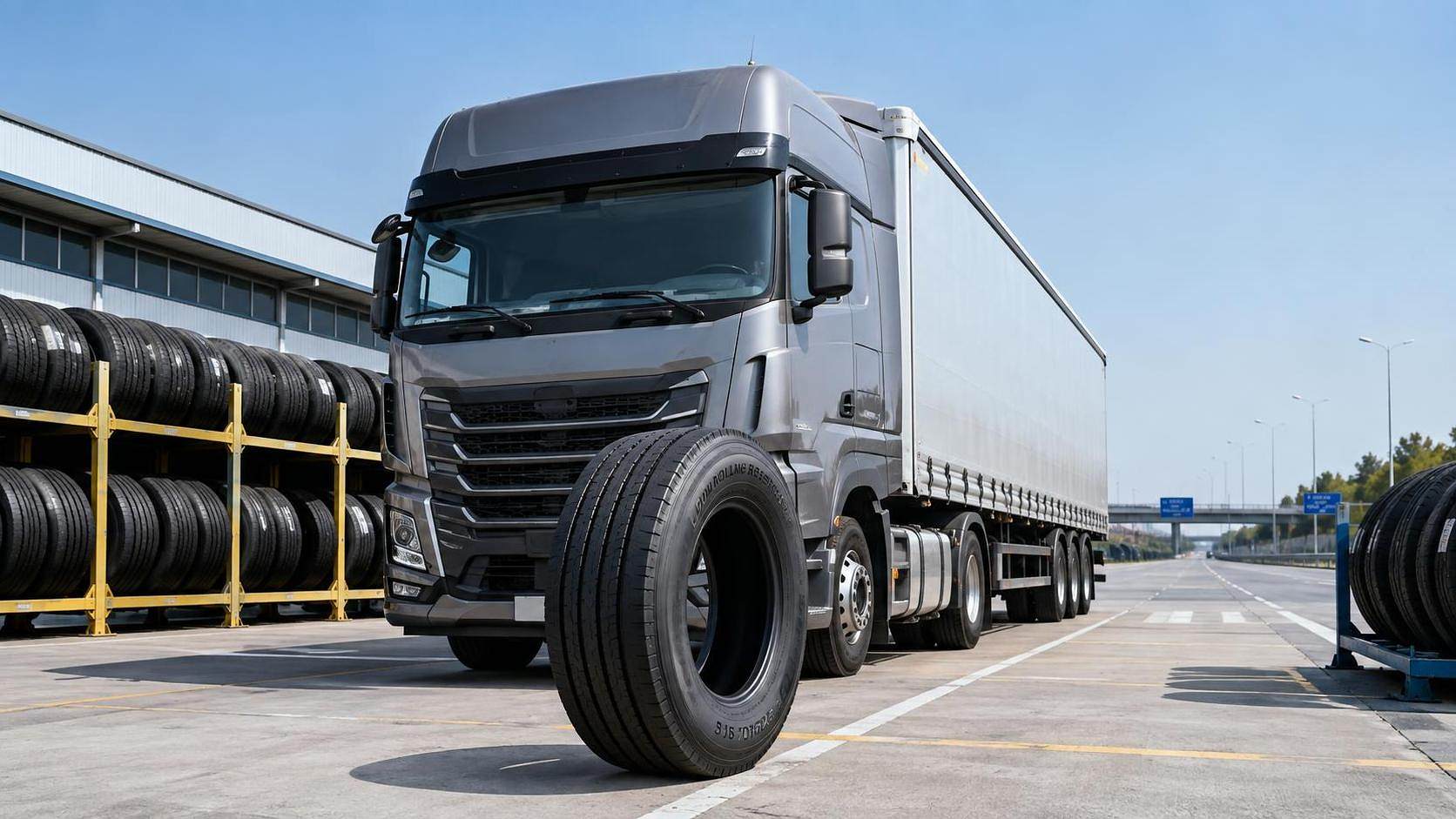
Low rolling resistance (LRR) tires can reduce fleet fuel consumption and, in some operating profiles, support longer usable tread life. But the lowest rolling-resistance specification is not automatically the lowest-cost choice. A tire that saves fuel while wearing rapidly, losing wet grip, running hot under load, or suffering frequent casing damage can increase total operating cost despite an attractive efficiency claim.
The practical purchasing question is therefore not “Which tire has the lowest rolling resistance?” It is whether a given tire delivers the lowest cost per kilometer for a specific vehicle, axle position, payload range, route pattern, maintenance discipline, and replacement policy. This distinction matters particularly where fuel, downtime, retreading, and tire-related service events are all material cost items.
Why rolling resistance affects fuel cost—but not in isolation
Rolling resistance is the energy lost as a tire deforms and recovers while rotating under load. Tire compounds, carcass design, tread geometry, sidewall construction, inflation pressure, and operating temperature all influence that loss. Lower hysteresis in the rubber compound and a carefully engineered casing can reduce the energy required to keep the tire moving.
For internal-combustion fleets, that reduced energy demand can lower fuel consumption. For electric vehicles, it can reduce energy use and help preserve operating range. The economic value is route-dependent: a long-haul tractor operating at steady highway speeds may realize a different result from a regional delivery vehicle that repeatedly accelerates, brakes, turns, and operates under variable loads.
Rolling resistance is also only one contributor to energy use. Aerodynamic drag, vehicle mass, terrain, ambient temperature, traffic conditions, drivetrain efficiency, alignment, and driver behavior may have equal or greater influence on actual fuel use. A supplier’s test value is useful as a comparison point, but it should not be converted directly into a guaranteed fleet fuel-saving figure without confirming the test method and the duty cycle.
This is why the phrase low rolling resistance tires long mileage should be treated as a performance objective rather than a universal product category. Long mileage depends on how efficiently the tire converts its available tread depth into usable service life under real operating conditions.
The trade-off that matters: efficiency, wear, grip, and casing life
Tire development involves competing requirements. A compound formulated to reduce energy loss may behave differently in abrasion resistance, wet traction, snow performance, heat generation, or cut-and-chip resistance. Modern tire designs can manage these trade-offs effectively, but the correct balance differs by application.
For example, a steer-position tire on a highway tractor is expected to prioritize directional stability, even wear, wet braking, and casing durability. A drive tire must also transmit torque and manage traction. A trailer tire may offer substantial efficiency potential because of its duty profile, but irregular wear caused by axle misalignment or suspension issues can erase that gain. Using one “fuel-saving” specification across all positions without considering those functional differences is a common purchasing error.
Long mileage should also be defined precisely. It can mean:
- distance to legal tread limit on the first life;
- distance to removal before irregular wear becomes uneconomic;
- total distance across original tread and retread cycles;
- service life before casing failure or non-retreadability; or
- calendar life where annual mileage is low.
A tire with slightly lower first-life mileage can still be economically superior if it retains a sound casing for retreading. Conversely, a tire with high original tread mileage may be less valuable if heat, impacts, or structural damage reduce its casing recovery rate. Where retreading is part of the operating model, casing value belongs in the purchasing calculation from the beginning, not as an afterthought at removal.
Start the specification with the operating profile
A useful tire specification begins with vehicle and route evidence, not a brand comparison. Historical records should identify the tire positions, sizes, load indexes, speed symbols, inflation practices, removal reasons, and average service distances for each vehicle class. The purpose is to distinguish genuine tire-performance issues from mechanical or operational causes of short life.
Key questions include whether vehicles operate mainly on motorway, regional roads, urban streets, construction access roads, ports, or mixed surfaces; whether loads are consistently high or highly variable; whether routes involve frequent curbing, sharp turns, steep grades, or unpaved segments; and whether tires are exposed to high ambient temperatures or prolonged idling.
These conditions determine what “low rolling resistance” should mean in the tender. A line-haul operation may favor a highway-oriented casing and tread compound optimized for stable rolling efficiency. A mixed-service operation may need greater resistance to cuts, stone retention, shoulder damage, and irregular wear, even if the rolling-resistance figure is less aggressive. Selecting the highway tire for severe regional service can create a false economy: fuel savings may be offset by early removals and road-service events.
Load reserve deserves particular attention. The tire must carry the maximum permitted axle load at the specified operating speed and inflation pressure, with suitable margin for actual operating conditions. Under-specification raises heat and durability risk; over-specification can add unnecessary mass, cost, and rolling loss. Load and inflation tables should be matched to the vehicle manufacturer’s requirements and applicable regulations rather than assumed from a previous tire size.
How to read supplier efficiency claims
Suppliers may present rolling-resistance data as a coefficient, a label grade, an energy-saving percentage, or a projected fuel reduction. These are not interchangeable without context. The purchasing file should ask for the exact product identification, tire size, load/speed configuration, intended axle position, test method, and test conditions associated with the claim.
For markets covered by the EU tire label, rolling resistance, wet grip, and external rolling noise are presented under the applicable labeling framework. The label provides a standardized comparative reference, but it is not a complete assessment of mileage, damage resistance, retreadability, or real-world fuel use. Two tires with similar label outcomes can produce very different removal patterns in a specific fleet.
UNECE Regulation No. 117 addresses requirements related to rolling sound emissions, wet adhesion, and rolling resistance for relevant tire categories. It is important for compliance and product eligibility in applicable markets, but compliance alone does not establish suitability for a particular duty cycle. Regional fleets may also encounter jurisdiction-specific requirements, including labeling rules and vehicle or tire fitment obligations. Documentation should be checked for the actual sales and operating markets rather than copied from a supplier’s general catalogue.
For heavy-duty operations in the United States, EPA SmartWay verification may be relevant when evaluating eligible tire technologies and fuel-efficiency programs. Verification is a meaningful screening reference where applicable, but it should still be read alongside the complete tire specification, axle application, warranty terms, and operating conditions.
The most useful supplier submission separates verified test information from modeled savings. A projected annual fuel benefit should state the baseline tire, annual distance, fuel price assumption, vehicle configuration, utilization level, and expected operating conditions. Without those inputs, a savings figure is a scenario, not a procurement fact.
Total cost of ownership should be calculated per usable kilometer
Purchase price is visible immediately; fuel effect, removal timing, and casing recovery are realized later. A sound comparison uses total cost of ownership (TCO) over an agreed evaluation period. The basic logic is:
Tire TCO per kilometer = (acquisition cost + fitting and balancing + maintenance allocation + roadside and downtime cost + disposal cost − casing or residual value − fuel-cost benefit) ÷ usable kilometers.
The formula is simple, but each component requires disciplined assumptions. “Usable kilometers” should exclude distance that was expected but lost due to premature removal. If a tire is removed for shoulder wear caused by alignment issues, the result should not automatically be attributed to the tire design. Equally, a fuel-efficient tire that requires tighter pressure control should not receive credit unless that maintenance practice is actually sustained.
A comparison table can prevent the lowest unit price from dominating the decision:
Fuel-price volatility is another reason to model more than one scenario. A tire with a price premium may require a smaller mileage or efficiency advantage when fuel prices are high, while a lower fuel-cost environment places more weight on wear life, retread value, and acquisition price. The decision should remain defensible under reasonable changes to those assumptions.
Pressure management can determine whether the tire delivers its promised value
Low rolling resistance does not compensate for underinflation. Insufficient pressure increases tire deflection, heat build-up, rolling resistance, shoulder wear, and the likelihood of structural damage. Overinflation can reduce the contact patch and contribute to ride concerns or irregular center wear, depending on the application. The correct target is the pressure required for the actual axle load, tire specification, and operating conditions.
Because pressure loss develops between inspections, the value of tire-pressure monitoring systems or regular pressure-maintenance routines should be considered alongside tire selection. A premium LRR tire operating at inconsistent pressure may perform worse economically than a less sophisticated tire maintained correctly. This is especially relevant when trailer assets circulate independently from tractors or when vehicles move between sites with different maintenance standards.
Alignment, wheel-end condition, suspension wear, and rotation discipline have the same effect on the buying decision. Feathering, one-sided shoulder wear, cupping, or rapid localized wear point to a vehicle or maintenance issue that no compound technology can solve. Tender requirements should therefore include a process for documenting removal causes, not simply recording total mileage.
Use controlled trials before standardizing a specification
A fleet-wide conversion based on catalog comparisons creates unnecessary exposure. A controlled field evaluation can test whether the expected efficiency and mileage balance holds under the intended service conditions. The trial should compare like with like: similar vehicle configuration, axle position, route type, payload pattern, maintenance interval, and driver operating conditions.
Installation dates, serial or identification records, starting tread depth, cold inflation settings, axle loads, rotation history, repairs, and removal reasons should be captured consistently. Periodic tread-depth measurements across multiple points help reveal whether wear is uniform or whether a promising mileage figure is concealing an emerging irregular-wear problem.
Fuel comparisons require particular care. Comparing consumption before and after a tire change without controlling for season, routes, payload, traffic, and vehicle allocation can produce misleading results. Where fuel data are available from telematics or fuel-management systems, evaluate a sufficiently comparable operating set rather than relying on a single vehicle or short observation period.
The commercial terms should support the trial. Confirm minimum order quantities, production lead times, regional warehousing, emergency availability, warranty handling, and the supplier’s ability to maintain the same specification over the contract period. A tire that performs well but cannot be replenished consistently can force mixed fitments and complicate maintenance, rotation, and performance tracking.
Common buying mistakes that raise fleet cost
The most frequent mistake is treating an LRR label or marketing claim as evidence of long tread life. Rolling resistance and wear resistance are related through material and design choices, but neither can be inferred reliably from the other. Both must be assessed.
Another error is comparing tires only by size and unit price. Two tires carrying the same nominal size may differ in load index, speed rating, casing construction, tread depth, intended axle position, regional approval, and retread potential. A lower-priced tire may not be a valid substitute if these characteristics differ.
Mixed tire fitment can also undermine the intended outcome. On dual assemblies, significant differences in rolling circumference or uneven wear can impose unequal load sharing and accelerate damage. Fitment policies should follow the vehicle manufacturer’s guidance and applicable safety requirements, particularly where axle, traction, or stability systems are involved.
Finally, do not assign all energy-saving expectations to the tire supplier. The tire is part of a system comprising wheels, valves, inflation control, alignment, vehicle loading, driving patterns, and maintenance. Commercial accountability is stronger when the supplier provides clear product data and support, while the operator maintains the conditions needed for the tire to perform.
The defensible selection decision
The best low rolling resistance tire is the one that achieves measured energy efficiency without creating a larger cost through short life, weak wet performance, inadequate load capability, poor casing retention, or supply disruption. For high-mileage highway assets, a premium efficiency design may justify its price through fuel savings and stable wear. For demanding mixed-service routes, a more robust specification may generate lower lifecycle cost even when its rolling-resistance rating is less favorable.
A purchasing decision becomes stronger when it is based on comparable technical data, verified regulatory documentation, a route-specific TCO model, and controlled field results. This approach avoids paying for an efficiency claim that cannot survive real operating conditions—and avoids rejecting a higher-priced tire whose fuel, mileage, and casing economics are genuinely superior over its full service life.