
Industry Portal
Related News
- 00
0000-00
NEV Industry Standards in China: Which Battery Safety Tests Are Required? - 00
0000-00
Automotive Exterior Lighting Systems: Lamp Types, Functions, and Placement - 00
0000-00
Choosing an Electric SUV Sunroof: Key Fit, Safety, and Weather-Sealing Factors - 00
0000-00
Pop-Up Automotive Sunroof Systems: Key Design Factors for Vehicle Integration - 00
0000-00
Automotive Product Comparison Charts: How Buyers Can Compare Specs, Cost, and Fit
Rain Sensing Systems Calibration: Methods for Reliable Detection and Testing
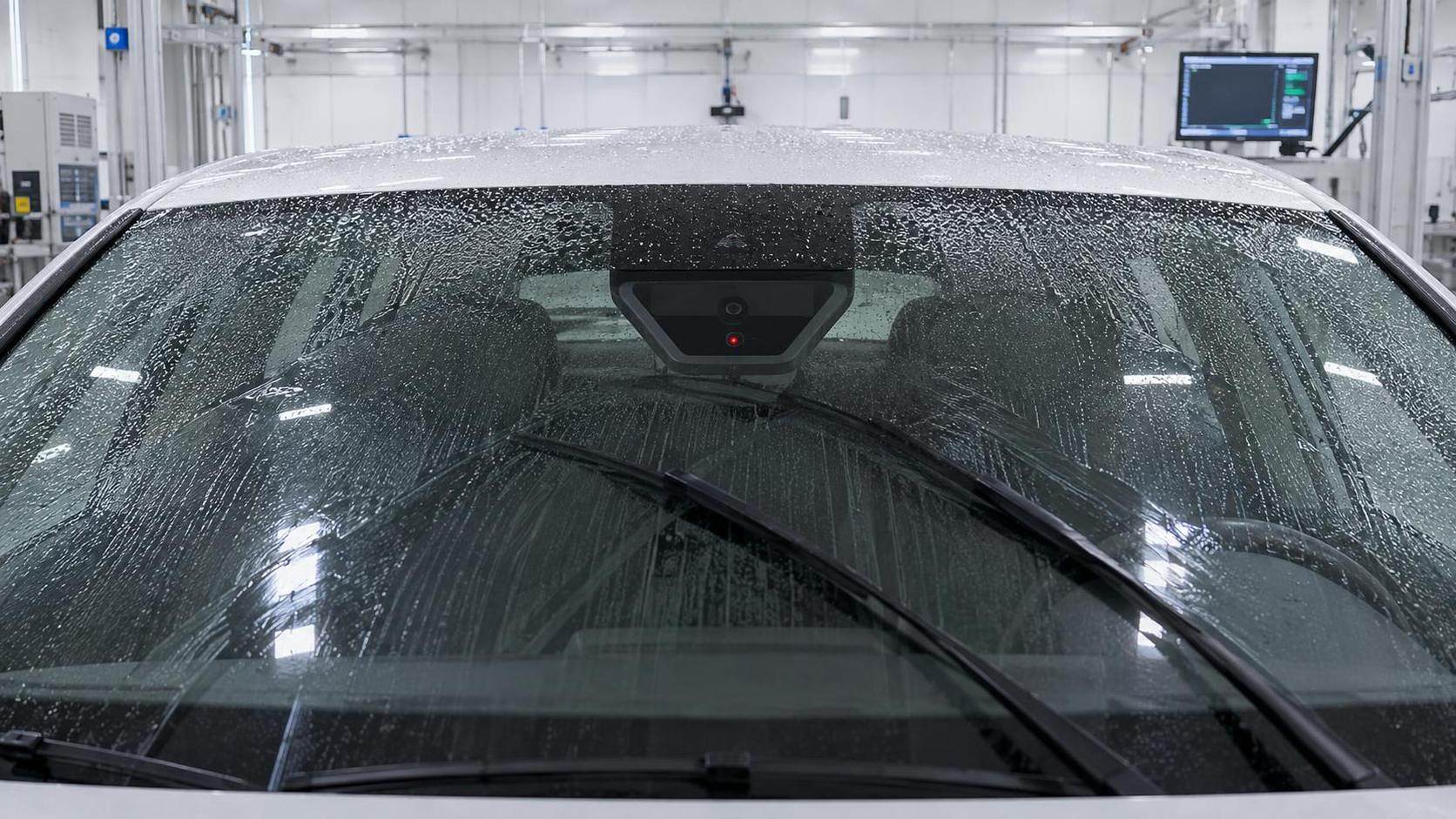
Rain Sensing Systems Calibration: Methods for Reliable Detection and Testing
Reliable automatic wiper performance begins with precise rain sensing systems calibration. For a driver, the expected behavior seems simple: rain starts, wipers react; rain stops, the system settles down. For a technical evaluator, however, that behavior is the visible result of a tightly coupled optical, mechanical, electronic, and software chain. A sensor can be correctly mounted yet respond poorly because of windshield coating variation. A well-designed optical module can appear unstable because the body controller interprets its output too aggressively. Even a clean laboratory calibration may fail to represent a road scenario involving washer fluid residue, low-angle sunlight, or a partially worn wiper blade.
This is why rain sensing systems calibration should not be treated as a one-time programming task at the end of vehicle development. It is a validation discipline that connects windshield selection, sensor coupling, signal processing, vehicle-network logic, and real-world test conditions. In modern exterior and vision systems, the rain sensor is one of the smaller components, but it sits at a meaningful point in the vehicle’s perception architecture: it influences visibility, driver trust, wiper wear, and the perceived maturity of automated convenience functions.
What the Sensor Is Actually Measuring
Most automotive rain sensors mounted behind the windshield use an optical principle based on infrared light and reflection at the glass surface. The sensor emits light into the windshield at a controlled angle. When the outer surface is dry, a large portion of that light is reflected internally back toward the receiver. Water droplets alter the optical boundary and reduce or redistribute the returned signal. The electronics convert that change into an estimated wetness level, which is then used to request a wiper mode, frequency, or sweep.
That description is technically correct, but it can hide the practical problem: the sensor does not “see rain” in the same way a camera sees droplets. It sees changes in optical coupling. Any factor that changes the optical path can influence the result. This includes glass thickness, curvature, frit pattern placement, infrared-transmitting coatings, lamination structure, adhesive pad condition, trapped air bubbles, sensor seating force, and contamination near the sensing area.
A rain sensor therefore cannot be evaluated in isolation from the windshield. This is especially relevant in vehicles with acoustic laminated glass, solar-control layers, heated windshield zones, heads-up display areas, or rapidly changing glass suppliers. A calibration that works on one windshield build may need revalidation when the glazing stack-up changes, even if the sensor hardware and control software remain nominally unchanged.
Calibration Starts Before Software Adjustment
A recurring mistake in troubleshooting is to begin by changing sensitivity thresholds in software. That can mask the problem without solving it. Before adjusting algorithms, evaluators should confirm that the physical installation is repeatable. The sensor should be located in the approved windshield zone, fully seated against the glass, and installed with the specified optical coupling element. A gel pad or similar interface is not a minor assembly detail; it is part of the optical system.
Poor coupling often produces a recognizable pattern. The system may be excessively sensitive immediately after installation, insensitive in certain sections of the sensing field, or inconsistent between vehicles built with the same nominal configuration. Visual inspection can identify obvious bubbles or pad damage, but not all defects are visible. Where available, the supplier’s diagnostic output or raw optical channel data is more useful than judging only by wiper behavior.
The distinction between assembly verification and functional calibration matters. Assembly verification asks whether the optical path is physically acceptable. Functional calibration asks whether the system responds appropriately across defined wetting conditions. A vehicle may pass one and fail the other.
Baseline learning and initial reference values
Many rain sensor systems establish a dry reference after installation, ignition cycles, or a defined initialization sequence. The sensor uses this baseline to distinguish normal glass characteristics from moisture-related signal changes. The exact process depends on the sensor design and vehicle software, so it should follow the applicable supplier procedure rather than a generic workshop routine.
The important evaluation point is that the dry reference must be acquired under genuinely dry and stable conditions. Residual water, cleaning-agent film, finger marks, condensation, or fresh washer-fluid overspray can distort the baseline. If a vehicle is calibrated immediately after a wash bay process, the result may look acceptable in the workshop but become erratic during the first real rain event. Allowing the sensing zone to dry fully is a modest delay that prevents a surprising number of false diagnostic conclusions.
A Useful Test Matrix Is More Valuable Than a Single “Rain Test”
A bucket of water or a handheld spray bottle can confirm that a sensor is alive. It cannot demonstrate reliable detection. Real precipitation varies by droplet size, flow rate, direction, and persistence. Vehicle motion changes how water spreads across the windshield, while wiper sweeps repeatedly interrupt the optical condition that the sensor is trying to interpret.
A practical validation program should cover both controlled bench conditions and vehicle-level scenarios. The controlled portion establishes repeatability. The vehicle portion exposes interactions that do not appear on a static windshield fixture, including vibration, vehicle pitch, airflow, electrical noise, and wiper control delays.
The test method should define more than whether the wipers moved. Useful acceptance criteria may include detection onset, time to the first commanded wipe, stability of the selected wipe mode, recovery after drying, and the absence of unwanted activation under specified dry conditions. The actual limits are normally program-specific, because driver expectations, wiper geometry, windshield rake, and body-control strategy vary by vehicle segment.
Reading the Signal Chain Instead of Only Watching the Blades
When a rain sensing function appears inconsistent, the wiper blades are often blamed first. Sometimes that is justified: poor blade contact can leave water in the sensing zone or create streaks that the sensor interprets as ongoing wetness. But the evaluator should trace the complete chain before replacing hardware.
The path usually includes the optical sensor, its internal processing, a local communication interface, the body control module, the wiper controller or motor electronics, and the mechanical wiper system. Depending on vehicle architecture, the sensor may communicate through LIN, CAN, or another network arrangement. A command delay can be caused by filtering in the sensor, arbitration in the body controller, a communication fault, or a wiper motor response issue. These are different failures and should not share the same corrective action.
Diagnostic logging is particularly valuable during rain sensing systems calibration. Comparing raw or normalized optical values with transmitted rain-intensity states and final wiper commands reveals where behavior diverges. If the optical signal changes normally but the wiper request is late, the concern is likely downstream. If the optical reading remains nearly unchanged during controlled wetting, attention should return to coupling, glass compatibility, sensor condition, or the test setup itself.
Sensitivity Is Not the Same as Good Performance
A system that wipes at the first trace of moisture may look impressive in a demonstration, yet it is not necessarily well calibrated. Excess sensitivity creates dry-wipe events, unnecessary blade wear, distraction, and an impression that the vehicle is acting on its own without good reason. Under-sensitivity is more obvious because the driver takes over manually, but oversensitivity is often the issue that causes longer-term dissatisfaction.
The better target is stable proportional behavior. Light drizzle should not always trigger the same response as a heavy road splash. The system should avoid rapidly switching between intermittent and continuous modes when wetness is near a threshold. This is where filtering and hysteresis become important. Some delay is intentional: without it, the control logic can react to every brief optical fluctuation. Too much filtering, on the other hand, makes the system feel slow at the moment the driver needs visibility.
The right balance must be assessed with the vehicle moving, not only parked. At speed, airflow can spread droplets differently across the windshield, and water may clear from the sensor zone faster than from the driver’s primary field of view. A calibration that is technically consistent at the sensor may still produce poor perceived performance if its response is not aligned with what the driver sees through the glass.
Environmental, Electrical, and Glass-Change Validation
Rain sensing systems are exposed to more than rainfall. Temperature cycling, solar loading, humidity, vibration, and electrical disturbances can affect either the sensor module or its optical interface. Vehicle programs commonly evaluate these influences within their broader environmental and electromagnetic compatibility plans. Standards such as ISO 16750 are frequently relevant to automotive electrical and electronic equipment environmental conditions, while EMC evaluation is generally addressed through the project’s applicable vehicle and component requirements. The exact standard set and pass criteria should be confirmed for the target market and program rather than assumed from another platform.
Windshield changes deserve the same discipline. A change in glass supplier, interlayer, coating, ceramic print area, or curvature may appear cosmetic from a purchasing perspective, but it can be functional for an optical sensor. Change-control documentation should identify whether the sensor viewing zone has been affected. If it has, a focused optical and functional revalidation is usually more defensible than relying on part-number continuity alone.
This issue is becoming more visible as exterior systems gain complexity. Smart headlights, camera modules, automatic lighting, and rain sensing functions increasingly share the same upper-windshield packaging area. Reflections, thermal constraints, wiring paths, and service access can all create compromises. The most reliable design reviews bring glazing, body electronics, optics, and wiper teams into the same discussion early enough to make changes without late-stage workarounds.
Practical Checks Before Sign-Off
Before approving a rain-sensing function, technical teams should be able to answer a few direct questions. Is the sensor mechanically and optically installed as intended? Has the dry reference been established under controlled conditions? Does the test set include drizzle, splash, sustained wetness, dry-back, and contamination rather than one generic spray event? Can the team distinguish sensor output from body-controller and wiper-actuator behavior? Has the windshield configuration used in validation been clearly documented?
There is also a service question. Workshop technicians need a defined procedure for windshield replacement, sensor removal, gel-pad handling, initialization, and post-repair verification. Many field complaints arise not from an original design weakness but from a replacement process that disturbed the optical interface. A good production calibration strategy should therefore be paired with an equally clear service strategy.
For organizations tracking exterior and vision technology, this is a useful reminder that perception quality is not limited to cameras and advanced driver-assistance systems. At AEVS, the same cross-disciplinary view applied to intelligent lighting, optical perception, lightweight exterior components, tires, and auto sensor switches is relevant here: a small sensing component can only perform reliably when its surrounding vehicle system is treated as part of the design.
The strongest rain sensing systems calibration programs do not chase the highest sensitivity setting. They establish a stable optical baseline, validate behavior across realistic windshield conditions, preserve traceability when glass or software changes, and test the full command path to the wipers. That approach is less dramatic than a quick spray demonstration, but it is far more likely to produce automatic wiping that drivers trust in everyday weather.