Industry Portal
Related News
- 00
0000-00
Precision Forging for Aluminum Wheels: Alloy Selection and Fatigue Performance - 00
0000-00
NEV Industry Standards in China: Which Battery Safety Tests Are Required? - 00
0000-00
Automotive Exterior Lighting Systems: Lamp Types, Functions, and Placement - 00
0000-00
Choosing an Electric SUV Sunroof: Key Fit, Safety, and Weather-Sealing Factors - 00
0000-00
Pop-Up Automotive Sunroof Systems: Key Design Factors for Vehicle Integration
Automatic Wipers for Buses: 7 Selection Criteria for Fleet Procurement
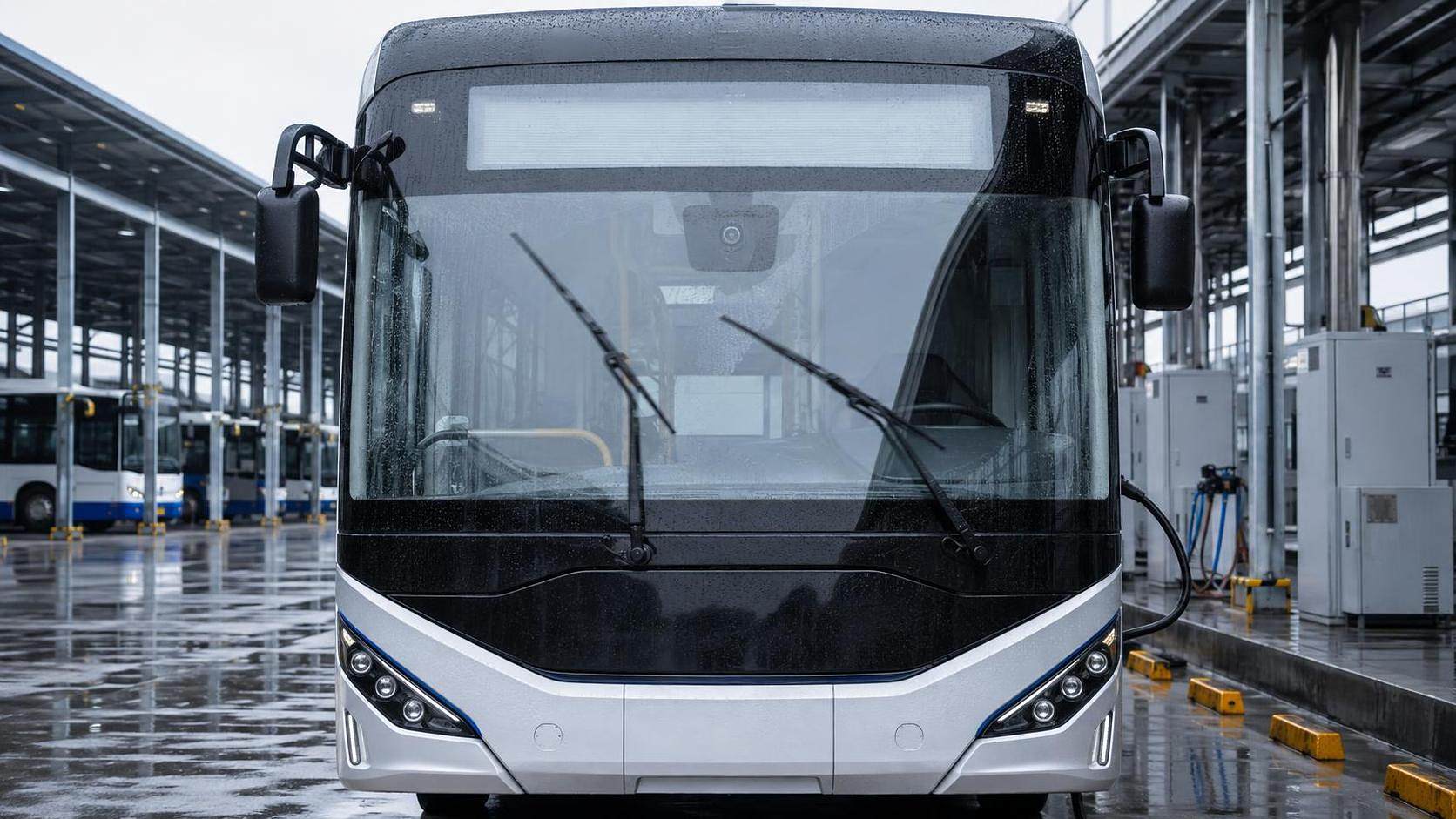
Automatic wipers for buses should not be selected as a simple convenience feature. In fleet operation, the real procurement question is whether the system can maintain usable forward visibility across different rainfall intensities, windshield designs, driver habits, electrical architectures, and maintenance conditions without creating new downtime or integration risks.
A low purchase price may be attractive, but it can become expensive if the sensor reacts too slowly to spray, the wiping area does not match the windshield, replacement blades are difficult to source, or the system cannot communicate reliably with the vehicle controller. The most dependable selection process evaluates the complete operating system rather than the sensor alone.
1. Sensor accuracy must match real bus operating conditions
Automatic wiper systems generally use an optical rain sensor mounted behind the windshield. The sensor emits light into the glass and evaluates changes in reflected light caused by water on the outer surface. When the measured condition crosses a defined threshold, the controller activates or adjusts the wiper system.
For buses, accuracy is more complicated than detecting ordinary rainfall. A vehicle may move from a dry depot into heavy rain, encounter water spray from trucks, or operate at low speed in stop-and-go urban traffic. The sensor must distinguish meaningful moisture from temporary contamination, windshield washer fluid, condensation, glare, and isolated droplets.
Procurement specifications should therefore address:
- Detection response time at different vehicle speeds;
- Adjustable sensitivity and driver override options;
- Resistance to false activation from dust, road spray, or windshield contamination;
- Stable operation under direct sunlight, night driving, and changing ambient temperature;
- Sensor calibration requirements after windshield replacement.
A system that activates quickly but wipes continuously in light mist may create unnecessary blade wear and driver distraction. Conversely, a system that delays activation during heavy spray may compromise visibility. The preferred setting is not necessarily the most sensitive one; it is the one that provides predictable visibility with limited nuisance operation.
2. Wiping coverage is a vehicle-specific issue
Sensor performance cannot compensate for inadequate mechanical coverage. Bus windshields are often large, tall, curved, divided, or designed with multiple viewing zones. The wiper arrangement may use tandem arms, opposed blades, pantograph mechanisms, or other configurations. A control module can command wiping, but it cannot correct a dead zone caused by incorrect arm geometry.
During evaluation, procurement teams should compare the proposed system against the actual windshield and wiper mechanism of each bus platform. Important points include the swept area, overlap between blades, park position, clearance from pillars and mirrors, and visibility of the driver’s primary viewing zone.
Do not assess coverage only with a dimension on a supplier drawing. A practical validation should consider:
- Water distribution across the full windshield during stationary and moving operation;
- Visibility near the A-pillars and lower driver sightline;
- Interference with cameras, heating elements, washer nozzles, or body trim;
- Blade lift or loss of contact at operating speed;
- Clearance when the windshield is opened, tilted, or serviced.
For a mixed fleet, one wiper control solution may still require different blades, arms, brackets, sensor mounts, or software settings by vehicle model. Treating fleet standardization as a reason to ignore platform differences is a common sourcing error.
3. Mechanical durability matters more than nominal wiping speed
Bus wipers often operate for long periods in rain, road spray, dust, snow, and temperature extremes. They also face contamination from insects, oily film, de-icing chemicals, and cleaning agents. These conditions place stress on blades, pivots, linkages, motors, and mounting points.
When comparing automatic wipers for buses, buyers should separate the electronic control system from the mechanical wiping assembly. A reliable rain sensor does not make a weak motor or poorly supported linkage durable.
Key questions for the technical specification include:
- What is the rated duty cycle of the motor and control unit?
- Does the motor provide overload or stall protection?
- How are park-position errors detected and recovered?
- Are arm and linkage components protected against corrosion?
- Can the system operate with increased resistance caused by ice or a dry windshield?
- Are replacement blades available in the exact required lengths and connection types?
Blade life should not be evaluated only by elapsed months. Mileage, operating hours, climate, windshield contamination, and cleaning practices can have a greater effect. A procurement contract should define inspection criteria, replacement intervals where appropriate, and the components considered consumable parts.
4. Electrical and vehicle integration can determine project success
Automatic wipers are rarely an isolated accessory on a modern bus. The system may interact with the ignition circuit, body control module, washer pump, vehicle speed signal, lighting controls, diagnostic functions, or a CAN-based vehicle network. Electrically compatible hardware can still create integration problems if the communication logic, wake-up behavior, or fault reporting does not match the bus platform.
The supplier should provide a clear integration package covering voltage range, current consumption, fuse requirements, connector design, grounding, electromagnetic compatibility, communication protocol, and diagnostic outputs. If the system uses vehicle speed information to adjust intermittent wiping, the source and validity of that signal should be identified.
Compatibility checks should also cover low-voltage events during engine cranking, battery isolation, emergency power conditions, and vehicle shutdown. A controller that resets unpredictably or leaves the motor in an incorrect position can create more maintenance work than a manual system.
For retrofit projects, installation time is a procurement variable. A solution requiring extensive harness modification, custom brackets, or software changes may have a higher total cost than its quotation suggests. Ask for an installation drawing, wiring diagram, commissioning procedure, and fault-diagnosis method before awarding the order.
5. Weather, contamination, and climate suitability need evidence
A bus fleet operating in a coastal city, a cold region, and a dusty inland environment will impose different demands on the same product. The sensor mounting area may be affected by windshield tint, frit patterns, optical gel quality, condensation, or repeated cleaning. In cold climates, ice and snow can overload the wiper mechanism; in hot climates, ultraviolet exposure and high cabin temperatures can accelerate material aging.
Environmental specifications should be reviewed for operating and storage temperature, humidity, vibration, water ingress, salt exposure, dust exposure, and chemical resistance. The relevant test methods should be stated rather than replaced by a general claim such as “automotive grade.”
Environmental testing also needs to reflect the installation position. A sensor inside the cabin, a motor in the front cowl, and an external connector do not experience the same conditions. The protection level and sealing method should be assessed for each exposed component.
Procurement teams should request validation evidence for the target operating environment, while avoiding the assumption that a laboratory rating guarantees identical field performance. The windshield, mounting method, harness routing, and vehicle body structure can affect the result.
6. Compliance and documentation must be checked by market
Visibility systems are safety-related equipment, but approval responsibilities depend on the vehicle type, installation method, destination market, and whether the system is supplied as original equipment or an aftermarket retrofit. Requirements for windshield wiping and washing performance may be addressed through national rules, regional vehicle type-approval frameworks, or specific technical regulations.
For example, the United States has requirements under FMVSS No. 104 for windshield wiping and washing systems. In other markets, vehicle approval may involve UNECE regulations and national implementation rules. The exact applicability should be confirmed for the bus category and installation configuration rather than inferred from a general compliance logo.
A supplier’s compliance file should clearly identify:
- Applicable regulations and the scope of certification;
- Test reports and the tested vehicle or system configuration;
- Electromagnetic compatibility and environmental test documentation;
- Material declarations and restricted-substance information where required;
- Change-control procedures for hardware, software, and critical components.
Documentation is particularly important when exporting buses or components across multiple jurisdictions. A certificate issued for a sensor may not automatically cover the complete installed wiper assembly. The buyer should define who is responsible for final vehicle approval and which documents must be delivered with each shipment.
7. Lifecycle cost and supplier support should be included in the quotation
The purchase price of the controller or sensor is only one part of fleet cost. A more useful comparison includes installation labor, calibration, replacement blades, motors and arms, diagnostic tools, software support, training, inventory requirements, warranty administration, and vehicle downtime.
Supplier continuity is also part of technical risk. Buyers should examine production capacity, approved sub-suppliers for motors and sensors, spare-part availability, minimum order quantities, lead times, and end-of-life notification procedures. A system that performs well but cannot be supported five years into fleet operation is not a low-risk choice.
How to compare bids without relying on headline specifications
A fair comparison should use the same vehicle configuration, operating assumptions, and acceptance tests for every bidder. Ask suppliers to state which functions are included as standard and which require optional software, additional sensors, or custom engineering.
The evaluation can combine weighted technical and commercial criteria, but safety-critical requirements should be treated as pass-or-fail conditions rather than compensated by a lower price. Sensor response, wiping coverage, electrical compatibility, environmental suitability, and regulatory documentation belong in this category. Lifecycle cost, delivery terms, warranty, and service capacity can then distinguish otherwise acceptable solutions.
Acceptance testing should include light rain, heavy water application, washer-fluid operation, dry-glass prevention logic, ignition cycling, low-voltage conditions, and fault simulation where practical. The test should also confirm manual override, intermittent modes, park position, and recovery after a blocked blade or motor stall.
The best choice among auto wipers for buses is therefore not the system with the highest sensitivity or the longest feature list. It is the solution that delivers stable visibility on the target bus, integrates cleanly with the vehicle, remains serviceable under local operating conditions, and has documented support throughout the fleet’s intended service life.