Industry Portal
Related News
- 00
0000-00
NEV Industry Standards in China: Which Battery Safety Tests Are Required? - 00
0000-00
Automotive Exterior Lighting Systems: Lamp Types, Functions, and Placement - 00
0000-00
Choosing an Electric SUV Sunroof: Key Fit, Safety, and Weather-Sealing Factors - 00
0000-00
Pop-Up Automotive Sunroof Systems: Key Design Factors for Vehicle Integration - 00
0000-00
Automotive Product Comparison Charts: How Buyers Can Compare Specs, Cost, and Fit
Wheel Lightweighting in Europe: How EV Regulations Are Reshaping Wheel Sourcing
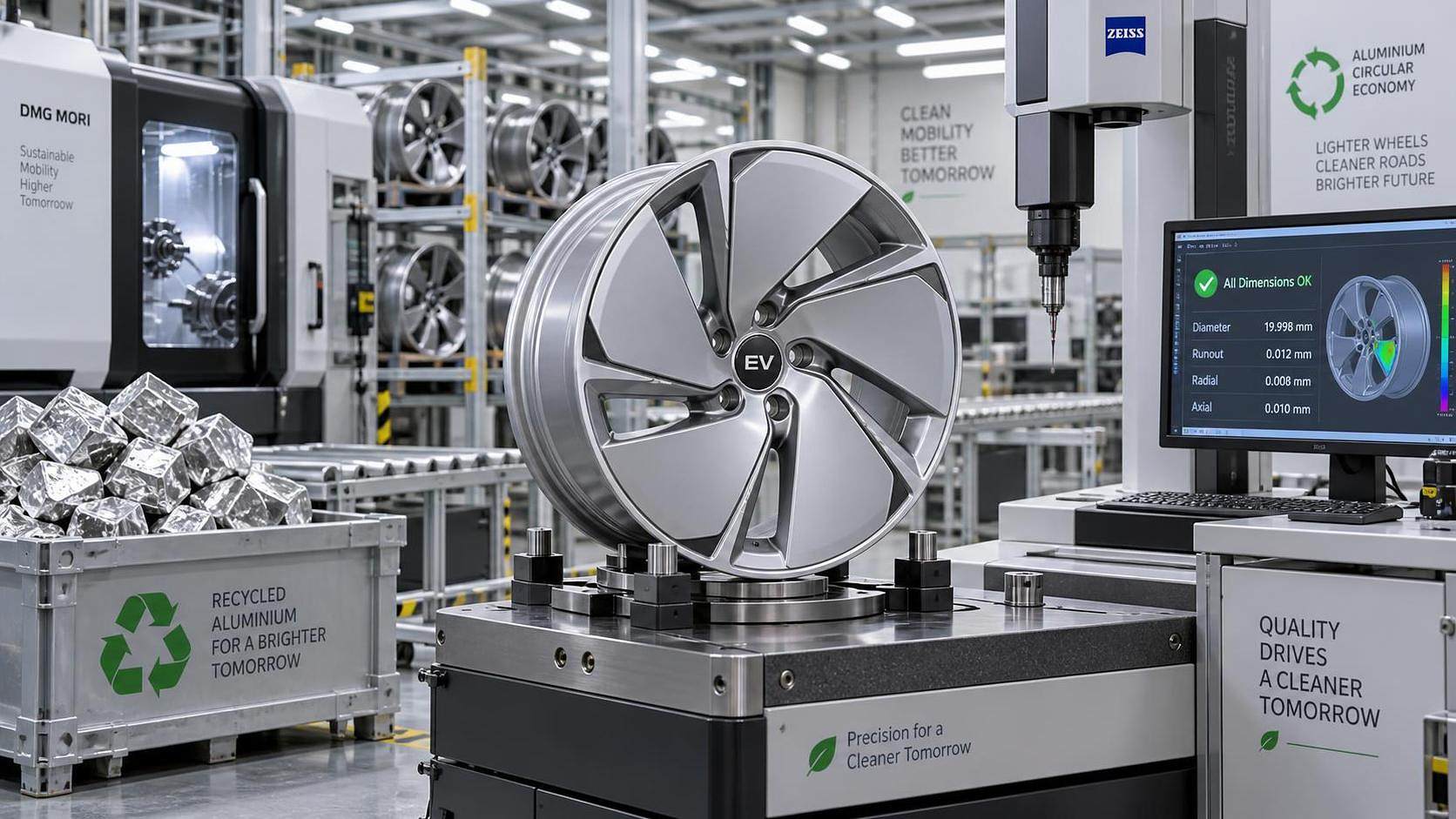
European EV programmes are changing the wheel brief from a styling and cost exercise into a multi-variable sourcing decision. A lighter wheel can support vehicle efficiency, but that benefit now has to coexist with aerodynamic targets, heavy-vehicle durability, brake cooling, recycled-content expectations, carbon reporting and approval discipline. For purchasing teams, wheel lightweighting in Europe is therefore worth close attention, particularly where an existing alloy wheel programme is being adapted for an electric platform or a new supplier is being qualified.
The practical conclusion is not that every EV should receive the lightest possible wheel. A wheel that removes mass but creates higher warranty exposure, inconsistent machining quality, poor coating durability or an unverified compliance position is rarely a good procurement result. The strongest sourcing decisions begin with a vehicle-level requirement: define the efficiency contribution expected from the wheel-and-tire assembly, then establish the structural, aerodynamic, manufacturing and documentation limits within which suppliers must work.
Why EV regulation changes the wheel sourcing conversation
European vehicle policy places continued pressure on manufacturers to improve fleet CO2 performance, while battery-electric vehicles make real-world energy consumption more commercially visible. Range comparisons, winter efficiency, charging frequency and residual value all sharpen attention on losses that might previously have been tolerated in a combustion-engine vehicle. Wheels sit at an awkward but important intersection of those pressures.
Reducing wheel mass can lower unsprung mass and rotational inertia. Depending on the full vehicle set-up, that may assist ride control, acceleration response and energy use in stop-start conditions. Yet a procurement specification focused only on kilograms is incomplete. Wheel diameter has increased across many EV segments to accommodate brake systems, support higher vehicle weight and meet design expectations. Larger rims can quickly offset the mass advantage promised by a different casting method or alloy choice.
At the same time, wheel geometry has become an aerodynamic component. More enclosed spoke forms, aero inserts and carefully managed rim surfaces can reduce turbulence around the wheelhouse. Their value cannot be judged from a render or a single component drawing. Brake airflow, water drainage, cleaning access, tire fitment, noise behaviour and serviceability all remain relevant. A wheel that performs well aerodynamically but compromises thermal margin or loses inserts during routine use can create a larger programme problem than its theoretical efficiency benefit justifies.
Regulation does not normally prescribe one wheel material or one wheel design. It changes the business conditions around the decision. Vehicle approval obligations, sustainability disclosures, supply-chain due diligence and increasingly detailed carbon-accounting requirements make it harder to treat wheels as interchangeable commodity parts. Buyers are being asked to defend how a component was made, what it contains and whether its performance remains consistent across production locations and material batches.
Lightweighting needs a system target, not a material preference
Aluminum alloy wheels remain the central option for most European EV programmes because they offer a workable balance of mass, strength, design freedom and industrial scale. Within aluminum, however, low-pressure casting, flow forming and forging serve different technical and commercial purposes. It is tempting to rank them simply from cheapest to lightest. That ignores the fact that geometry, wall-thickness distribution, machining strategy, finishing process and validation standard can matter as much as the manufacturing route.
A forged wheel may deliver a compelling mass reduction for a performance-oriented vehicle, but its cost, capacity profile and design constraints need to fit the programme. A well-engineered low-pressure cast wheel may be the more resilient option for high volume, especially where the target is a controlled mass reduction rather than an extreme one. Flow-formed designs can sit between those positions, but buyers should assess the actual final geometry and process control rather than assume a universal performance level from the label alone.
For an EV, the wheel must also be considered together with the tire. A larger wheel coupled with a wide, heavy tire may raise rolling losses and compromise comfort even when the rim itself is lighter than the outgoing part. Conversely, a modest rim mass increase may be accepted where the package enables a tire with a better efficiency, load or noise balance. Procurement should avoid setting a wheel mass target before engineering has agreed the tire, brake and wheelhouse envelope.
A useful sourcing brief distinguishes between four linked targets:
- Mass target: maximum wheel mass by size, including any aero cover, valve hardware and required balancing provisions.
- Structural target: load rating, impact performance, fatigue durability and resistance to the higher curb weights and torque characteristics associated with EV use.
- Efficiency target: aerodynamic intent and tire-package assumptions, assessed at vehicle level rather than inferred from spoke coverage alone.
- Lifecycle target: expected finish durability, repairability where relevant, scrap handling and consistency over the programme life.
This framework prevents a common mistake: allowing a supplier to optimize one visible metric while transferring risk into another part of the vehicle or the supply chain.
Compliance is broader than a certificate in the quotation pack
European wheel compliance requires careful distinction between original-equipment and replacement applications. A wheel supplied as part of a new vehicle programme is evaluated within the vehicle’s approval and validation framework. Replacement wheels may also fall under separate requirements, including UNECE Regulation No. 124 for replacement wheels intended for passenger cars and trailers in its scope. The applicable route depends on the product, intended market, vehicle category and fitment claim.
That distinction matters because aftermarket growth can make a seemingly simple OE sourcing decision more complex. A supplier may be capable of producing an approved replacement wheel for selected applications without having the process capability, documentation discipline or validation support required for a platform-specific OE programme. The reverse can also be true: an OE wheel manufacturer may have no commercial appetite to support the fitment data, packaging and channel controls required in the replacement market.
Procurement teams should ask suppliers to describe their compliance position in product-specific terms. A generic statement that a factory is “ECE compliant” does not establish that a particular wheel design, finish, size and load rating are suitable for the intended application. The enquiry should identify the exact part number logic, markets, intended tire dimensions, axle loads, offset range and any wheel-cover configuration. Changes to those items should trigger a documented review, not be treated as cosmetic revisions.
The same discipline applies to testing. Buyers need visibility into which tests are carried out on the representative production configuration, how samples are selected, what happens after a tooling change and how design changes are controlled. With lightweight wheels, small shifts in local section thickness, porosity control or heat treatment can have outsized consequences. A one-time validation result is valuable, but it does not replace production surveillance.
Questions that expose approval and quality risk early
- Which regulation, vehicle approval process or market-specific requirement applies to this exact wheel application?
- Does the supplier maintain traceability from finished wheel to alloy batch, casting or forging lot, heat treatment and machining record?
- Which changes require revalidation: alloy source, tool repair, wall-thickness adjustment, finish system, aero insert or production-site transfer?
- How are radial runout, lateral runout, leak testing, X-ray or other internal-defect controls managed for the proposed process?
- Who owns fitment evidence and approval documentation if the programme later extends into replacement channels?
These questions are not paperwork for its own sake. They determine whether a purchasing team can contain a problem when it appears after launch, rather than attempting to reconstruct component history from incomplete records.
Carbon and aluminum sourcing are moving into the commercial evaluation
Aluminum is energy-intensive to produce, so the carbon profile of an alloy wheel is influenced heavily by the origin and production route of the metal. Recycled aluminum can reduce demand for primary material, but “recycled content” alone is not a complete procurement criterion. Buyers need to understand how the supplier defines it, whether it is allocated at company, plant, melt or component level, and how contamination or alloy chemistry is controlled.
High recycled content can be compatible with robust wheel production when metallurgy and melt management are well controlled. It should not be used as a shortcut around mechanical-property requirements. A wheel programme still requires evidence that the chosen alloy composition and process window can reliably meet the intended fatigue, impact and corrosion expectations. For complex wheel designs, the ability to maintain quality across recycled feedstock variation may be more valuable than an ambitious headline percentage that cannot be tied to the supplied part.
European carbon-border and sustainability reporting developments also affect the landed-cost conversation for aluminum-containing parts. The commercial impact depends on the transaction structure, importer responsibilities, origin of material and evolving reporting rules. A buyer should therefore map the chain from primary aluminum or secondary metal through billet, foundry or forging plant, machining, coating and final delivery. Without that map, a quoted piece price can understate exposure to future reporting burdens, material-cost volatility or customs-related administration.
Supplier comparison is stronger when each bidder is asked for the same evidence set: declared production site, material origin methodology, energy-source information where available, recycled-content accounting method, scrap recovery process and transport assumptions. The purpose is comparability, not a contest over the most attractive sustainability statement. Where programme decisions depend on lifecycle carbon, the calculation boundary must be agreed before bids are compared.
Where lightweighting claims commonly fail in sourcing
The first weak claim is “lighter automatically means more efficient.” Wheel mass matters, but EV efficiency is shaped by the whole rotating assembly and the vehicle’s aerodynamics. A wheel with aggressive open spokes may save material while worsening airflow; a heavy aero cover may reduce drag but bring fastening and durability questions. The right decision requires vehicle engineering to quantify the trade-off for the platform, not purchasing to select a winner from component-level claims.
The second is “forging solves durability.” Forged construction can offer strong performance potential, but it does not exempt a design from load, impact, corrosion and fatigue validation. Wheel failures are often governed by local geometry, surface condition, manufacturing consistency or service damage. A procurement requirement should specify the demanded performance and verification method, then let the supplier demonstrate how its process achieves it.
The third is “a local European supplier automatically has a lower-risk or lower-carbon offer.” Geographic proximity may shorten transport routes and simplify communication, but it does not reveal where aluminum originated, how much spare capacity the plant has, whether tooling is internally controlled or how well the supplier can manage volume ramps. Conversely, a supplier outside Europe may have mature traceability and a stable European logistics model. Location is one evaluation factor, not a substitute for supply-chain evidence.
The final failure is treating finish selection as a styling issue. EV wheels are exposed to high vehicle mass, curb contact, brake dust, road salt and frequent cleaning. Painted, machined, polished and coated surfaces have different repair, corrosion and inspection implications. If a wheel uses aero inserts or contrasting materials, the interface between parts needs its own durability review. Finishing choices should be made early enough that they are included in validation samples, cost models and service assumptions.
How procurement teams can structure the next sourcing round
A productive request for quotation should begin after engineering has frozen the primary package constraints, not before. Suppliers need a stable envelope, load cases, target mass range, wheel architecture, tire interface, brake-clearance requirement, finish concept and annual volume profile. Where aero performance is important, the request should state whether the supplier is expected to provide design input, simulation support, physical samples or only manufacturability feedback.
Commercial evaluation should then separate the quoted piece price from the cost drivers that can change after nomination: metal index exposure, energy exposure, scrap ownership, tooling amortization, validation charges, finish complexity, packaging, inventory terms and logistics. This makes bids easier to compare and reduces the temptation to award business to an apparently low-cost offer built on unspoken assumptions.
Wheel lightweighting in Europe will keep pushing procurement beyond the old choice between cast and forged aluminum. The programmes likely to perform best will be those that treat the wheel as part of an efficiency, safety and carbon system, while demanding enough evidence to make supplier claims comparable. A lighter wheel is valuable when its mass reduction survives that broader test: it fits the vehicle, holds up in production, meets its approval obligations and carries a supply-chain story that the buyer can defend.